
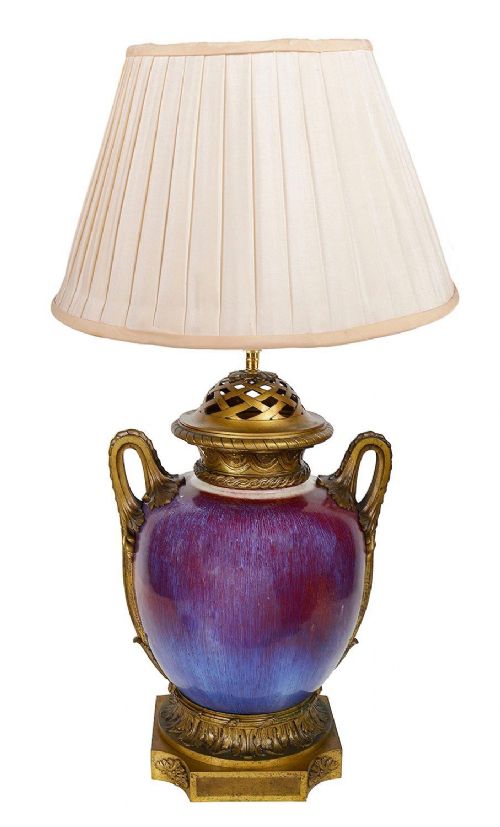


Ormolu Mounted Porcelain Lamps
Ormolu mounted porcelain lamps combine European cast metalwork with imported and domestic ceramic bodies to sit on a table and cast a warm glow.
Ormolu Mounted Porcelain Lamps
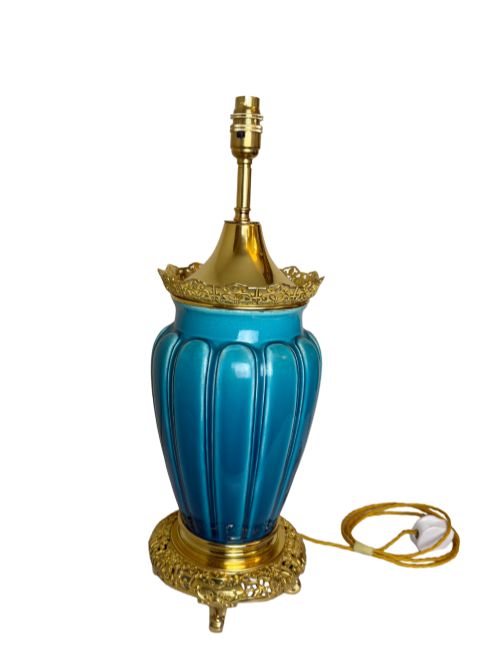
When you search for ormolu mounted porcelain lamps, you encounter vessels transformed into illumination across the eighteenth and nineteenth centuries. These objects typically combine a ceramic body with cast bronze mounts finished in a golden metallic layer.
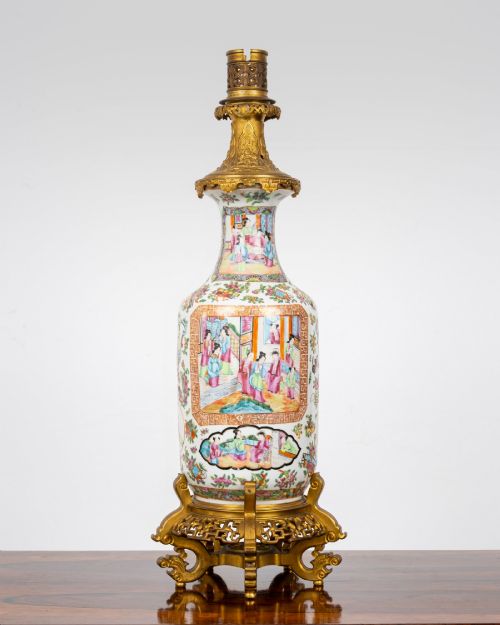
The ceramic components range from Chinese export wares including powder blue, rose medallion, and famille verte to European interpretations in the French taste. Makers frequently utilised existing antique vases, adapting them into table lamps by securing metal bases and collars around the porcelain.
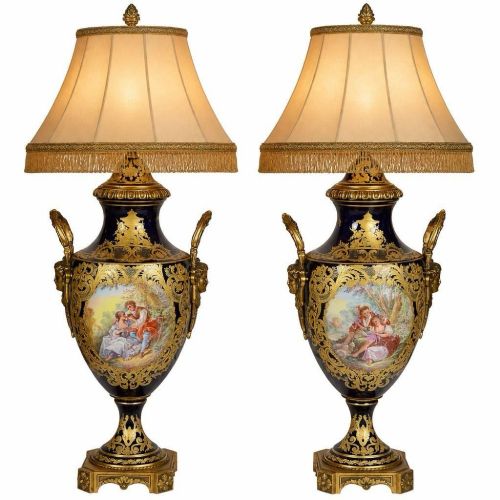
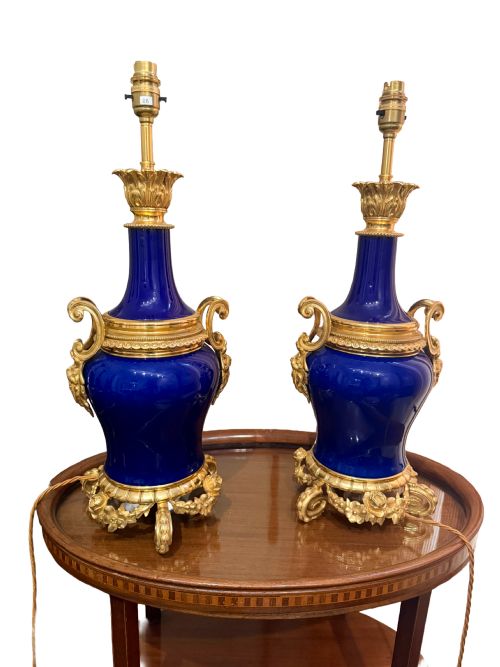
French workshops dominated much of this production, particularly during the nineteenth century, drawing on styles such as French Rococo Revival and Louis XVI. Many examples survive as matched pairs, though single vase lamps appear with equal frequency across the inventory.
How they were made
The construction of these pieces relies on the union of fired ceramic and cast metalwork. Artisans shaped bronze through casting and chasing before applying gold leaf or mercury gilding to create the characteristic ormolu surface.
Porous ceramic bodies and hard-paste porcelains required careful handling when fitted with metal collars, handles, and feet. Workshops secured these bronze mounts to the porcelain using pins, adhesives, or internal threading to support the electrical components added later.
Several vases crossed oceans as cargo before finding themselves fitted with French gilt bronze feet and wired for light.
What varies in quality
The refinement of the cast bronze mounts distinguishes finer examples from standard production. Crisp detailing in the foliage and scrollwork of the ormolu indicates superior craftsmanship by the metalworker.
The quality of the porcelain body and the hand-painted decoration also determine the tier of the piece. Painted scenes executed with precision and depth sit above simpler glazed surfaces in terms of artistic merit.
Gien·Samson·Sevres
The Ormolu Mounted Porcelain Lamps Glossary
- Ormolu
- A gilded bronze finish achieved by applying gold leaf or an amalgam to cast bronze. This technique produces a rich golden lustre that does not tarnish easily.
- Famille Rose
- A palette of Chinese ceramic enamel colours introduced in the eighteenth century, dominated by opaque pink. The style appears frequently on export porcelain adapted for European mounts.
- Pâte-sur-Pâte
- A ceramic decorating method where liquid porcelain clay is applied layer by layer onto a wet background to create a low relief cameo effect. This technique gained popularity in nineteenth-century French manufacture.
- Sang de Bœuf
- A deep red copper-glazed ceramic finish originating in Chinese kilns. The intense red coloration requires precise kiln temperature control during firing.
- Rose Medallion
- A nineteenth-century Chinese export porcelain pattern featuring panels of figures alternating with birds and flowers, highlighted in green and pink enamels.
Ormolu Mounted Porcelain Lamps: Frequently Asked Questions
Are these lamps converted from old vases?
Many examples began life as decorative vases before receiving bronze mounts and electrical fittings in the nineteenth century.
Craftsmen often utilised imported Asian ceramics or European factory wares for this purpose, uniting different cultures in a single decorative object.
How do I identify French versus Chinese porcelain?
Chinese porcelain bodies often display specific export characteristics such as rose medallion or famille verte palettes.
French equivalents frequently mimic these styles or employ distinct European neoclassical motifs associated with nineteenth-century Paris workshops.
What is the difference between ormolu and brass?
Ormolu consists of cast bronze treated with a golden surface layer to impart a rich yellow metallic sheen.
Brass is an alloy of copper and zinc with a different intrinsic colour and weight, lacking the specific gilded finish found on higher quality mounts.
How should I clean ormolu and porcelain?
Dust the porcelain gently with a dry cloth and avoid harsh chemical cleaners that might damage hand-painted enamel surfaces.
Metal mounts require minimal intervention; use a soft brush to remove dust from crevices without rubbing the delicate gilded finish.