



Ormolu Mounted Mirror
An ormolu mounted mirror brings together polished glass and gilt bronze or brass enrichments across nineteenth-century and early twentieth-century interiors.
Ormolu Mounted Mirror
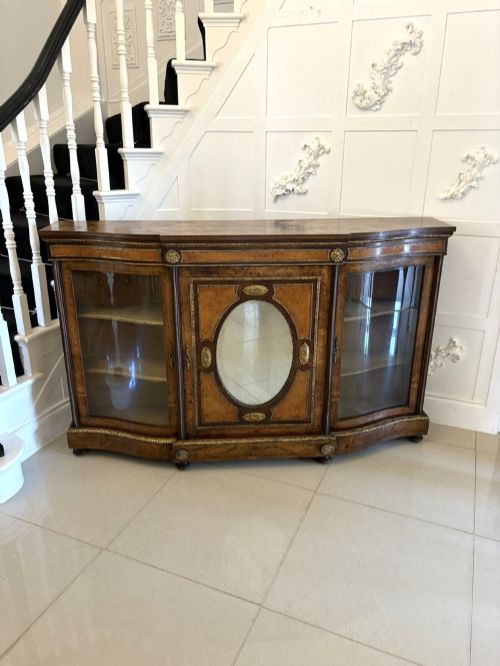
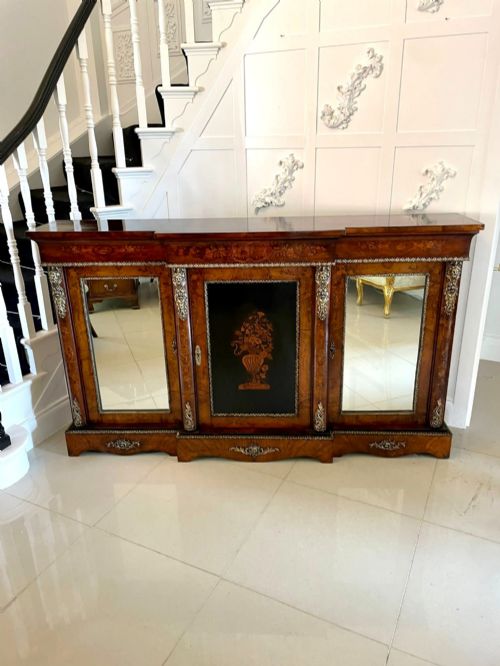
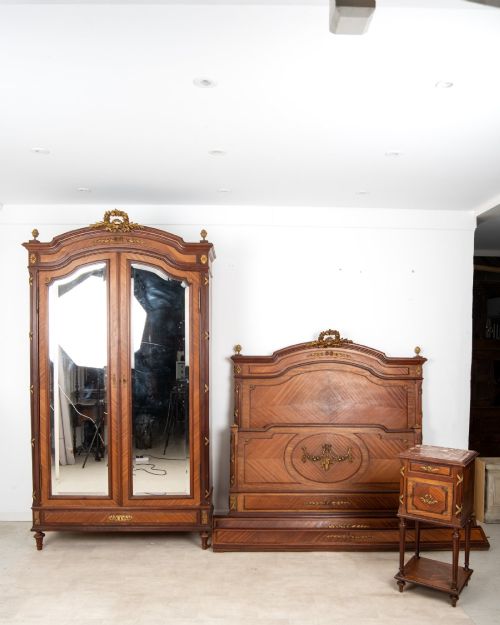
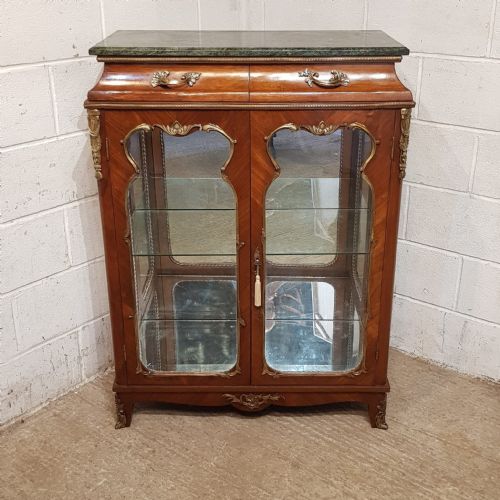
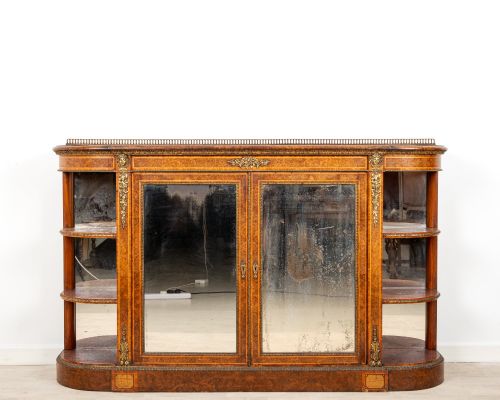
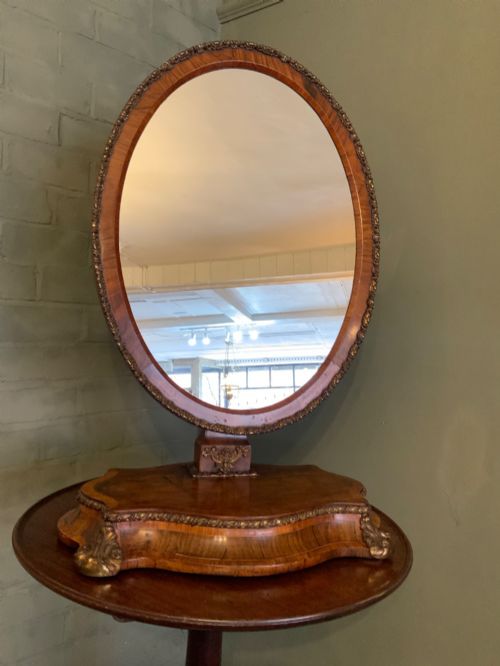
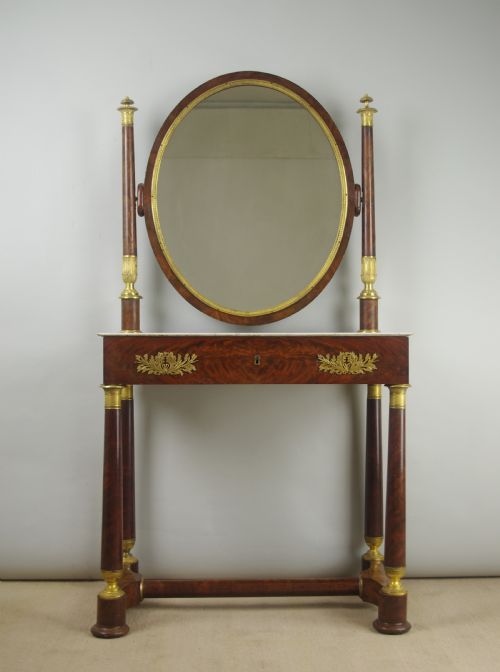
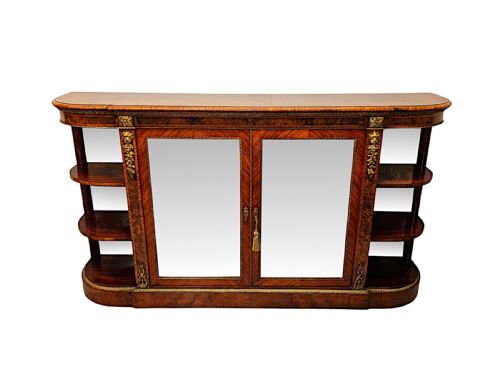
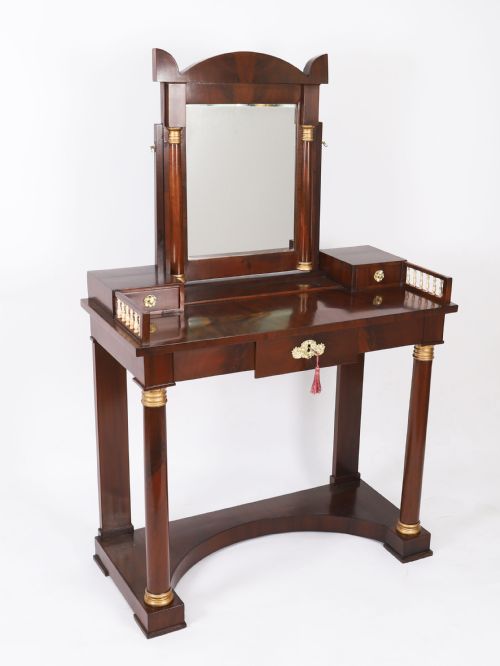
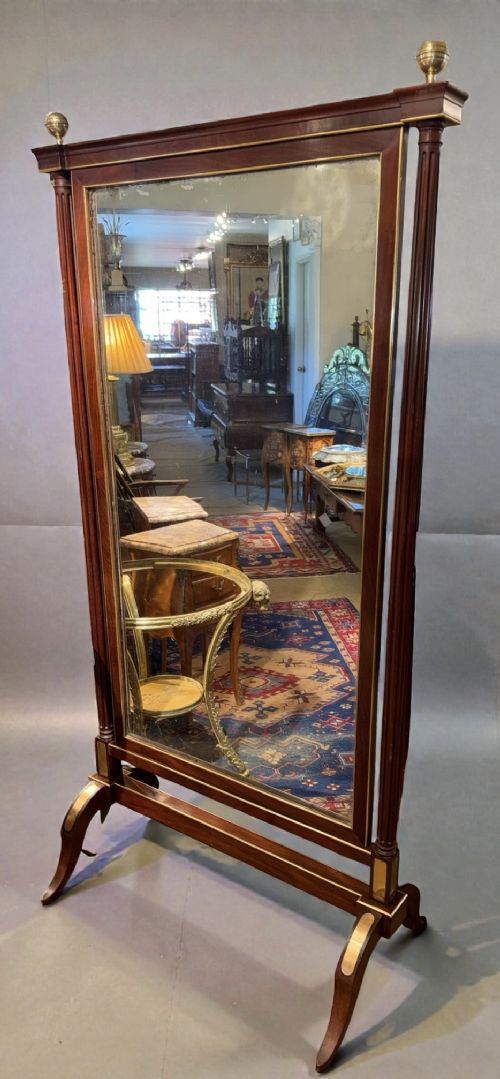
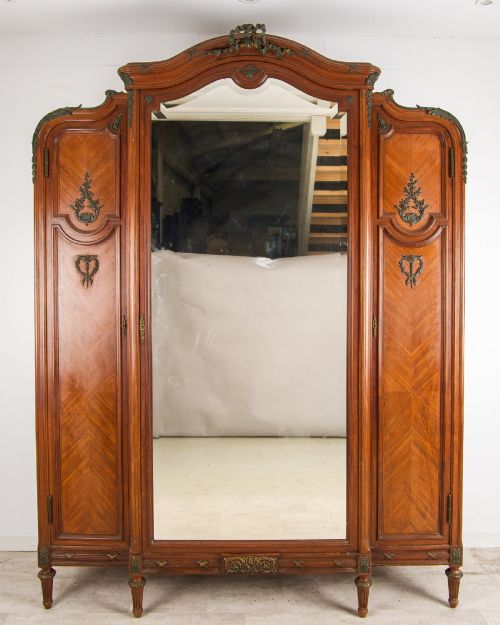
An ormolu mounted mirror appears in several distinct forms across the selection, ranging from large cheval mirrors and toilet glasses to overmantel pieces and mounts integrated onto credenzas, dressing tables, and wardrobes. The nineteenth century yields the highest concentration of examples, spanning Victorian British cabinet-making and French revival output.
Buyers most frequently encounter walnut and mahogany frames enriched with cast metal mounts, often styled after French Empire, Louis XVI, or Rococo traditions. These objects combine functional glass with decorative cabinetry, serving simultaneously as mirrors and substantial furniture pieces.
How they were made
The construction relies on solid and veneered timbers such as burr walnut, mahogany, and kingwood, paired with glass plates and cast ormolu, gilt bronze, or gilt metal mounts. Timber carcases are precision-built to support heavy reflective glass and protruding metal embellishments.
Ormolu elements are cast in bronze or brass, then hand-finished and fire-gilded to achieve a bright, durable metallic surface. These mounts are secured to the wooden frames and furniture bodies using small brass pins or screws.
Object forms span cheval mirrors, toilet mirrors, dressing tables, credenzas, and vitrines displaying French revival and Empire styles.
What varies in quality
The refinement of the ormolu casting separates standard production from exceptional pieces, visible in the crispness of the chased detail and the depth of the gilding. High-tier works display fluid, deeply undercut foliage and figures rather than soft, flat metal surfaces.
The choice and figuring of the underlying timber veneer, whether burr walnut or figured mahogany, together with the integration of marquetry or porcelain plaques, dictate the overall stature of the piece.
Gillows·G Durand·Paul Sormani
The Ormolu Mounted Mirror Glossary
- Ormolu
- Gilded bronze or brass applied as a decorative mount to furniture and mirror frames. The term derives from the French for ground gold.
- Cheval mirror
- A freestanding full-length mirror hung on a vertical frame with pivots allowing it to tilt. It is also known as a Psyche mirror.
- Credenza
- A sideboard or cabinet designed for display and storage, frequently featuring mirrored doors and ormolu mounts in Victorian pieces.
- Vitrine
- A glass-fronted display cabinet used for porcelain and objets d'art. Many examples incorporate gilt bronze enrichments.
- Marquetry
- Decorative woodwork where pieces of veneer are fitted into a ground to form geometric or floral patterns. It often complements ormolu mounts on nineteenth-century cabinets.
Ormolu Mounted Mirror: Frequently Asked Questions
What is an ormolu mounted mirror?
An ormolu mounted mirror combines a reflective glass plate within a wooden frame embellished with cast and gilded bronze or brass ornaments. These decorative metal mounts are fastened directly to the timber.
Such pieces range from portable toilet mirrors and large cheval frames to wall-hanging glasses and mirrors integrated into the backs of credenzas and dressing tables.
How do I date an ormolu mounted mirror?
Dating relies on examining the timber species, the construction of the mirror frame, and the style of the metal mounts. Victorian and nineteenth-century pieces often utilise burr walnut or mahogany with French revival motifs.
Earlier examples from the French Empire period display classical restraint, while later nineteenth-century work leans towards exuberant Louis XV or Louis XVI revival detailing.
Where were these mirrors used?
These mirrors occupied principal rooms in nineteenth-century homes, including drawing rooms, boudoirs, and bedrooms. Cheval mirrors stood in dressing areas for full-length viewing.
Smaller toilet mirrors sat upon dressing tables and chests of drawers, while overmantel versions were fixed directly above fireplaces to reflect light around the interior.
How do I care for ormolu mounted mirrors?
Maintenance involves keeping the timber and metal away from direct heat sources and strong sunlight to prevent veneer cracking and fading. Regular dusting with a soft, dry cloth preserves the finish.
Harsh chemical polishes must be avoided on both the ormolu mounts and the polished wood to protect the historic gilding and patination.