

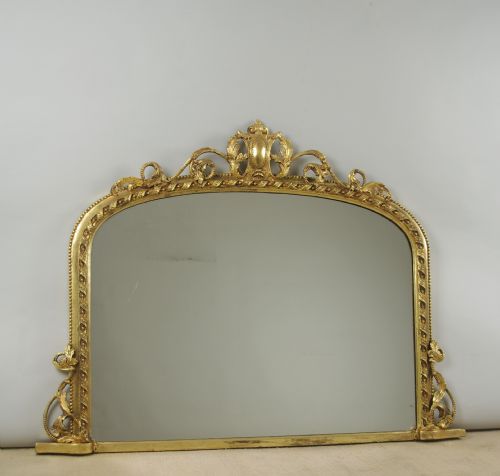


Arched Top Overmantel
When you choose an arched top overmantel, you bring home a nineteenth-century mirror designed to sit above a fireplace and enlarge the room.
Arched Top Overmantel
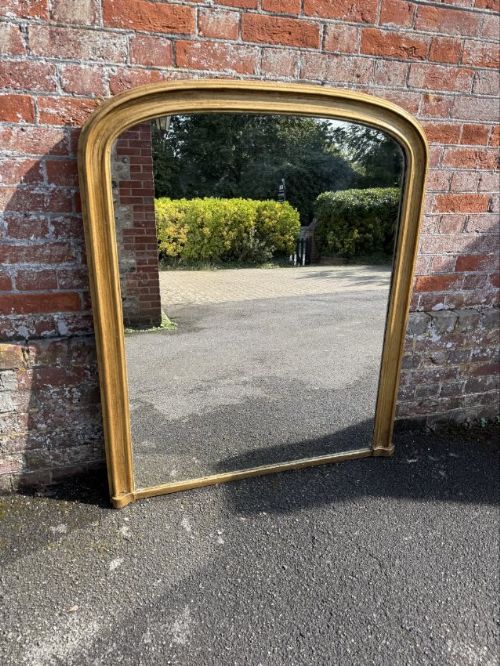
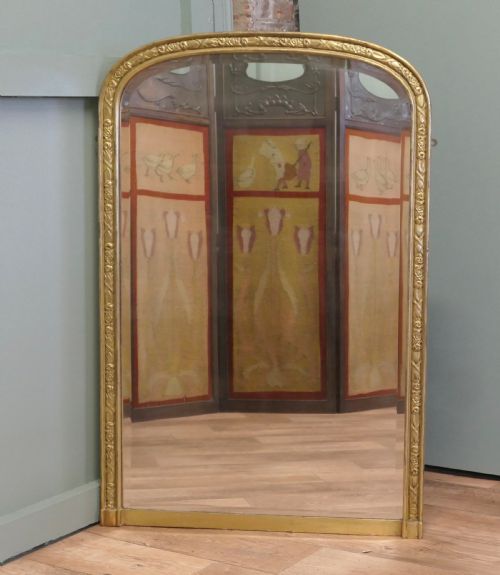
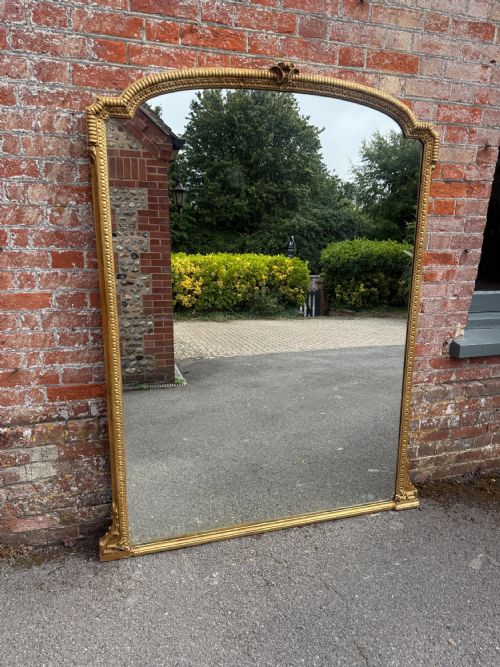
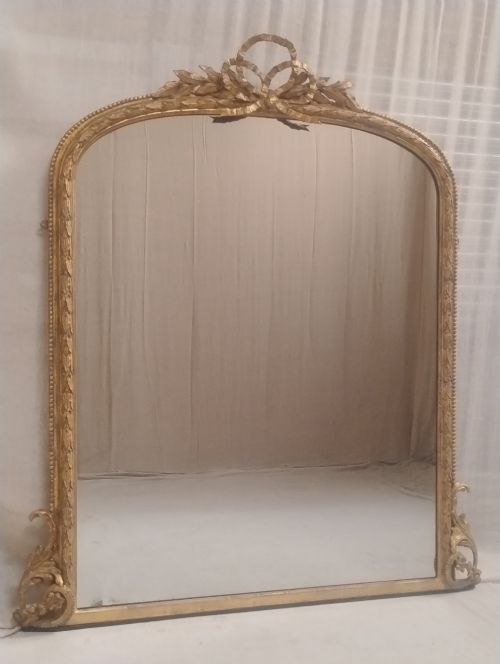
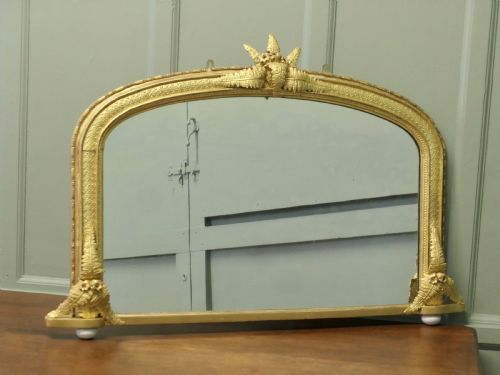
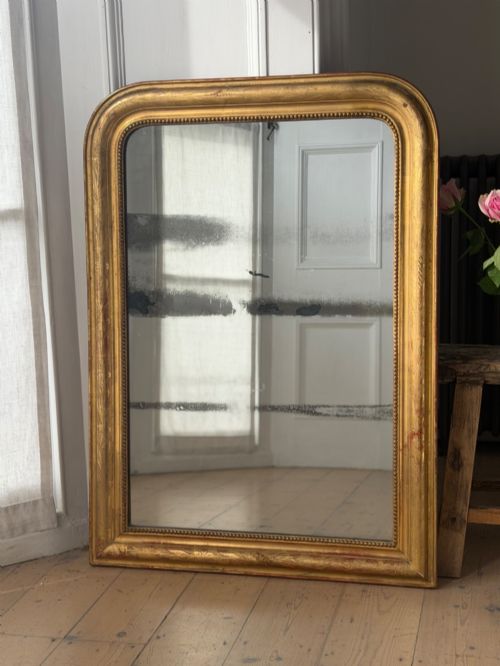
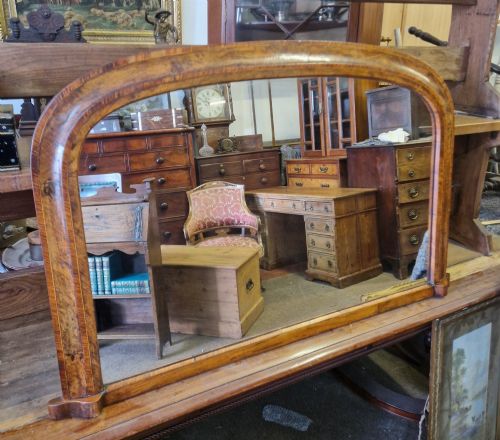
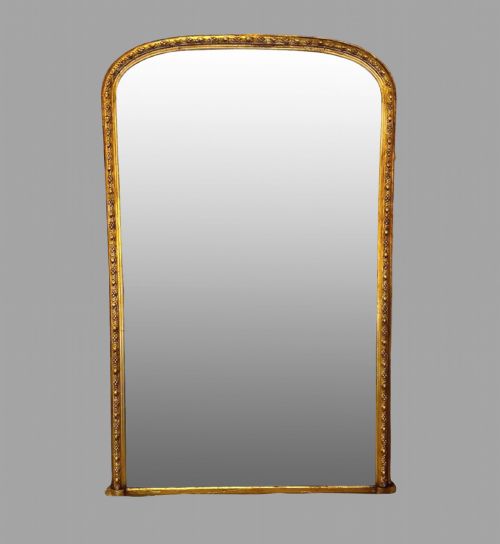
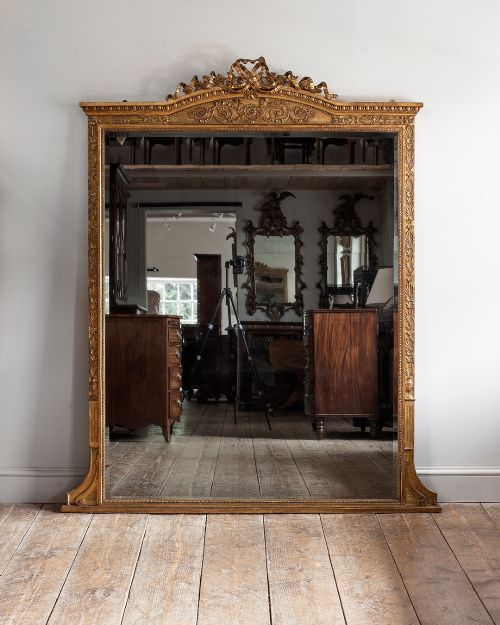
An arched top overmantel is a large wall mirror created to occupy the space above a chimney breast, drawing light across the room from nineteenth-century interiors. The most common examples seen here are English and French pieces from the Victorian era, spanning decades from eighteen-fifty to eighteen-ninety. These objects combine architectural height with curved upper frames designed to soften the rigid lines of a fireplace.
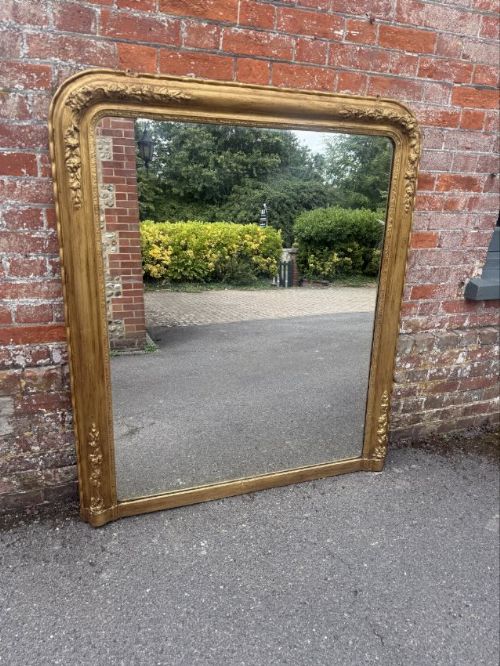
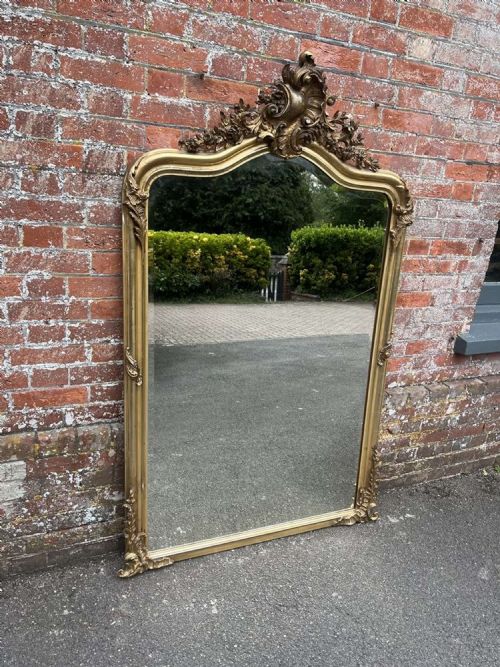
Most pieces appearing on this page present rectangular bodies surmounted by gentle curves, constructed specifically for domestic reception rooms. English variants frequently display carved wood and gesso finished in gold leaf or paint, whilst French examples often follow the Louis Philippe or Rococo styles. Their substantial scale means they function as primary focal points within a room rather than mere accessories.
Materials and Construction
The foundation of these frames typically relies on carved wood strengthened with moulded gesso or composition details. Artisans applied layers of gold leaf or paint directly over this prepared surface to achieve the desired metallic sheen or flat colour.
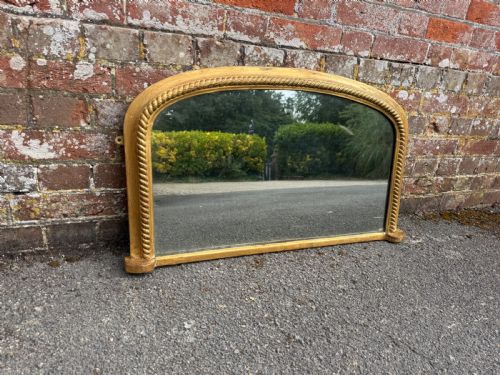
Mirror glass of the period was set into the rebate behind wooden backs, occasionally retaining original mercury backing that exhibits characteristic foxing. Frames incorporate decorative elements such as tulip motifs, rope twists, and ribbed moulding executed by hand.
The inventory combines English overmantle mirrors with continental French variants featuring Louis Philippe and Rococo influences.
Assessing Quality and Execution
The distinction between ordinary and superior examples rests upon the crispness of the carved details within the wood and gesso. Finer pieces maintain deep, clean lines along their arched mouldings and decorative borders without the softening that occurs when moulds are reused excessively.
Original surface treatments, particularly untouched gold leaf or early painted finishes, elevate a piece above later interventions. The weight and clarity of the mirror glass, alongside the integrity of the structural joints at the corners of the arch, determine the overall calibre.
The Arched Top Overmantel Glossary
- Gesso
- A plaster-like mixture applied to wood frames to create a smooth surface for gilding or painting. It accepts fine incisions and relief mouldings before leaf is laid.
- Overmantel
- A mirror or painting specifically scaled and styled to hang above a mantelpiece. These pieces reflect hearth firelight and balance the vertical pull of the chimney breast.
- Louis Philippe
- A nineteenth-century French style characterised by restrained classical proportions and rounded upper corners. It avoids heavy ornamentation in favour of clean architectural grace.
- Mercury Glass
- Mirror plate manufactured using a tin and mercury amalgam behind the glass. It ages with dark spots and a characteristic mottled appearance known as foxing.
- Rococo Revival
- A decorative style popular in the nineteenth century featuring asymmetrical scrolls, naturalistic floral motifs, and flowing curves. It draws inspiration from earlier eighteenth-century continental design.
Arched Top Overmantel: Frequently Asked Questions
Where should an arched top overmantel be hung?
These mirrors traditionally anchor the space directly above a fireplace mantelpiece, where their height draws the eye upward. They also function effectively on main room walls as standalone focal points.
Ensure the wall construction safely supports the substantial weight of wood, gesso, and glass before installation.
How do I identify a French Louis Philippe mirror?
Louis Philippe mirrors typically feature a subtle arched top combined with clean, unpretentious framing lines. They often display softened corners and minimal carved ornament compared to busier Victorian styles.
Originating from mid-nineteenth-century France, they bring an understated elegance to both period and modern interiors.
What causes foxing on antique mirror glass?
Foxing occurs when atmospheric moisture degrades the reflective backing behind the glass over many decades. This chemical breakdown creates small dark spots and characteristic cloudiness across the surface.
Many collectors value original foxing as proof of age and authenticity rather than treating it as a defect.
How do English and French overmantels differ?
English overmantels from the nineteenth century frequently employ robust carved wood and gesso frames with distinct decorative borders like rope twists or tulip motifs. They lean towards architectural presence and substantial proportions.
French equivalents, such as those in the Louis Philippe or Rococo styles, often prioritise simpler curved silhouettes or flowing organic ornamentation with a lighter visual feel.