


Empire Vanity Mirror
An empire vanity mirror brings classical elegance to a room, offering a striking focal point with its refined proportions and rich materials.
Empire Vanity Mirror
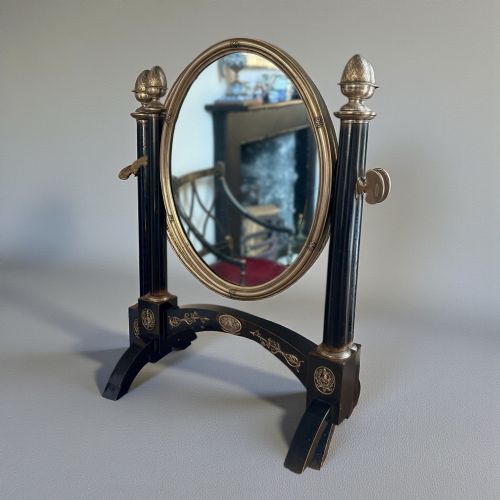
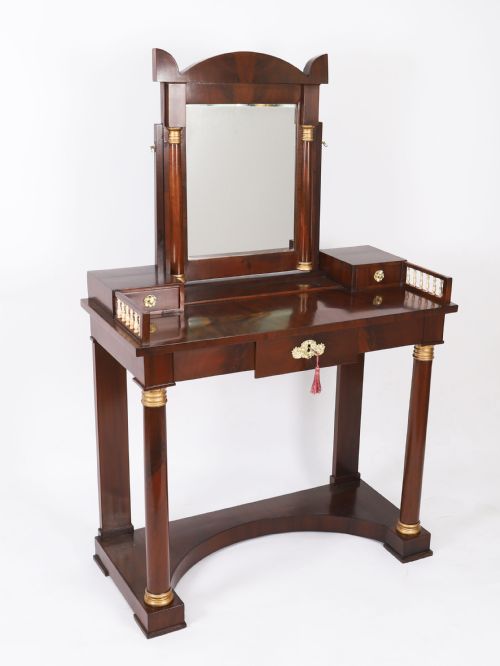
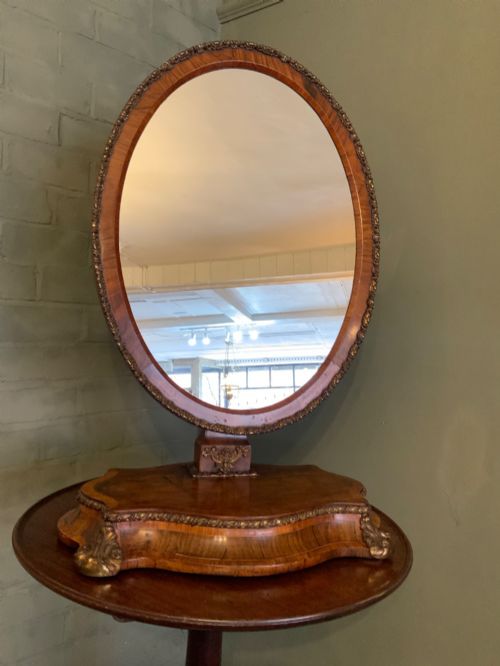
An empire vanity mirror is a dressing mirror designed to sit upon a table, dressing table or console, drawing on classical forms from the nineteenth century. These pieces emerge in styles such as French Empire, Empire Revival and Swedish Biedermeier, spanning periods from the early nineteenth century to eighteen ninety.
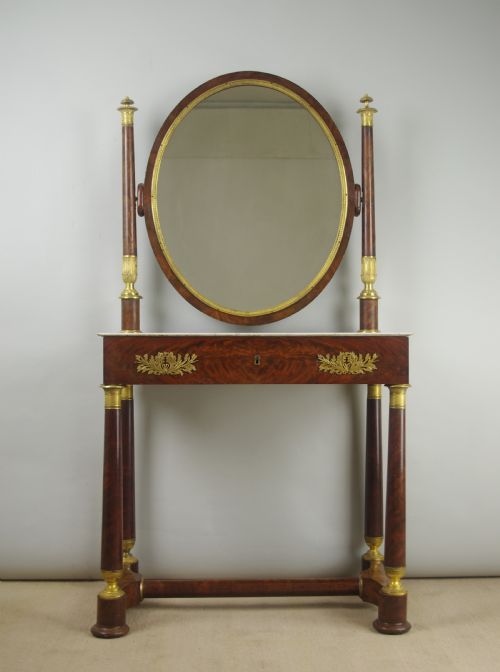
The objects on this page appear primarily as adjustable pedestal mirrors, table mirrors and dressing table mirrors alongside larger dressing tables fitted with mirrors. Mahogany, birch and walnut form the structural woods, while bronze, ormolu and gilt metal provide the decorative mounts.
Buyers meet variations that include oval and upright glass plates supported by scrolling frames or classical columns. Origin points span France, Russia, Vienna and Sweden, reflecting the broad European reach of the classical revival.
How they were made
Cabinetmakers constructed these mirrors using dense timbers like mahogany, birch and walnut, frequently applying ebonised finishes or veneer. Metalwork played a central role, with ormolu, gilt bronze and brass cast and chased to form classical mounts, pilasters and candle sconces.
Mirrors utilised cast bronze or wooden frames designed to tilt upon adjustable pivots, resting upon stepped marble bases or solid plinths. Hand-applied gilt highlights and fine joinery defined the construction of both the smaller toilet mirrors and the grander dressing tables.
What varies in quality
The standard of an empire vanity mirror rests upon the crispness of the bronze or ormolu casting and the depth of the timber grain. Finer examples display sharp, hand-chased metal mounts that integrate harmoniously with the architectural lines of the frame.
Weight and stability indicate superior construction, particularly in the balance of adjustable pedestal mirrors and the quality of the supporting marble bases. The clarity of the glass and the integrity of the original polish distinguish pieces produced by skilled workshops from later revivals.
The Empire Vanity Mirror Glossary
- Ormolu
- Gilded bronze, where a layer of gold amalgam is applied to a bronze base and heated to drive off the mercury. This technique creates a rich, matte gold surface characteristic of nineteenth-century decorative arts.
- Biedermeier
- A Central European style spanning the mid-nineteenth century, known for utilitarian comfort and clean lines that celebrated domestic virtue. Swedish examples often utilised lighter woods like birch.
- Toilet mirror
- A smaller mirror designed to sit upon a dressing chest or dressing table for personal grooming. These pieces frequently incorporate small drawers within their wooden bases.
- Pedestal mirror
- A mirror supported by side pillars or columns that allow the glass plate to pivot. This mechanical arrangement permits the user to adjust the angle of reflection.
- Gilt bronze
- Metal cast in bronze and subsequently covered in gold leaf or gilt. It provides durable ornamentation that resists tarnishing over time.
Empire Vanity Mirror: Frequently Asked Questions
How do I clean the ormolu?
Clean ormolu mounts gently with a soft, dry cloth to remove dust without disturbing the gilt surface. Avoid harsh chemical cleaners or abrasive polishes that can strip the delicate metallic finish.
For stubborn grime, use a slightly dampened cloth with mild soapy water, drying the metal immediately afterwards.
Can I adjust the mirror angle?
Most period pedestal mirrors feature functional pivot screws or side pins designed to alter the tilt of the glass plate. Tighten or loosen these fixings carefully to achieve the desired viewing angle.
Take care not to force the mechanism if it feels stiff, as nineteenth-century hardware requires delicate handling.
Where should I place it?
Position your mirror on a sturdy dressing table, console table or chest of drawers where its weight is evenly supported. Ensure the surface is level so the pedestal base remains stable.
Keep the piece away from direct sunlight and excessive moisture to protect the timber veneer and the antique silvering on the glass.
Are the mirror plates original?
Many nineteenth-century mirrors retain their original glass, which often exhibits minor foxing, speckling or slight distortion due to age. These natural signs of wear confirm the period authenticity of the piece.
Replacement glass appears in some examples where the original plate suffered damage over generations of use.