



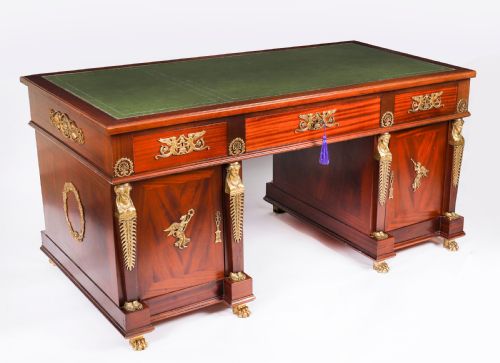


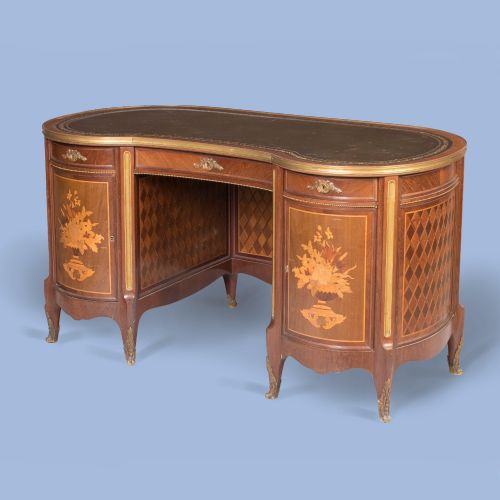


Ormolu Mahogany Pedestal
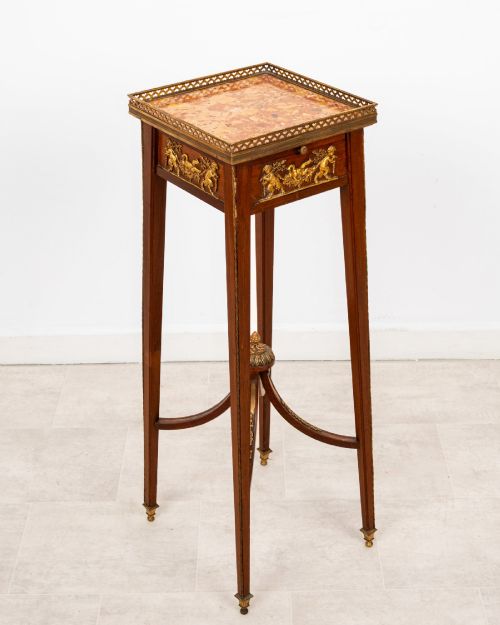
An ormolu mahogany pedestal brings together rich timber and chased gilt bronze, offering a striking display surface for rooms of distinction.
Ormolu Mahogany Pedestal
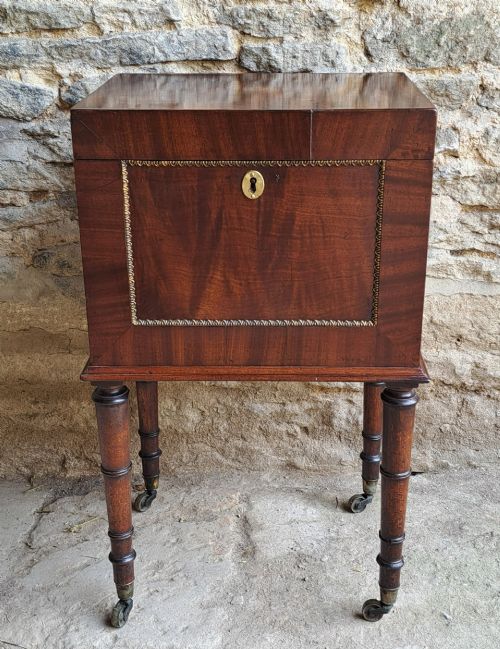
When you search for an ormolu mahogany pedestal, you encounter tall display stands and supportive pillars alongside related case pieces like bedside cabinets and desks from the nineteenth and early twentieth centuries. These furnishings frequently draw upon French design vocabularies, including the French Empire and Louis XVI styles, alongside Swedish interpretations.
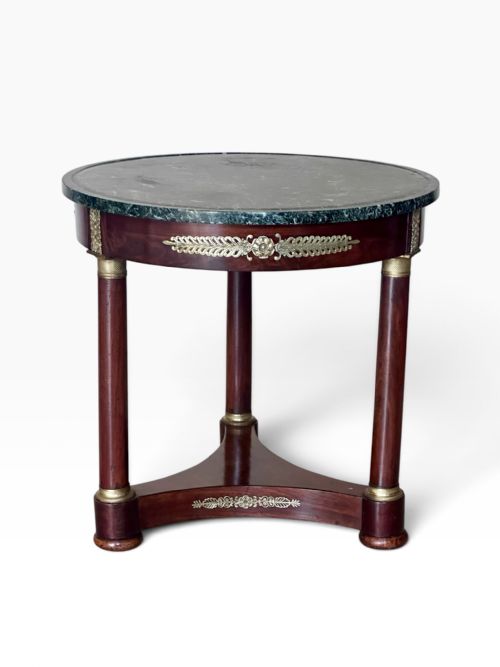
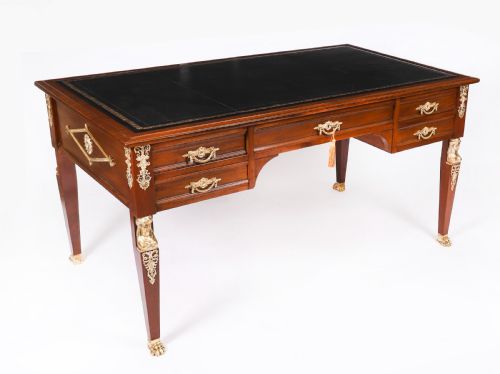
The objects listed on this page range from dedicated torcheres and pedestals to side tables, gueridons, and bureaus. The common thread uniting these forms is the combination of dark tropical timber with cast metallic enrichment, originating primarily from French and English workshops spanning the 1800s to the 1930s.
Materials and construction methods
The core structure relies on solid and veneered mahogany, sometimes accompanied by secondary hardwoods like rosewood or kingwood, shaped into columns, octagonal forms, and rectangular cabinets. Tops of rouge marble or inset leather frequently complete the primary wooden carcass.
Gilding and metal casting define the surface enrichment, utilising ormolu, gilt bronze, brass, and gilt metal mounts fastened to the timber frames. Marquetry inlays and cast decorative borders further punctuate the mahogany surfaces.
Ormolu Mahogany Pedestal Retail Price Guide 2026
Typical asking prices for ormolu mahogany pedestal among the pieces listed under this phrase on Sellingantiques today, from the lower quarter to the upper quarter. They describe what is for sale here now, not the wider market.
Several pieces include hidden candle slides for unexpected evening illumination.
Distinctions in craftsmanship and design
The sophistication of the cast ormolu mounts dictates much of the visual success, with finely chased and fire-gilded bronze elements standing apart from simpler brass stampings. Artisanal precision in the carving of the mahogany and the crispness of marquetry details reveal the maker's hand.
Structural integrity and the selection of figured mahogany veneers determine the longevity and presence of each piece. Superior examples exhibit harmonious proportions between the timber body and its metal ornamentation, adhering closely to neoclassical or empire canons.
François Linke
The Ormolu Mahogany Pedestal Glossary
- Ormolu
- Finely chopped high-karat gold applied to a copper-based bronze metal object through mercury amalgamation, or more broadly, gilt bronze mounts used on furniture. This finish provides a warm, lasting lustre that distinguishes higher-grade pieces from simple brass.
- Gueridon
- A small French round table, typically supported by a central column or multiple legs, often featuring ormolu mounts and marble tops. These tables function as decorative centrepieces or stands.
- Torchere
- A tall stand designed to elevate a lamp, vase, or sculptural object, constructed from mahogany and embellished with metal mounts. They introduce vertical interest to interior spaces.
- Bureau Plat
- A kneehole writing desk with a rectangular top, frequently fitted with leather writing surfaces and ormolu framing. These desks emerge frequently in French Empire and Louis style forms.
- Marquetry
- Decorative patterns formed by fitting together thin slices of various woods and other materials onto a structural carcass. This technique creates elaborate geometric or floral motifs across table tops and cabinet doors.
Ormolu Mahogany Pedestal: Frequently Asked Questions
What is an ormolu mahogany pedestal?
It is a tall display stand or pillar constructed from mahogany timber and embellished with cast ormolu or gilt bronze mounts, typically following neoclassical or empire designs.
These pieces serve as elevated surfaces for decorative objects, urns, or sculptures within period interiors.
How do I identify French Empire style?
French Empire pieces rely on classical architectural proportions, dark mahogany surfaces, and symmetrical ormolu mounts depicting military trophies, swans, or classical palmettes.
They reflect the aesthetic tastes prevalent during the early nineteenth century under Napoleonic influence.
Where were these pedestals placed?
They typically stood in corners, between windows, or at the centre of principal reception rooms to display decorative works of art.
Their elevated design drew the eye upward and complemented large wall mirrors or architectural cornices.
How do I care for mahogany and ormolu?
Maintain the timber using appropriate wax polishes applied sparingly, avoiding excessive moisture and direct sunlight that might fade the grain. Clean the ormolu gently with a soft dry cloth without using abrasive metal cleaners.