

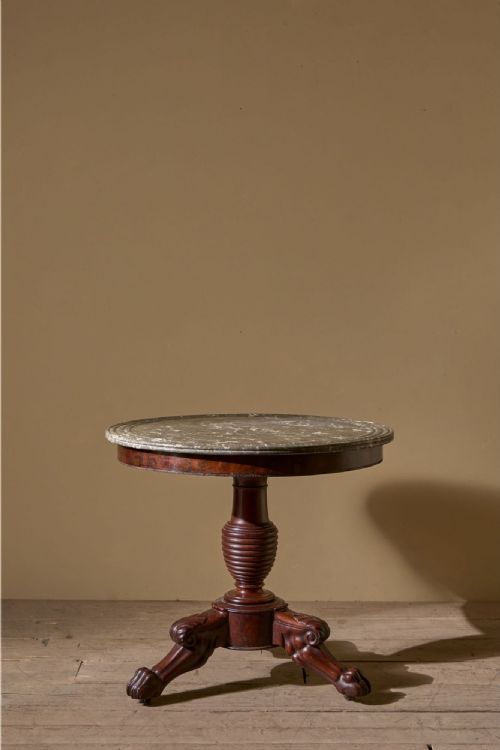


French Empire Pedestal Column
These french empire pedestal column pieces bring architectural presence and classical dignity to a room, offering elevated display surfaces for sculpture and lighting.
French Empire Pedestal Column
When you search for french empire pedestal column, you encounter architectural forms designed to elevate decorative objects, lighting, and sculpture within a room. The selection spans cylindrical stands, display cabinets, and table lamps that draw on classical proportions and monumental design.
The versions you meet most frequently on this page date from the nineteenth century, reflecting the enduring influence of French Empire and neoclassical aesthetics. These include tall marble-topped stands, rotating display columns, and occasional tables shaped by classical column geometry.
Makers of the period utilised distinct furniture types such as guéridon tables and bedside stands alongside structural pedestals to furnish interiors with symmetry and order. Each object translates ancient architectural vocabulary into functional domestic furnishings for the collector.
How they were made
The construction of these pieces relies heavily on dense timbers such as mahogany and burr elm, which provide a stable foundation for decorative display. Cabinetmakers selected these woods for their rich grain patterns, often pairing them with contrasting stone surfaces.
French Empire Pedestal Column Retail Price Guide 2026
Typical asking prices for french empire pedestal column among the pieces listed under this phrase on Sellingantiques today, from the lower quarter to the upper quarter. They describe what is for sale here now, not the wider market.
What varies in quality
Quality in these architectural forms rests upon the precision of the timber selection and the crispness of the applied metal mounts. Pieces displaying finely figured burr elm or rich mahogany show a higher grade of craftsmanship from the workshop.
The integration of marble tops and the weight of the bronze or ormolu mounts distinguish standard production from exceptional work. Finer examples maintain strict proportional balance between the column shaft, the capital, and the heavy base.
The French Empire Pedestal Column Glossary
- Guéridon
- A small French table, typically round and supported by a central pillar or column. These tables often served as stands for lamps or decorative objects.
- Ormolu
- Gilt bronze mounted on furniture or decorative objects, created through an amalgam of mercury and gold applied to bronze. This technique produces a rich metallic lustre characteristic of the period.
- Neoclassical
- A style reviving classical architectural elements from ancient Greece and Rome. It emphasises symmetry, straight lines, and structural columns.
- Burr elm
- Timber taken from the growth excrescences of an elm tree, prized by cabinetmakers for its swirling grain patterns. It adds rich texture to cylindrical pedestals and table surfaces.
- Column lamp
- A lighting fixture shaped like an architectural column, often constructed from bronze, brass, or timber. It adapts classical support structures for interior illumination.
French Empire Pedestal Column: Frequently Asked Questions
What is a french empire pedestal column used for?
These pieces function primarily as elevated platforms for displaying bronze sculptures, busts, or table lamps within a room. Their vertical format draws the eye upward and anchors corners or structural transitions in an interior.
Beyond simple display, certain forms incorporate rotating tops or enclosed cabinet space behind cylindrical doors. This allows them to combine decorative architectural presence with practical storage for small items.
How do I identify french empire style?
The style draws inspiration from classical antiquity, ancient Rome, and Napoleon's campaigns, featuring monumental forms and clean architectural lines. You will notice cylindrical columns, heavy proportions, and restrained use of classical symmetry.
Decoration relies heavily on architectural geometry rather than excessive carving, often enhanced by gilt bronze mounts. Timber surfaces like mahogany and burr elm provide the primary body, contrasted against grey marble tops.
Where should I place a pedestal in a room?
Columns and pedestals perform best in spaces where their architectural silhouette can stand free, such as corners or flanking doorways. Placing a sculpture or lamp on top completes the classical arrangement.
Ensure the surrounding furniture scale matches the height and mass of the column. A rotating display version benefits from placement where access to all sides is possible.
What materials are typical for these pieces?
Nineteenth-century workshops relied on dense hardwoods like mahogany and burr elm for the main structural columns and table bodies. These woods offered stability and attractive grain patterns for cylindrical forms.
Stone and metal form the secondary palette, with grey marble providing durable tops and bronze or ormolu supplying classical mounts. Brass also appears in lighting fixtures and structural details.