

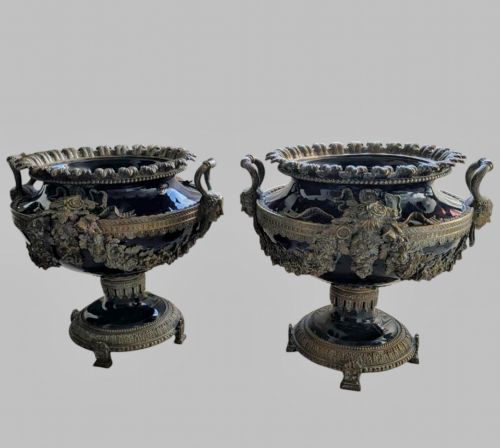
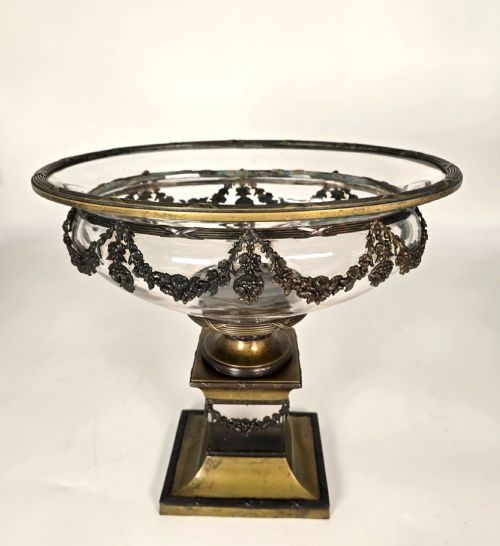
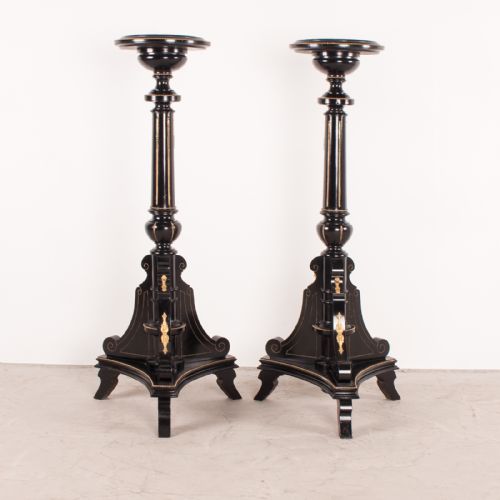


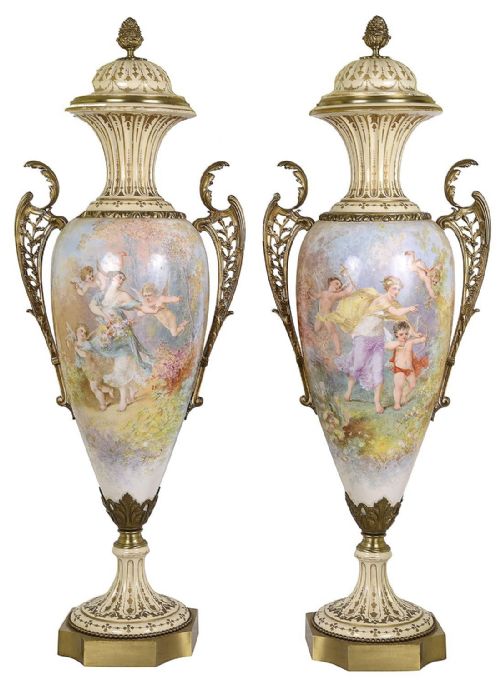

Gilt Bronze Mounted Pedestal
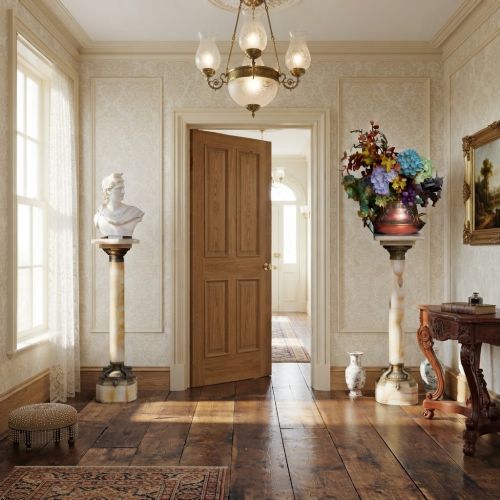
A gilt bronze mounted pedestal brings architectural presence to a room, supporting sculptures and lamps with cast metal enrichments.
Gilt Bronze Mounted Pedestal
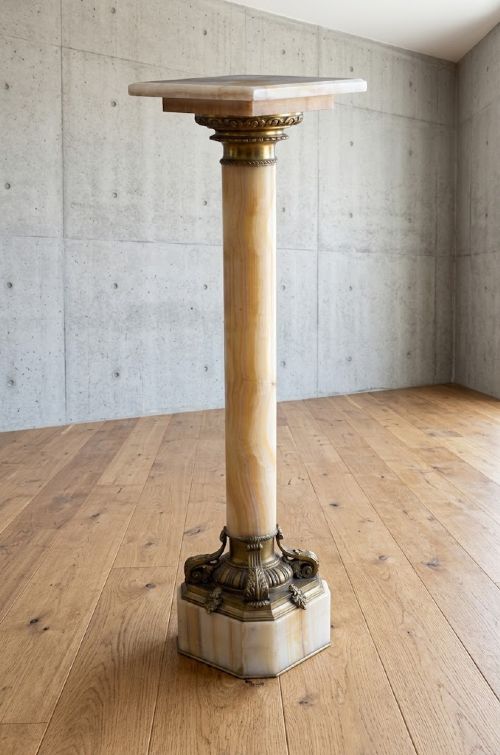
A gilt bronze mounted pedestal takes the form of a tall column, plinth, or stand designed to elevate display objects. These pieces emerge chiefly from nineteenth-century workshops, drawing upon French Empire, Louis XVI, and neoclassical design vocabularies.
The materials combine structural timbers or stone with cast metal mounts. Marble and onyx feature prominently as column shafts and tops, paired with mahogany, kingwood, or ebonised wood.
Beyond standalone columns, the selection includes revolving stands and jardinière supports. These domestic items bring classical proportions and rich surface contrast into nineteenth-century interiors.
Materials and construction methods
Makers construct the core shafts from turned marble, onyx, or dense hardwoods such as mahogany and kingwood. Stone columns often incorporate brass or ormolu collars to secure the sections together.
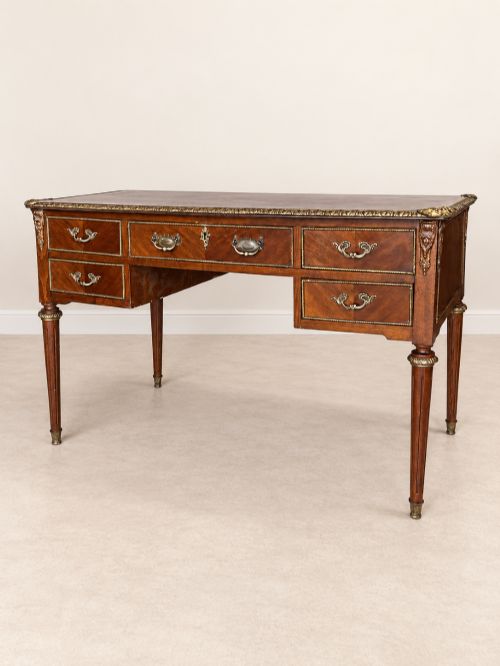
Ormolu and gilt bronze elements are cast and fire-gilded before being applied as mounts, capitals, and bases. Cabinetmakers integrate these metal enrichments alongside marquetry, parquetry, and ebonised finishes.
Some columns rotate silently, letting visitors admire every angle of a bust without walking in circles.
Distinctions in execution and design
Quality rests upon the crispness of the gilt bronze chasing and the selection of the stone or timber. Finer pieces display sharply defined cast ornaments and substantial marble tops with well-finished edges.
The integration of the metal mounts into the wood or stone body indicates the maker's skill. Superior examples demonstrate rigorous symmetry, harmonious wood figures, and heavy, secure mountings.
François Linke·Zwiener Jansen Sucesseur·Jackson and Graham
The Gilt Bronze Mounted Pedestal Glossary
- Ormolu
- A gilded bronze composition used for decorative mounts and furniture trim. This technique produces a bright gold surface finish on cast metal objects.
- Guéridon
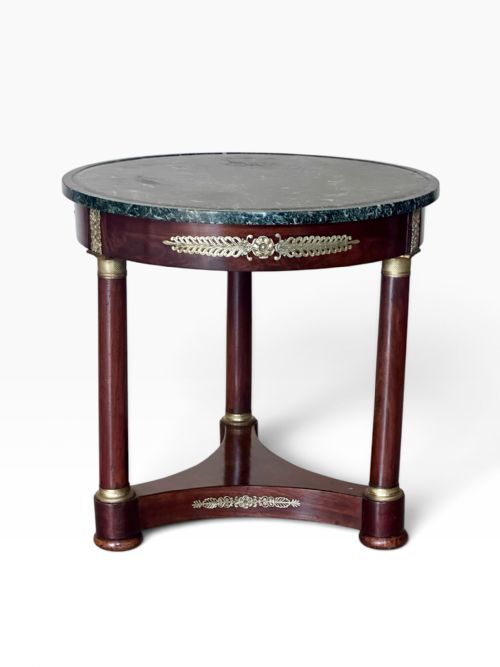
- A small round table supported by a central pillar or figures. Nineteenth-century versions frequently employ marble tops and gilt bronze mounts.
- Marquetry
- Inlaid wood veneers arranged to form decorative patterns on furniture surfaces. Craftsmen utilise contrasting timbers to build complex pictorial or geometric designs.
- Parquetry
- Geometric wood inlay forming repetitive patterns across a tabletop or panel. This technique contrasts timber grains to create structured surface decoration.
Gilt Bronze Mounted Pedestal: Frequently Asked Questions
What goes on a gilt bronze mounted pedestal?
These tall stands suit heavy display items such as marble busts, bronze figures, or large decorative urns. Their primary purpose is elevation, lifting sculptures into the line of sight within a room.
Selecting a piece with a robust marble or wood top ensures stable support for heavy ornaments without risking structural wobble.
How do I clean gilt bronze mounts?
Dust bronze and ormolu mounts gently with a soft dry brush to remove particles. Avoid harsh metal polishes that strip away the original gilding.
Water and chemical solvents can damage surrounding wood or stone surfaces, so keep cleaning agents away from the base materials.
Where should I place a pedestal?
Position columns in corners or against blank walls where vertical lines draw the eye upward. Stable flooring prevents tall stone and wood stands from tipping under heavy loads.
Keep pieces away from direct heat sources to protect timber veneers and prevent the drying out of traditional joinery.
How do I tell nineteenth century styles apart?
Empire and Louis XVI revival pieces favour strict classical symmetry, columns, and crisply chased architectural bronze mounts. Rococo and later nineteenth-century designs introduce asymmetric curves, flowing floral motifs, and rich burr walnut or kingwood veneers.
Examining the construction methods and secondary timbers helps confirm the period when stylistic cues overlap.