
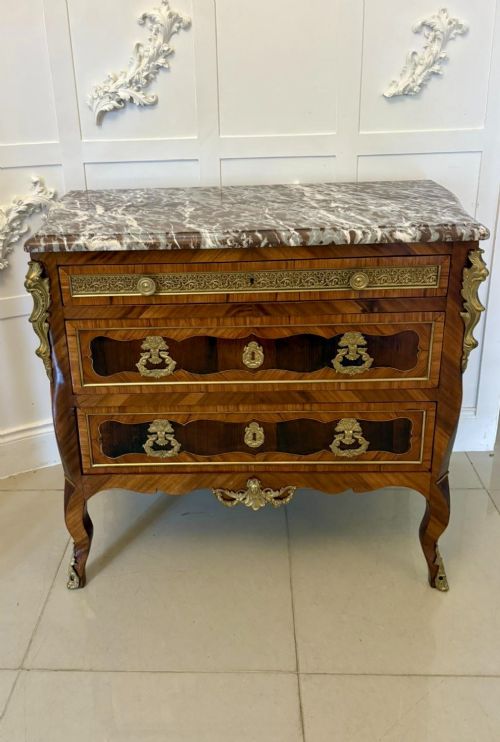
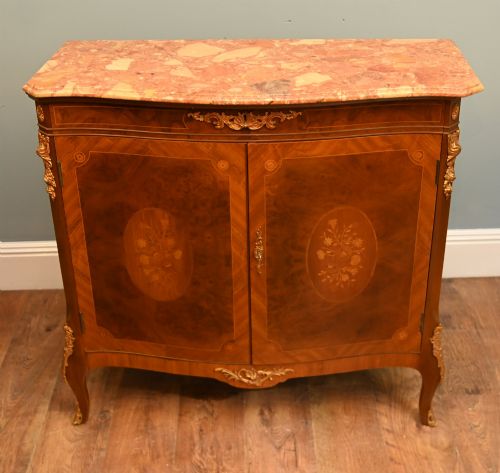
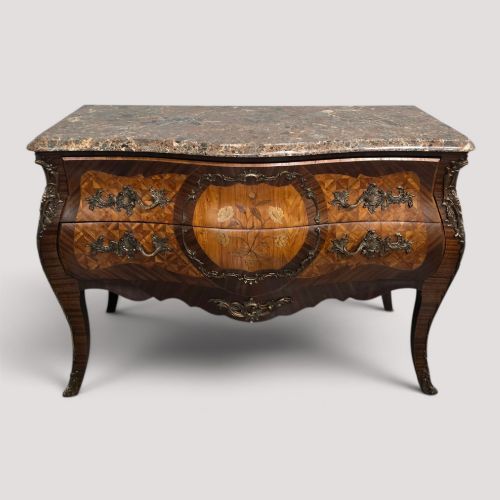
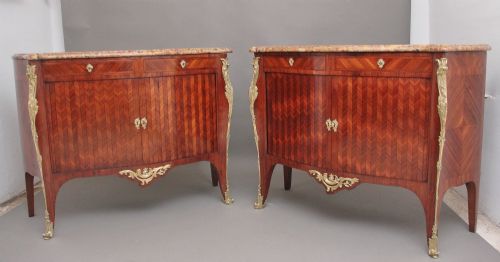

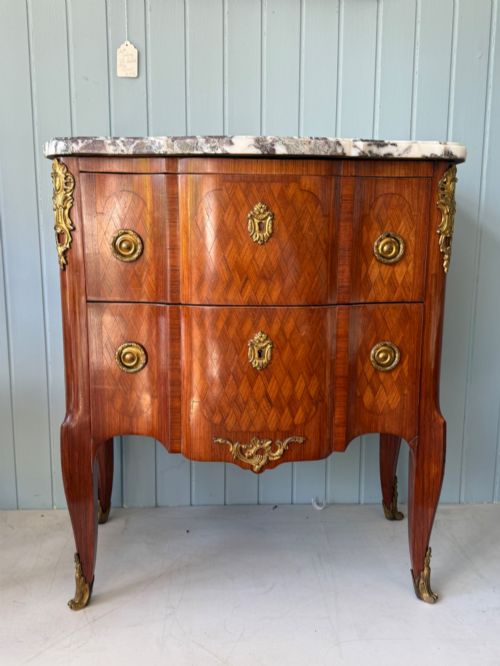
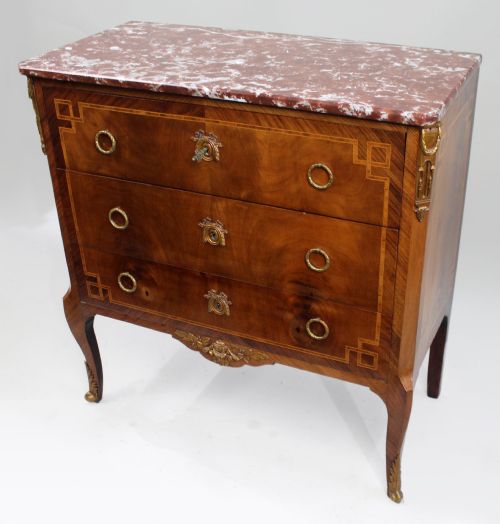
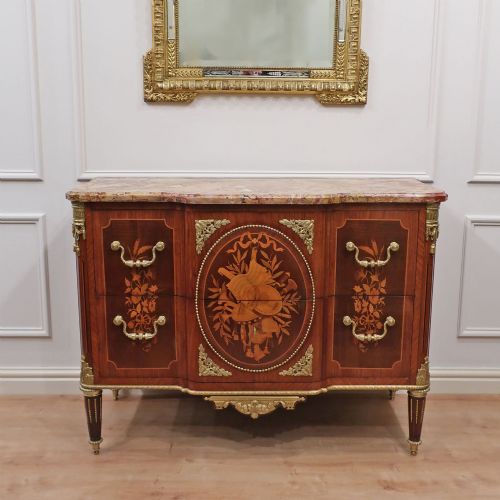
Ormolu French Commode
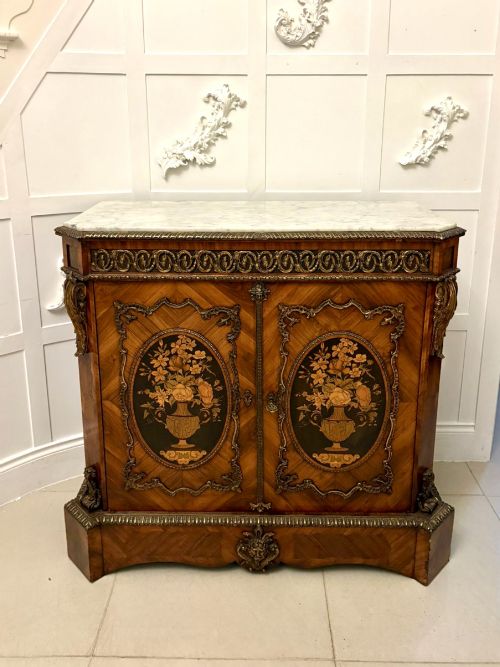
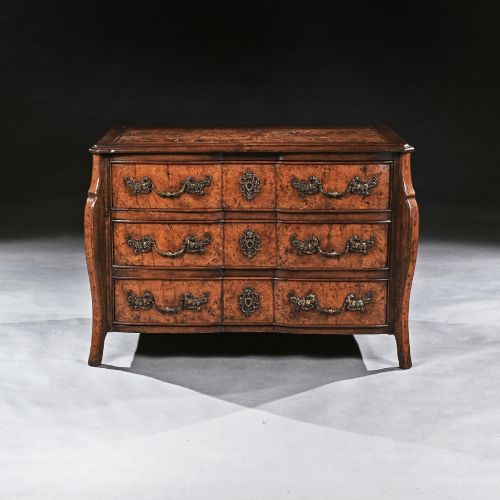
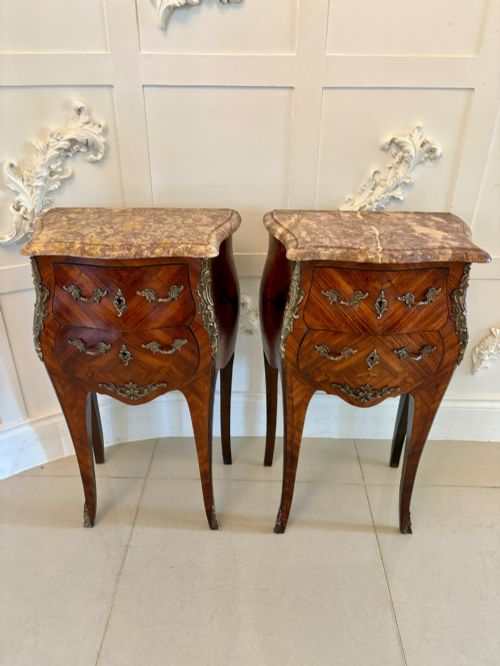
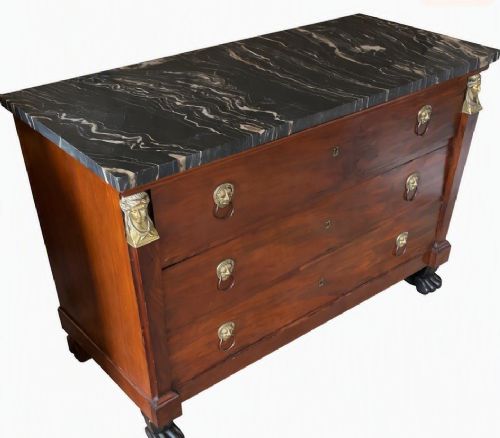
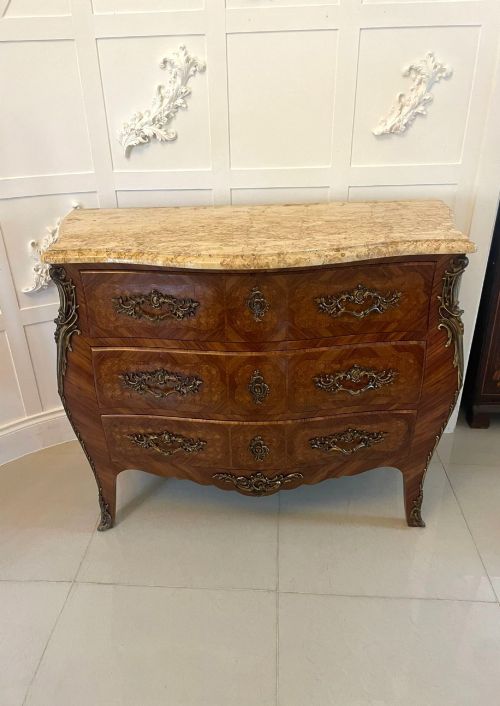
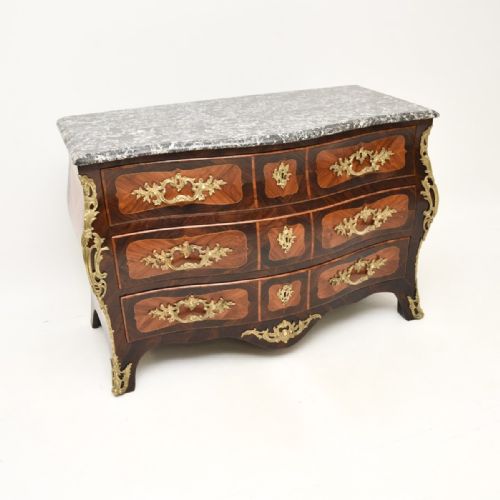
When you encounter an ormolu french commode, you see a grand decorative chest of drawers finished with gilt bronze mounts and marble tops.

Ormolu French Commode
An ormolu french commode is a substantial storage piece, typically functioning as a chest of drawers, side cabinet, or bedside table with French origins.
The pieces listed on this page span from the 18th century through the 19th century and into the early 20th century, encompassing revival styles such as Louis XV and Louis XVI.
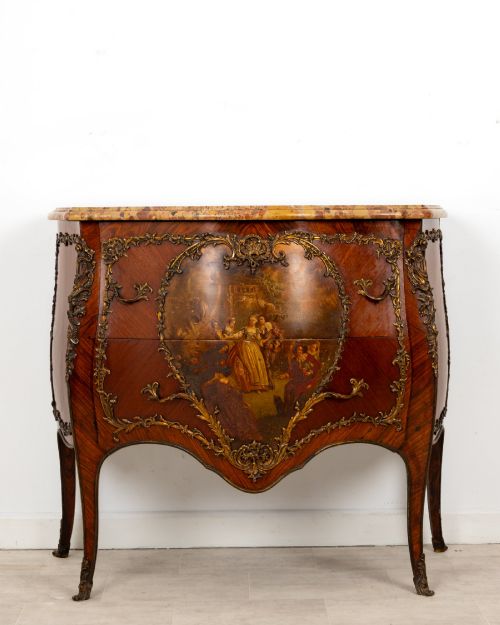
Most examples present serpentine or bombe forms, frequently incorporating marble tops alongside intricate marquetry or parquetry patterns in woods like kingwood, walnut, and mahogany.
Materials and Construction
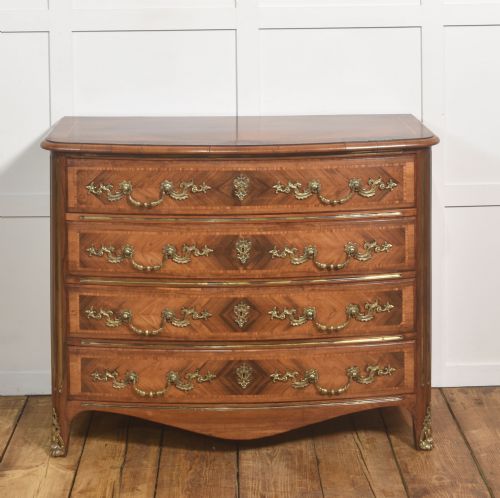
The construction relies on sturdy carcases veneered with exotic timbers such as kingwood, tulipwood, and rosewood, often arranged to display geometric parquetry or floral marquetry designs.
Gilt bronze or ormolu mounts are cast, chased, and applied to the corners, feet, and drawer edges to accentuate the curved contours of the furniture.
Heavy marble slabs, selected in varieties such as rouge or fossilised types, are fitted precisely to the upper surface of the chest.
The inventory spans the 18th, 19th, and early 20th centuries across revival styles.
Assessment of Workmanship
Quality rests heavily on the crispness and depth of the ormolu casting, where finer pieces display hand-chased detail rather than flat, machine-finished surfaces.
The precision of the wood veneers and the complexity of the marquetry inlay distinguish superior examples from simpler production pieces.
Internal construction, including the dovetailing of drawer boxes and the use of matching secondary timbers, indicates the standard of the maker's workshop.
Jacques Bircklé·Henry Dasson·Gillows·E. Kahn·Thomas Hache·Sormani·Hopillart and Leroy
The Ormolu French Commode Glossary
- Ormolu
- Gilded bronze applied as decorative mounts on furniture. The technique involves a mercury-gilding process on bronze to produce a rich golden surface.
- Bombe
- A swelling, bulging outward shape characteristic of certain cabinet forms. This curved profile requires skilled joinery to execute successfully.
- Marquetry
- Decorative veneer patterns formed by fitting together small pieces of various coloured woods. Craftsmen use this technique to create pictorial or floral scenes across the drawer fronts.
- Parquetry
- Geometric wood inlay patterns such as cubes or chequers. It differs from marquetry by adhering to strict repeating alignments rather than pictorial designs.
- Vernis Martin
- A type of simulated Japanese lacquer developed in France. Furniture makers applied multiple translucent varnish layers to achieve a glossy, decorative finish.
Ormolu French Commode: Frequently Asked Questions
What is an ormolu french commode?
An ormolu french commode is a decorative chest of drawers originating from France, distinguished by cast bronze mounts and usually topped with stone.
These pieces served primarily as prominent storage furniture in formal rooms, combining practical drawer space with elaborate artistic display.
How do I identify the period?
Dating relies on stylistic cues such as the asymmetry of Louis XV designs versus the neoclassical straight lines of Louis XVI pieces.
Construction methods and timber choices further clarify whether a piece originates in the eighteenth century or forms part of a later nineteenth-century revival.
Where were these pieces used?
Historically, these items stood in principal reception rooms, parlours, and grand bedrooms of large houses. Their decorative facades and polished marble surfaces meant they functioned as display pedestals as well as storage.
In modern interiors, they fit well in living rooms and halls where their distinct silhouettes add character.
How should I care for marble and ormolu?
Marble surfaces benefit from regular dusting and prompt cleaning of spills to prevent staining on porous stone. Harsh chemical cleaners should be avoided.
Ormolu mounts require gentle dusting with a soft cloth without abrasive polishes that might strip the historic gilt surface.