
French Louis XV Commode
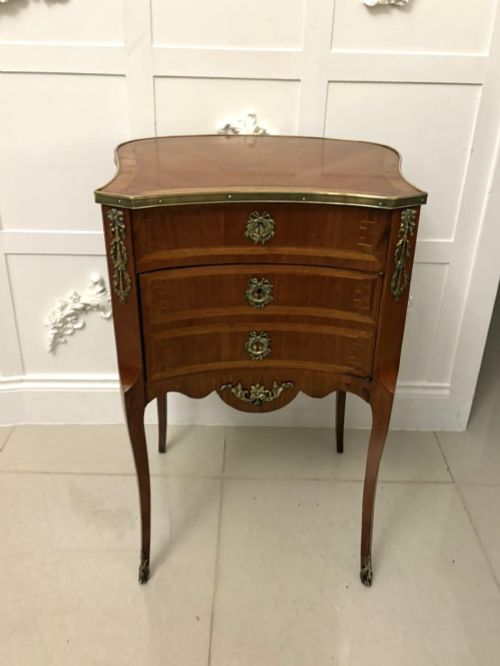
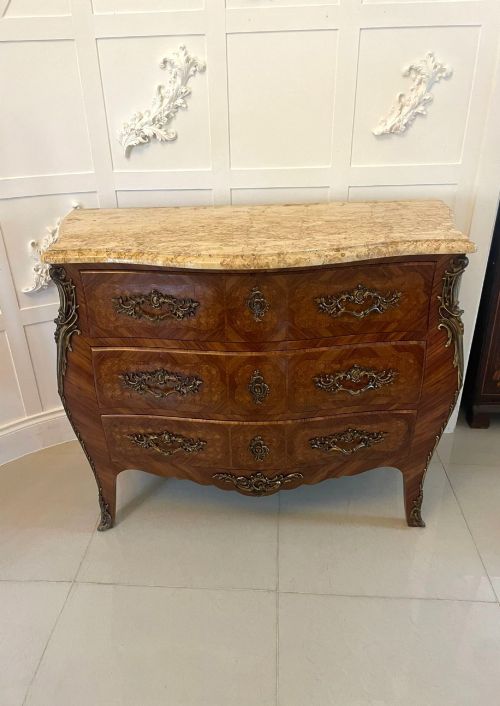
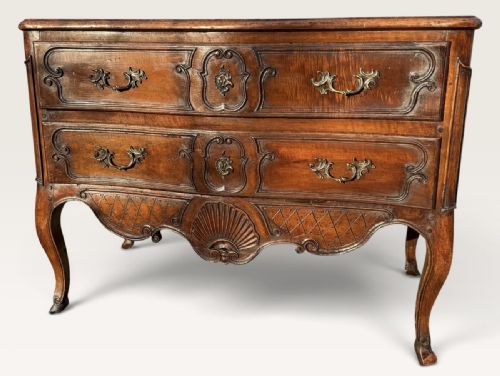
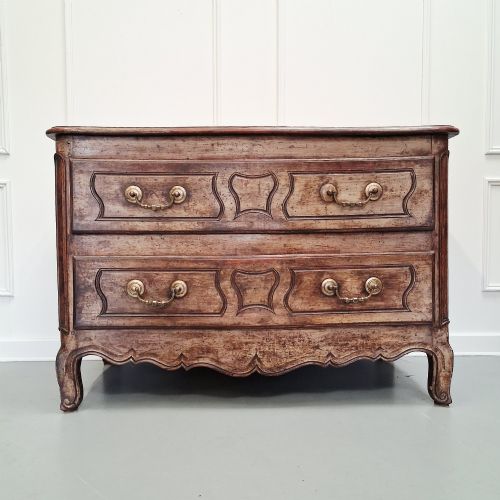
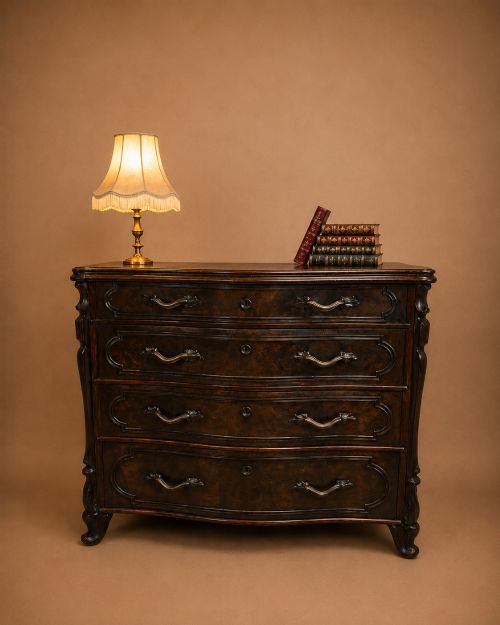
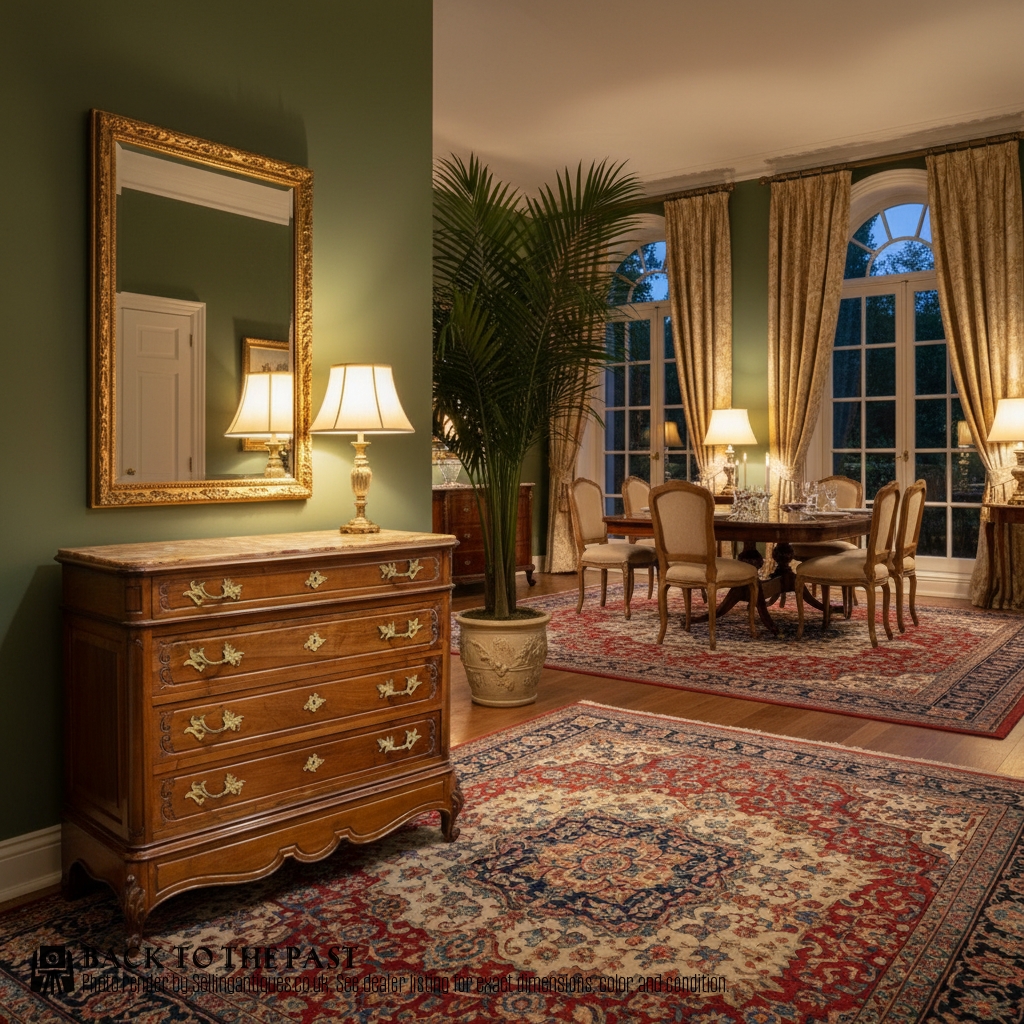
A french louis xv commode brings sculptural curves and rich timber into a room, offering practical storage disguised as art.
French Louis XV Commode
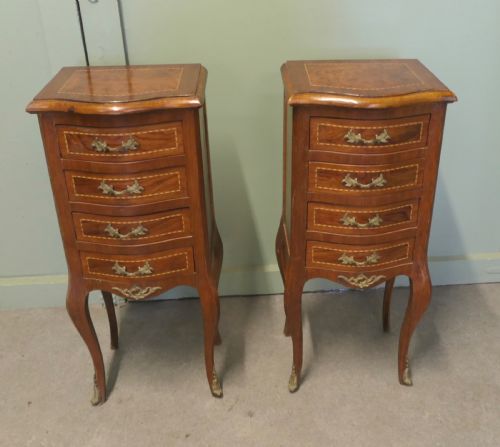
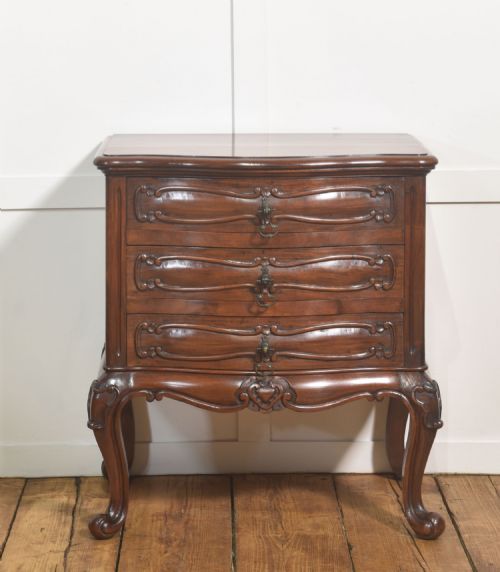
Beyond the standard drawer chests, the selection spans bedside cabinets, compact lamp tables, and side cabinets sharing the same characteristic profile. Carved walnut, bleached oak, and figured kingwood dominate the framework, frequently topped with shaped marble slabs in white or grey tones.
Materials and Construction
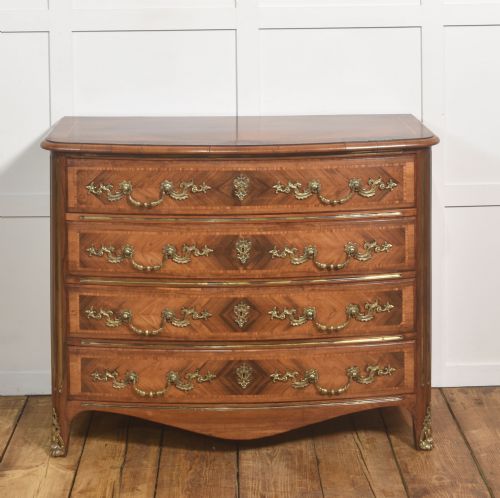
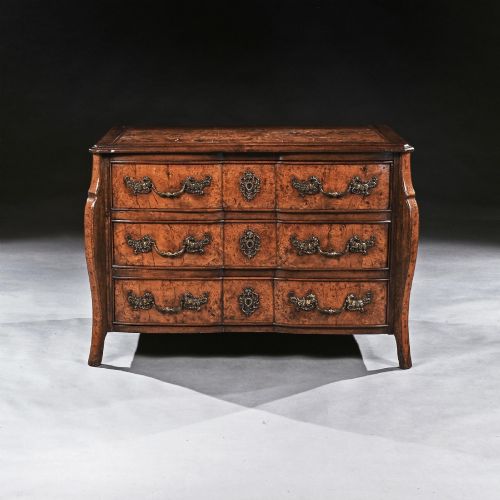
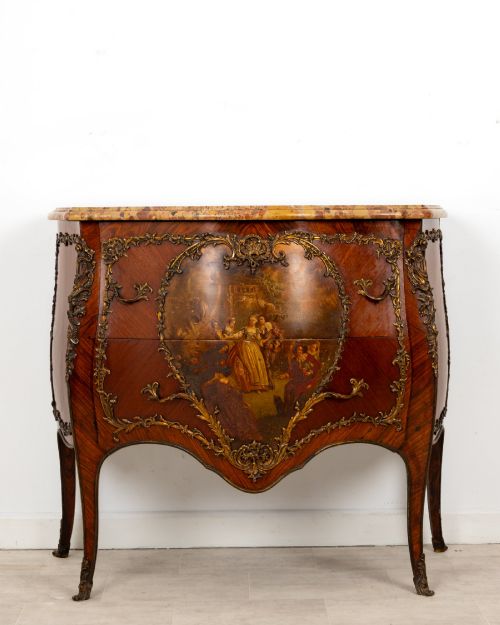
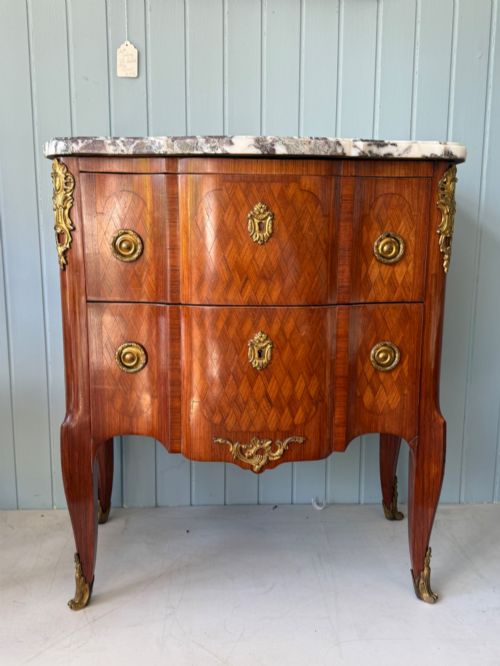
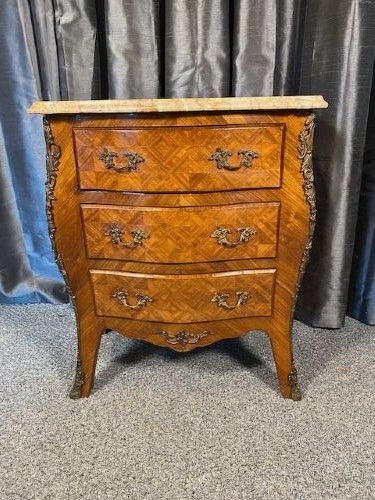
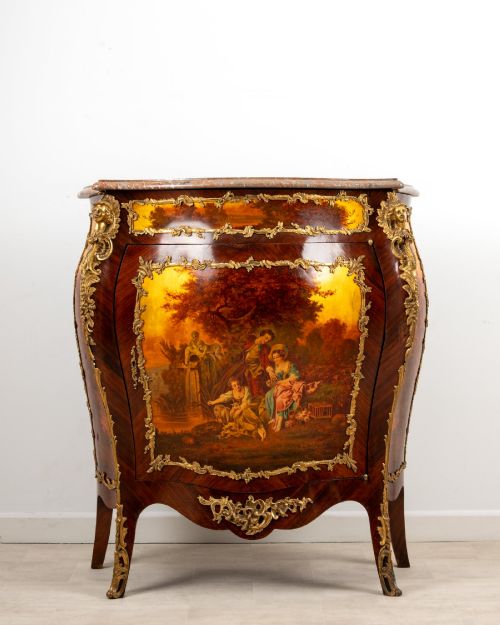
Cabinetmakers constructed carcass frames primarily from solid oak or pine, applying decorative veneers of kingwood, walnut, burr elm, and mahogany in intricate marquetry or geometric parquetry patterns. Surfaces often incorporate painted finishes or varnished lacquer panels in the manner of Vernis Martin.
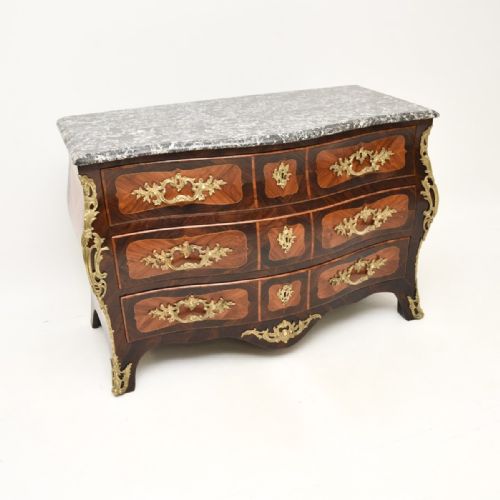
Foundational carpentry relied on traditional dovetail joinery for the drawer construction and mortise and tenon joints for the structural framing. Cast and chased gilt-bronze or ormolu mounts were secured to corners, handles, and aprons to accentuate the flowing contours.
French Louis XV Commode Retail Price Guide 2026
Typical asking prices for french louis xv commode among the pieces listed under this phrase on Sellingantiques today, from the lower quarter to the upper quarter. They describe what is for sale here now, not the wider market.
Several compact bedside models are small enough to hide a surprisingly large collection of midnight reading material.
Judging the Standard
The degree of refinement in the bronze or ormolu mounts separates standard output from exceptional atelier pieces, where chisel work remains sharp and details retain depth. Superior examples display seamless veneer matching across drawer fronts, whereas simpler provincial pieces rely on solid timber construction with minimal ornamentation.
Structural integrity depends upon the original fit of the marble top to the serpentine wooden carcass and the survival of functioning locks with matching keys. Finer items exhibit precise hand-cut dovetails and well-seasoned timbers that have resisted warping along the curved profiles.
Jacques Bircklé·E. Kahn·Sormani
The French Louis XV Commode Glossary
- Bombé
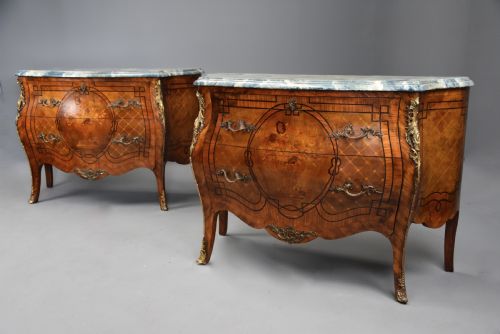
- A swollen, convex shape that curves outward on the front and sides of a cabinet. This bulging profile represents a defining characteristic of mid-eighteenth-century case furniture.
- Ormolu
- Gilded bronze applied as decorative mounts on furniture corners, feet, and drawer pulls. The technique involves treating brass or bronze with a gold-mercury amalgam.
- Marquetry
- The art of applying decorative veneer slices to form pictorial or geometric patterns on furniture surfaces. Craftsmen utilise contrasting timbers like kingwood, walnut, and tulipwood.
- Parquetry
- Geometric wood mosaic work formed by small veneer pieces arranged in repeating grid or diagonal patterns. It decorates the flat surfaces of many case pieces.
- Serpentine
- A furniture front or top shaped with a central convex curve flanked by two concave curves. The flowing wave-like motion softens the overall silhouette.
French Louis XV Commode: Frequently Asked Questions
How do I spot a reproduction?
Examine the interior timber linings, backboards, and drawer construction for signs of age, tool marks, and wood shrinkage. Older carcasses utilise hand-sawn boards and pegged joints rather than modern mechanical fixings.
Check the quality of the gilt-bronze mounts and the consistency of the veneer fading. Later nineteenth-century revivals and twentieth-century interpretations often employ machine casting and standardised veneer patterns.
Can I use one as a bedside table?
Compact versions, often catalogued as bedside cabinets or petit commodes, fit well beside low or medium bed frames. Their enclosed drawer space provides concealed bedside storage.
Ensure you measure the height of the marble top relative to the mattress level. Many eighteenth-century and revival pieces stand lower than standard modern nightstands.
How do I care for the marble top?
Clean the stone surface using a soft cloth dampened with warm water and mild, pH-neutral soap. Avoid acidic cleaners, vinegar, or citrus products that etch polished marble.
Place protective coasters under glasses and bottles to prevent liquid rings from penetrating porous stone. Professional sealing helps guard against staining over time.
What is the difference between provincial and court styles?
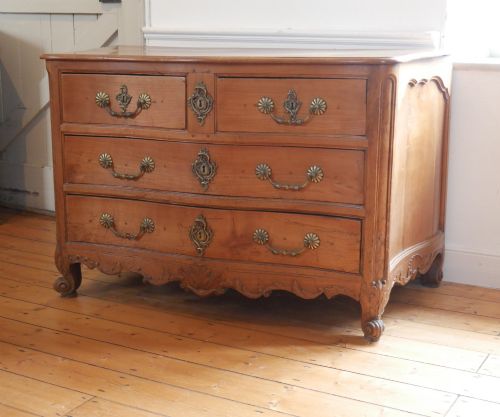
Provincial pieces originate from regional French workshops outside Paris, favouring local woods like chestnut, cherry, and solid walnut with simpler, sturdier carvings. They reflect practical domestic utility rather than courtly extravagance.
Court-style commodes produced in major urban centres showcase exotic imported veneers, elaborate marquetry, and heavily chased ormolu mounts. These metropolitan items prioritize decorative display and technical virtuosity.