






Ormolu Coffee Table
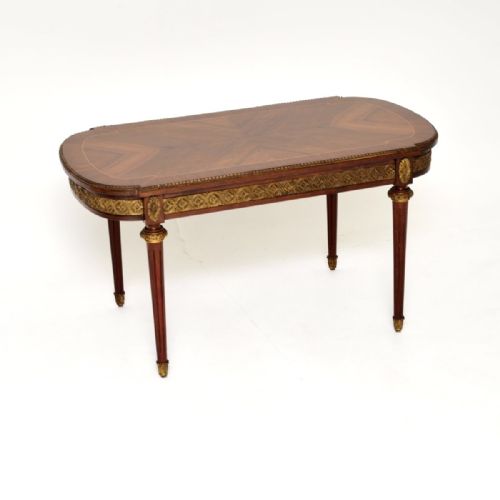
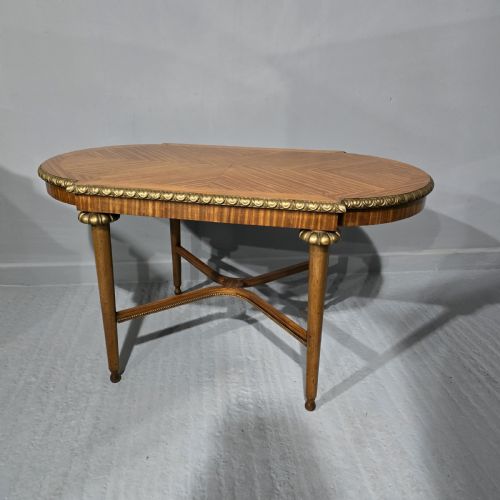
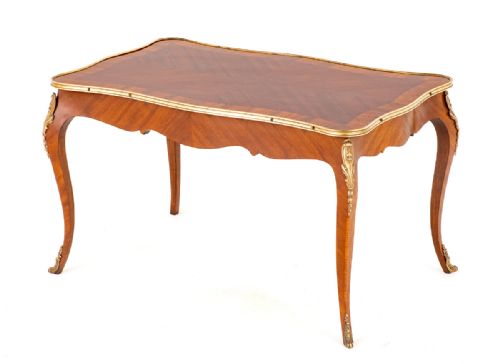
These ormolu coffee table pieces bring French revival elegance and gilded brass mounts to a room.
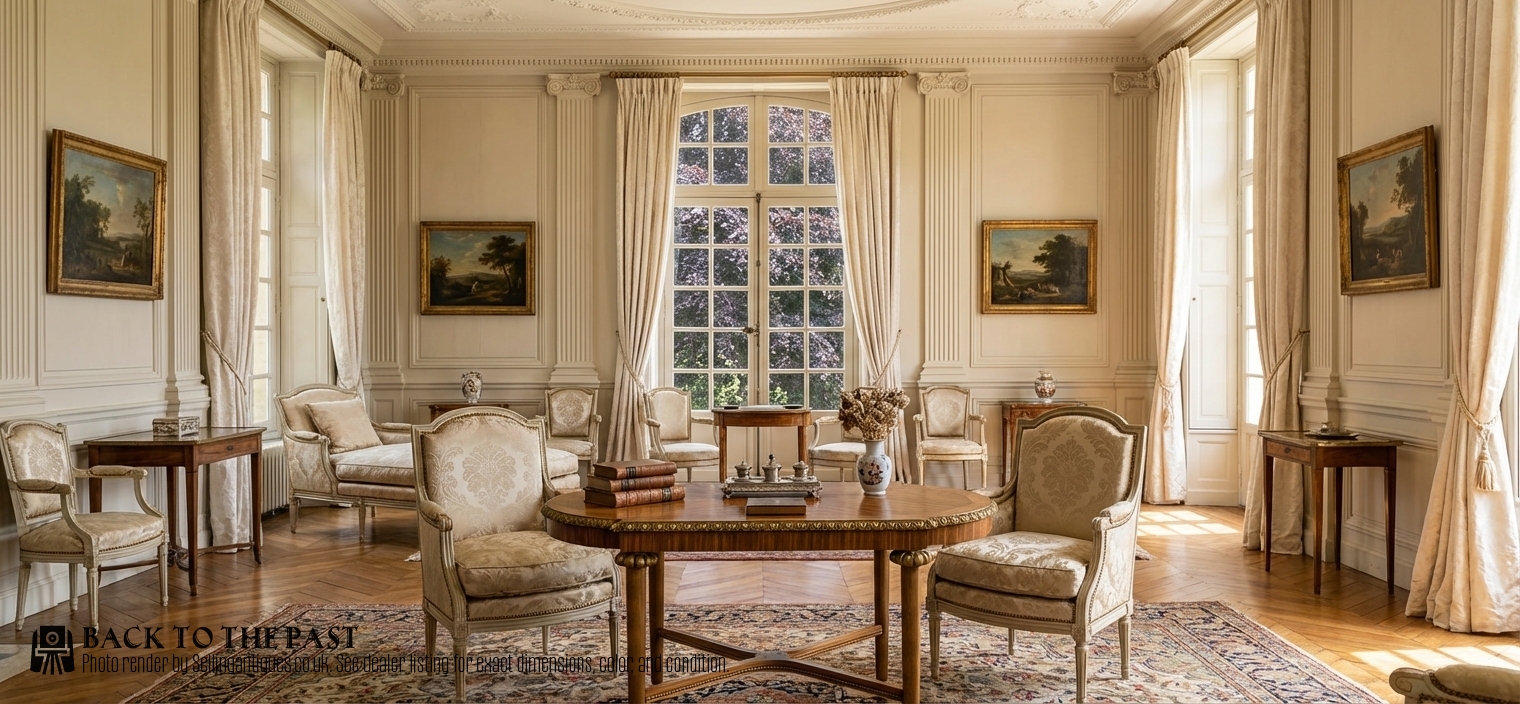
Ormolu Coffee Table
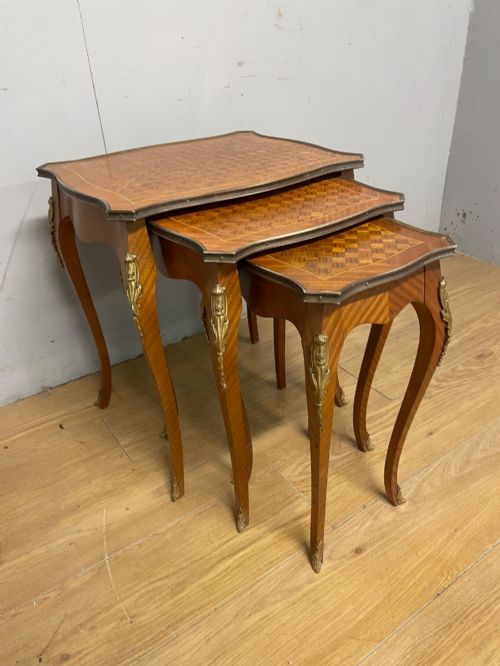
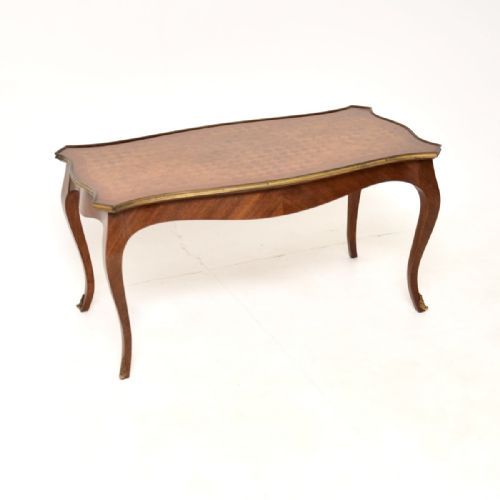
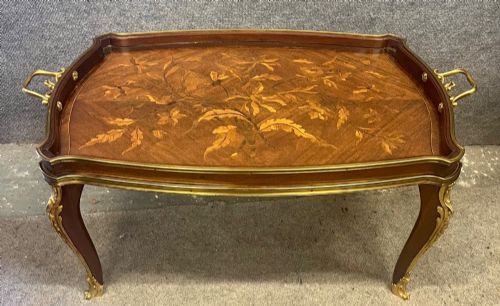
When you search for an ormolu coffee table, you are looking at French revival furniture adapted from earlier centre and occasional tables. The pieces on this page span the nineteenth century through the early twentieth century, taking forms such as tray top, two tier, and oval centre tables.
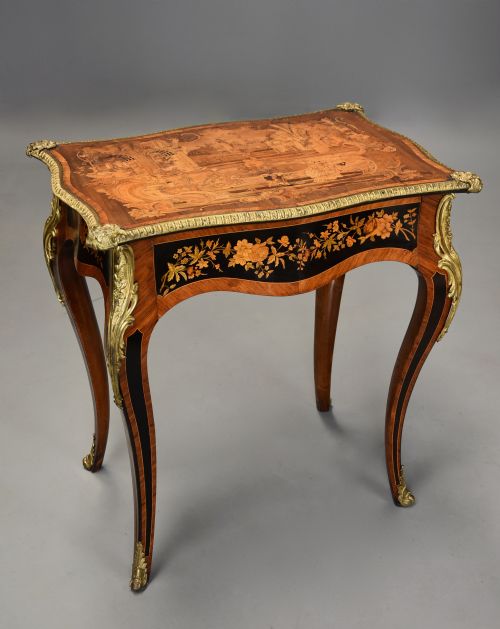
You are most likely to meet walnut, kingwood, and burr walnut frameworks decorated with parquetry or marquetry. Styles lean heavily towards Louis XV and Louis XVI revivals, alongside French chateau and Aesthetic Movement pieces.
Makers and workshops drew inspiration from classic cabinet-making traditions, resulting in functional surfaces framed by decorative metalwork. These tables function today as low centre or coffee tables while retaining their nineteenth-century occasional table proportions.
How they were made
Makers built the foundational frames using hardwoods like walnut, mahogany, and satinwood, often applying veneers of kingwood and burr walnut. Surfaces frequently feature intricate parquetry or marquetry patterns set into the timber.
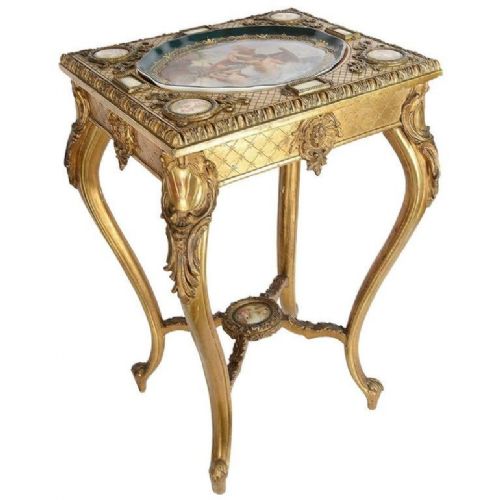
The characteristic ormolu mounts, cast in brass or gilt metal, decorate the corners, aprons, and legs. Porcelain plaques and marble tops occasionally integrate into the design, secured within the timber framework.
Listings feature nineteenth-century and early twentieth-century dates, spanning the 1860s through 1930.
What varies in quality
The standard of timber inlay and veneer matching distinguishes the finer examples from simpler production. Crispness in the casting and chasing of the brass ormolu mounts separates standard cabinetwork from exceptional pieces.
The integration of materials, such as the precise fit of porcelain plaques and marble inserts into the wooden tops, marks the level of craftsmanship involved.
Zwiener
The Ormolu Coffee Table Glossary
- Ormolu
- Gilded bronze or brass mounts applied to furniture. This decorative technique adds metallic highlights to timber surfaces.
- Marquetry
- Veneers arranged in pictorial or floral patterns. Craftsmen piece together different coloured woods to create decorative scenes.
- Parquetry
- Geometric patterns formed of fitted wood veneers. Squares, diamonds, and cubes repeat across the table top.
- Galleried
- A raised metal or wooden rim around a table edge. This feature prevents items on tray top tables from sliding off.
Ormolu Coffee Table: Frequently Asked Questions
What is an ormolu coffee table?
These pieces are typically nineteenth-century or early twentieth-century French occasional and centre tables adapted for modern use. They combine timber frames with cast brass or ormolu mounts.
Many originate from revival styles such as Louis XV and Louis XVI, featuring inlaid parquetry or marquetry surfaces.
How were these tables used originally?
Earlier versions served as centre tables, occasional tables, or games tables in formal French interiors. They held decorative objects, porcelain, or served rooms where tea was taken.
Today, their lower heights make them suitable to function as coffee tables in living spaces.
How do I care for timber and ormolu?
Protect the polished wooden surfaces from direct sunlight and excessive moisture. Dust the timber and ormolu mounts regularly with a soft, dry cloth.
Avoid abrasive cleaners or polishes that might damage the gilt finish on the brass mounts.
How can I tell the period apart?
Nineteenth-century pieces often reflect specific revival movements like Rococo or Aesthetic styles. Materials such as kingwood, burr walnut, and Vienna porcelain help indicate the era of production.
Construction methods and the weight of the cast ormolu mounts also point towards nineteenth and early twentieth-century workshop practices.