



Ormolu Chiming Clock
An ormolu chiming clock brings together gilded bronze and audible timekeeping, offering the traditional character of nineteenth-century mantel and bracket pieces.
Ormolu Chiming Clock
An ormolu chiming clock combines heavy fire-gilded bronze mounts with mechanical striking movements designed to mark the hours and quarters. When you search for an ormolu chiming clock, you encounter primarily nineteenth-century French mantel clocks alongside English and German bracket designs.
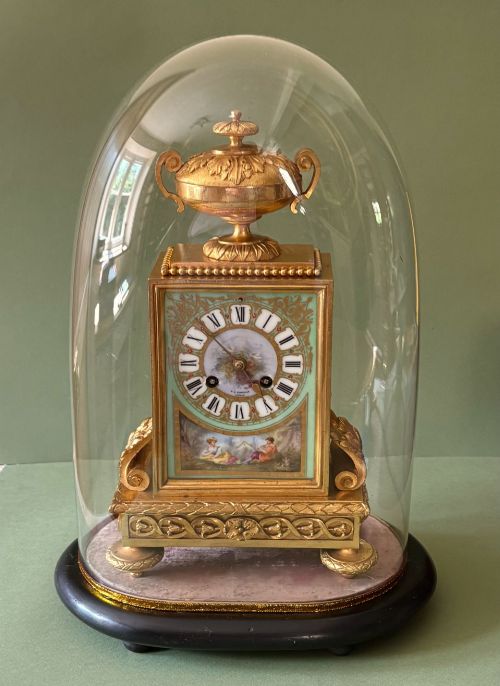
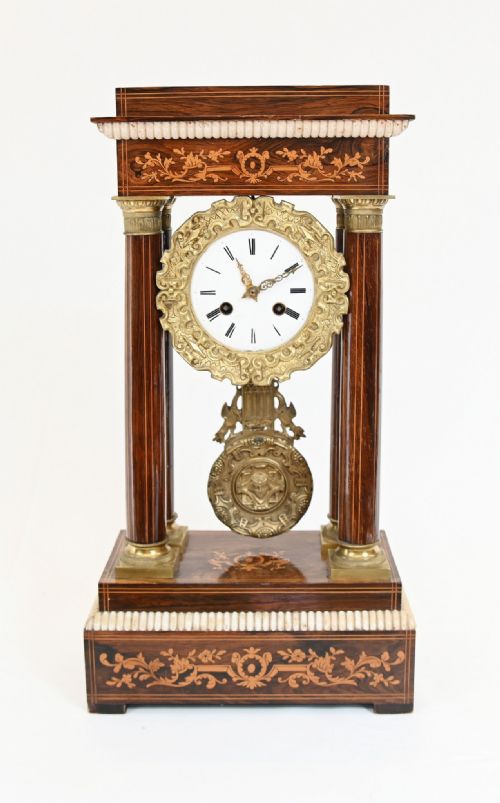
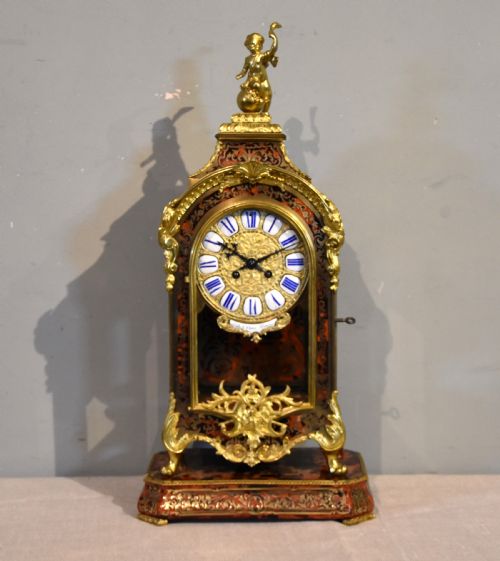
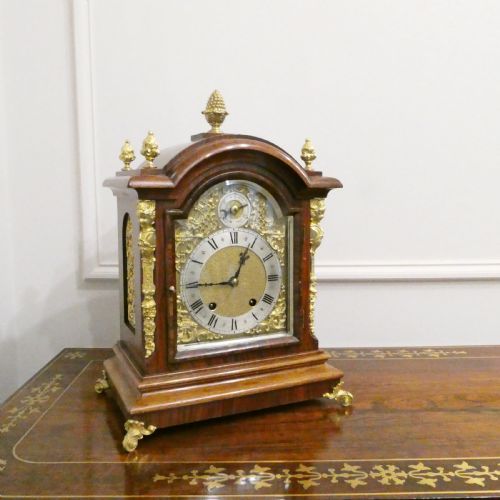
The forms span ornate French Louis XV and XVI revival cases, portico designs, and ebonised bracket clocks equipped with musical or ting-tang movements. Most examples on this page date from the Victorian era and the decades spanning 1860 to 1890, housed in glass, porcelain, tortoiseshell, or wood.
Mantel clocks and bracket clocks form the core of this selection, varying from simple gilt-bronze cases to elaborate pieces mounted with Sevres porcelain panels. These objects served both practical timekeeping and decorative roles in nineteenth-century interiors.
Materials and construction
Makers cast the decorative mounts in bronze before applying a mercury-gilding technique to produce the distinctive ormolu surface. This gilded bronze is frequently paired with wooden cases in mahogany, walnut, or ebonised finishes, often inlaid with tortoiseshell or brass.
Enamel dials, sometimes featuring individual cartouches for numerals, sit behind glass bezels alongside brass and gilt-bronze mechanical movements. Porcelain plaques, notably from Sevres, and white marble are integrated into the cases of French revival pieces.
Ormolu Chiming Clock Retail Price Guide 2026
Typical asking prices for ormolu chiming clock among the pieces listed under this phrase on Sellingantiques today, from the lower quarter to the upper quarter. They describe what is for sale here now, not the wider market.
Listings feature mantel and bracket clocks spanning the eighteenth to the nineteenth century, utilising materials like ormolu, tortoiseshell, porcelain, and ebonised wood.
Qualities that set examples apart
The crispness of the bronze chasing dictates the visual success of the ormolu, separating sharp hand-finished surface detail from soft or worn casting. Movement quality is evident in the weight of the plates, the complexity of the chiming train, and the reputation of the maker.
The integration of materials such as porcelain panels, tortoiseshell inlay, and fire-gilded mounts demonstrates the ambition of the original workshop. Balance in the proportions of the case and the preservation of the original gilding distinguish superior examples from standard production.
Japy Freres·Schneckenburger·Francis Perigal·Achille Brocot and Delettrez·Barraud and Lunds·Lenzkirch
The Ormolu Chiming Clock Glossary
- Ormolu
- Gilt bronze produced by applying a mercury and gold amalgam to cast bronze and heating it until the mercury vaporised. This historic technique creates a rich, matte golden surface.
- Bracket clock
- A portable spring-driven clock originally designed to sit on a wall bracket. Many later examples stood directly on furniture surfaces while retaining the name.
- Boulle
- A form of marquetry employing brass and tortoiseshell inlaid in counterpoint patterns. Named after the French cabinetmaker Andre-Charles Boulle.
- Portico clock
- A mantel clock featuring a architectural case supported by columns. This style was popular during the Charles X and early nineteenth-century periods.
- Ting-tang
- A two-hammer striking mechanism that sounds two different notes on the quarters or hours. It provides a distinct chime without a full melody.
- Sevres
- Porcelain produced by the French royal manufactory, frequently used for painted dial surrounds and decorative panels on nineteenth-century mantel clocks.
Ormolu Chiming Clock: Frequently Asked Questions
What is an ormolu chiming clock?
An ormolu chiming clock is a timekeeper housed in a case decorated with fire-gilded bronze and equipped with a mechanical movement that sounds the hours or quarters.
These pieces rely on spring or weight-driven movements and feature cases made from materials including brass, wood, porcelain, and marble.
How do you wind an antique clock?
Winding involves inserting a matching key into the winding arbors on the dial and turning gently until resistance stops the movement. Care must be taken not to overwind the springs.
Most nineteenth-century spring-driven movements require winding every eight days, while fusee bracket clocks may need weekly attention depending on the train.
Where were these clocks made?
The majority of these clocks originate from workshops in France, particularly Paris, as well as England and Germany during the nineteenth century.
French makers specialised in gilt-bronze revival styles, while English and German makers focused on bracket clocks with complex musical or chiming movements.
How do I identify the period?
Period identification relies on a combination of case style, movement signatures, dial construction, and materials such as porcelain or ebonised wood.
Nineteenth-century pieces often reflect earlier French royal aesthetics like Louis XV and Louis XVI, combined with nineteenth-century mechanical manufacturing standards.
How should I care for a chiming clock?
Keep the clock away from direct sunlight, heat sources, and damp environments to protect the wood case, dial enamel, and metal gilding.
Professional servicing every few years ensures the mechanical gear trains remain clean and properly lubricated.