
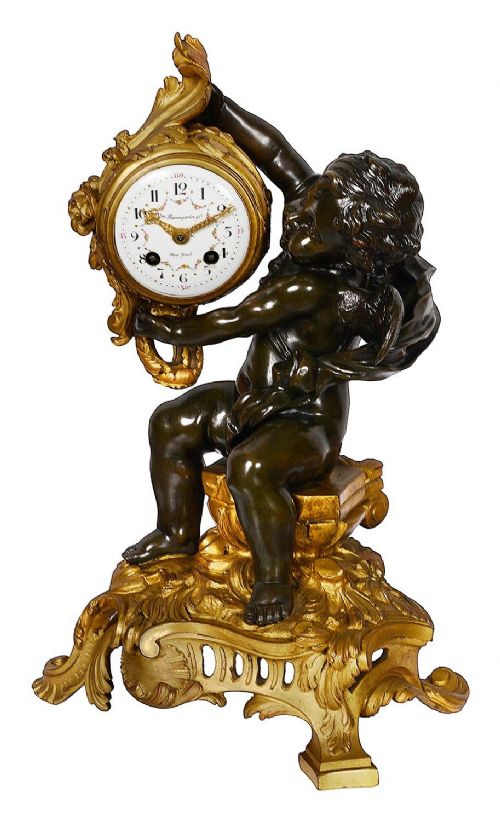


Cherub Gilt Table Clock
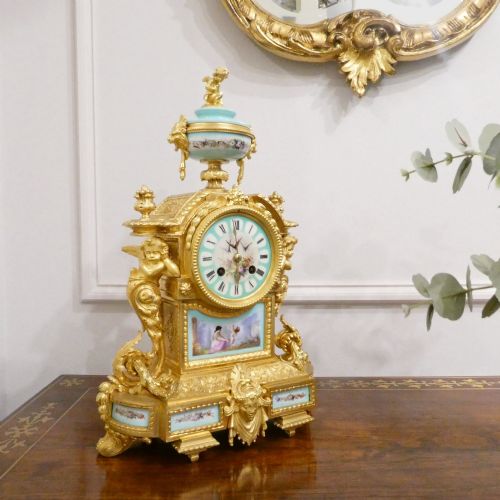
A cherub gilt table clock brings together classical figures and gilt metalwork, offering both timekeeping and sculptural presence.
Cherub Gilt Table Clock
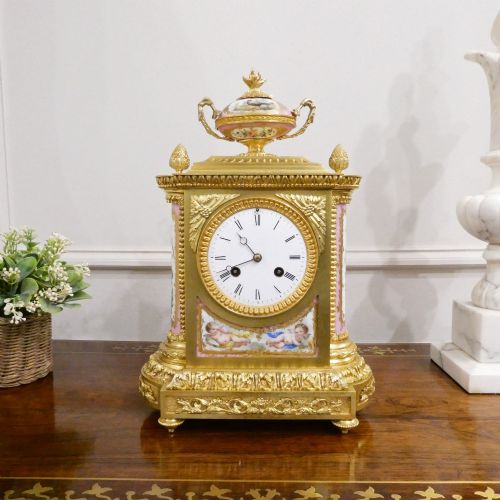
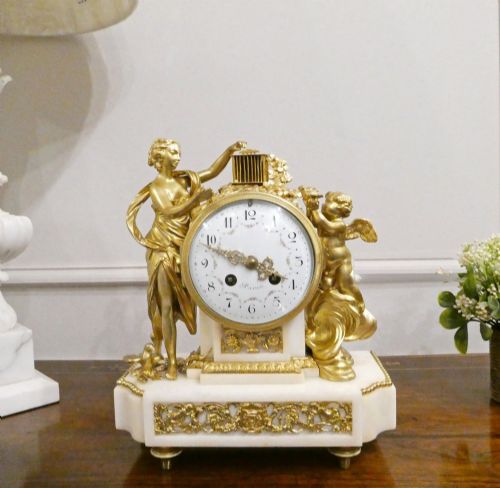
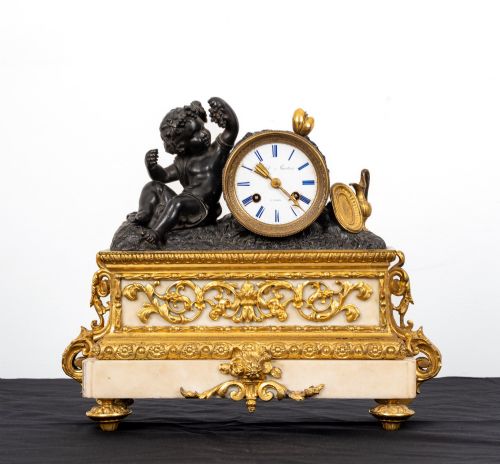
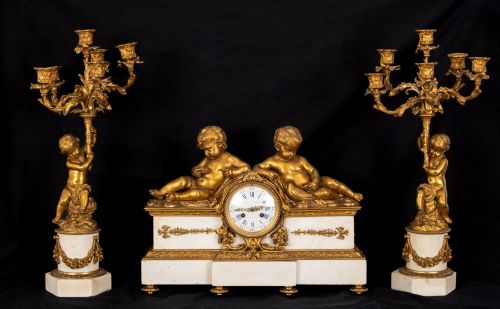
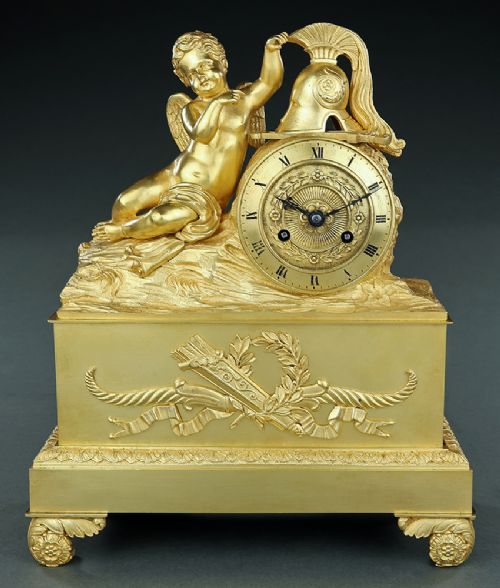
A cherub gilt table clock is a timepiece set within a gilt metal, bronze, or ormolu case, frequently accompanied by porcelain panels or marble bases. The selections span the nineteenth century, including Victorian examples and Regency pieces, taking the form of mantel clocks, desk clocks, and clock garnitures.
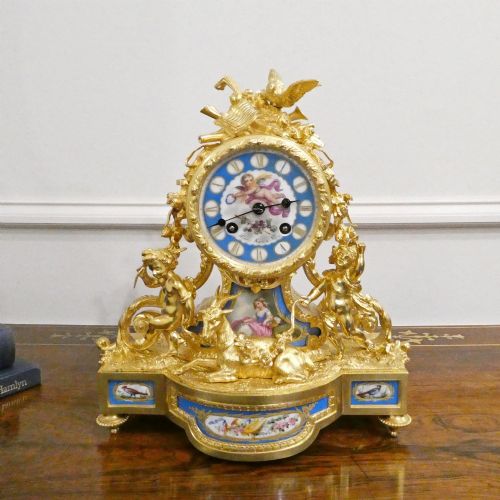
French makers dominate the selection, working in styles such as French Rococo Revival, French Empire, Louis XVI Revival, and French Classical. Buyers will frequently encounter mantel clocks and garnitures featuring cast figures of putti or cherubs alongside enamel dials.
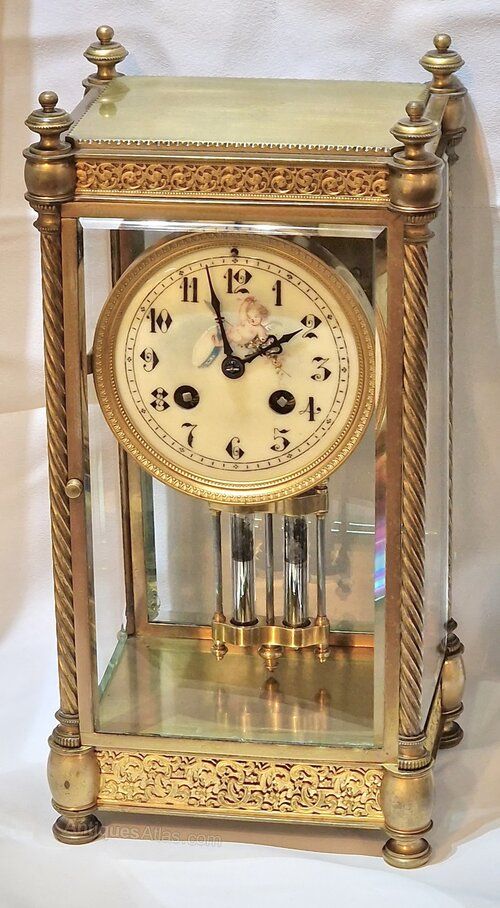
The objects serve as decorative centerpieces as well as functional timekeepers. Their designs range from elaborate ormolu and white marble figural works to smaller drum head clocks and four glass mantel clocks.
Materials and construction
Cases combine cast ormolu, gilt bronze, and brass, often paired with contrasting white marble bases or champlevé enamel details. Figures of cherubs and putti are cast in bronze or brass before receiving a gilt or ormolu finish.
Dials employ hand-painted enamel or porcelain, sometimes signed by the maker and protected beneath glass. Movements are mechanical, housing eight-day striking mechanisms produced by prominent nineteenth-century French and English clockmakers.
Cupid occasionally manages to conquer time itself, presiding over dial faces where love triumphs on the brass bezels.
Standards of craftsmanship
Quality reveals itself in the crispness of the bronze and ormolu casting, where finer pieces display sharp chased details on the cherubs and foliage rather than softened edges. The weight and solidity of the materials, from the marble plinths to the cast mounts, separate substantial works from lighter productions.
The integration of the porcelain panels, hand-painted dials, and the precision of the movement contribute to the standing of a piece. Makers who supplied signed movements and coordinated garniture sets represent the higher tier of nineteenth-century production.
Jean-Baptiste Delettrez·Henry Marc·Henry Dasson·Le Roy, Paris·Japy Frères·Leon Message·Jollet et Cie·Samuel Marti·Achille Brocot·Le Roy and Fils·Siffel and Cartier
The Cherub Gilt Table Clock Glossary
- Ormolu
- A finely ground high-carat gold amalgam applied to bronze or brass objects through a mercury-gilding process. This technique creates a rich, matte yellow-gold surface characteristic of fine nineteenth-century French clock cases.
- Garniture
- A set consisting of a central clock flanked by matching decorative objects such as urns or vases. These matched suites are designed to be displayed together on a mantelpiece.
- Puttu
- A plump, naked child figure, often winged, used extensively in classical and revival decorative arts. They appear frequently on these clock cases as sculptural attendants.
- Champlevé
- An enamelling technique where troughs or cells are hollowed out of a metal surface and filled with vitreous enamel powder before firing. The resulting design sits flush with the surrounding metal dividers.
- Drum head clock
- A timepiece featuring a circular movement housing shaped like a drum, mounted upon a decorative plinth or base. This form often incorporates marble and gilt bronze elements.
Cherub Gilt Table Clock: Frequently Asked Questions
How do I wind a cherub gilt table clock?
Use the appropriate winding key to turn the arbors located on the enamel dial, taking care not to over-wind the mainspring.
Consult the movement type before adjusting the hands, moving them only in the correct direction as specified by the mechanism.
What is a clock garniture set?
A clock garniture pairs a central mantel clock with matching side ornaments, such as decorative vases or urns, designed for a unified display.
These matched sets share identical materials, styles, and gilt bronze or marble treatments.
How do I distinguish Louis XVI style from Rococo?
Louis XVI style pieces display symmetry, straight architectural lines, and classical motifs like urns and swags alongside the cherubs. Rococo Revival works favour asymmetrical scrolls, flowing organic forms, and exuberant ornamentation.
Both styles utilise gilt bronze and ormolu, but their structural geometry differs markedly.
Are these clocks suitable for daily use?
Many nineteenth-century mechanical movements remain fully functional and keep accurate time when properly serviced and set on a stable surface.
They require professional cleaning and oiling every few years to maintain the gear trains and springs.