
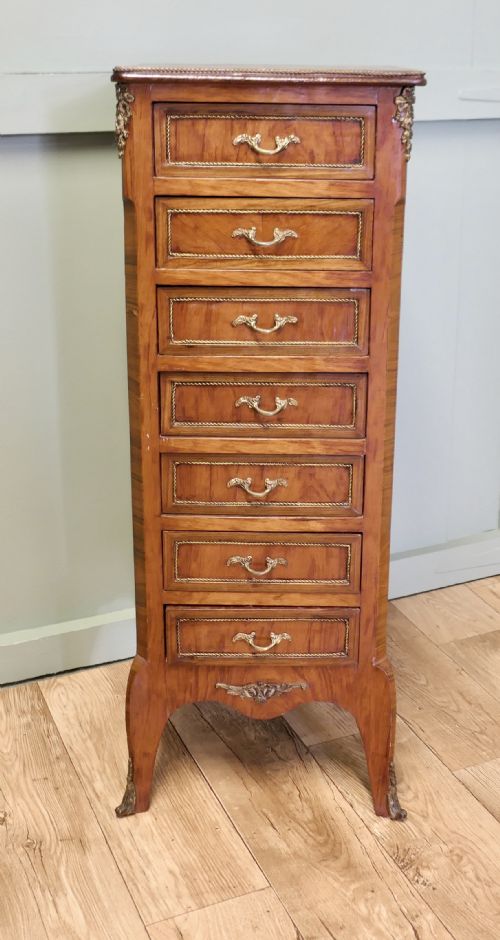
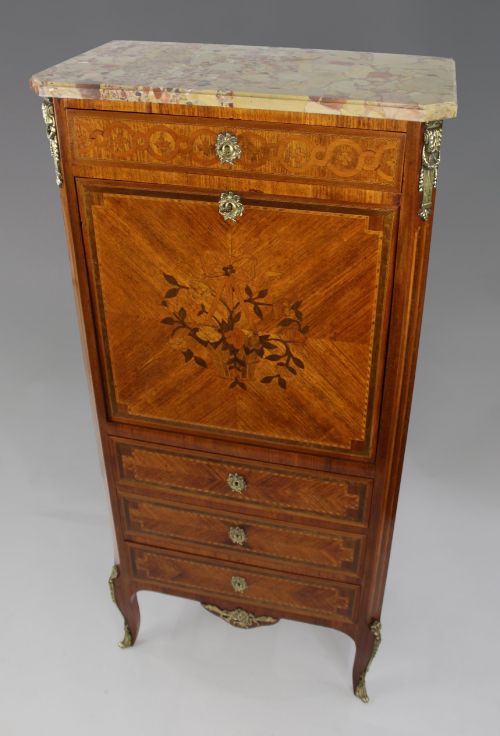
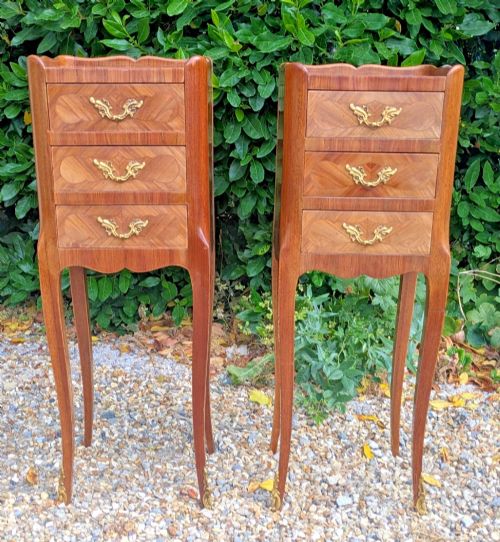
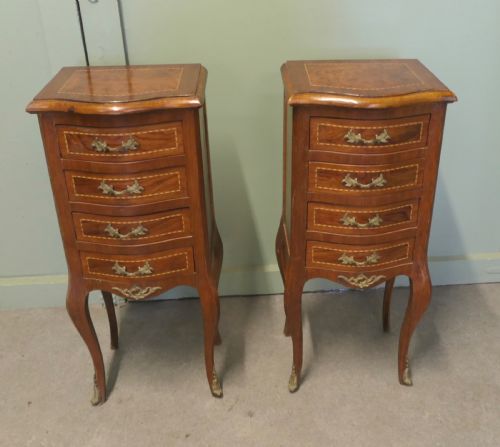

Ormolu Cabriole Leg Cabinet
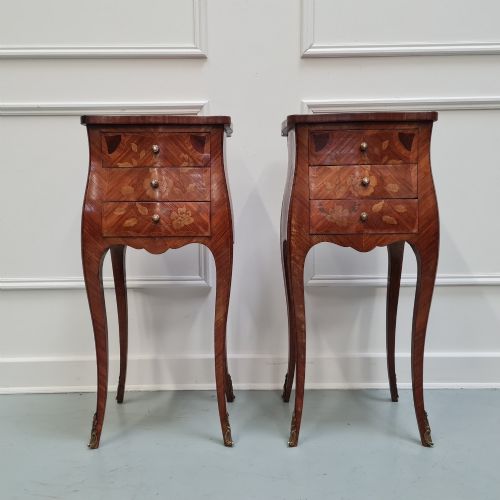
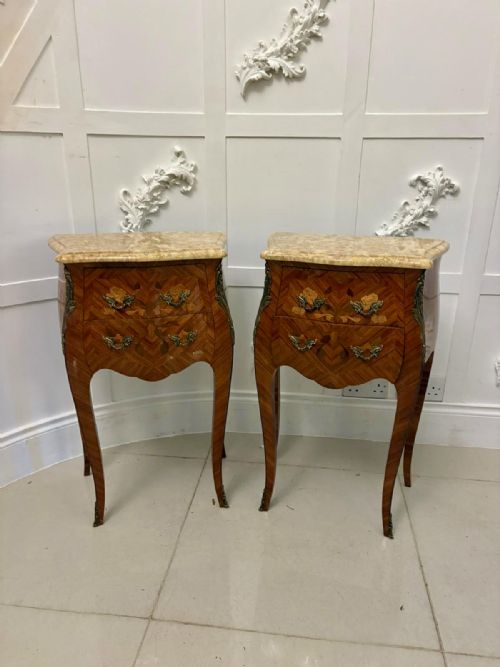
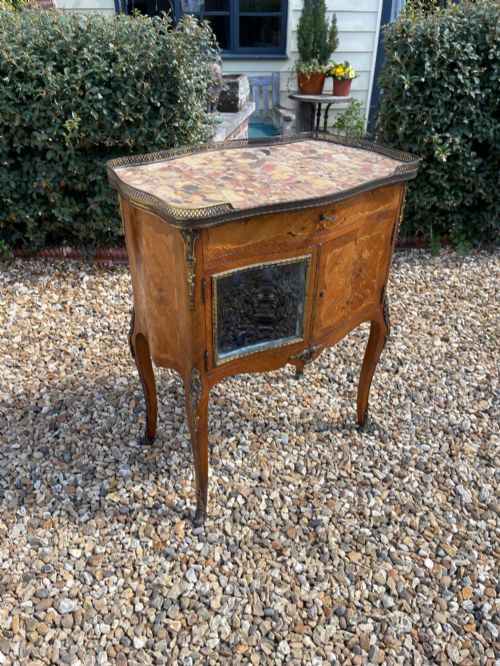
An ormolu cabriole leg cabinet brings French Rococo elegance into a room through curved lines and gilt mounts.
Ormolu Cabriole Leg Cabinet
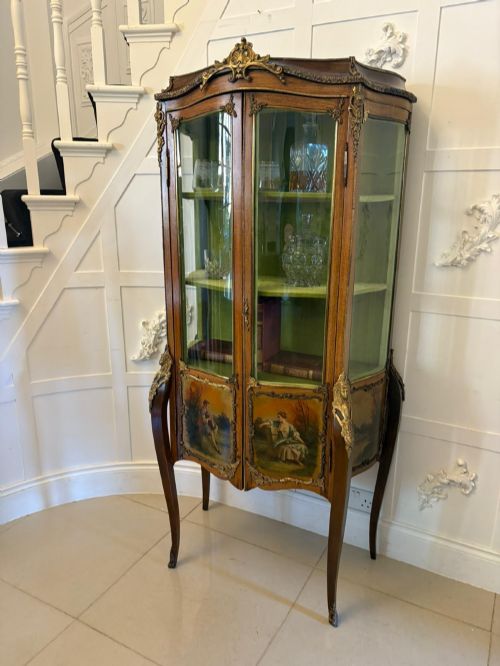
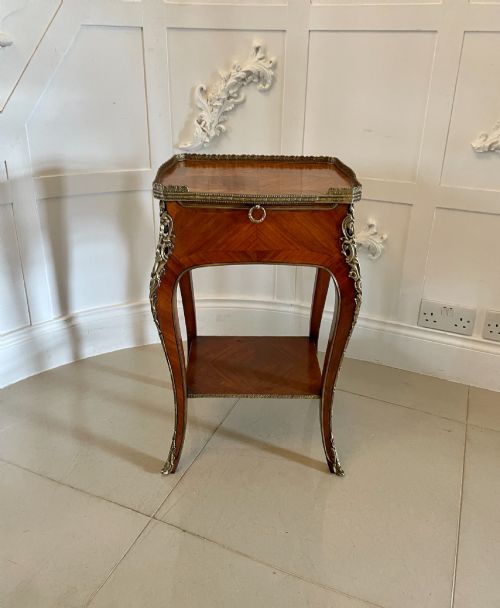
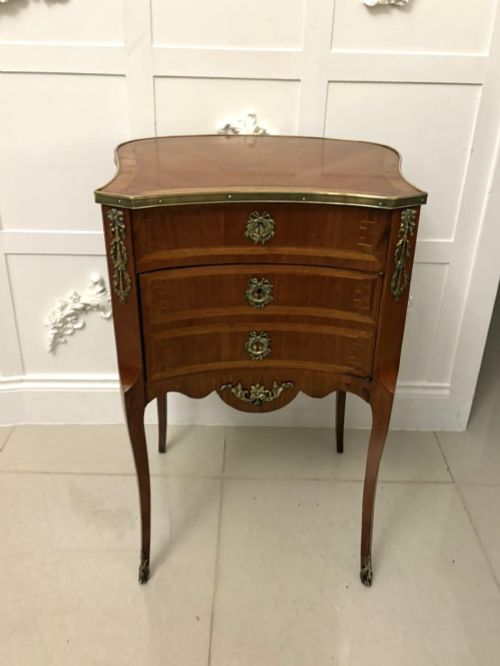
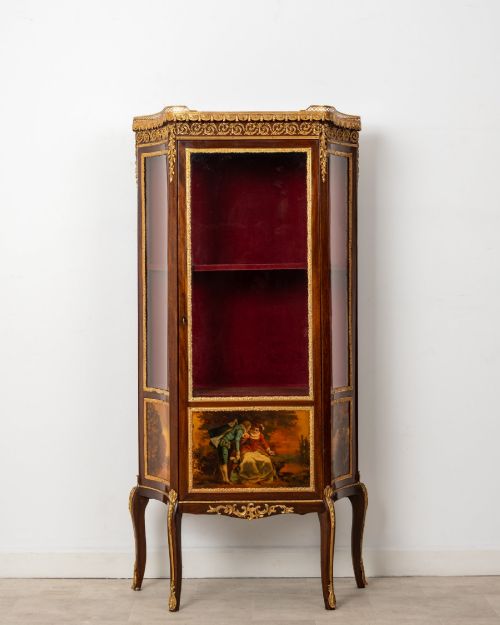
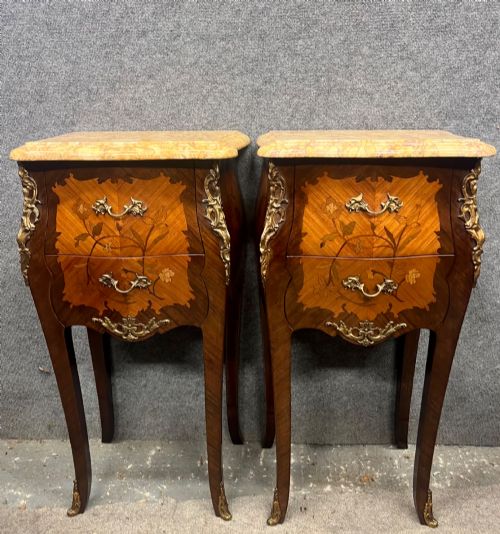
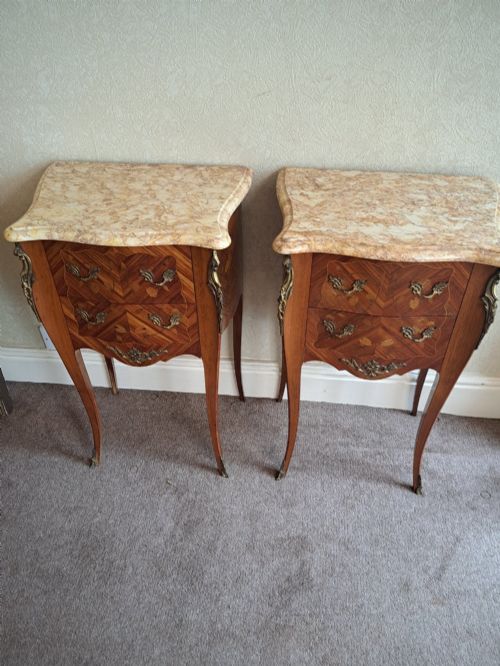
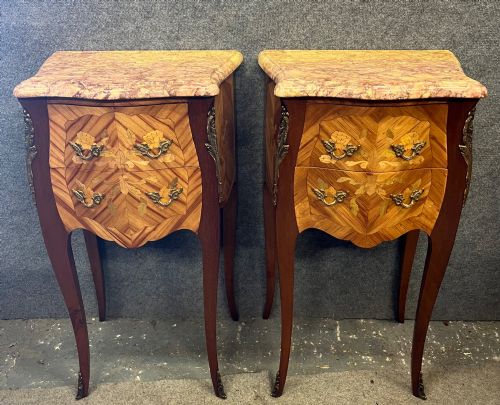
An ormolu cabriole leg cabinet encompasses a range of French-inspired furniture forms designed for display and bedside use. Buyers searching this phrase meet display cabinets, side cabinets, desks, and bedside chests originating from the nineteenth and early twentieth centuries.
The prevalent aesthetics draw heavily from Louis XV revival styles and French Rococo designs. These pieces often feature serpentine fronts, bowed sides, and characteristic curved supports that elevate the cabinet from the floor.
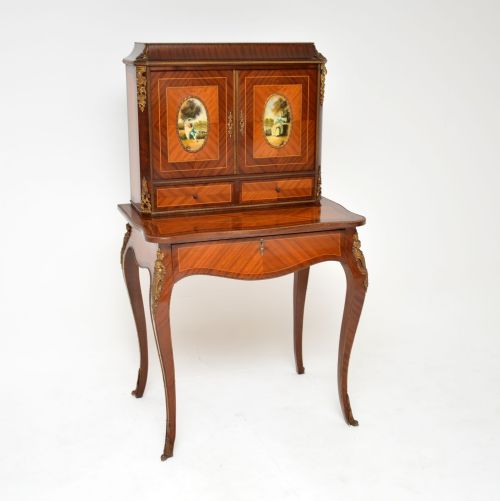
Originating largely from French workshops, these items serve functional roles as bedside tables, vitrines, and writing desks while providing decorative visual weight through rich timber veneers and metallic highlights.
How They Were Made
Cabinet makers utilised dense hardwoods such as kingwood, walnut, rosewood, and mahogany as foundations for intricate marquetry and veneer work. Surfaces frequently combine contrasting timber grains arranged in geometric or floral patterns across drawers and doors.
Gilt bronze and brass mounts, cast in ornate foliate and scroll motifs, are pinned or screwed to corners, legs, and aprons to accentuate the fluid contours. Many surfaces incorporate polished marble tops fitted closely to the timber frames.
Glazed panels feature on display cabinets and vitrines, whilst specialised items integrate porcelain plaques and specialised locking mechanisms into the side lockers and escutcheons.
Some bedside chests are built with delightfully narrow proportions made to fit tight historic spaces.
What Varies in Quality
The refinement of the cast bronze and brass mounts dictates much of the visual distinction across examples. Finer pieces display crisp chasing and deep mercurial gilding on the ormolu, whereas simpler versions rely on lighter, smoother metallic fittings.
Marquetry execution separates standard production from superior craftsmanship through the precision of the veneer cutting and the variety of exotic timbers employed. Subtle shading in the wood inlay creates depth that flat, uniform patterns lack.
The integration of secondary materials such as original marble slabs, Sevres porcelain plaques, and intact glass panels elevates the overall standard of the construction and indicates a higher grade of original commission.
Paul Sormani
The Ormolu Cabriole Leg Cabinet Glossary
- Ormolu
- Gilded bronze or brass used for decorative mounts and furniture highlights. It provides a bright metallic contrast against dark exotic veneers.
- Cabriole leg
- A furniture support that curves out and then in, mimicking animal limbs. It forms a defining feature of Louis XV style furniture.
- Marquetry
- The art of applying small pieces of veneer to a structure to form decorative patterns. Artisans use various coloured woods to achieve pictorial designs.
- Vitrine
- A glass-panelled cabinet designed for displaying porcelain, curiosities, and small objects. These pieces often incorporate glazed sides as well as doors.
- Bonheur du Jour
- A small light lady's writing desk featuring an upper cabinet with shelves or drawers. These desks typically stand on slender legs.
- Serpentine
- A furniture front or top that curves outward at the centre and inward at the ends. This undulating shape creates dynamic movement across the piece.
Ormolu Cabriole Leg Cabinet: Frequently Asked Questions
What rooms suit an ormolu cabriole leg cabinet?
These cabinets work well in bedrooms as bedside tables or in drawing rooms as display vitrines and lamp tables. Their compact footprints and decorative mounts allow them to sit comfortably alongside contemporary or traditional furnishings.
The reflective quality of the gilt bronze and the warmth of the kingwood or walnut veneers help to brighten dark corners. Tall chests and writing desks also function effectively in studies and landings.
How do I care for the ormolu mounts?
Gilt bronze mounts require gentle dusting with a dry microfibre cloth to prevent the accumulation of dirt in the chased recesses. Avoid abrasive metal cleaners that can strip the original gilding from the surface.
Keep the timber and marble away from direct heat sources and strong sunlight to protect the polish and prevent the veneers from lifting.
How can I tell the period of these cabinets?
Nineteenth-century examples often exhibit heavier construction methods and hand-cut dovetails within the drawer construction. Pieces from the later revival periods around nineteen hundred frequently utilise machine-prepared timbers whilst closely copying earlier French forms.
The style of the hardware, lock mechanisms, and the ageing of the timber backing boards offer further clues to the manufacturing decade.