


French Porcelain Display Cabinet
A french porcelain display cabinet brings together refined ceramic plaques and rich timber to show off porcelain plates.
French Porcelain Display Cabinet
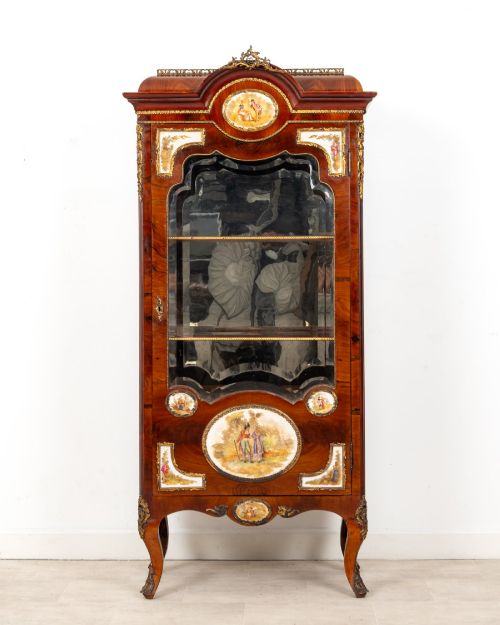
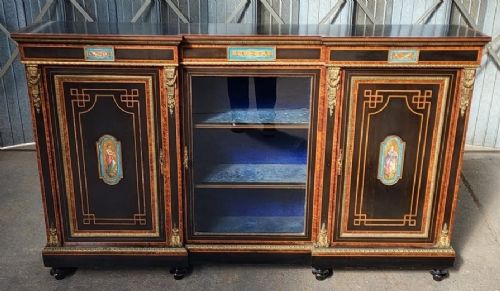
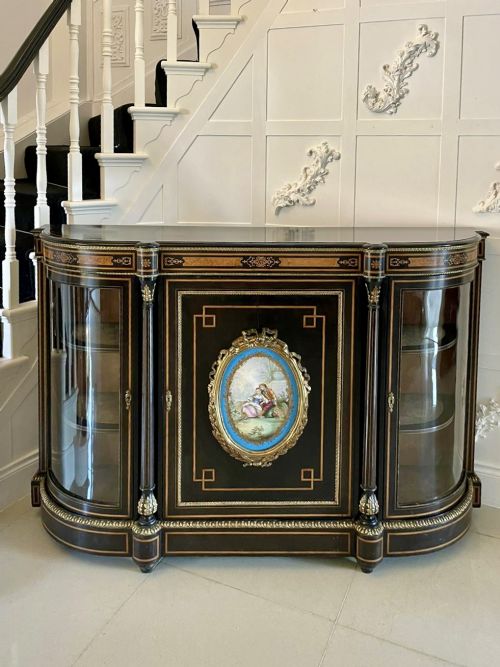
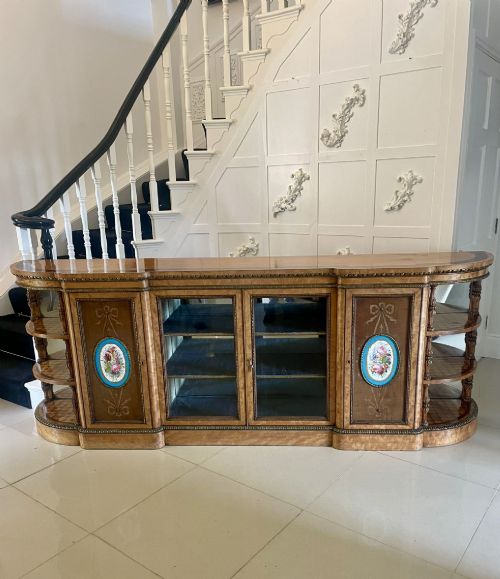
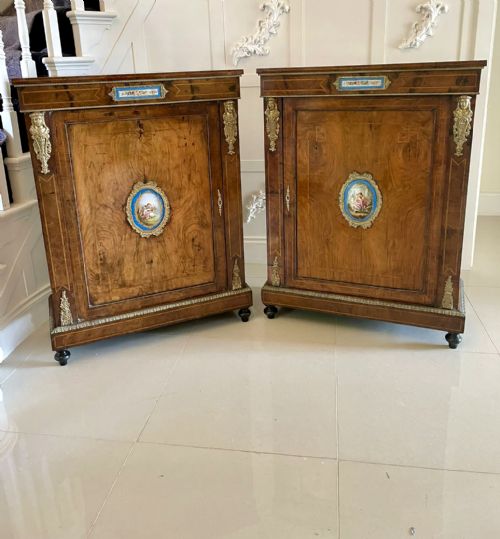
A french porcelain display cabinet is typically encountered as a glazed pier cabinet, credenza, or sideboard dating from the nineteenth century. These forms combine wooden cabinetry with inset ceramic plaques, glass doors, and gilt mounts. They provide enclosed shelving for cabinet plates and decorative objects.
The pieces on this page span the 18th century to around 1900, drawing on Victorian tastes and revival styles such as Louis XVI, Louis XV, and French Empire. Alongside cabinets, the selection includes standalone porcelain plates and dishes painted with portraits, armorials, or figurative scenes.
Makers and manufacturers represented range from English workshops utilising imported panels to Parisian factories and independent decorators. Whether configured as a multi-door credenza or a small table top cabinet, each item integrates glazed display space with decorative ceramic elements.
How they were made
Cabinets are constructed from timbers such as walnut, burr walnut, satinwood, ebonised wood, and kingwood, often enhanced with marquetry, inlay, and gilt-metal or ormolu mounts. Glazed panels and doors frame the interior shelves, while ceramic plaques are set directly into the wooden frames.
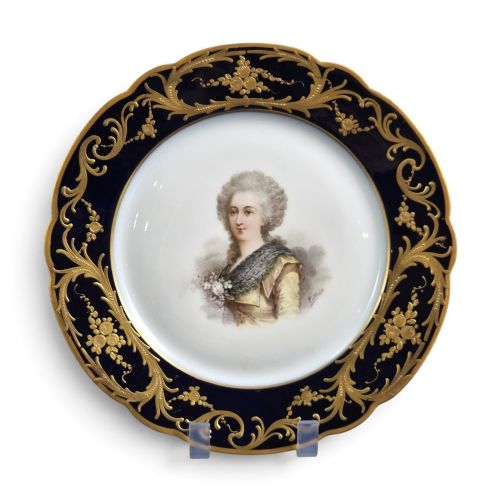
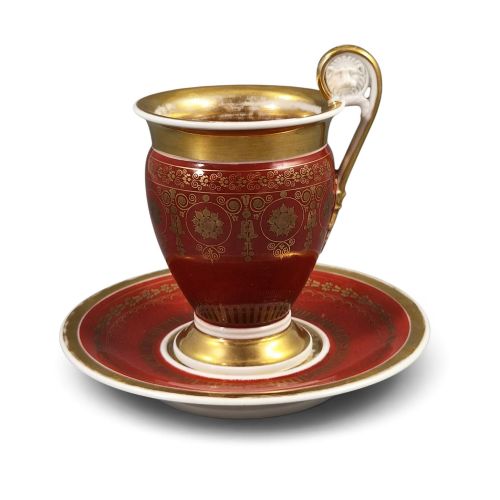
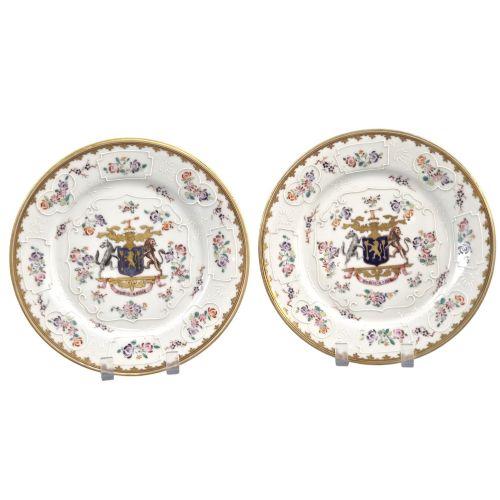
The porcelain components include hand-painted plates, chargers, and plaques decorated with enamels, cobalt blue grounds, and gold leaf. Many feature pastoral scenes, portraits, or armorial motifs executed in the manner of established French factories.
The selection ranges from tall pier cabinets and multi-door credenzas to eighteenth-century cabinet plates.
What varies in quality
Quality rests on the depth of timber selection and the precision of the cabinetmaker's marquetry, inlay, and structural joinery. Burr walnut, satinwood, and kingwood veneers combined with heavy, crisply chased ormolu mounts indicate higher execution.
The refinement of the porcelain plaques and plates distinguishes standard items from exceptional ones. Finely hand-painted enamel portraits and detailed botanical subjects set within rich gilt borders command greater attention than simple transfer-printed or sparsely decorated pieces.
Edmé Samson & Cie·Darte Brothers·Pucher Deroche
The French Porcelain Display Cabinet Glossary
- Ormolu
- Gilded bronze mounts cast and chased to ornament furniture frames and door panels. These metallic additions provide contrast against dark ebonised wood or walnut.
- Credenza
- A low sideboard or cabinet used historically for display and storage. Nineteenth-century versions frequently incorporate glazed doors and inset porcelain panels.
- Pier cabinet
- A tall, narrow display cabinet designed to fit wall spaces between windows. They often feature single glass doors and fitted interior shelving.
- Vitreous enamel
- Glass fused to a metal or ceramic surface through firing. Used to create durable, highly coloured details on plaques and plates.
French Porcelain Display Cabinet: Frequently Asked Questions
What is a French porcelain display cabinet?
A French porcelain display cabinet is a piece of nineteenth-century furniture that incorporates glazed doors and hand-painted ceramic plaques into timbers like burr walnut and ebonised wood.
These cabinets were designed to protect and exhibit decorative porcelain plates and vessels while serving as prominent decorative furniture in reception rooms.
How do I date a porcelain display cabinet?
Dating relies on examining the timber veneers, framing styles, and the characteristics of any inset ceramic plaques. Nineteenth-century examples frequently employ revival styles and specific joinery methods.
Parks, mounts, and lock mechanisms also offer clues to the exact manufacturing period, ranging from Georgian precedents to late Victorian production.
What styles are common in these cabinets?
The pieces draw heavily on French design movements, including Louis XV and Louis XVI revivals, alongside Napoleon III and Victorian interpretations.
These styles feature curved or rectilinear woodwork paired with elaborate gilt-metal mounts and symmetrical ceramic panel arrangements.
How should I care for a wood and porcelain cabinet?
Keep the timber clean using dry cloths and avoid placing the furniture in direct sunlight to protect the wood finishes and enamel colours.
Ensure the glazed doors and internal shelving are handled with care when placing or removing ceramic plates and decorative items.