




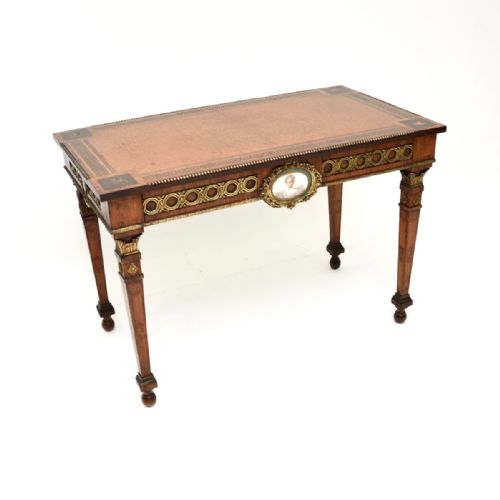
Ormolu and Porcelain
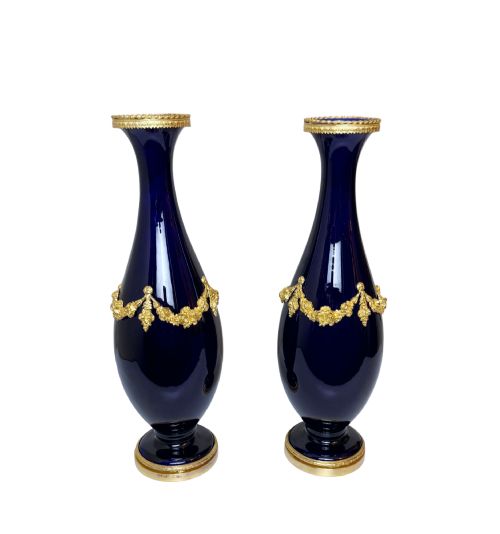
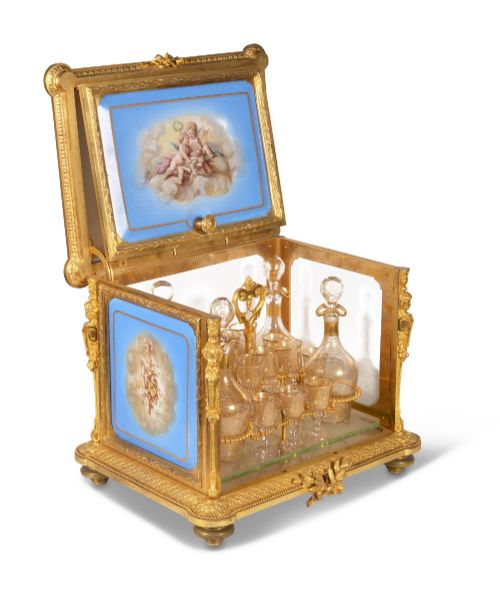
These pieces of ormolu and porcelain combine gilded bronze mounts with glazed ceramic bodies to bring lavish nineteenth-century French decorative arts into a room.
Ormolu and Porcelain
When searching for ormolu and porcelain, a buyer encounters a union of two distinct decorative mediums that French and Victorian cabinet makers favored for luxury furnishings.
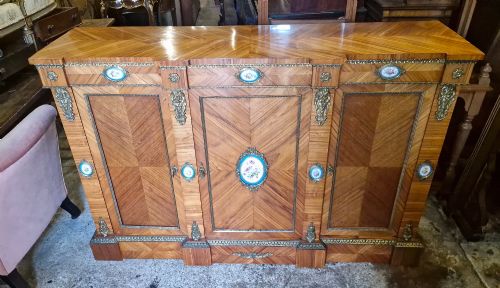
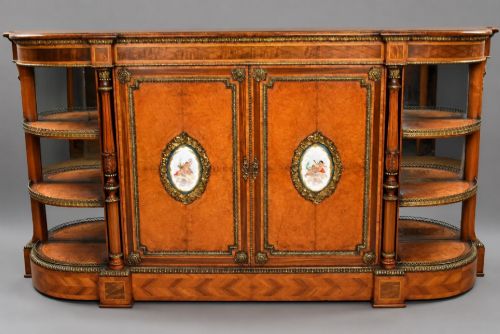
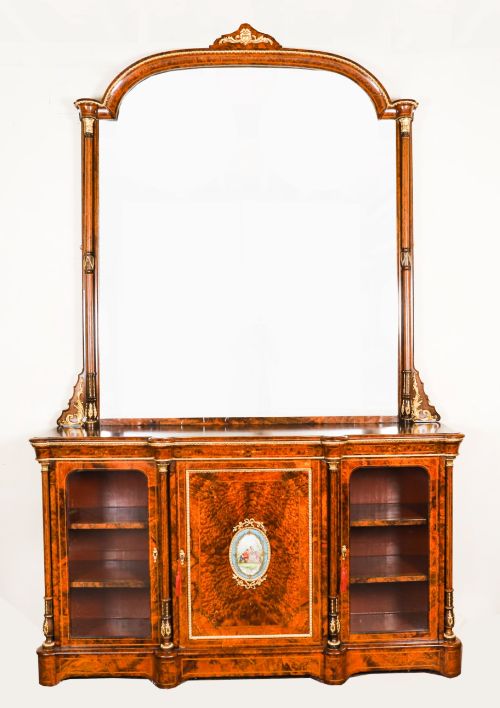
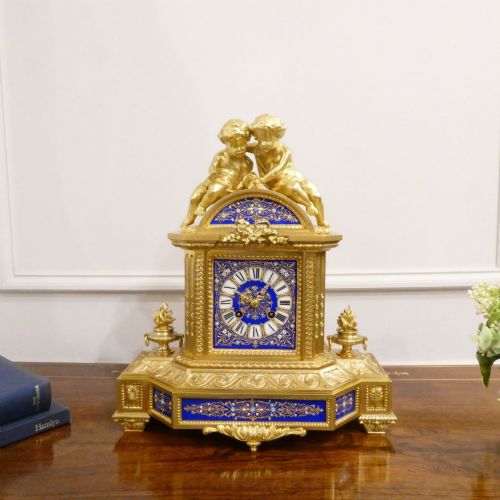
The objects on this page span several functional forms, most commonly mantel clocks, table lamps, jardinières, and credenzas.
Nineteenth-century pieces dominate the selection, heavily influenced by French Rococo revival and Louis XVI styles alongside Victorian interpretations.
How they were made
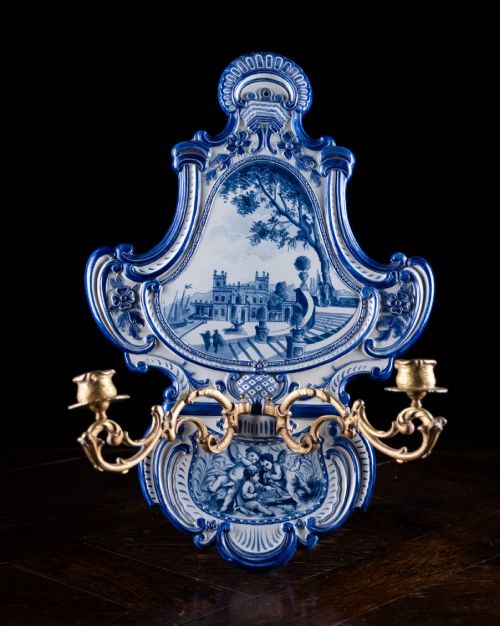
Gilt bronze or ormolu mounts are cast, chased, and gilded to frame ceramic plaques, dials, and urn bodies.
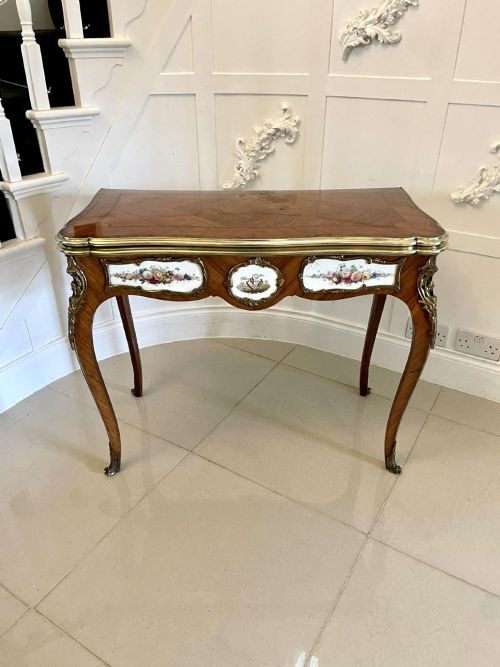
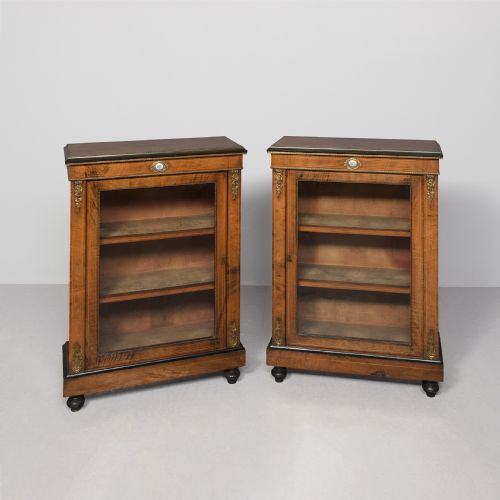
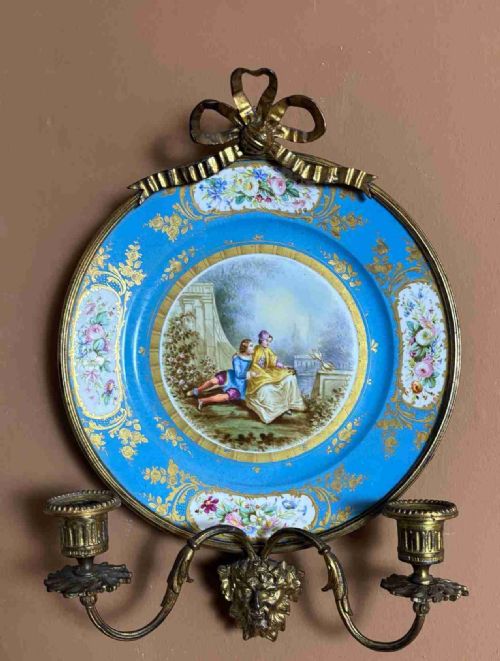
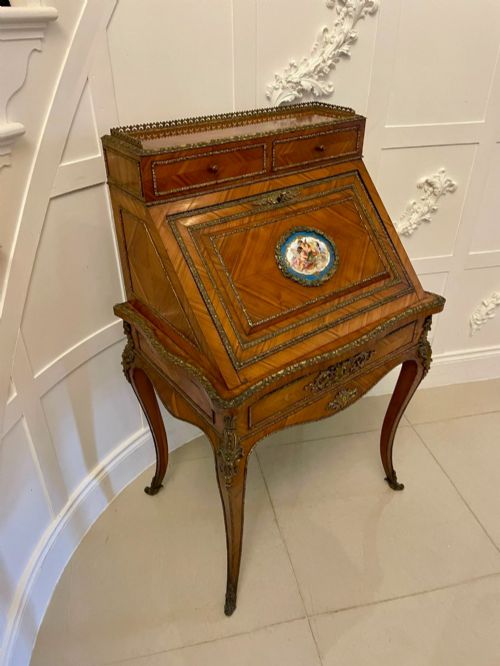
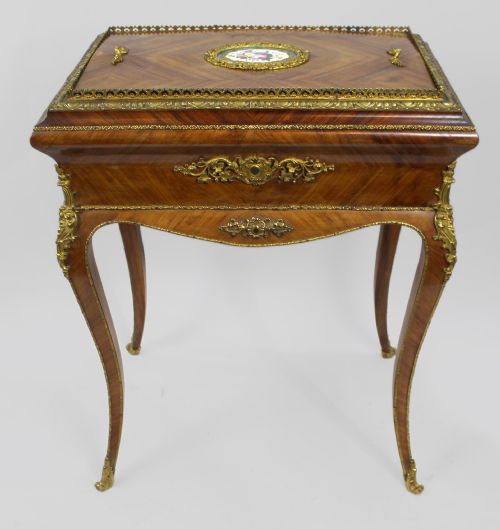
The ceramic elements utilise porcelain bodies, often painted by hand or decorated with turquoise glazes and Sevres-style motifs, then secured with metal mounts onto timber carcasses like kingwood, burr walnut, and ebonised woods.
Ormolu and Porcelain Retail Price Guide 2026
Typical asking prices for ormolu and porcelain among the pieces listed under this phrase on Sellingantiques today, from the lower quarter to the upper quarter. They describe what is for sale here now, not the wider market.
Listings feature 18th, 19th, and early 20th century pieces, predominantly executed in porcelain, ormolu, gilt bronze, kingwood, and burr walnut.
What varies in quality
The definition and depth of the chasing on the gilt bronze mounts separate standard production from superior examples.
Porcelain quality rests on the precision of the hand-painted details, enamel work, and the integration of the ceramic components into the timber or metal framework.
Japy Freres·Jean-Baptiste Delettrez·Achille Brocot·Henry Marc·Villeroy & Boch
The Ormolu and Porcelain Glossary
- Ormolu
- Gilded bronze applied as a decorative mount to furniture, clocks, and porcelain objects. It requires precise casting and hand-chasing to achieve crisp detail.
- Sevres
- A type of fine French porcelain associated with royal patronage and known for rich blue grounds and hand-painted panels. Pieces often bear distinct factory marks beneath the glaze.
- Cassolette
- A decorative vase or urn with a reversible lid that functions as a perfume burner or a solid vase. These objects frequently pair porcelain bodies with gilt bronze mounts.
- Jardiniere
- An ornamental stand or container designed to hold plants or flowers. In this category, they incorporate porcelain plaques and ormolu mounts.
- Bonheur du Jour
- A small lady's writing desk featuring an enclosed superstructure above the writing surface. These desks often integrate porcelain plaques into the cabinet doors.
Ormolu and Porcelain: Frequently Asked Questions
Were these clocks made to run?
Many nineteenth-century mantel clocks incorporate mechanical movements designed for daily timekeeping alongside their decorative porcelain and ormolu cases.
Restoration status varies, so buyers should check individual descriptions regarding the current working order of the movement.
How do I identify a Sevres mark?
Authentic factory pieces typically feature interlocking blue letter marks accompanied by painter symbols or date ciphers hidden beneath the glaze.
Many nineteenth-century items adopt the Sevres style rather than originating from the royal French manufactory itself.
Where should I place a jardiniere?
These decorative containers suit side tables, credenzas, or pedestals where their glazed ceramic and metal mounts remain visible from multiple angles.
Line the interior with a removable waterproof container rather than placing wet soil directly against the antique porcelain or wood.