



Ormolu and Marble Clock
An ormolu and marble clock brings together cast gilt bronze mounts and carved stone to anchor a mantelpiece with heavy neoclassical presence.
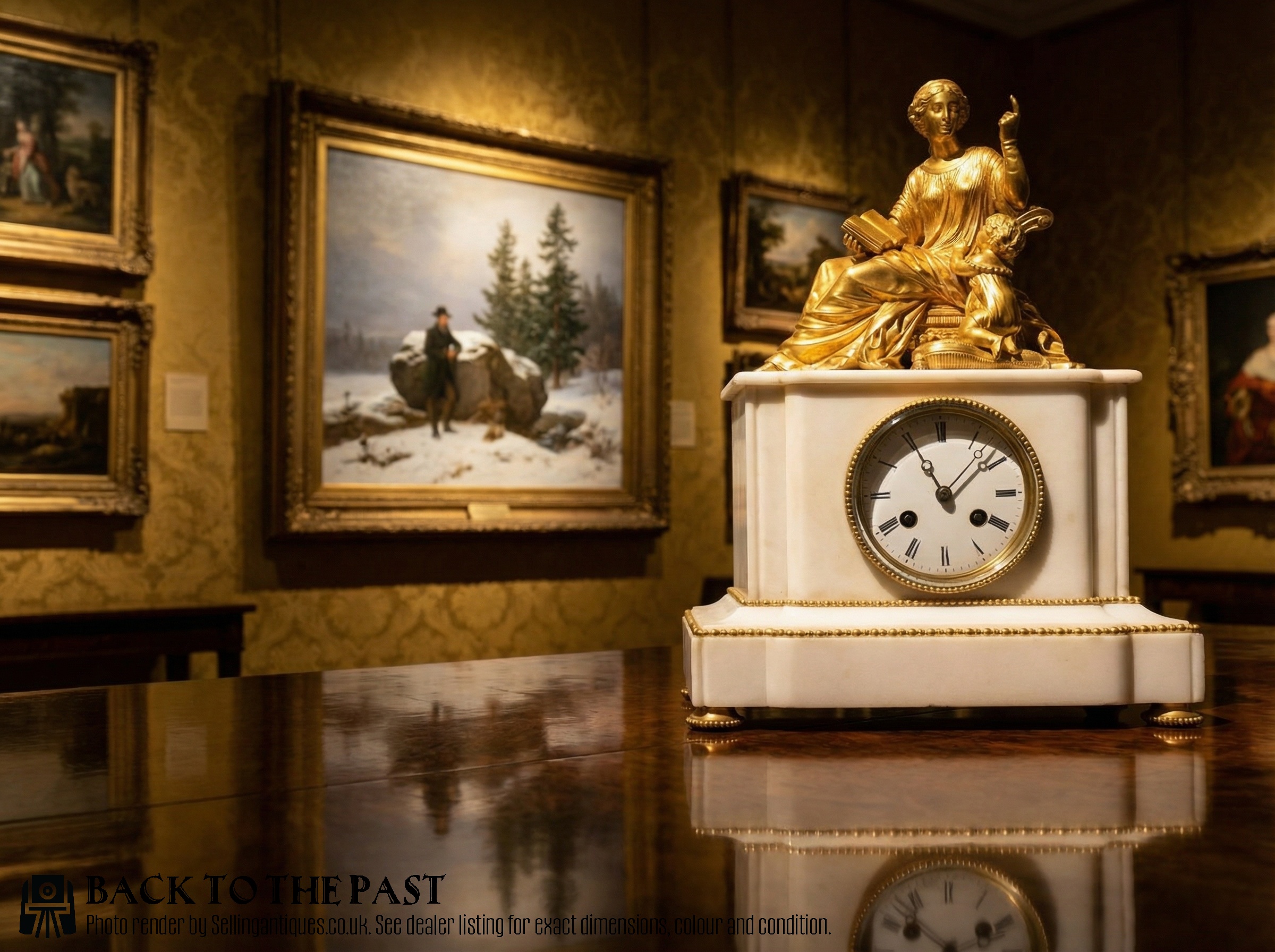
Identifying an ormolu and marble clock
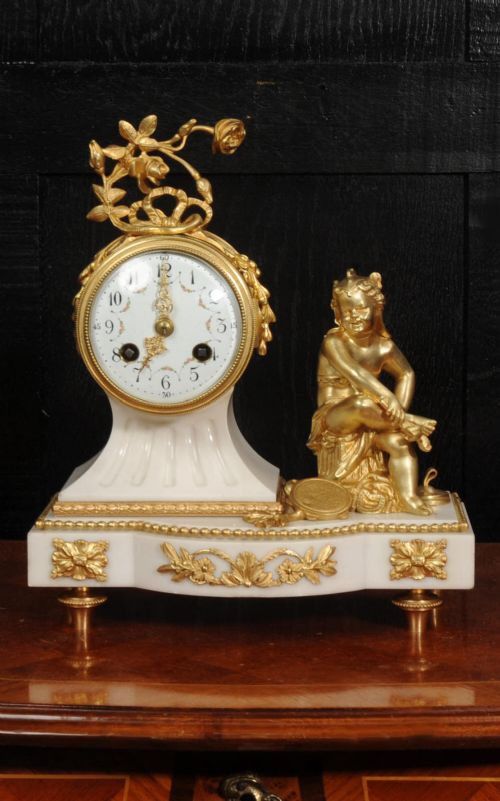
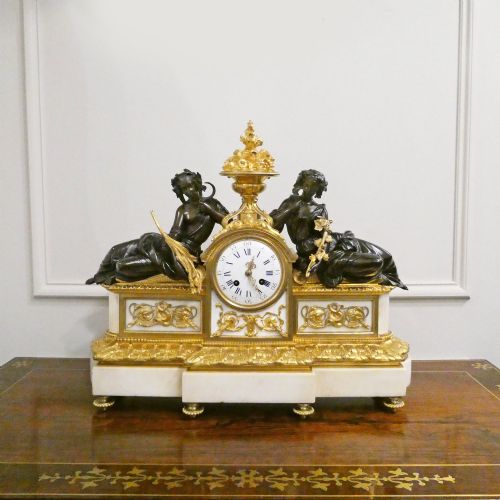
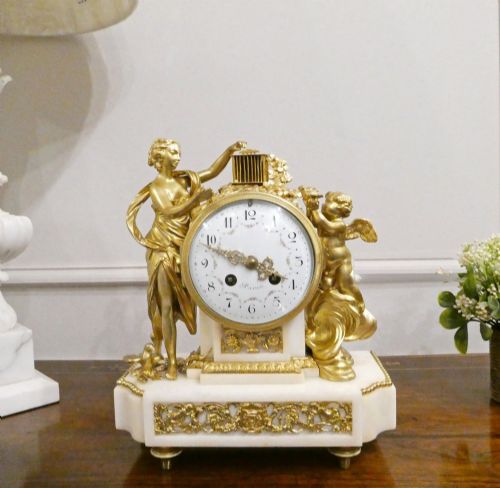
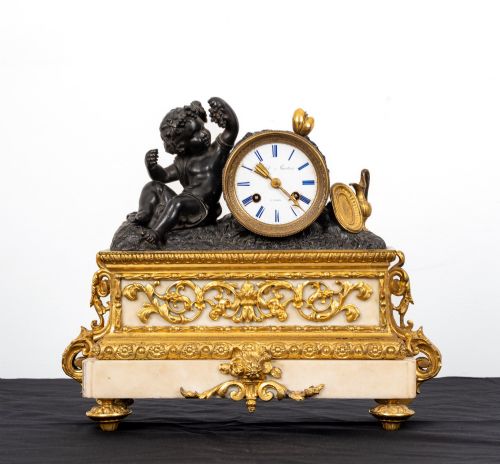
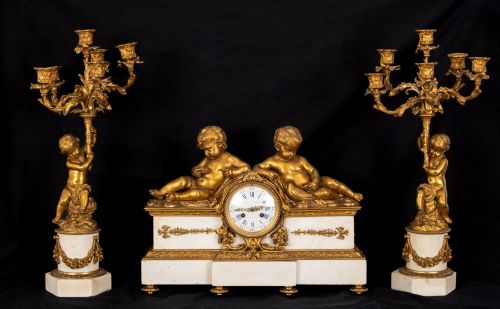
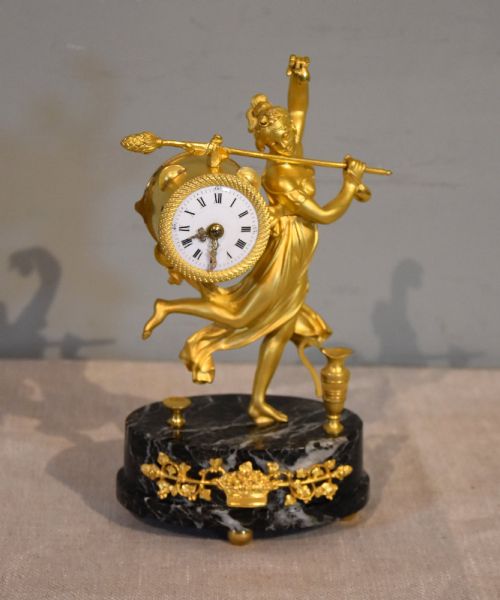
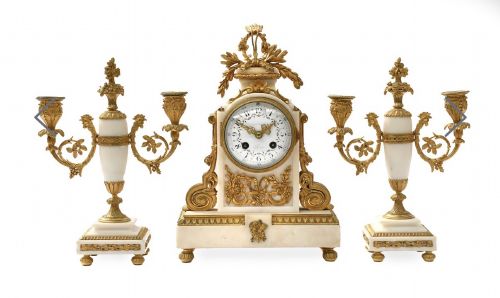
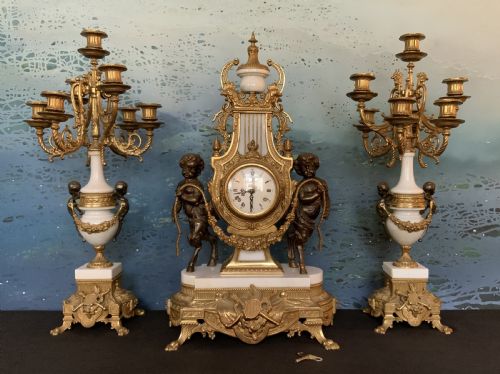
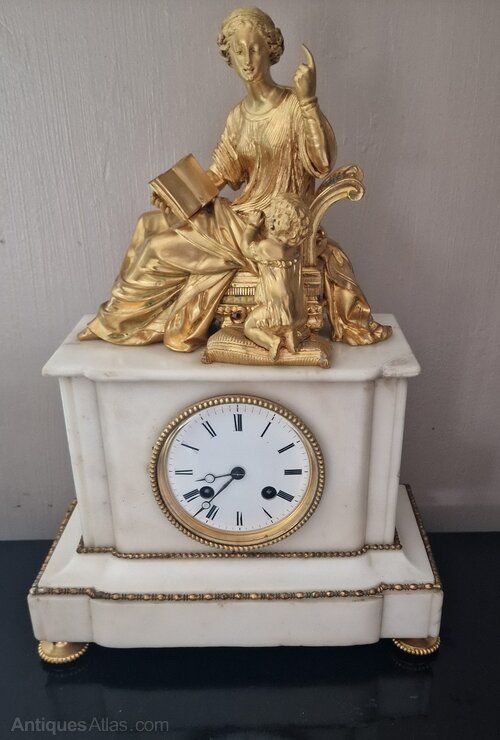
An ormolu and marble clock combines gilded metal work with natural stone bodies, predominantly appearing in French and English output from the nineteenth century. These items manifest as mantel clocks, boudoir pieces, or larger clock garnitures flanked by matching side ornaments.
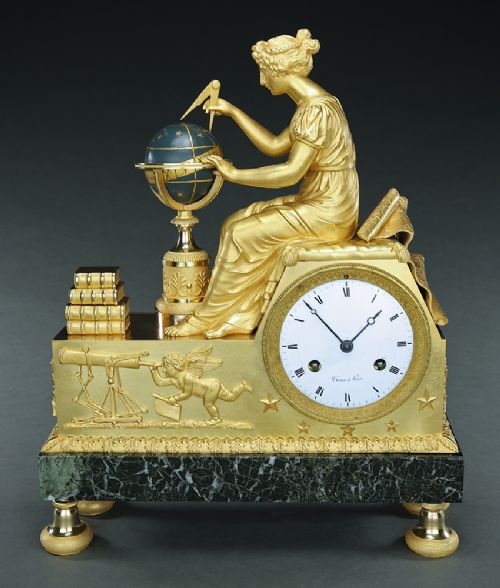
The most common form on this page is the portico clock or standard mantel design, drawing heavily on Louis XVI and Empire aesthetics. They utilise architectural columns, urns, and figurative bronzes depicting cherubs or mythological motifs.
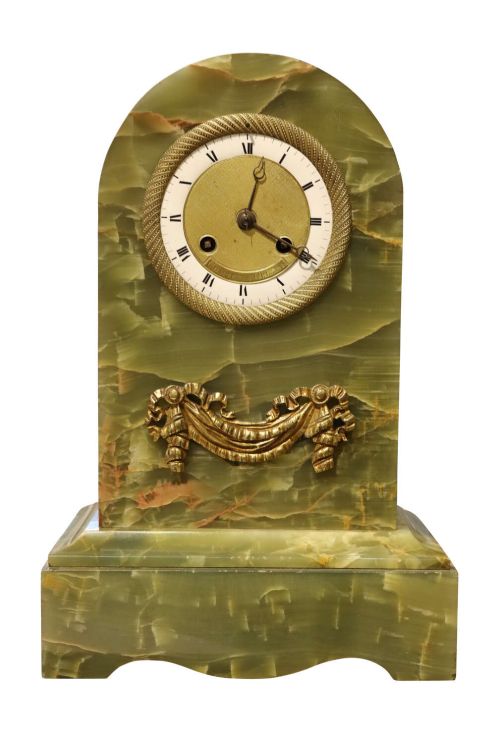
Origins stretch from Parisian makers working in the nineteenth century to English makers crafting fusee movements. White, green, sienna, and pink varieties of marble form the plinths and bodies that carry the metallic mounts.
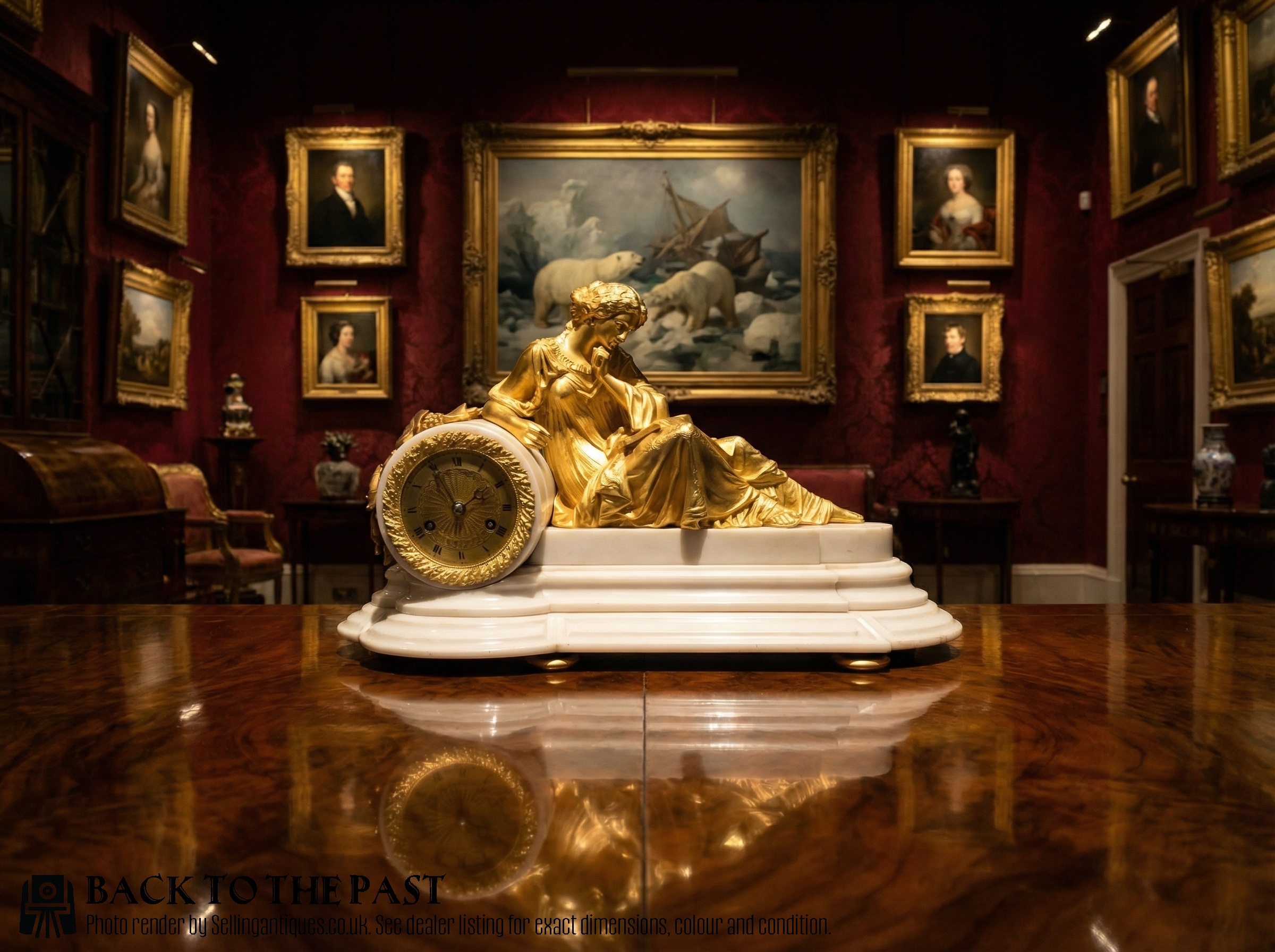
Materials and construction
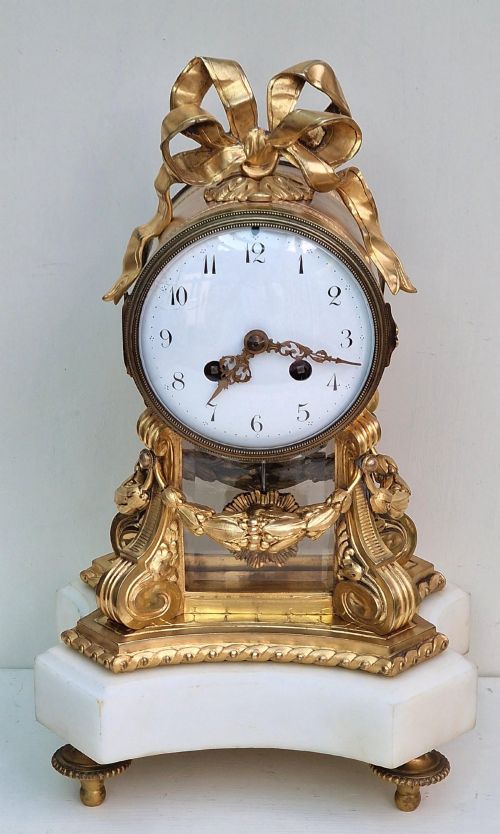
The physical structure relies on heavy blocks of marble, shaped into porticos, columns, lyre silhouettes, or rectangular plinths. Gilt bronze or ormolu mounts are cast, chased, and fire-gilded before being fixed to the stone bodies with pins or screws.
Dials frequently feature enamel paint with Roman or Arabic numerals, sometimes protected behind convex glass within cast bezels. Movements are mechanical, ranging from eight-day striking mechanisms to fusee or crystal four-glass systems.
Retail Price Guide 2026
Typical UK retail prices for ormolu and marble clock, calculated from the Sellingantiques database of over a million retail prices indexed since 2003. This retail price guide relies exclusively on Sellingantiques data; no external sources or auction records are used, so the figures do not describe the wider market.
Listings feature nineteenth-century items utilising white, green, sienna, and pink marbles paired with gilt bronze and enamel dials.
Evaluating the standard of execution
The crispness of the bronze chasing dictates the visual success of the piece, separating sharp, hand-finished foliage and figures from soft, mass-produced castings. Heavier gilding holds its warmth and lustre, whereas thin plating wears away to reveal the dull base metal beneath.
The selection and integration of the marble matter significantly, with uniform white carrera or rich specimen and sienna marbles demonstrating superior material grade. Harmonious proportions between the stone housing, the architectural columns, and the scale of the ormolu mounts govern the overall elegance.
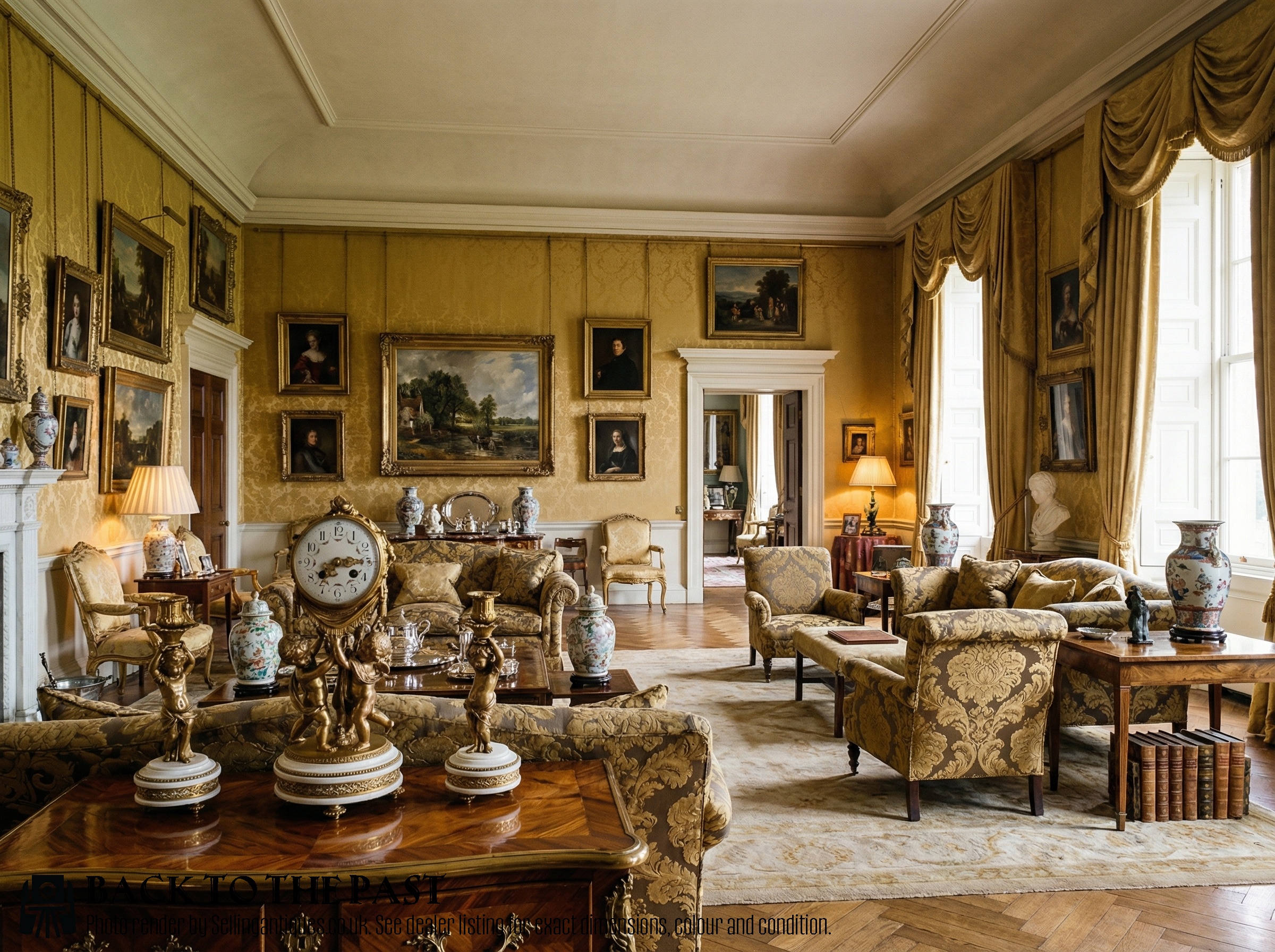
Payne of London·Le Roy Paris·Lemerle-Charpentier and Cie Paris·Nicoll Great Portland St London·Fritz Marti·Japy Freres·Samuel Marti of Paris·Louis Japy
The Ormolu and Marble Clock Glossary
- Ormolu
- Gilt bronze created through a mercury amalgamation process that leaves a durable, deep golden surface on cast metal mounts.
- Portico clock
- A mantel clock built on architectural columns resembling a classical temple facade, popular in neoclassical designs.
- Clock garniture
- A set comprising a central clock accompanied by matching side ornaments such as vases, urns, or candelabra.
- Fusee
- A conical pulley used in clock movements to equalize the declining power of the mainspring as it unwinds.
- Chasing
- The manual technique of refining and detailing cast bronze surfaces using hammers and small punches before gilding.
Frequently Asked Questions
How do I wind the clock?
Most mechanical movements require a key inserted into specific winding holes on the enamel dial to tension the springs.
Care must be taken not to over-wind the mechanism, stopping as soon as resistance is felt.
Where should I place it?
These heavy items need a stable, level surface such as a mantelpiece, heavy sideboard, or console table.
Direct sunlight and damp environments should be avoided to protect the fire-gilded bronze and marble surfaces.
What is a clock garniture?
A clock garniture includes the main timekeeper alongside matching decorative objects designed to be displayed together as a symmetrical set.
These matching pieces typically mirror the marble and ormolu motifs of the central clock.