

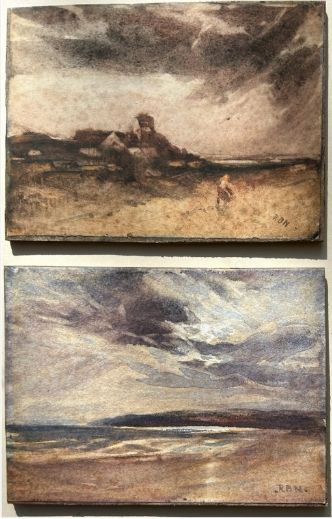
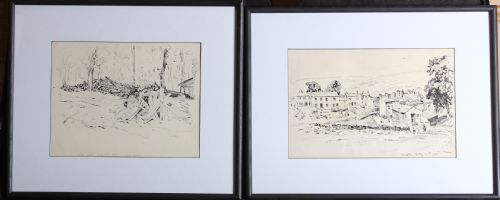
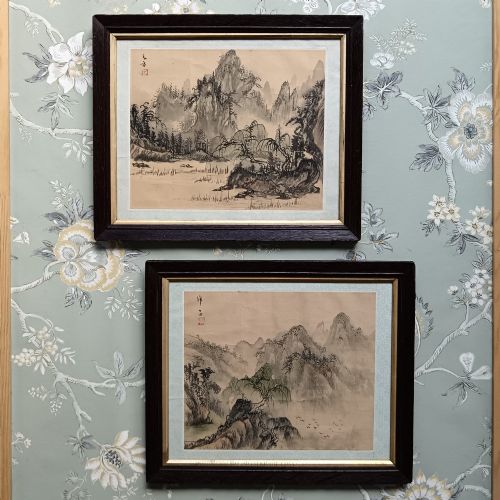
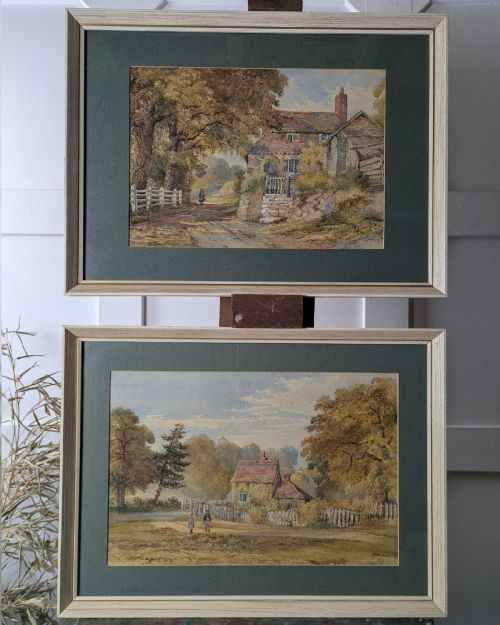


Original Watercolour Landscapes Pair
An original watercolour landscapes pair offers matching views of scenery, painted by hand and preserved together in period frames.
Original Watercolour Landscapes Pair
An original watercolour landscapes pair consists of two matching painted views on paper, usually created as companion pieces by the same hand. These works capture natural scenery, rivers, moorlands, and rural settings across the nineteenth and twentieth centuries.
Buyers encounter Victorian rural scenes, Edwardian moorlands, and mid-twentieth-century realist views. The selection includes British countrysides, Scottish landscapes, and overseas subjects rendered in transparent pigments.
Most examples arrive framed behind glass in gilt wood or ebonised surrounds that match the period of the painting. The pairing creates a balanced display for interior walls, maintaining the original layout intended by the artist.
Materials and Technique
Artists painted these works using water-soluble pigments on heavy paper or occasionally silk. Watercolour pigment is mixed with water and applied in thin, translucent washes to build light and shadow across the landscape.
Drafting often began with light pencil or ink lines to establish perspective before applying colour. Some pieces incorporate bodycolour or touches of gold leaf to highlight specific details within the composition.
Framing utilised wood mouldings, frequently finished with gilt leaf or ebonised paint, protecting the delicate paper surface beneath glass. Original frames often retain their backboards and early fixings.
Original Watercolour Landscapes Pair Retail Price Guide 2026
Typical asking prices for original watercolour landscapes pair among the pieces listed under this phrase on Sellingantiques today, from the lower quarter to the upper quarter. They describe what is for sale here now, not the wider market.
Several artists painted identical dimensions so precisely that their companion views fit together like geographical puzzle pieces of the past.
Quality Variations
Quality rests primarily on the skill of the brushwork and the precision of the perspective. Master painters controlled pigment washes to create atmospheric depth, whereas lesser works appear flat and heavy-handed.
Condition matters greatly because paper is sensitive to light and dampness. Strong colour retention without excessive fading distinguishes well-preserved works from those damaged by poor storage.
The integrity of the framing also influences the piece. Surviving period frames that complement the exact date of the paintings elevate the overall authenticity and visual balance of the pair.
Robert A. Nottingham·Fred Lawson·Th. Thibault·F.J. Snell·Alfred George Morgan·Ernest Uden·George Whyatt·Robert Buchan Nisbet·Sidney James Beer·Nora Cundell·Leslie Rackham·James H Hulse·Alfred Rimmer·WD Scull·Gordon Meadows·JS Cooper·Charles Frederick Allbon
The Original Watercolour Landscapes Pair Glossary
- Watercolour
- A painting method where natural pigments are suspended in a water-based solution and applied to paper. This technique creates transparent layers that allow the white of the paper to reflect light through the colour.
- Diptych
- A work of art divided into two distinct panels or sections designed to be displayed together. In this context, it refers to two matching landscape paintings conceived as a single unit.
- Gilt Wood
- Timber framing coated with a thin layer of gold leaf or metallic gilt paint. This traditional finish provided an ornate border that reflected candlelight in period interiors.
- Ebonised
- Wood stained or treated to imitate ebony, producing a dark, deep black finish. This technique was common in Victorian and early twentieth-century picture framing.
- Bodycolour
- Watercolour paint mixed with a white pigment to make it opaque rather than transparent. Artists utilised this technique to add solid highlights and opaque details to landscape scenes.
Original Watercolour Landscapes Pair: Frequently Asked Questions
How were landscape pairs displayed originally?
Victorian and Edwardian homes typically hung matching watercolours symmetrically on either side of a fireplace or doorway. This arrangement created visual balance and unified the interior decoration of the room.
Today, hanging them side by side or stacked vertically preserves that intended harmony, allowing viewers to appreciate the shared palette and subject matter of both works.
Why do watercolours fade over time?
Early watercolour pigments were sensitive to ultraviolet light, which breaks down the chemical structure of natural dyes. Prolonged exposure to direct sunlight causes blues and greens to weaken and yellows to shift.
Protecting these pieces requires hanging them away from direct sunbeams and utilising UV-filtering glass during framing to preserve the remaining pigment strength.
Are these paintings signed by the artists?
Many examples feature signatures, monograms, or initials inscribed directly into the lower corner of the paper by the painter. Signatures help attribute the work to specific regional artists active during the nineteenth and twentieth centuries.
Unsigned pieces rely on stylistic evidence, contemporary framing, and subject matter to indicate their period of origin and regional school.
How do I care for antique paper art?
Paper works require stable indoor humidity and temperatures to prevent foxing, mould growth, and warping. Keeping the backing boards sealed and avoiding damp walls ensures the paper stays dry.
Professional framing with acid-free backing materials further protects the fragile medium from chemical deterioration over the decades.