




Original Watercolour Landscape Scene
An original watercolour landscape scene brings the topography and coastal life of nineteenth and twentieth-century Britain directly into domestic spaces.
Original Watercolour Landscape Scene
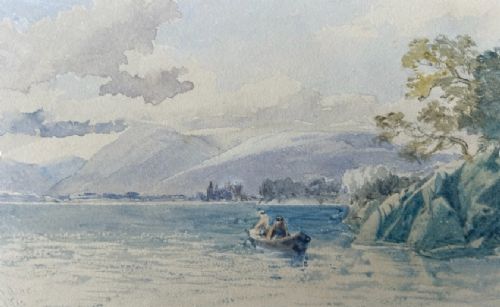
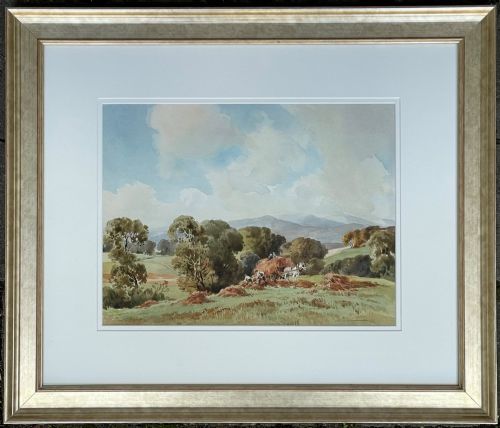
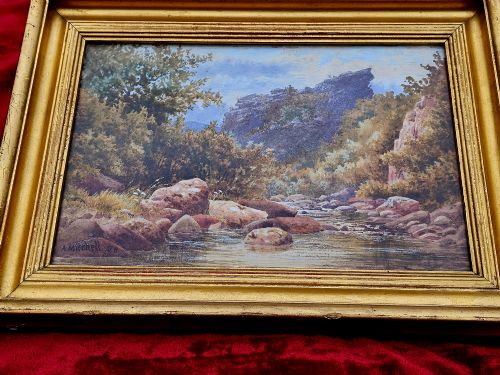
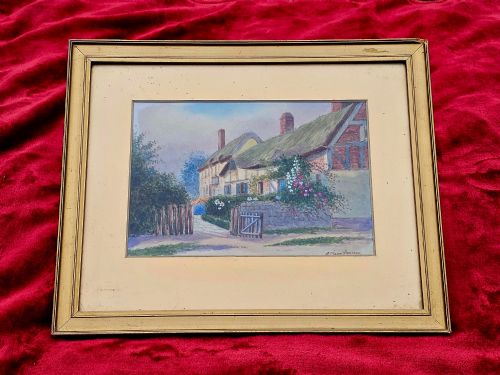
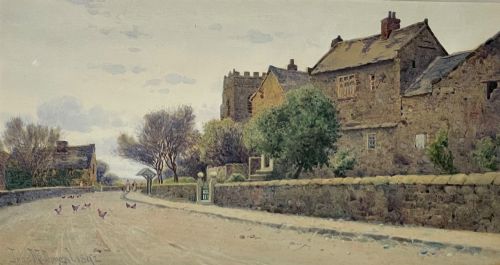
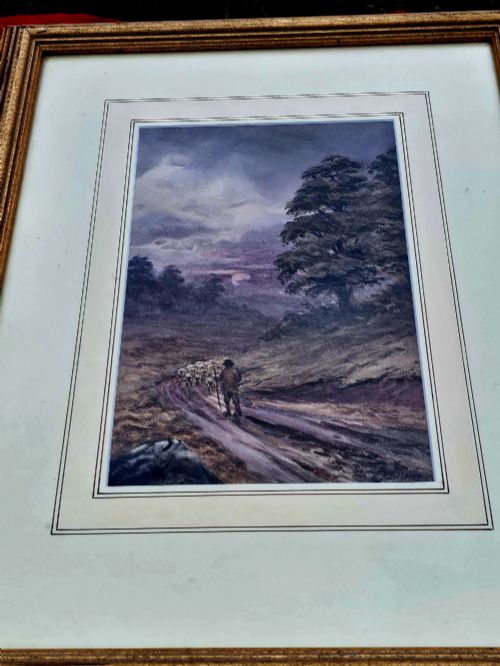
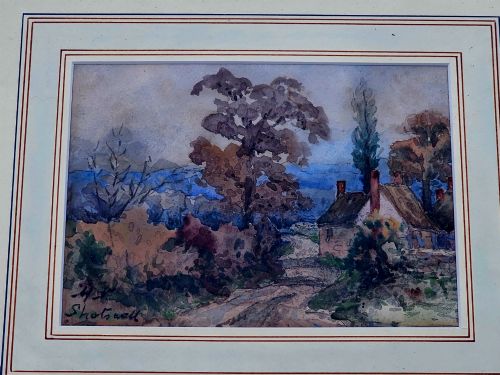
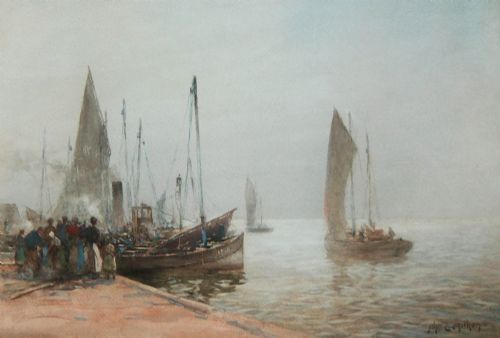
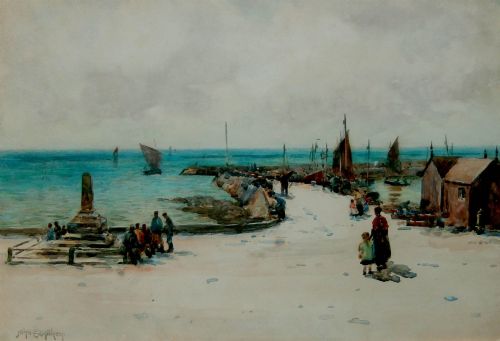
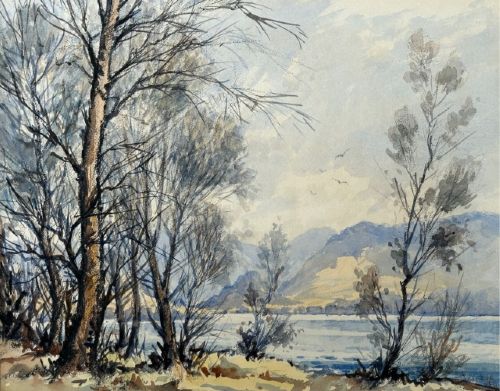
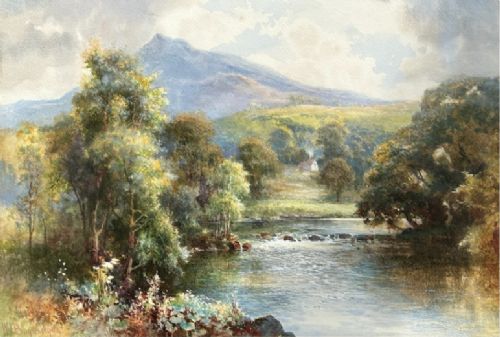
An original watercolour landscape scene captures countryside vistas, coastal harbours, and rural village life across Britain and continental Europe. Buyers encounter works spanning the Victorian, Edwardian, and mid-twentieth-century periods, created by professional artists and Royal Academy exhibitors alike.
The most common examples on this page date from the late nineteenth century to the 1930s, featuring river valleys, Scottish lochs, and Cornish fishing ports. These paintings preserve topographical records and atmospheric impressions executed on paper support.
Materials and methods
Artists applied water-soluble pigments onto heavy paper stocks, occasionally combining watercolour with ink, gouache, or pencil sketching to define architectural details and foreground textures. Washed pigments created translucent skies and fluid water effects, while opaque bodycolour highlighted areas of light.
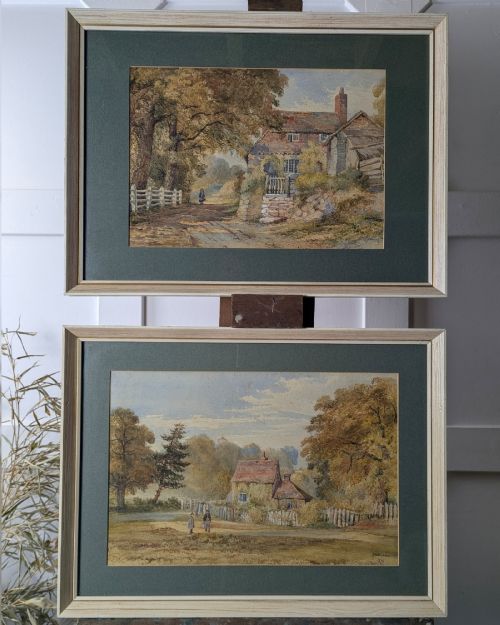
Finished sheets were framed behind glass within wood or giltwood mouldings to protect the delicate pigment and paper from atmospheric moisture and handling.
Listings feature paper, watercolour pigment, ink, and giltwood frames across Victorian, Edwardian, and mid-twentieth-century eras.
Distinctions in execution
Quality rests in the handling of light, atmospheric depth, and sureness of brushwork, distinguishing confident topographical studies from rigid amateur efforts. The integration of tone and the preservation of paper freshness separate accomplished compositions from muted or overworked examples.
Condition plays a part, particularly the absence of foxing spots, damp stains, and fading caused by prolonged exposure to direct sunlight over decades.
Thomas Miles Richardson Jnr RWS·James Orrock·Percy Lancaster·John McDougal·George Oyston·William Lee Hankey
The Original Watercolour Landscape Scene Glossary
- Watercolour
- A painting method where finely ground pigments are suspended in a water-soluble binder and applied to paper. This medium allows for luminous washes and rapid execution in the field.
- Gouache
- An opaque water-soluble paint containing pigment and a binding agent, mixed with chalk to create solid, light-reflecting highlights. It frequently appears alongside transparent watercolour in nineteenth-century landscapes.
- Foxing
- Small brownish spots caused by chemical reactions within the paper pulp over time. These blemishes frequently affect nineteenth-century paper works kept in humid conditions.
- Monogram
- A cipher or set of intertwined initials used by an artist to sign a work instead of a full signature. These marks require comparison with recorded artist registers for definitive attribution.
- Provenance
- The documented history of ownership and exhibition for an artwork. Verified exhibition labels on reverse frames provide clues to a piece's origin.
Original Watercolour Landscape Scene: Frequently Asked Questions
How should I hang an antique watercolour?
Position watercolours away from direct sunlight and strong artificial heat sources to prevent the pigments from fading and the paper from becoming brittle.
Use UV-filtering glass during framing to provide additional protection against light damage over years of display.
Are these paintings signed by the artists?
Many examples feature visible signatures, monograms, or dated inscriptions applied directly by the painter in the lower corners or margins. Other works remain unsigned but display distinct regional styles and period framing techniques.
Exhibition labels and ink inscriptions on the reverse of the backing board frequently record the title and creator's name.
What subjects appear in these landscape scenes?
The subjects range from Scottish lochs and Welsh rivers to Cornish fishing harbours, Sussex village streets, and rural agricultural workers harvesting crops. Coastal views of Whitby and St Ives also feature prominently among the topographical records.
Urban street scenes and European townscapes from France, Italy, and the Low Countries appear alongside British countryside vistas.
How do I identify the date of a watercolour?
Dates are often written alongside the artist signature or discovered on old exhibition labels and framing inscriptions attached to the reverse. Stylistic elements such as artist clothing, architectural details, and framing materials also offer chronological markers.
Paper watermarks and the specific texture of the backing support provide further clues regarding the manufacturing period.