



Framed Cottage Genre Artwork
Framed cottage genre artwork brings domestic interior scenes and rustic rural life into your home through Victorian and Edwardian paintings and watercolours.
Framed Cottage Genre Artwork
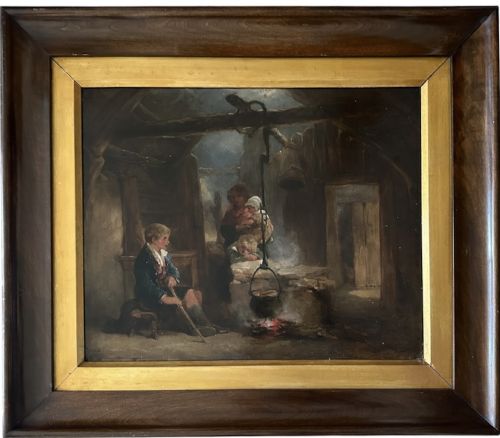
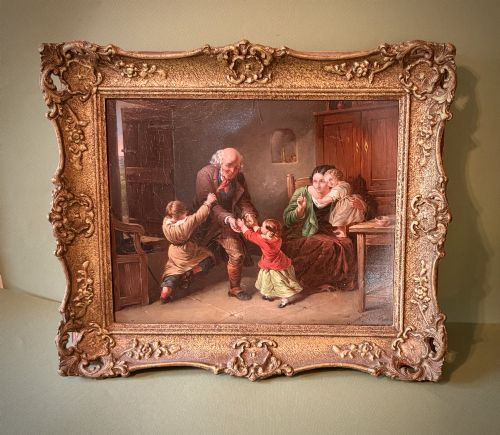
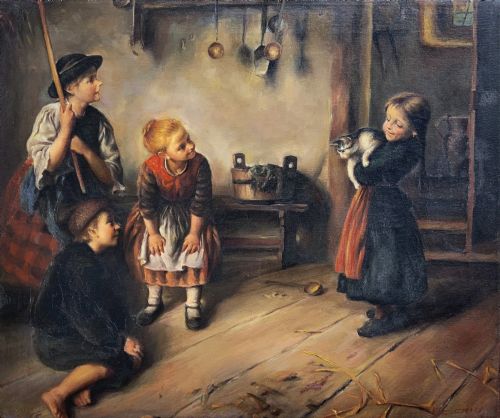
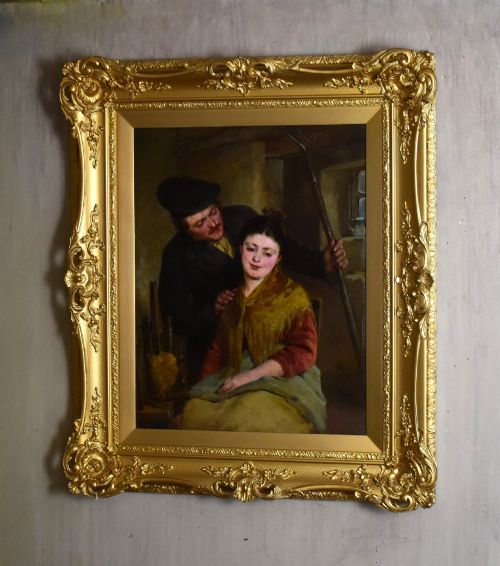
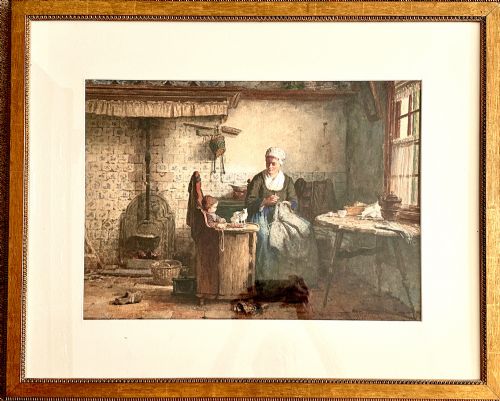
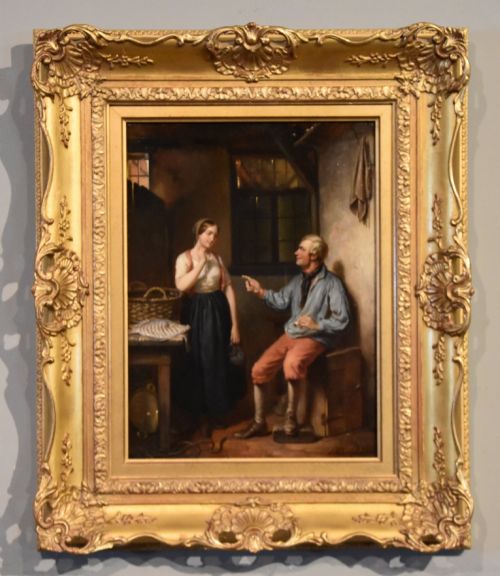
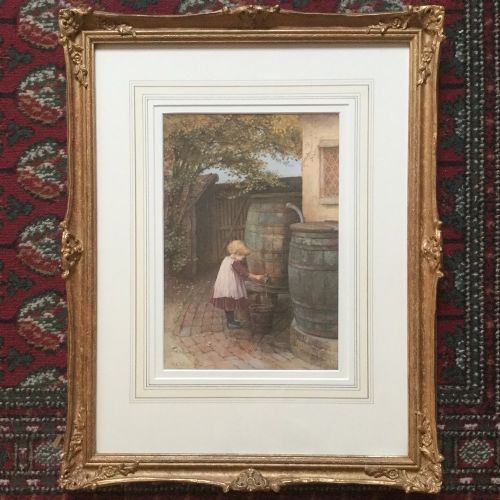
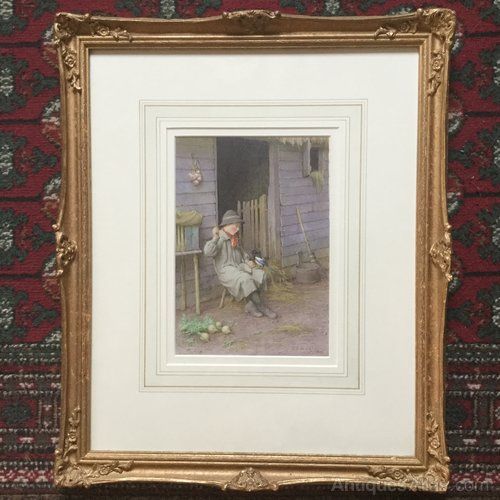
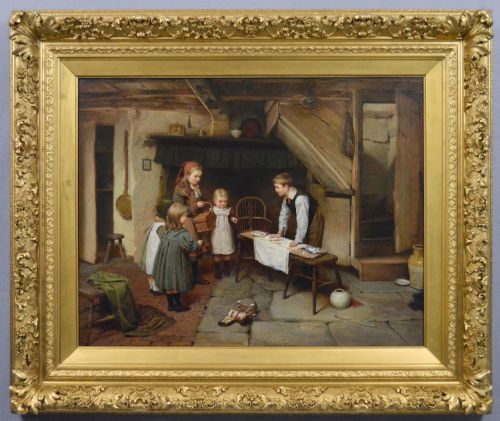
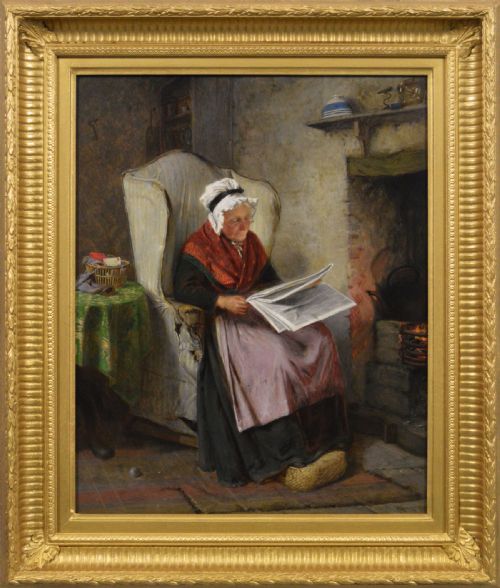
When you search for framed cottage genre artwork, you find oil paintings and watercolours depicting domestic interior scenes and rural cottage life from the nineteenth and early twentieth centuries. These works record everyday moments, such as children playing, spinning maids at work, and fireside family visits.
The selections available here predominantly feature Victorian and Edwardian realism created by British and European artists. You will encounter framed panels, canvases, and works on paper showing rural characters in domestic settings.
Common subjects include mothers and children at cottage doors, elderly villagers reading, and rural interiors populated with domestic animals like dogs, pigs, and ponies.
How they were made
Artists painted these genre scenes using oil on canvas or panel, and watercolour on paper, often framing them in giltwood and gesso mouldings embellished with gold leaf. The physical construction combines traditional fine art supports with decorative frames designed to complement nineteenth-century interior aesthetics.
Watercolour works utilise fine washes on paper to capture domestic light, while oil paintings build rich textures through layered pigments on stretched canvas or wooden panels.
Many of these rustic domestic scenes feature an improbable gathering of farmyard animals, including pigs, donkeys, and guinea pigs, sharing the cottage doorstep.
What varies in quality
Quality in framed cottage genre artwork rests on the artist's ability to render facial expressions, domestic textiles, and interior lighting with convincing realism. Works by exhibited Royal Academy artists show superior draughtsmanship and compositional depth compared to anonymous studio copies.
The condition of the original giltwood and gesso frames significantly influences the overall integrity of the piece, as period frames matched to the artwork preserve its historical context.
George Whitton Johnstone·Howard Helmick·Hendrik Valkenberg·Jacob Akkersdijk·Charles Edward Wilson·Harry Brooker·Alexander Rosell·Haynes King·James Kyd·James Hardy Junior·George Smith·William Henry Knight·Helena Maguire·Ralph Hedley·David Woodlock·Henry Spernon Tozer·Arthur Claude Strachan·James Ward·George Morland·Pauline Delacroix Garnier·Alfred Provis·Henry Silkstone Hopwood·Robert Gemmell Hutchison·Jonathan Pratt·Charles Edward Wilson
The Framed Cottage Genre Artwork Glossary
- Genre painting
- A style of art depicting scenes from everyday life, typically involving ordinary people in domestic or rural settings. These works focus on narrative moments rather than formal portraits.
- Gesso
- A plaster-like mixture applied to wooden frame mouldings as a base for gilding. It provides a smooth surface for intricate decorative details.
- Lithograph
- A printmaking process where an image is drawn onto limestone or a metal plate with a greasy medium and then inked. Many nineteenth-century lithographs reproduced popular original paintings.
- Panel painting
- A painting executed on a flat wooden panel rather than stretched canvas. Panels provide a rigid surface favoured by many nineteenth-century realists.
Framed Cottage Genre Artwork: Frequently Asked Questions
What is cottage genre artwork?
Cottage genre artwork depicts everyday domestic scenes and rural life inside or outside traditional cottages. These nineteenth-century paintings focus on the daily activities of ordinary families and farm workers.
Subjects often include mothers with children, fireside rests, and domestic animals gathered around rural doorways.
How do I date a framed painting?
Dating a framed painting involves examining the artist's active period, the style of the canvas or panel, and the construction of the frame. Victorian and Edwardian works often feature exhibition labels or biographical records on the reverse.
Materials such as gesso frames and nineteenth-century canvas stamps provide further chronological clues.
Where should I hang these artworks?
These framed pieces suit living rooms, studies, and hallways where traditional interiors benefit from narrative depth and warm colour palettes. Placing them away from direct sunlight protects both watercolours on paper and oil pigments.
Matching the gold leaf frame to existing room hardware enhances their decorative integration.