


Victorian Mother Child Artwork
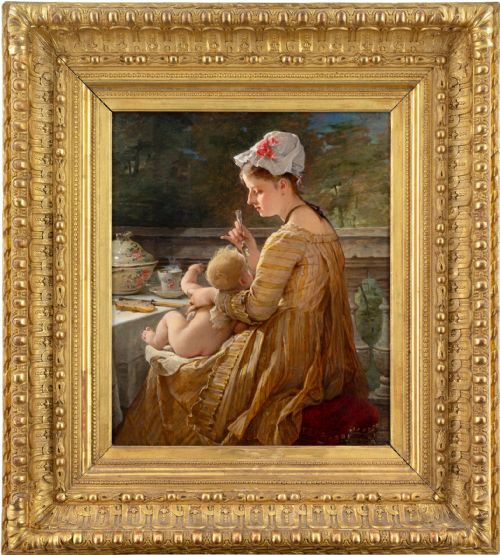
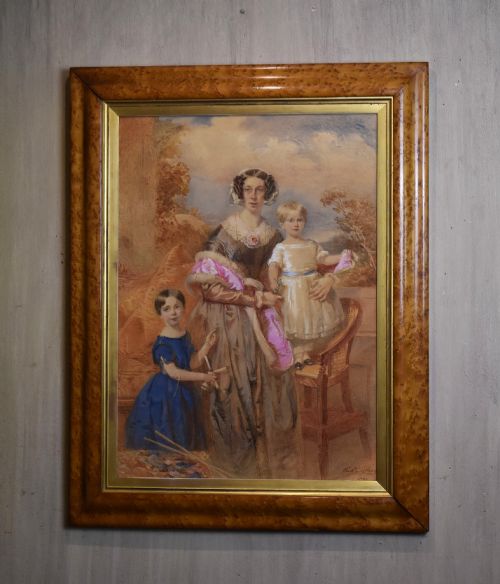
These Victorian mother child artwork pieces capture domestic affection through intimate oil paintings, watercolours and bronze sculptures from the nineteenth century.
Victorian Mother Child Artwork
Victorian mother child artwork spans domestic genre scenes, intimate family portraits and classical bronze sculptures depicting maternal bonds. Buyers searching this phrase encounter both oil paintings on canvas and delicate watercolours on paper, framed in gilt wood.
The pieces on this page originate predominantly from the nineteenth century, with specific dates clustering through the decades from eighteen sixty to nineteen hundred. Subject matter ranges from peasant families at the cottage door to formal portraits of countesses and children.
Makers and artists represented include named painters and sculptors working in academic, romantic, realist and impressionist styles. Sculptural interpretations appear in bronze, capturing physical closeness between mothers and their offspring.
Materials and methods
Painters of this subject applied oil or watercolour mediums onto stretched canvas or paper supports. Giltwood frames frequently complement the paintings, providing traditional nineteenth-century presentation.
Sculptors utilised the casting process in bronze to render three-dimensional studies of motherly love. These metal works combine detailed surface finishing with patination characteristic of the period.
Listings feature oil on canvas, watercolour on paper and bronze sculpture across the nineteenth century.
Quality factors
The standard of execution in figure drawing and facial expression dictates the success of each composition. Finer works display subtle handling of light and shadow, particularly in Impressionist and Academic paintings.
Material preservation affects physical integrity, from the stability of oil paint layers on canvas to the crispness of detail in bronze casts. Original gilt wood frames add contextual authenticity to framed works.
Adelaïde Salles-Wagner·Frederick Tatham·George Smith·Helena Maguire·Auguste Moreau·Lucien Madrassi·Franz Xaver Winterhalter·Richard Buckner·Charles Lewis
The Victorian Mother Child Artwork Glossary
- Genre painting
- Depiction of aspects of everyday life by portraying ordinary people engaged in common activities. Such works often focus on domestic scenes involving family members.
- Watercolour
- Painting method in which the paints are made of pigments suspended in a water-based solution. Works on paper require careful framing behind glass to prevent environmental damage.
- Bronze
- Alloy consisting primarily of copper, commonly used for casting sculptural figures. The material allows artists to capture flowing drapery and physical interaction between figures.
- Gilt wood
- Wood carved and covered with a thin layer of gold leaf or metallic powder. Frames made in this manner are typical for nineteenth-century fine art.
Victorian Mother Child Artwork: Frequently Asked Questions
What periods do these pieces date from?
The works primarily date from the Victorian era and the nineteenth century, encompassing years between eighteen sixty and nineteen hundred. A few pieces reflect mid-twentieth-century painting after earlier styles.
Most items align with academic, romantic, impressionist and realist movements of the period.
How should I display a framed watercolour?
Watercolours on paper require protection from direct sunlight to prevent fading of the pigments. Framing behind glass with conservation-grade mounting preserves the paper.
Keep them away from areas with high humidity or dramatic temperature fluctuations.
What is the difference between oil and watercolour works?
Oil paintings utilise pigment bound in drying oil applied to canvas, offering rich textures and deep tones. Watercolours use water-soluble pigments on paper, producing lighter, translucent effects.
Oils are generally more durable, whereas watercolours need dedicated protection behind glass.
How do I care for a bronze sculpture?
Bronze sculptures benefit from occasional dusting with a soft, dry cloth to prevent accumulation. Avoid applying abrasive cleaners or polishes that might disturb the original patination.
Maintaining a stable indoor climate prevents environmental stress on the metal.