







Original Vintage Marine Painting
An original vintage marine painting captures coastal trades, naval vessels and open waters across the nineteenth and twentieth centuries.
Original Vintage Marine Painting
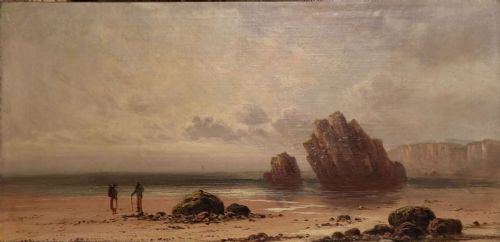
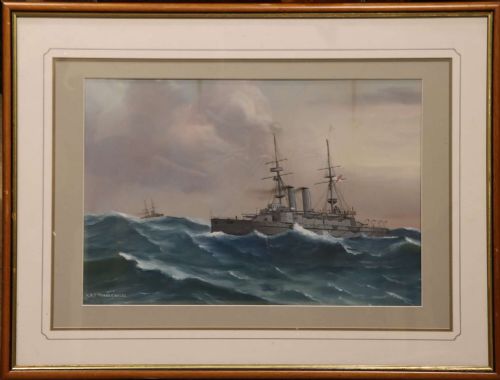
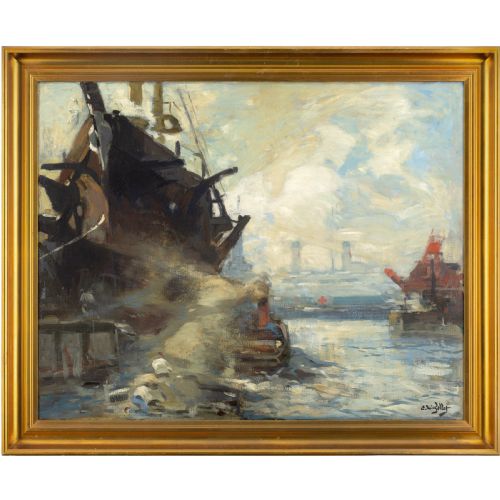
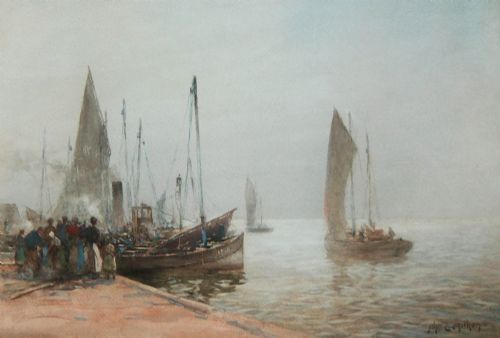
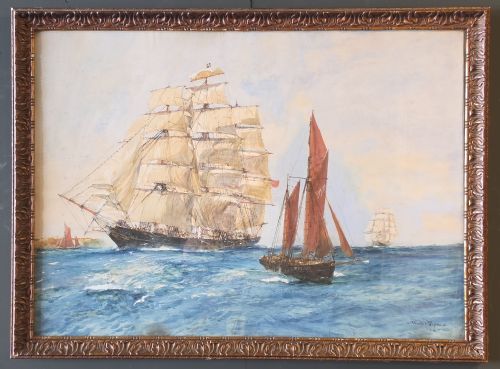
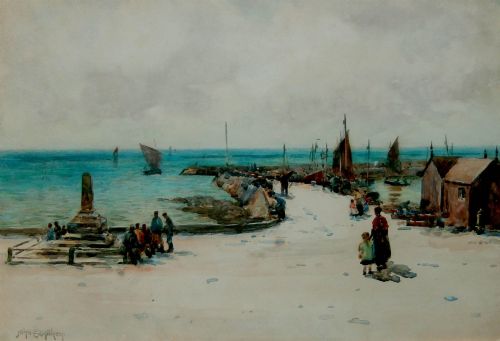
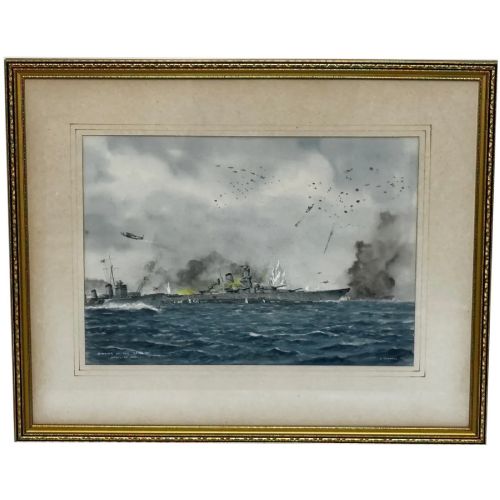
When searching for an original vintage marine painting, buyers encounter works spanning from the nineteenth century through the mid-twentieth century. These pieces record maritime subjects ranging from bustling harbour scenes and fishing docks to naval vessels and stormy coastal seascapes.
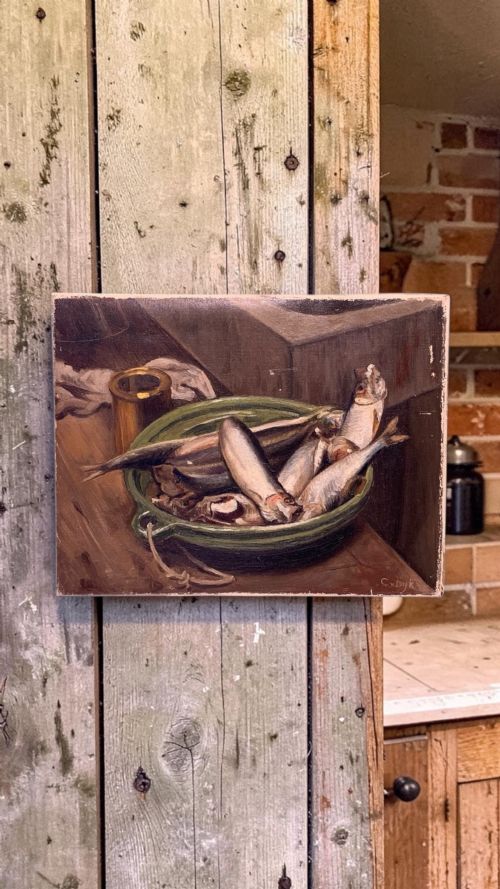
The selections available include both watercolours on paper and oil paintings on canvas or board, often housed within period gilt frames. Works originate from British, French and American artists operating within regional traditions such as Victorian maritime painting and British impressionism.
Materials and techniques
Artists painted using oil paint or watercolour applied to paper, canvas, or wooden board. Oil paint provided rich texture, sometimes worked in thick impasto to capture the weight of crashing waves, while watercolour allowed for translucent washes depicting atmospheric skies and coastal light.
Finished works were typically mounted behind glass for watercolours or stretched over wooden frames for oils, and frequently set into decorative gilt wood frames that defined their presentation.
The listings span from the nineteenth century through the 1960s, executed in oil and watercolour on paper, canvas, and board.
Distinctions in quality
Quality rests upon the artist's command of maritime atmosphere, draughtsmanship in rendering rigging and hull structures, and the vitality of the brushwork. Works by named painters with established exhibition records display superior control over light, movement and composition compared to anonymous student pieces.
Preservation of the original paint layer or paper surface, alongside the retention of period framing, influences the overall integrity of the piece.
Eugène-Louis Gillot·Charles Edward Dixon·Abraham Hulk I·Charles Napier Hemy·Louis Suire
The Original Vintage Marine Painting Glossary
- Impasto
- Paint applied thickly to a canvas or board, leaving visible brush or palette knife marks that add tactile depth to water and rocks.
- En plein air
- Painting outdoors on location, allowing the artist to capture natural light and rapidly changing coastal weather conditions directly.
- Lugger
- A traditional small fishing vessel carrying lug sails, frequently seen in West Country and French coastal scenes from the nineteenth and early twentieth centuries.
- Gilt frame
- A wooden picture frame coated with gold leaf or metallic paint, commonly used to frame traditional oils and watercolours of this era.
Original Vintage Marine Painting: Frequently Asked Questions
How do I date a marine painting?
Dating relies on stylistic evidence, artist signatures, framing materials, and the types of vessels depicted in the composition. Maritime history provides clues, as specific ship designs and naval uniforms changed across decades.
Examine the back of the canvas, board, or paper for handwritten inscriptions, gallery labels, or stamps that often record dates and locations.
Where should I hang a marine painting?
Choose a wall with stable ambient temperature and humidity away from direct sunlight to protect pigments and paper from fading. Oil paintings on canvas benefit from moderate, indirect room lighting that highlights the texture of the paint.
Allow adequate wall space around gilt frames so the decorative moulding can be appreciated without visual crowding.
Are watercolours more fragile than oils?
Watercolours are painted on paper and remain sensitive to ultraviolet light and moisture, requiring protective glass and professional framing to prevent degradation over time. Oil paintings on canvas or board are structurally more robust but still require stable indoor conditions.
Both mediums survive well when kept away from damp environments and direct heat sources.
What is the difference between oil and watercolour marine works?
Oil paintings utilise pigment suspended in drying oil applied to canvas or wood, offering rich colours and thick impasto textures suitable for dramatic seascapes. Watercolours use water-soluble pigments on paper, producing lighter, more translucent effects ideal for skies and calm harbours.
Oils are generally displayed without glass, whereas watercolours require framing beneath glass for physical protection.