

Coastal Sailing Boat Painting
A coastal sailing boat painting captures the enduring movement of maritime life, bringing historic harbours and offshore vessels into domestic spaces.
Coastal Sailing Boat Painting
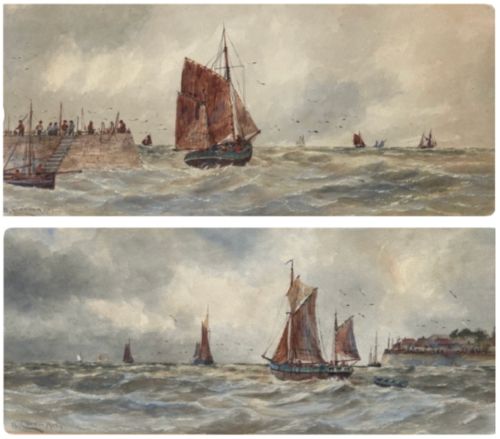
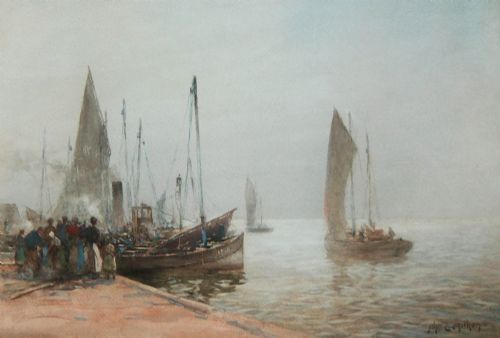
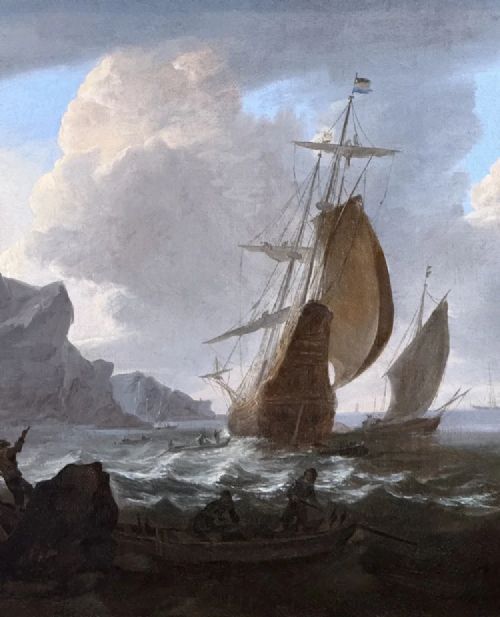
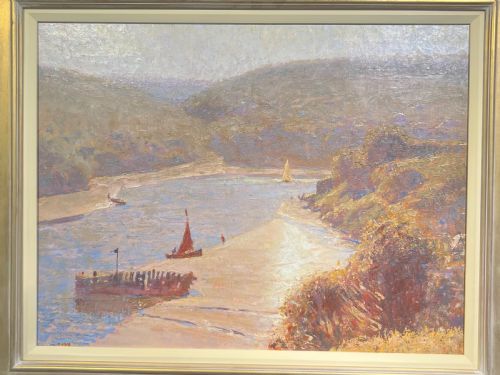
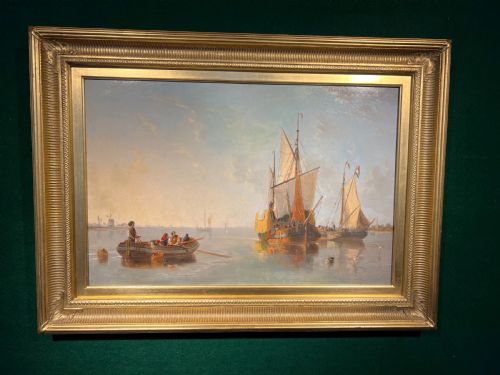
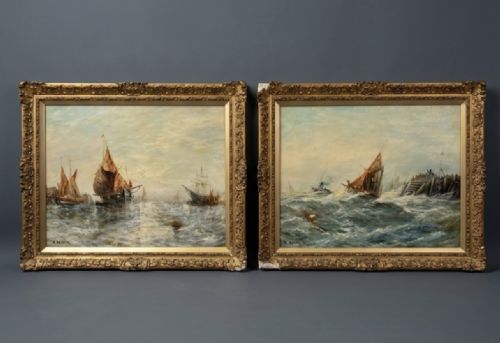
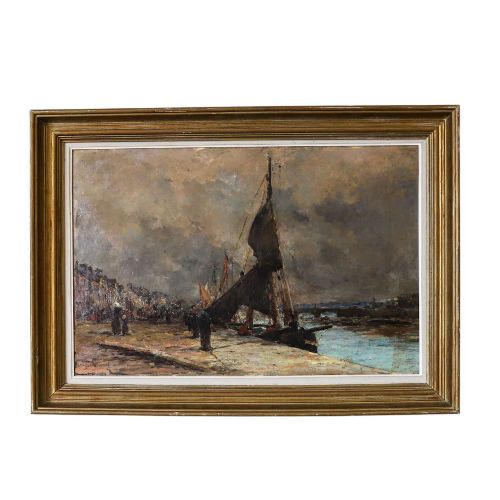
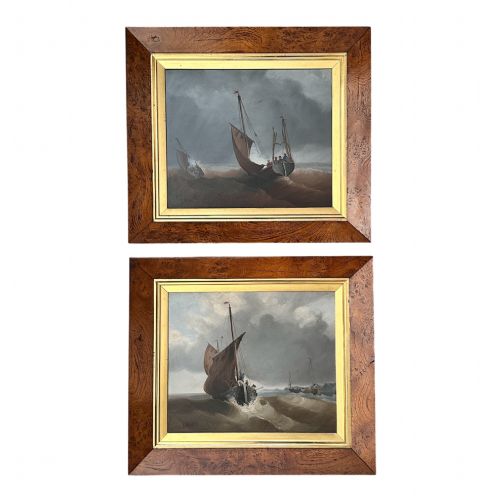
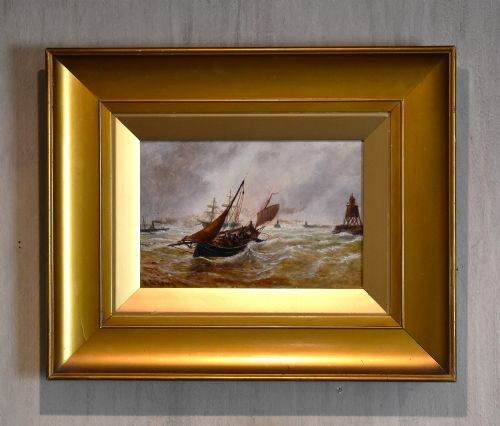
A coastal sailing boat painting depicts marine subjects ranging from quiet harbour moorings to vessels navigating stormy seas. Collectors encountering this genre will find pieces spanning the nineteenth and twentieth centuries, executed in various British and European styles.
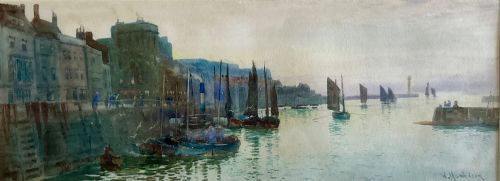
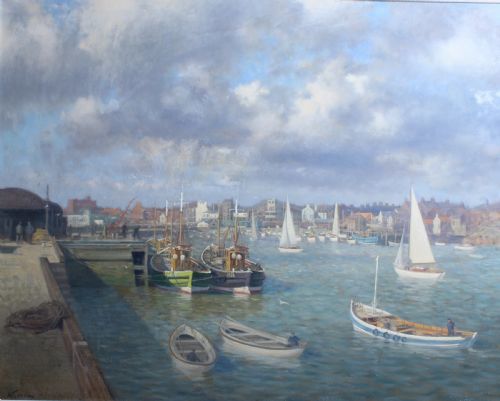
The subjects frequently record specific locations such as Whitby, Anstruther, and Dutch coastal waters. These works typically take the form of framed paintings on canvas, board, or paper.
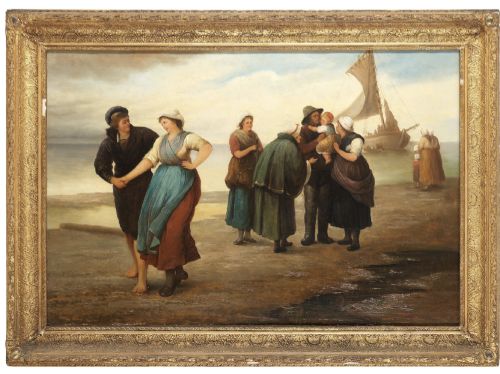
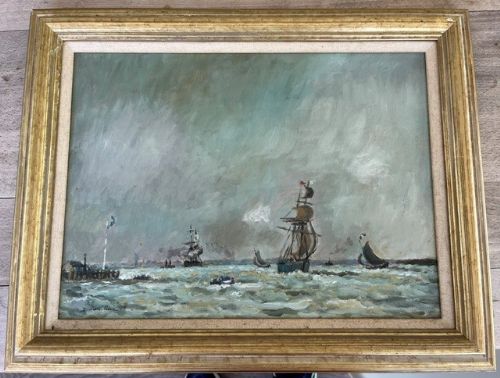
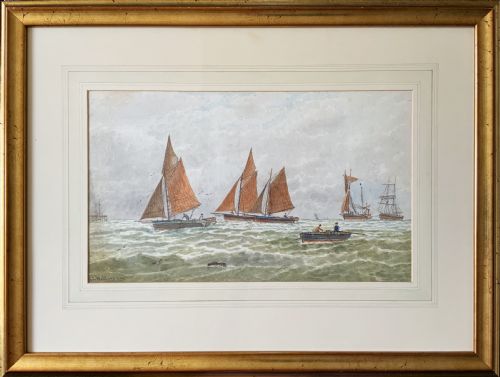
Examples on this page include watercolours and oil paintings created by named artists as well as unassigned regional school pieces. Buyers select these works to document historic maritime architecture and traditional sailing vessels.
Materials and technique
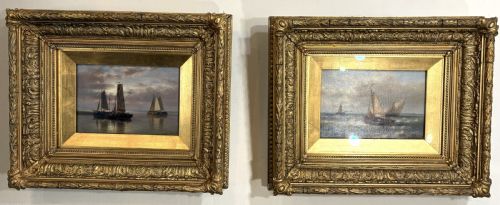
Artists record maritime subjects using oil paint on canvas or board, alongside delicate watercolours on paper. Oil mediums permit layered textures that render turbulent waves and atmospheric skies with depth.
Watercolour works rely on fluid washes of pigment to capture bright coastal light and open horizons. These paintings are commonly preserved within gilt wood frames that complement the tonal palette of the maritime scene.
Listings span periods from the seventeenth century through the mid twentieth century, utilising oil, watercolour, and gilt wood materials.
Judging quality in marine art
Quality rests upon the artist's ability to render the weight of water and the rigging of vessels with anatomical precision. Superior examples display confident brushwork that conveys motion and meteorological conditions convincingly.
The handling of light and perspective distinguishes accomplished academic or impressionist works from standard decorative pieces. Original framing and documented attribution further elevate the standing of a canvas.
Bonaventura Peeters·John Wilson Carmichael·John Moore of Ipswich·Abraham Hulk I·Thomas Bush Hardy·Edward Seago
The Coastal Sailing Boat Painting Glossary
- Seascape
- A work of art depicting the sea or marine subjects. These pieces focus primarily on open water, coastal views, and maritime weather.
- Gilt wood
- Wood coated with a thin layer of gold leaf or metallic paint. This material is standard for traditional picture frames intended to highlight the artwork.
- Provenance
- The documented history of ownership surrounding an artwork. A clear record verifies the authenticity and lineage of the piece.
- Impressionism
- An art style characterised by relatively small, thin yet visible brush strokes. This approach emphasises accurate depiction of light and its changing qualities.
Coastal Sailing Boat Painting: Frequently Asked Questions
How do I date a marine painting?
Dating relies upon stylistic markers, artist signatures, and framing methods recorded by the creator. Canvas types and stretcher construction also offer clues regarding the era of production.
Historical details within the subject matter, such as vessel rigging or harbour structures, help narrow down the decade in which the work was executed.
Where should I hang these paintings?
These works suit rooms with stable humidity levels away from direct sunlight to protect pigments and paper supports. Wall placement should account for the weight of traditional gilt wood frames.
Placing them at eye level in domestic spaces allows viewers to appreciate the fine brushwork and atmospheric depth of the maritime scene.
What is the difference between oil and watercolour?
Oil paint utilises a slow-drying medium that permits rich layering and textured depictions of stormy seas. Watercolour employs water-soluble binders on paper to create translucent, luminous effects.
Watercolours require protective glass framing, whereas oil canvases remain exposed to ambient air within their decorative surrounds.
How do regional schools differ?
British school paintings often focus on domestic coastal trades, local fishing fleets, and familiar ports like Whitby or St. Ives. Continental European works frequently depict Dutch coastal craft and northern gale conditions.
Palette choices and handling of light reflect the specific traditions taught within regional academies and workshops.