


Original Fruit Oil Painting
When you search for an original fruit oil painting, you encounter centuries of canvas and panel studies capturing apples, grapes, and pomegranates in period frames.
Original Fruit Oil Painting
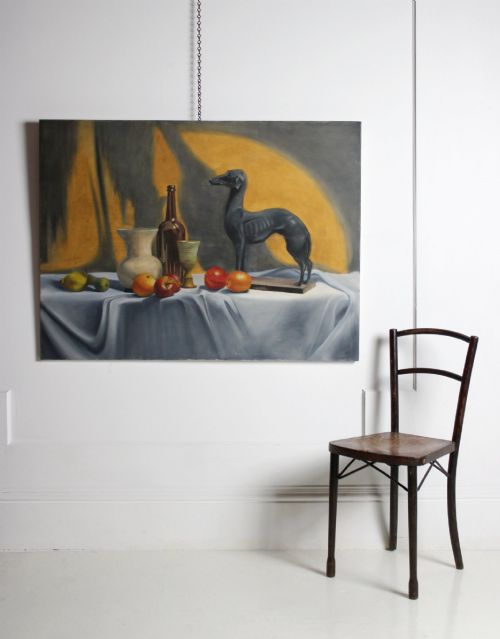
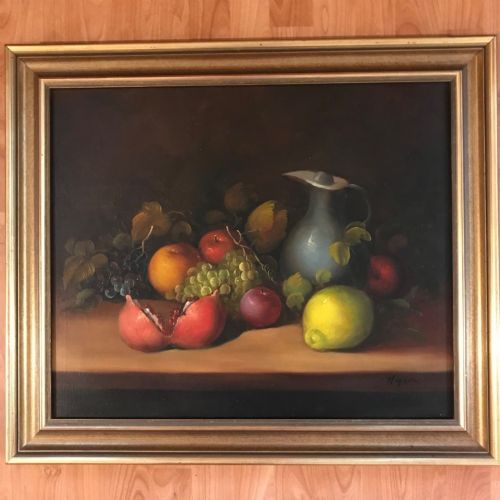
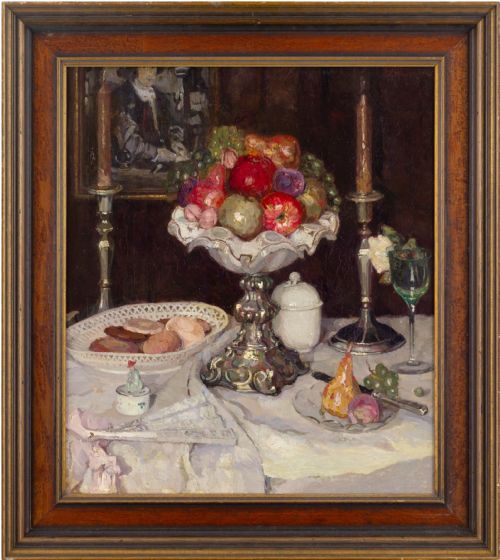
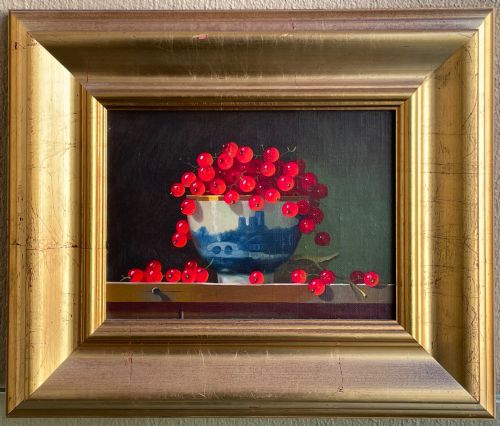
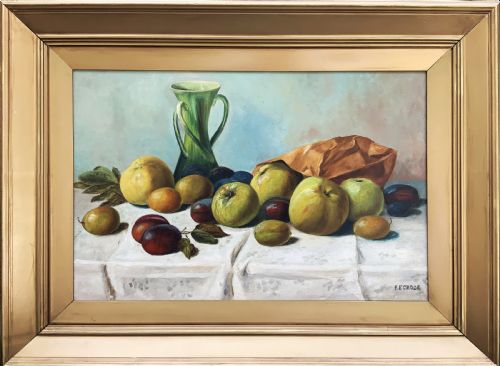
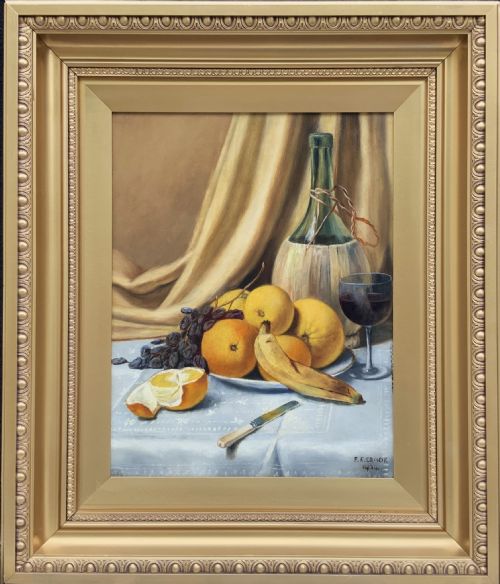
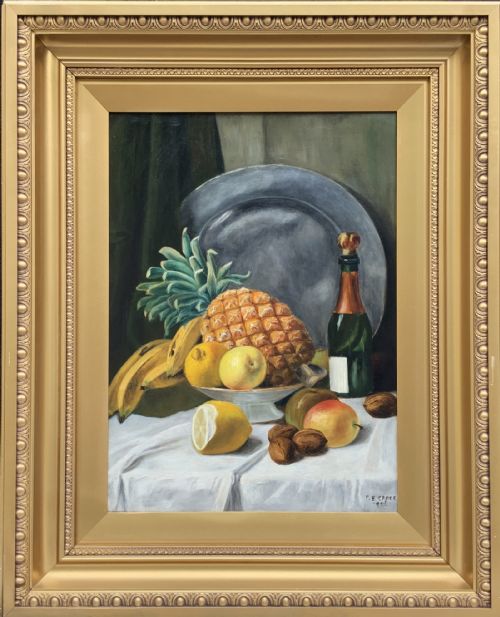
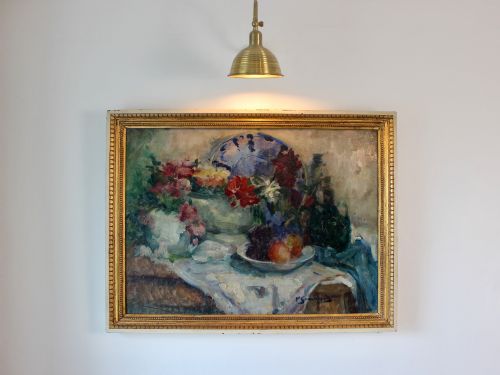
An original fruit oil painting depicts arrangements of produce, often accompanied by vessels, flowers, or glassware, rendered through traditional painting techniques. These works span from the nineteenth century through the mid-twentieth century, encompassing Victorian, Edwardian, Art Deco, and modernist movements.
The subjects range from tightly rendered classical realism studies of grapes and peaches to looser French colourist interpretations and mid-century European compositions. Works appear on stretched canvas, wood panels, milk glass, and board, frequently housed within their original gilt or solid wood frames.
How They Were Made
Artists applied oil paint to prepared surfaces such as woven canvas, wooden panels, or milk glass, utilising the slow-drying medium to build up rich textures and luminous colours. Paint layers create depth in depictions of fruit skins, porcelain vessels, and folded tablecloths.
Many works retain their period settings, featuring solid wood frames, ornate carved mouldings, or swept gilt decoration that reflects the framing conventions of the nineteenth and twentieth centuries.
Listings feature oil paintings on canvas, wood panel, board, and milk glass spanning the nineteenth century to the mid-twentieth century.
What Varies in Quality
The distinction between standard works and exceptional examples lies in the handling of light, shadow, and surface texture within the arrangement. Skilled painters capture the translucent quality of grapes and the varied weights of apples and pomegranates with precise tonal control.
The integrity of the original frame and the prominence of the artist's hand or signature contribute to the standing of a piece. Works retaining their period gilt or carved wooden surrounds offer a more complete historical context.
Else Preußner·Ian Parker·Vladimir Aldoshin·Victor Simonin·Evelyn Chester·Henri Joseph Pauwels·William Duffield·Vincent Clare·John Gilbey Bowles·Maud Frances Eyston Sumner·John Robertson Reid·Mary Fedden·E. Cremer·Oliver Clare·Alfred Arthur Brunel de Neuville·George Lance·R. Villa·Jozsef Molnar
The Original Fruit Oil Painting Glossary
- Canvas
- A heavy woven fabric stretched across a wooden frame to serve as a foundation for oil paint.
- Gilt
- A thin layer of gold leaf or gold paint applied to the surface of wood frames and decorative objects.
- Panel
- A flat piece of wood used as a rigid support for painting in place of flexible canvas.
- Still Life
- A painting featuring inanimate subject matter, typically everyday objects such as fruit, flowers, and tableware.
- Impressionism
- A nineteenth-century painting style focusing on accurate depiction of light and loose brushwork rather than rigid detail.
Original Fruit Oil Painting: Frequently Asked Questions
What periods do these oil paintings cover?
The available works span from the nineteenth century, through the Edwardian and Art Deco eras, into the mid-twentieth century and later modernist periods.
Paintings reflect the shifting artistic movements of their time, moving from classical realism to impressionism and mid-century European abstraction.
Are these paintings supplied in frames?
Many examples are presented in their original wooden, period, or swept gilt frames as recorded by the individual listings.
Frames frequently match the era of the canvas, adding to the historical integrity of the piece.
What surfaces were used for these paintings?
Artists painted on various supports including traditional canvas, solid wood panels, boards, and milk glass.
The choice of surface often corresponds to the date and school of the artist who created the work.
How are different art schools represented?
The selection includes examples from British, French, Spanish, Dutch, and Hungarian schools across different centuries.
Each regional school brings distinct approaches to colour, lighting, and composition within the still life genre.