
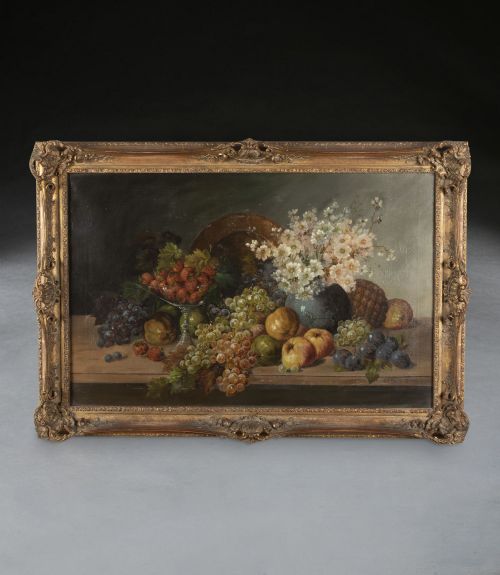


Traditional Fruit Still Life
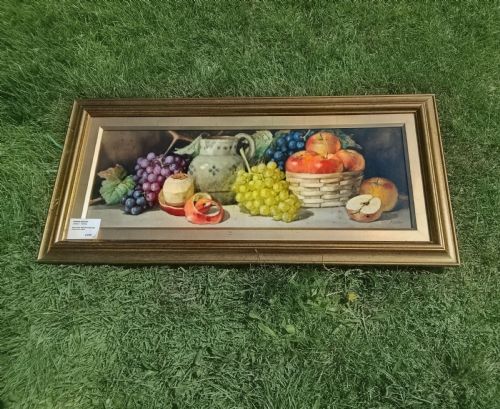
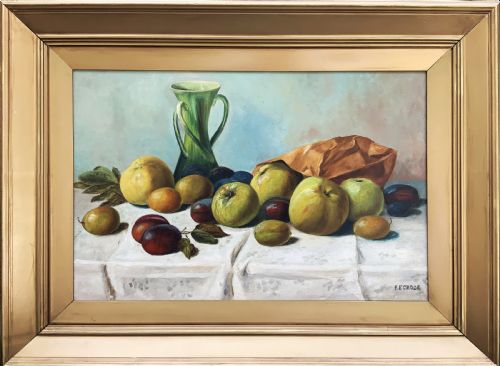
Traditional fruit still life paintings bring centuries of composed abundance to a wall, showing apples, grapes and baskets captured in oil.
Traditional Fruit Still Life
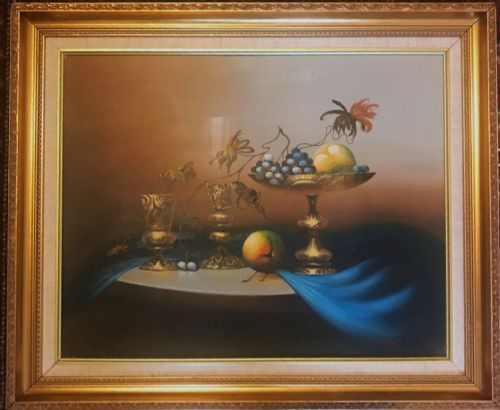
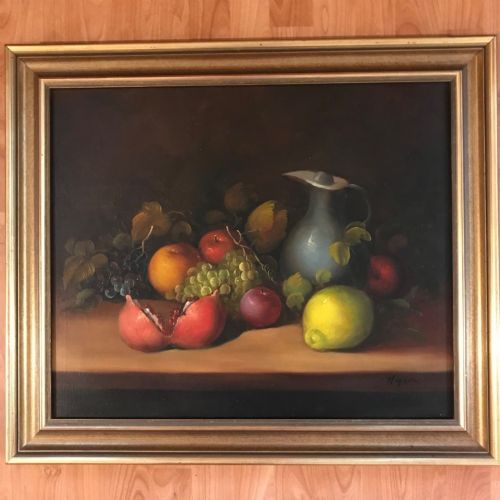
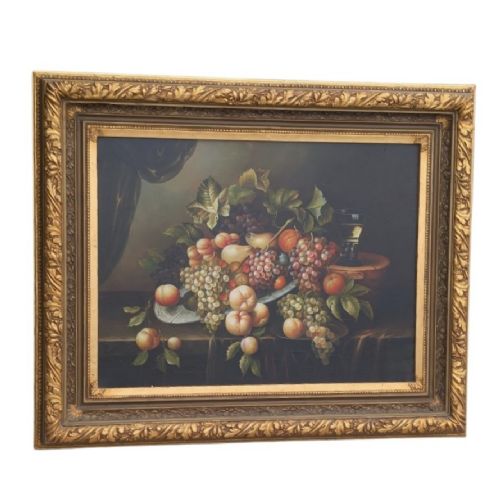
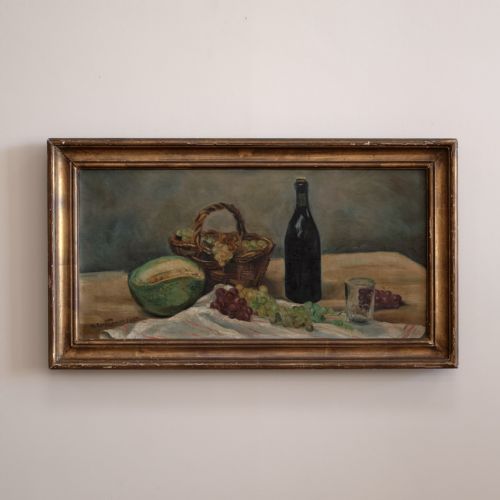
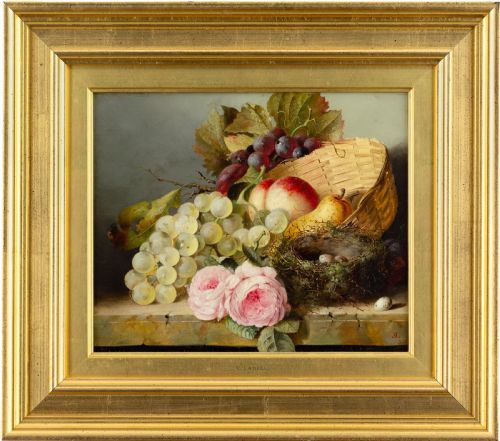
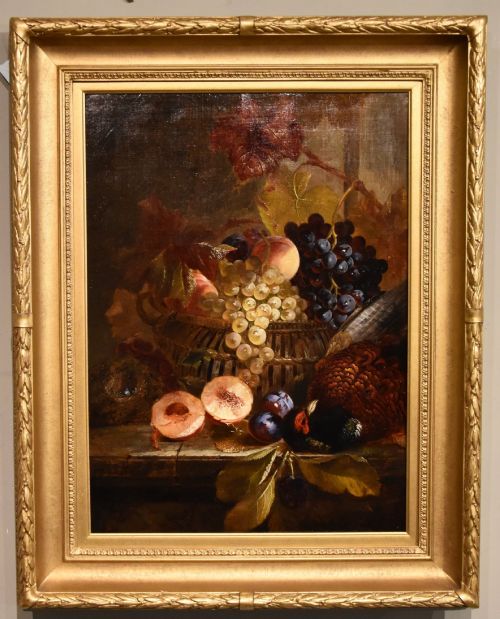
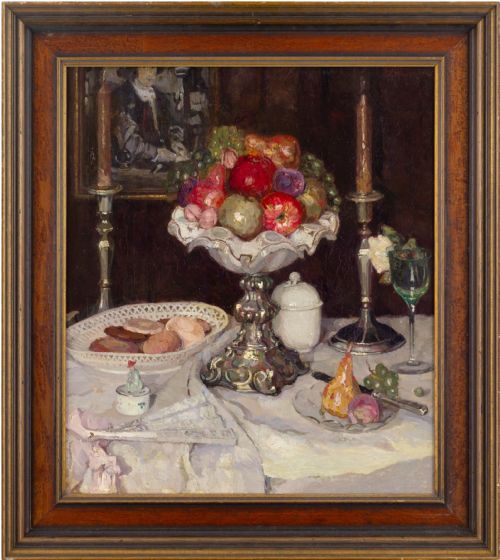
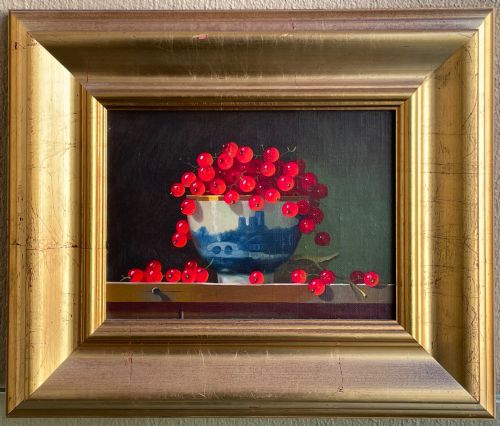
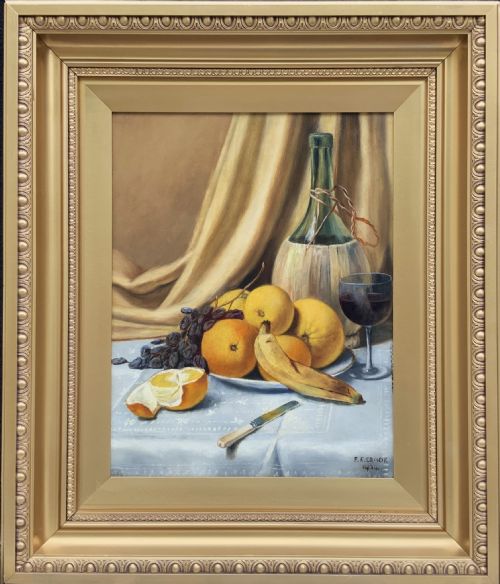
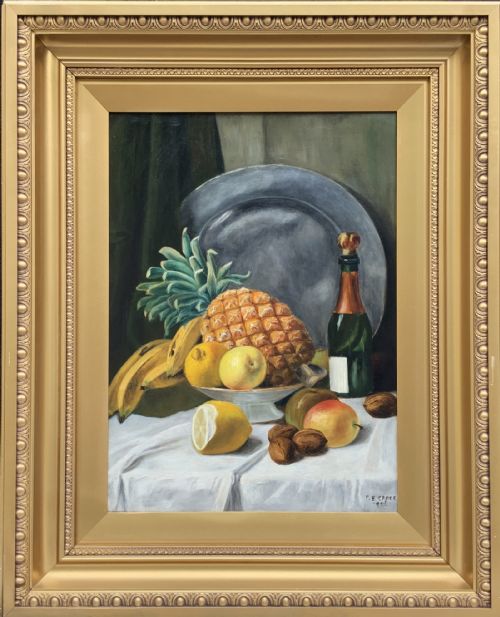
Traditional fruit still life compositions record arranged arrangements of food, baskets, and vessels on canvas or wood panel. These artworks span from the 18th century through the mid-20th century, capturing periods such as the Victorian and Edwardian eras. Buyers encounter pieces depicting apples, grapes, and pomegranates rendered in classical realism and baroque styles.
The subjects range from simple tabletop studies to detailed compositions featuring wine glasses, Chinese ginger jars, and birds' nests. Many canvases arrive housed in period giltwood or solid wood frames. The predominant formats include oil paintings and watercolours created by named artists and continental European schools.
Materials and methods
Painters utilised oil paint applied to stretched canvas or wooden panels, building rich layers of colour to depict the textures of fruit skins and woven baskets. Watercolours appear alongside oils on paper or card for more delicate studies.
Surviving works are frequently presented within original or period frames fashioned from carved wood, often finished with gold leaf or gilt. These frames protect the edges of the canvas and complement the warm tones of the pigment.
Listings feature oil paintings and watercolours on canvas, wood panel, and paper spanning the 18th, 19th, and 20th centuries.
Quality and execution
The standard of a traditional fruit still life depends upon the precision of brushwork and the handling of light across curved surfaces like grapes and melons. Superior examples show careful attention to shadow and reflection on glass jugs and ceramic jars.
The presence of a clear signature by an established painter distinguishes individual works from anonymous school studies. Furthermore, the survival of the original gilt frame contributes significantly to the integrity of the piece.
Jozsef Molnar·Edward Ladell·Else Preußner·Arthur Dudley·Evelyn Chester·Edward Duffield·Thomas Hooper·John Robertson Reid·William Jones of Bath·George Lance·James and William Ward
The Traditional Fruit Still Life Glossary
- Oil on canvas
- Pigment mixed with drying oil applied to a woven fabric support stretched across a wooden frame. This method allows for subtle blending and rich texture.
- Wood panel
- A flat wooden board utilised as a rigid support for painting before canvas became dominant. It provides a stable surface that preserves fine brushwork.
- Giltwood
- Wood that has been coated with a thin layer of gold leaf or metallic powder. It frames many traditional paintings with a reflective, ornate border.
- Still life
- A work of art depicting mostly inanimate subject matter, typically commonplace objects such as fruit, flowers, and tableware. These arrangements allow artists to focus on form and light.
- Classical realism
- An artistic style focused on accurate, lifelike representation of the visual world without stylistic distortion. It underpins much of the traditional fruit painting tradition.
Traditional Fruit Still Life: Frequently Asked Questions
What periods do these paintings come from?
The works originate from several eras, stretching from the 18th century through the Victorian and Edwardian periods up to the mid-20th century. Many pieces reflect the academic and realistic tastes of the nineteenth century.
Buyers will also find early 20th-century examples continuing classical traditions of composition and subject matter.
What objects usually appear in these compositions?
Common motifs include apples, grapes, pomegranates, and baskets filled with seasonal produce. Secondary elements such as wine glasses, Chinese ginger jars, and birds' nests frequently join the fruit.
These items were arranged by artists to test their skill in rendering contrasting textures, from soft fruit flesh to hard ceramic and woven wicker.
How should I hang a canvas painting?
Oil paintings on canvas require stable indoor environments away from direct sunlight and excessive humidity fluctuations. Using picture wire attached securely to sturdy wall fixings ensures safe display.
Allowing the canvas to breathe without pressing directly against damp walls preserves the integrity of the wood stretcher and paint layer.