


Victorian Fruit Picture
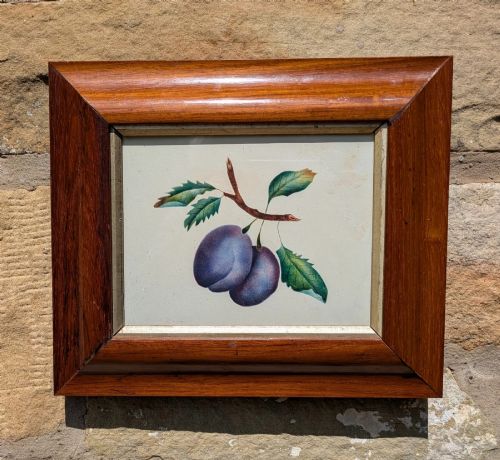
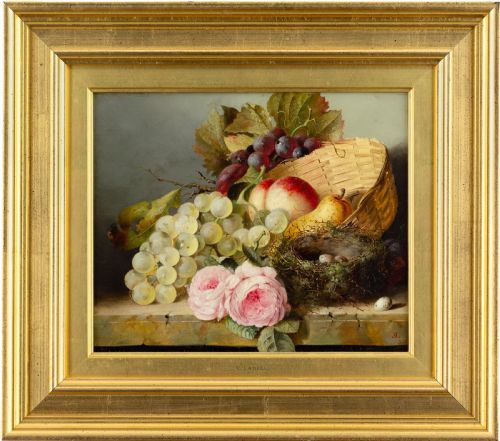
A victorian fruit picture brings the rich abundance of the parlour onto the wall in oil, watercolours or porcelain.
Victorian Fruit Picture
When you search for a victorian fruit picture, you encounter framed studies of apples, grapes, plums and baskets, executed with close observation. The items on this page span the nineteenth century, including works from eighteen fifty, eighteen eighty, and nineteen hundred, alongside occasional later interpretations.
You will find these subjects rendered across several distinct mediums. The selection includes oil on canvas, watercolours on paper, porcelain plaques, and porcelain panels housed in wood or giltwood frames.
How they were made
Artists built these compositions using oil paints on canvas or porcelain panels, often capturing the bloom upon grapes and the sheen of wicker baskets. Watercolours on paper provide a lighter alternative, deployed with fine brushwork to delineate plums, roses and foliage.
Framing played an integral part in the presentation, utilising wood, rosewood, and giltwood to complement the rich tones of the subject matter. Porcelain plaques from factories such as KPM demonstrate specialised firing and hand-painting techniques executed on a rigid ceramic surface.
The selection spans the nineteenth century, encompassing dates from eighteen fifty to nineteen hundred alongside later pieces.
What varies in quality
Quality rests upon the precision of the draughtsmanship and the naturalism of the arrangement. Superior works capture the translucent skin of fruit and the texture of surrounding foliage with conviction.
The integration of the frame with the artwork influences the overall character. Original giltwood or rosewood surrounds that match the period of the painting elevate the piece.
Edward Ladell·William Duffield·Vincent Clare·Helena Maguire·KPM·John Robertson Reid·William Rayworth·John Sherrin
The Victorian Fruit Picture Glossary
- Giltwood
- Wood carved and coated with gold leaf or metallic gilt. This finish was widely utilised for nineteenth-century picture frames.
- Porcelain plaque
- A flat sheet of fired ceramic material used as a stable support for fine hand-painted imagery. These panels provide a smooth surface for detailed still life subjects.
- Watercolour
- A paint consisting of pigment suspended in a water-soluble binder applied to paper. It yields transparent washes suitable for botanical and fruit studies.
- Still life
- An artwork depicting inanimate subject matter, typically commonplace objects such as fruit, baskets and vases. These compositions allowed artists to showcase mastery of light and colour.
Victorian Fruit Picture: Frequently Asked Questions
What is a victorian fruit picture?
It is a painted study of fruit, such as apples, grapes and plums, typically arranged in baskets or with vases during the nineteenth century. These works capture the Victorians' fascination with domestic abundance and natural history.
You encounter them executed in oil on canvas, watercolours on paper, or hand-painted directly onto porcelain panels. Each medium offers a distinct visual texture suited to period interiors.
How were these paintings displayed?
They were customarily hung in dining rooms, parlours and drawing rooms to reflect notions of hospitality and domestic comfort. The rich colours of the fruit complemented heavy wooden furniture and patterned wallpapers.
Most pieces are housed within their original wood, rosewood, or giltwood frames, which were selected to enhance the warmth of the composition.
How do I care for a porcelain plaque?
Porcelain panels require stable indoor environments away from direct sunlight and excessive moisture. Dust the surface gently with a soft, dry cloth without applying liquids.
Ensure the hanging wire and structural support of the frame remain secure to protect the rigid ceramic plaque from impact.
Are watercolours and oils framed differently?
Watercolours on paper are typically set behind glass with mounts to protect the delicate medium from airborne pollutants and humidity. Oil paintings on canvas or porcelain are generally open to the room or protected by glass in specific instances.
Examining the backing boards and frame construction helps determine whether the presentation remains true to the period.