
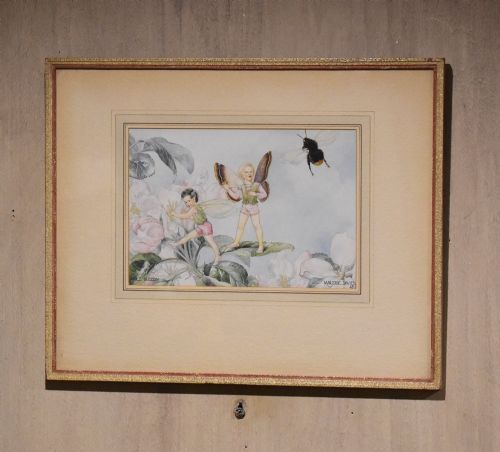
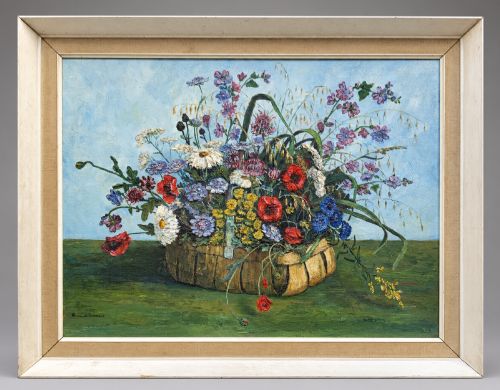
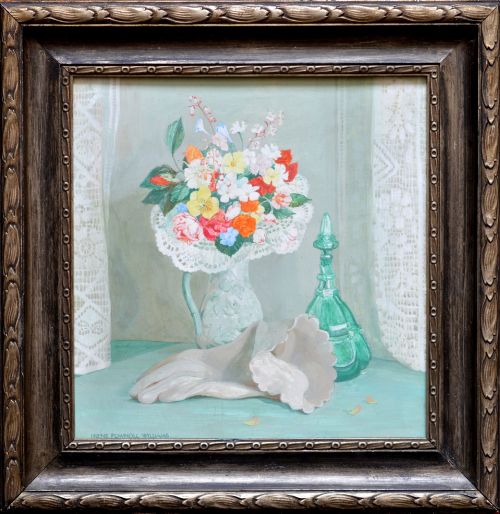
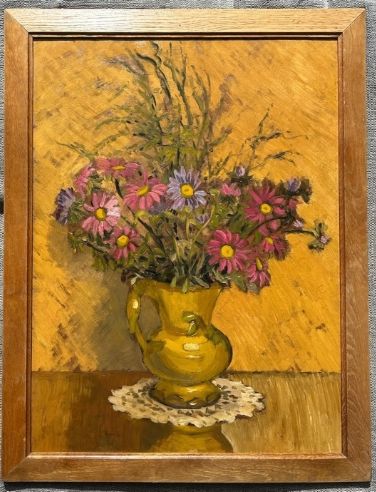
Original Floral Wall Art
Original floral wall art brings hand-painted blooms and botanical studies into interiors through oil, watercolour and canvas.
Original Floral Wall Art
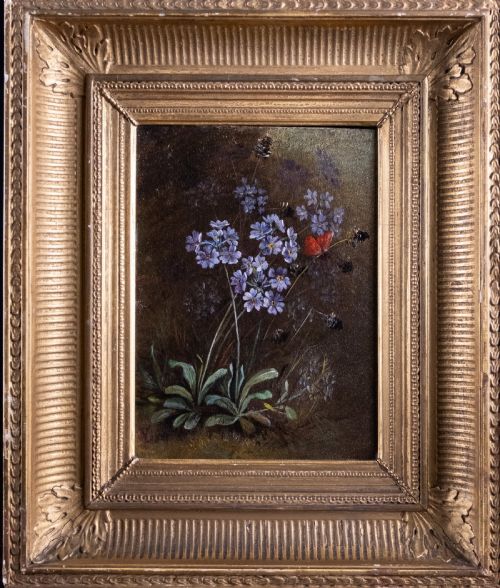
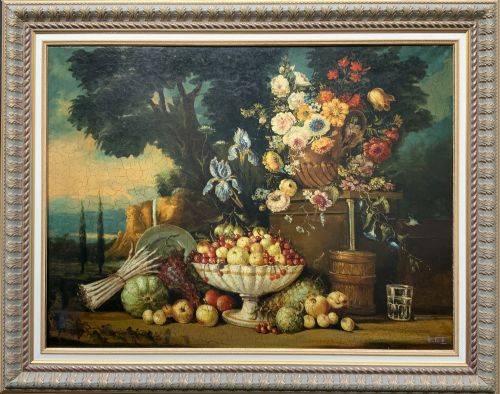
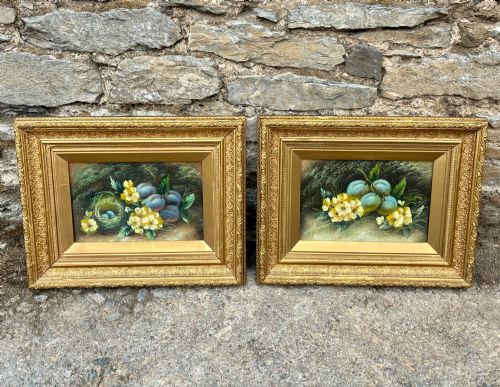
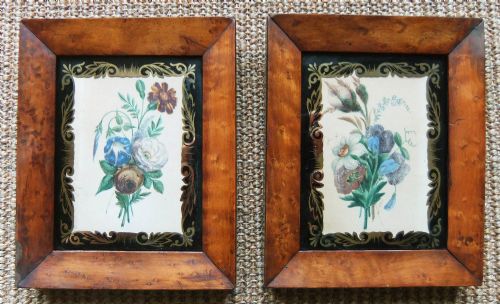
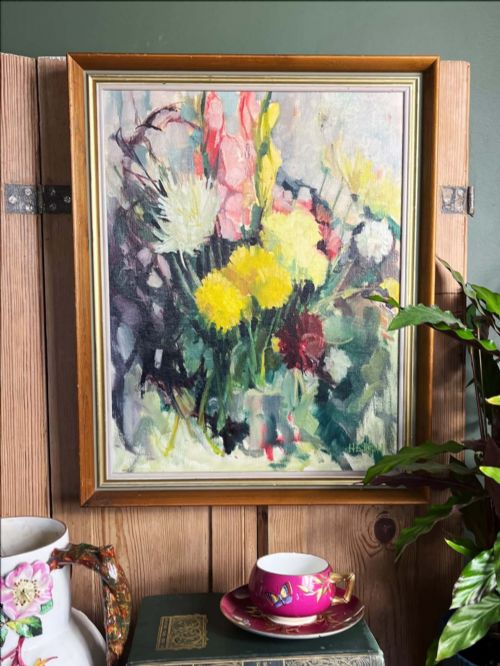
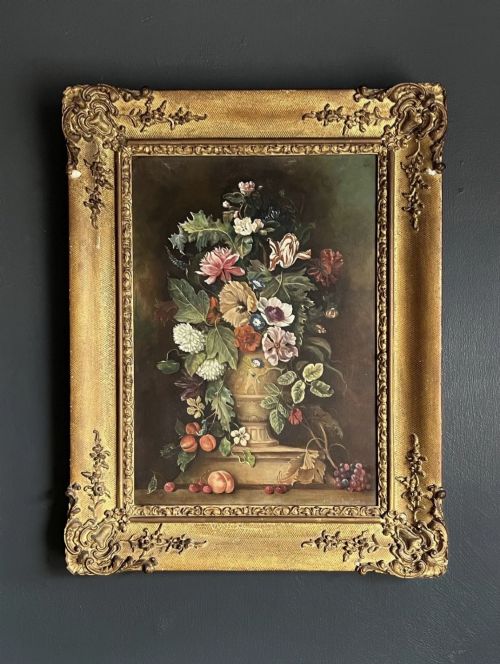
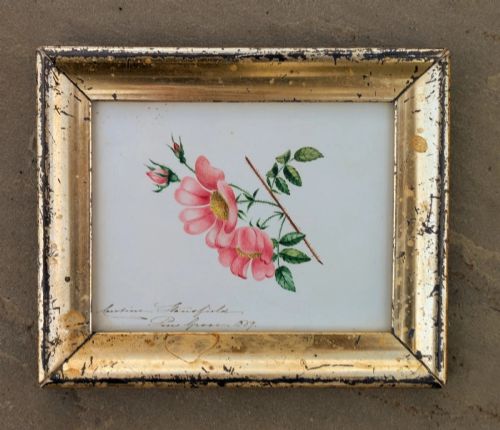
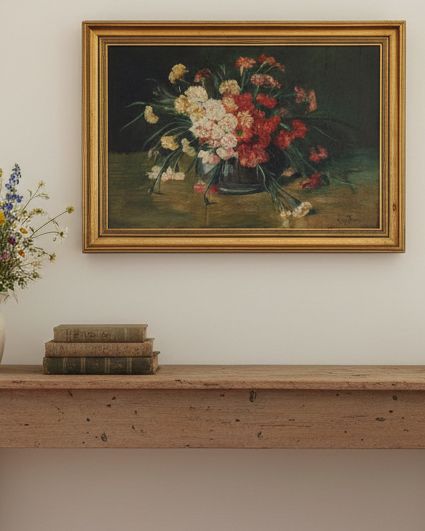
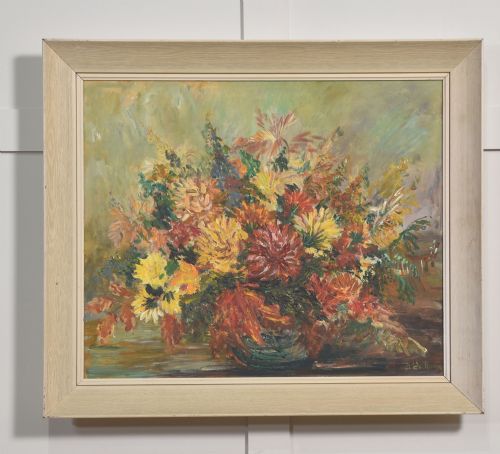
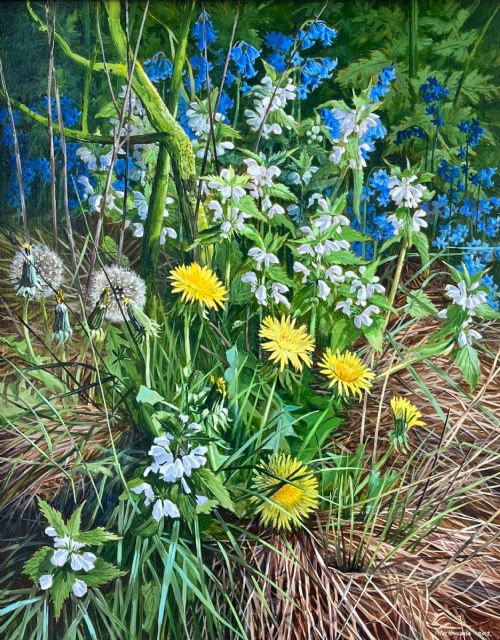
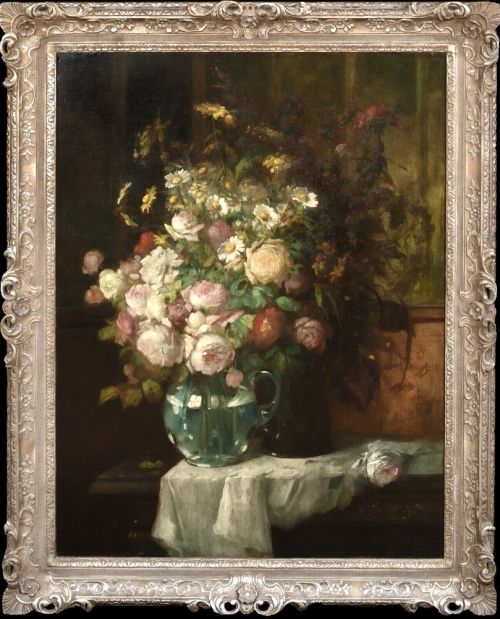
Buyers seeking original floral wall art encounter still life paintings, botanical watercolours and framed canvas works depicting garden scenes and arrangements. These pieces range from nineteenth-century studies to mid-century impressionist compositions executed across British and European traditions.
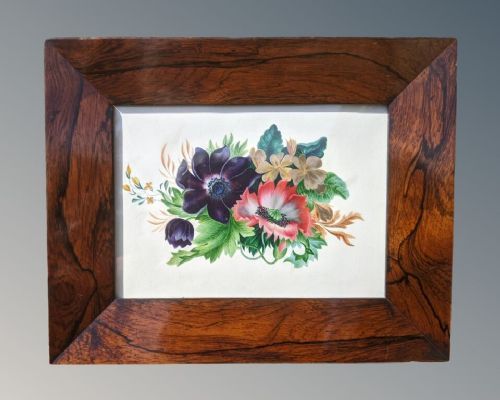
The selections span delicate nineteenth-century watercolours of wild roses and fuscias alongside bolder oil paintings on board and canvas from the 1930s to the 1960s. Common formats include framed floral displays in vases, garden views and intimate interior studies featuring seasonal blossoms.
Materials and technique
Paintings in this category utilise oil paint or watercolour applied to canvas, paper, wood panels or board. Artists built up their compositions using traditional brushwork, occasionally framing the finished works in gilt gesso or simple wooden frames.
Support materials vary from stretched canvas and heavy watercolour paper to wooden panels and board. Many period pieces retain their original frames, incorporating glass for works on paper and gilt ornamentation for oils.
Listings feature oil paintings, watercolours and gouache works on canvas, paper, wood and board across Victorian to mid-century periods.
Judging quality in floral works
Quality rests upon the confidence of the brushwork, the handling of light within the arrangement and the harmony of the palette. Stronger pieces display assured draughtsmanship in the rendering of petals, foliage and vessels rather than stiff, mechanical reproduction.
The condition of the pigment and the sympathetic matching of the frame to the artwork influence the visual impact. Works that retain vibrant colouration without heavy overpainting or stabilization display greater artistic integrity.
Irene Christobelle Pownoll Williams·Kenneth Cozens·Konstantin Stoitzner·Manuela Bonati·Victor Simonin·Owen Bowen·James Tower·Gertrude Hayes·Winifred Turner·Henrietta Creswell·Amile Coppieters·Florence Hess·Ernest Higgins Rigg·Kershaw Schofield
The Original Floral Wall Art Glossary
- Still life
- An artwork depicting inanimate subject matter, typically commonplace objects such as cut flowers in a vase. These arrangements allow artists to focus on colour, light and composition.
- Gouache
- An opaque water-based paint that includes a white pigment to create a heavier, denser finish than traditional watercolour. It produces matt surfaces with strong colour saturation.
- Gesso
- A paint mixture consisting of a binder mixed with chalk, gypsum or pigment, used to prepare wood or canvas surfaces. In framing, it provides a smooth base for gilding.
- Impressionism
- A nineteenth-century painting style characterised by relatively small, thin yet visible brush strokes and an emphasis on accurate depiction of light. Artists working in this manner capture transient visual impressions.
- Board
- A rigid flat substrate used instead of canvas for painting. Artists frequently utilised wooden boards or fibrous panels during the twentieth century.
Original Floral Wall Art: Frequently Asked Questions
What periods do these paintings cover?
The works span from the nineteenth century through the Edwardian era and into the mid-twentieth century. Mid-century impressionist and 1930s modernist pieces appear alongside Victorian botanical watercolours.
Dates are established through stylistic evidence, signatures, artist records and occasional inscriptions left by the painters on the reverse of the canvas or board.
How should I hang these artworks?
These framed paintings suit domestic spaces where natural light enhances the painted pigments. Match the weight of the frame to the wall space and keep pieces away from direct heat sources.
Ensure secure fixings suited to the weight of the particular wooden frame, canvas or glass-fronted watercolour.
Are these works signed by the artists?
Many pieces feature visible artist signatures or monograms applied directly onto the canvas, board or paper by the painter's hand. Some works retain period framing or gallery labels on the reverse.
Unsigned pieces rely on stylistic markers, handling of medium and period materials to indicate their origin and approximate decade of creation.
What subjects feature in these floral works?
Compositions frequently present cut flowers arranged in ceramic jugs, glass vases or terracotta pots. Other examples capture garden scenes, hedgerows and mixed botanical studies of roses, carnations and peonies.
The inclusion of surrounding domestic objects, such as bowls of fruit or interior table settings, adds context to the central floral arrangement.