
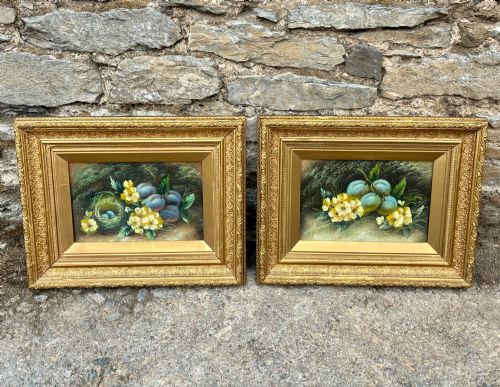
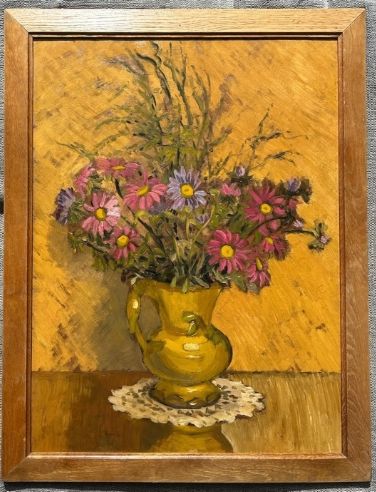
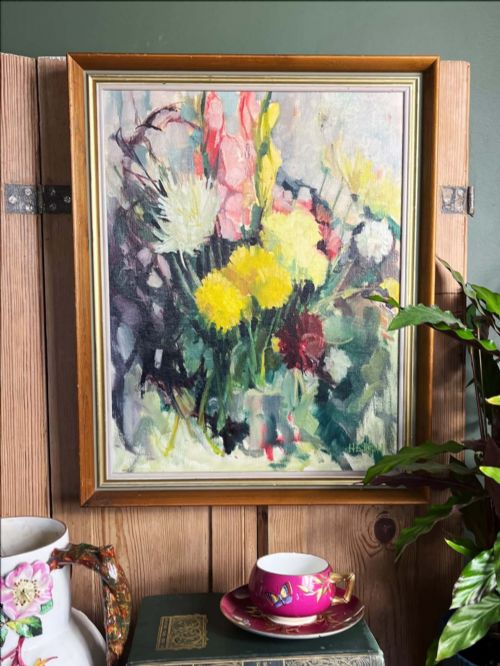
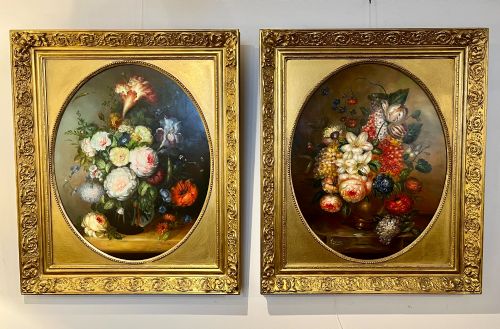
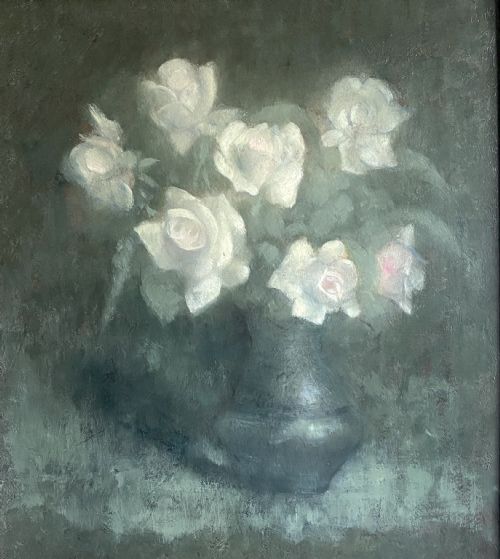
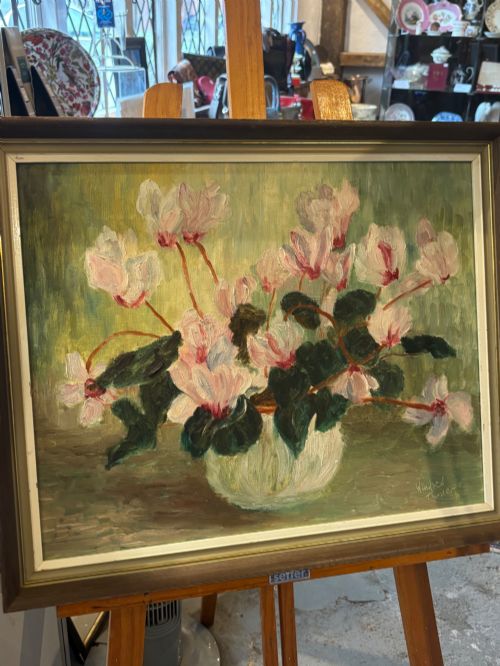


Oil on Board Floral
Oil on board floral paintings bring vibrant botanical studies into a room, offering rich brushwork and enduring character.
Oil on Board Floral
When you search for oil on board floral, you encounter intimate still life studies and garden scenes rendered directly onto rigid supports. These works range from early nineteenth-century Italian compositions to mid-century British and French modernist interpretations.
You are most likely to meet mid-twentieth-century examples on this page, alongside works from the 1910s, 1920s, and 19th century. The subjects focus predominantly on vases of flowers, chrysanthemums, roses, and garden tables rendered in varied regional styles.
The format provides a sturdy alternative to canvas, allowing artists to apply thick impasto and expressive brushstrokes directly to wood or compressed board. Painters adopted this medium across diverse movements, from Dutch Golden Age revivals to Art Nouveau and French Post-Impressionism.
Materials and technique
Artists painted using oil paint applied directly onto prepared wood and board supports. The rigid ground allowed for both smooth academic blending and heavy, textured impasto applications.
Many works retain their original decorative gilt or wooden frames, which complement the depth of the oil pigment. The combination of stable board supports and rich oil media ensured these botanical studies survived across decades with minimal structural loss.
Several panels capture the charming chaos of toppled flower pots and stray petals scattered across garden tables.
Assessing quality
Quality rests upon the confidence of the brushwork and the harmony of the colour palette within the floral arrangement. Stronger pieces display deliberate handling of light and shadow, particularly in the rendering of petals and vessels.
The distinction between standard decorative pieces and superior works lies in the artist's command of spatial depth and expressive movement. Framed presentation and the preservation of the original paint surface further elevate the standing of an individual board.
Kenneth Cozens·Winifred Turner·Albert E Jackson·Nicolas Issaiev·W E Littlewood·Bertoldo Taubert·Rémy Hétreau·Sylvain Vigny
The Oil on Board Floral Glossary
- Oil on board
- A painting execution where oil paint is applied to a rigid wooden panel or board rather than stretched canvas. This technique provides a firm resistance for the brush.
- Impasto
- Paint applied thickly to a surface, standing out in relief from the board. It gives the floral petals and stems a tactile, three-dimensional quality.
- Still life
- A work depicting inanimate subject matter, typically commonplace objects such as flowers in a vase. Botanical studies dominate this particular category.
- Art Nouveau
- An international style of art and design that peaked in popularity around the turn of the twentieth century. It manifests in these paintings through fluid, organic floral lines.
Oil on Board Floral: Frequently Asked Questions
What is an oil on board floral painting?
These works are compact paintings executed with oil-based pigments upon wooden boards or panels, depicting botanical subjects like vases of flowers.
They capture fleeting natural arrangements through the durable medium of oil paint.
How should I display these paintings?
Mount the board securely on a wall away from direct sunlight and excessive humidity to protect the oil pigments and wooden support.
Pairing the piece with its original gilt frame enhances its visual presence in a study or living space.
How do I date an oil on board floral?
Examine the stylistic markers, such as Art Nouveau curves or mid-century modernist abstraction, alongside the construction of the board.
Signatures, framing techniques, and recorded periods help place the work within nineteenth or twentieth-century traditions.
Are these works originals?
The selections comprise original hand-painted works created by individual artists rather than mass-produced prints.
Each board records the direct touch of the painter's brush and distinctive pigment mixing.