

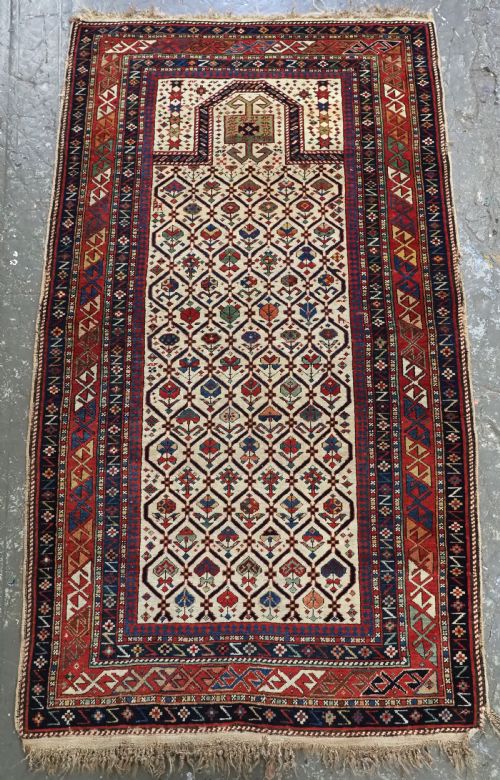
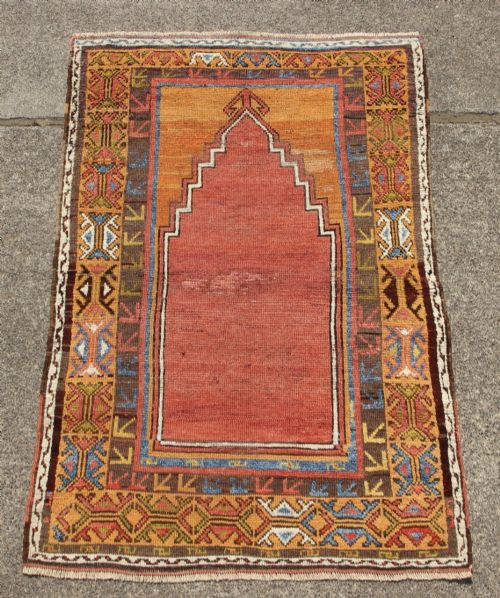
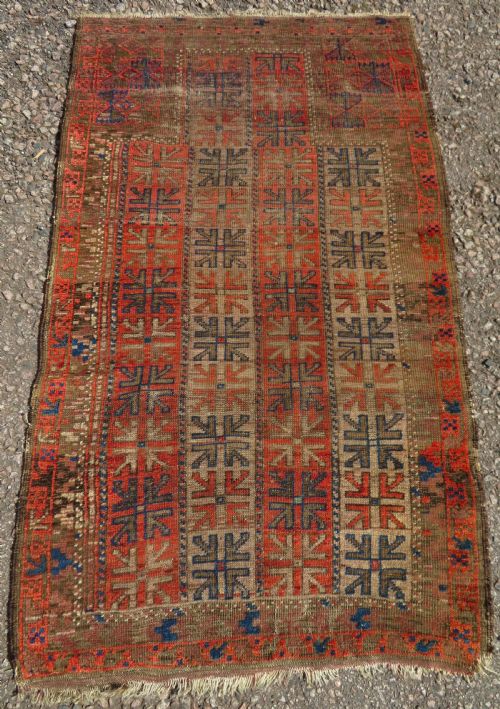
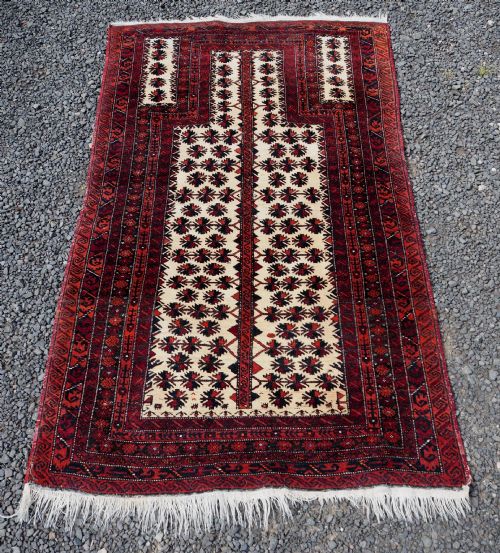

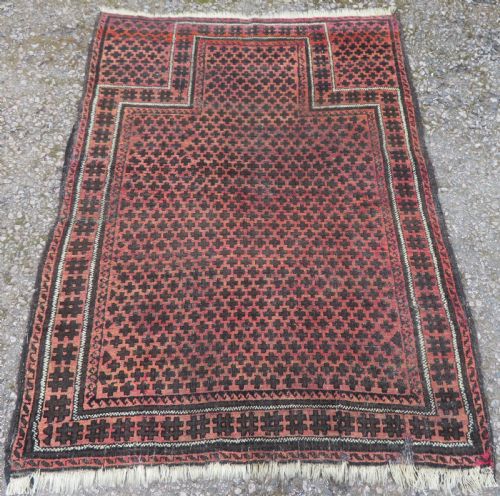

Oriental Wool Prayer Rug
An oriental wool prayer rug brings traditional nomadic and village weaving directly into domestic spaces through distinctive niche designs.
Oriental Wool Prayer Rug
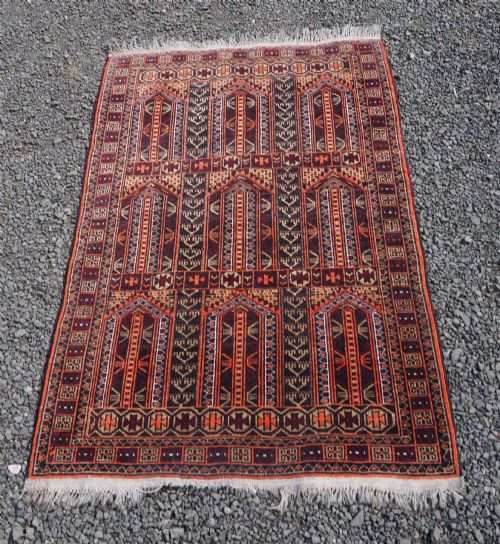
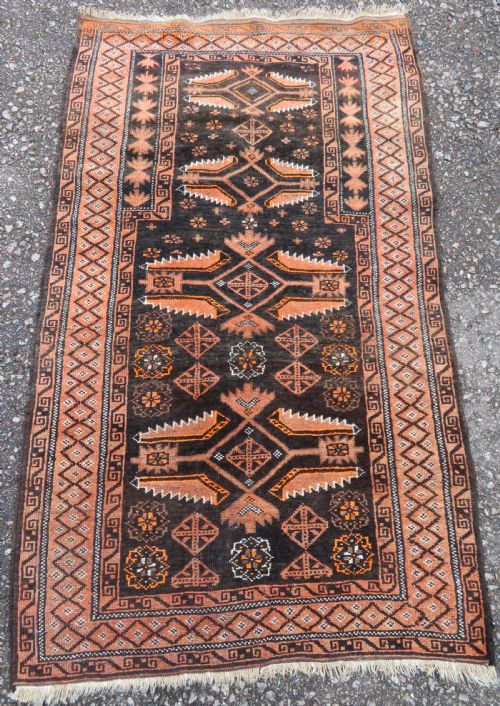
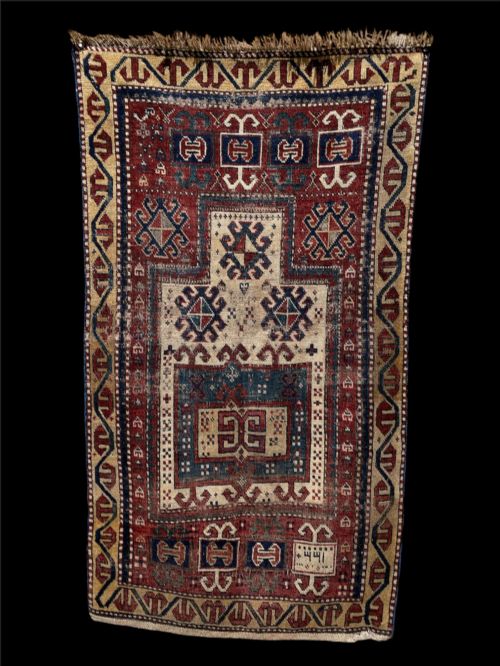
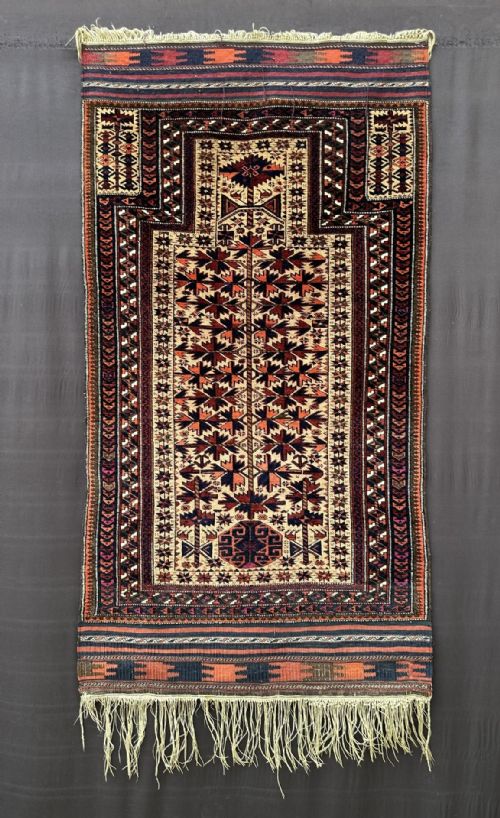
When searching for an oriental wool prayer rug, collectors encounter regional pieces originating from Anatolia, the Caucasus, Persia, and Afghan tribal territories. These textiles typically measure in area rug formats suited to domestic placement and floor display.
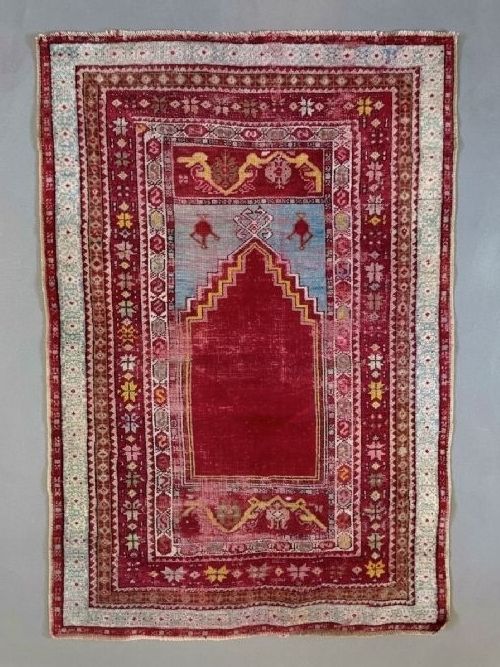
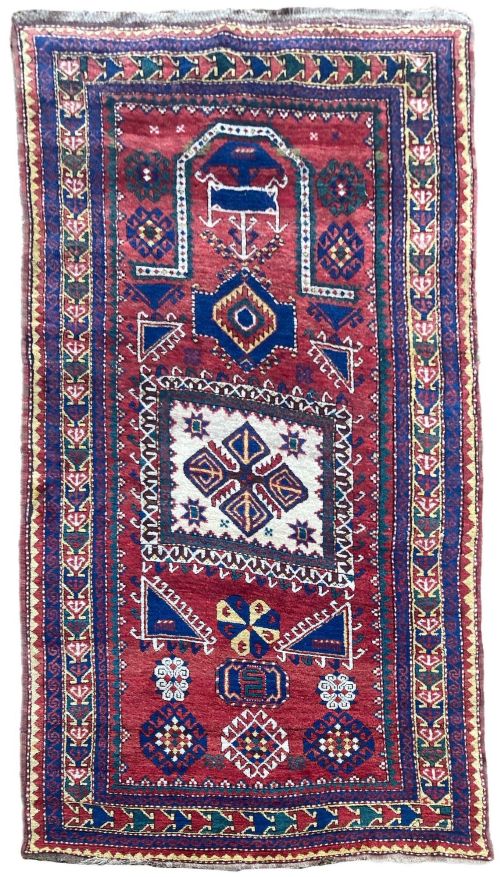
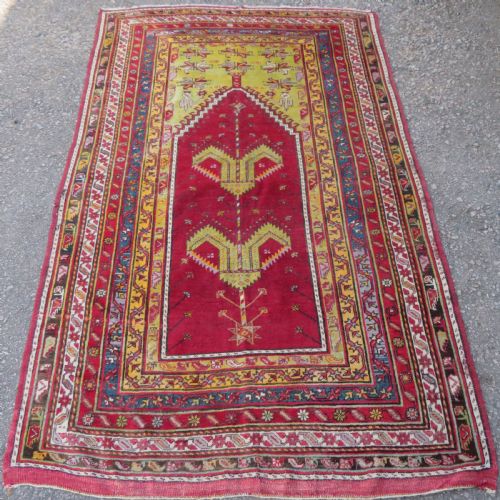
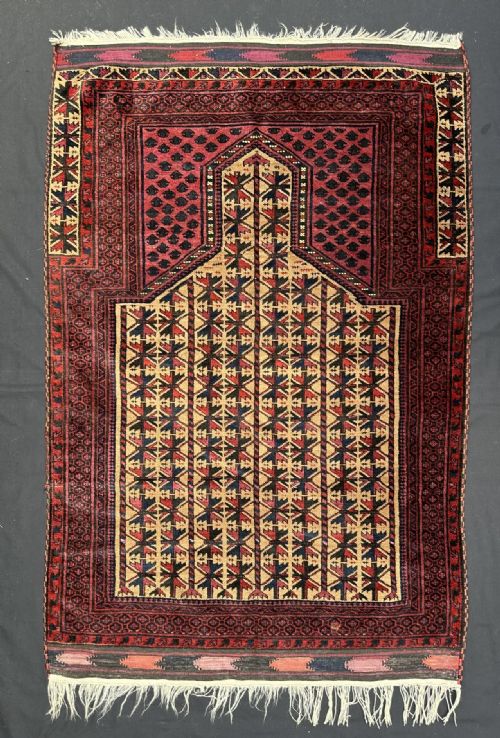
The primary architectural feature defining this category is the mihrab, a niche design signifying the direction of prayer. Examples range from single arches to double mihrabs and complex lattice formats produced across village and nomadic workshops.
Dating across the selection spans from the mid nineteenth century into the early twentieth century. Common stylistic attributions include Kazak, Baluch, Ghiordes, and Kirsehir traditions.
Materials and construction
Construction relies heavily on animal fibres, utilising hand-spun wool, camel wool, and goat hair alongside cotton foundations. These natural materials provide the structural durability characteristic of village and tribal floor coverings.
Colour relies on traditional dye sources, including natural dyes that create varied patination over decades of exposure and use. Weaving techniques incorporate long kilim ends and mixed technical structures unique to specific tribal groups such as the Taimani and Timuri.
Nomadic weavers occasionally embedded small protective amulets or asymmetrical motifs directly into the wool pile to ward off misfortune.
Assessing the weaving
Quality differences emerge through the crispness of the mihrab geometry and the precision of floral lattice or geometric motifs. Tighter knot density and finer preparation of hand-spun wool generally indicate superior workshop execution.
The integrity of the foundation materials and the richness of the natural dye palette influence the overall visual impact. Surviving edge finishes and original kilim ends contribute significantly to the preserved state of older specimens.
The Oriental Wool Prayer Rug Glossary
- Mihrab
- The arched niche design set into the field of the rug, denoting the direction of prayer. This architectural motif serves as the central focal point for most regional prayer rugs.
- Kilim end
- Flat-woven sections extending beyond the knotted pile at the top or bottom of the rug. These portions protect the pile from fraying and often display supplementary tribal patterns.
- Natural dyes
- Colourants derived from plant, insect, and mineral sources prior to the introduction of synthetic alternatives. They produce nuanced tones that age with distinct patination.
- Kazak
- A stylistic classification originating from the Caucasus region. These rugs are known for bold geometric designs and saturated primary colours.
- Baluch
- A designation for rugs produced by Baluch nomadic and village groups inhabiting the borderlands of Persia and Afghanistan. They frequently feature dark wool foundations and camel hair accents.
Oriental Wool Prayer Rug: Frequently Asked Questions
What is a mihrab?
The mihrab is the arched niche depicted on the field of the rug. It references Islamic architectural prayer niches and directs the visual layout of the textile.
In practical terms, it helps weavers centre their geometric and floral compositions. Collectors use the shape and proportion of the mihrab to identify specific regional weaving styles.
Where were these rugs made?
Production centres span Anatolia, the Caucasus, Persia, and the borderlands between Afghanistan and northeast Persia. Village cooperatives and nomadic tribes both contributed to this output.
Specific towns like Kirsehir, Ghiordes, and Kashan developed distinct local aesthetics. Tribal groups including the Baluch and Timuri maintained their own recognizable weaving traditions.
How do I care for an antique rug?
Gentle vacuuming without a rotating beater bar prevents dust accumulation in the wool pile. Keeping the textile away from direct sunlight preserves the stability of natural dyes.
Professional specialist cleaning is recommended for antique wool and cotton textiles. Placing a breathable underlay beneath the rug prevents slipping and reduces fibre friction.
How do I date an older rug?
Dating relies on assessing material characteristics, natural dye chemistry, and structural wear patterns. Examining the twist of the hand-spun wool and the composition of foundation threads provides clues to the period.
Stylistic motifs often align with known regional timelines from the nineteenth and early twentieth centuries. Comparing border designs against documented examples helps narrow down the decade of manufacture.