
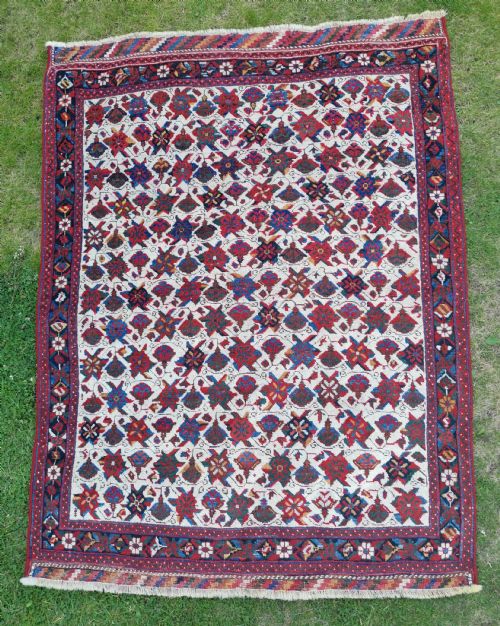
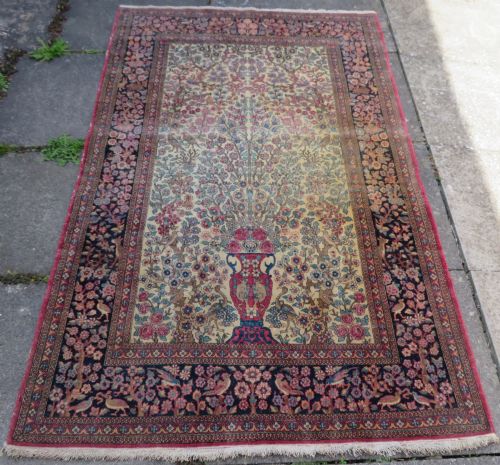
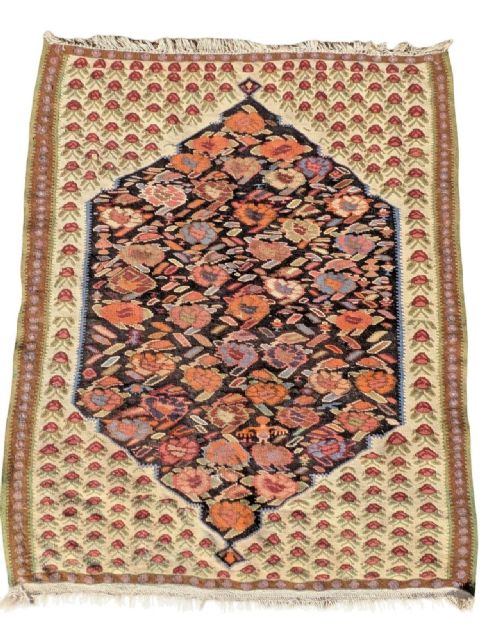
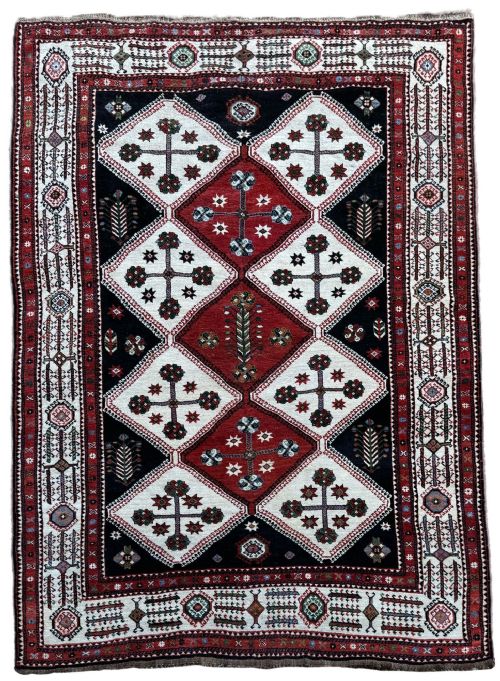
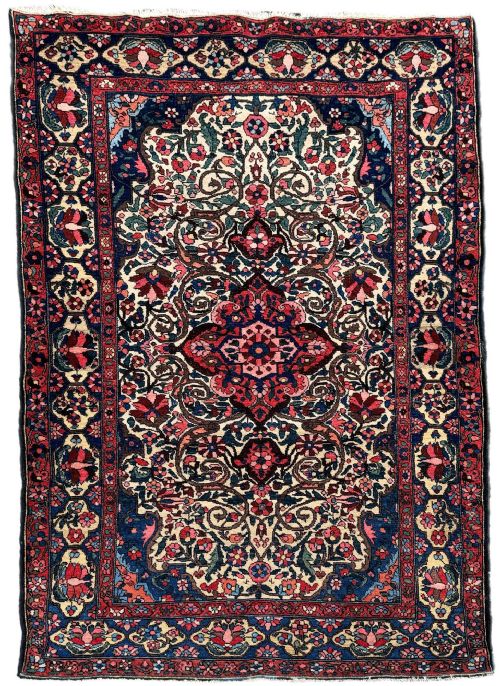
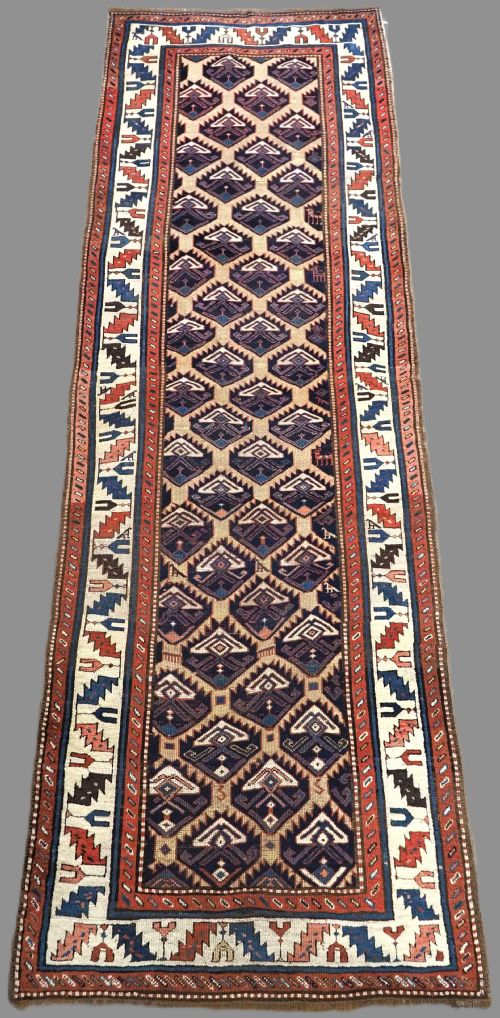
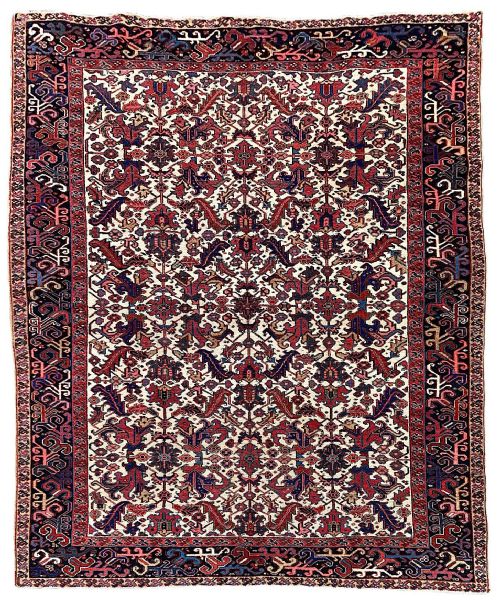
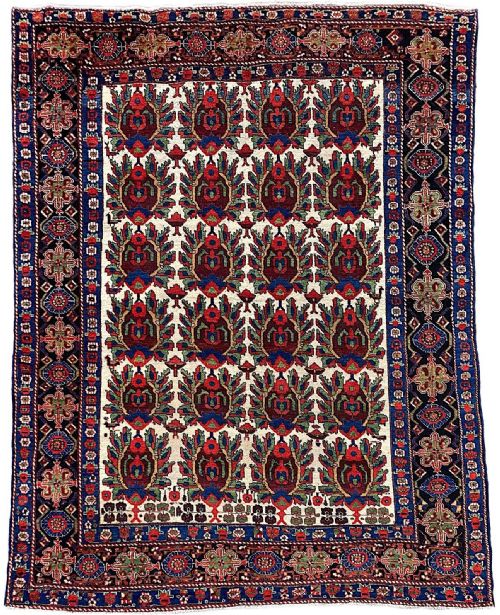


Cream Navy Persian Carpet
A cream navy persian carpet brings depth and traditional pattern into a room through hand-knotted wool and cotton construction.
Cream Navy Persian Carpet
When you search for a cream navy persian carpet, you are looking at hand-knotted floor coverings originating from various regions and nomadic traditions across Persia, dating from the nineteenth and early twentieth centuries. These pieces encompass room-size carpets, smaller rugs, square formats, and long hallway runners.
The styles you will most frequently meet include traditional floral medallions, tree of life motifs, lattice patterns, and tribal village designs woven in wool with cotton foundations. They range from grand city workshops like Tabriz and Isfahan to rural district works such as Mahal, Malayer, and Hamadan.
How they were made
These carpets and rugs were constructed using a foundation of durable cotton warps and wefts, upon which hand-spun wool pile was knotted by hand. Natural dyestuffs supplied the distinct cream and navy colour palettes, alongside terracotta and accent hues.
Weavers utilised upright looms, employing asymmetrical or symmetrical knots depending on the tribal or urban workshop tradition. Finished edges were typically overcast by hand, and ends were secured with simple woven kilim web ends.
Listings feature wool and cotton carpets spanning the nineteenth and twentieth centuries.
What varies in quality
Knot density and structural fineness separate standard village examples from master city workshop productions, affecting both the crispness of the design and the handle of the textile. A tightly packed foundation ensures greater longevity under foot traffic.
The clarity and saturation of the natural dyes, alongside the balance of the wool quality, determine the visual depth of the cream grounds and navy fields. Smoother, more evenly clipped piles demonstrate superior shearing skill during manufacture.
Hajji Jalili
The Cream Navy Persian Carpet Glossary
- Pile
- The vertical or diagonal loops of yarn that form the usable surface of the carpet. It is shorn to an even height after knotting.
- Warp
- The stationary vertical threads stretched tightly on the loom before knotting begins. Cotton is the standard material for these structural strands.
- Weft
- The horizontal threads passed back and forth between the warp threads to bind the knots in place. They alternate with the warps to stabilize the weave.
- Boteh
- A traditional almond-shaped or paisley motif representing a floral spray or cypress tree. This ancient symbol appears frequently in village and nomadic carpets.
- Medallion
- A large central ornamental design motif placed in the middle of the carpet field. It is a defining feature of many classical Persian workshop carpets.
Cream Navy Persian Carpet: Frequently Asked Questions
How do I clean an old carpet?
Surface dust is best removed through gentle, low-suction vacuuming without a rotating brush roll.
For deeper cleaning, professional textile conservation or specialised rug washing is required to protect the natural wool pile and dyes.
Can I place these in a hallway?
Narrow formats and long runner variations suit high-traffic corridors and transitional spaces.
Using a quality underlay prevents slipping and protects the cotton foundation from uneven wear on hard floors.
How do I distinguish regional styles?
City carpets often display precise floral medallions and fine knotting, whereas tribal pieces show geometric motifs and looser structures.
Examining the weave on the reverse reveals structural clues tied to specific production districts.
What underlay should I use?
A breathable, rubberized mesh pad keeps the carpet stable and prevents sliding.
This layer also cushions the wool pile against direct friction with floorboards.