



Oriental Wood Cupboard
An oriental wood cupboard brings distinct regional character to a room, offering practical storage through traditional craftsmanship.
Oriental Wood Cupboard
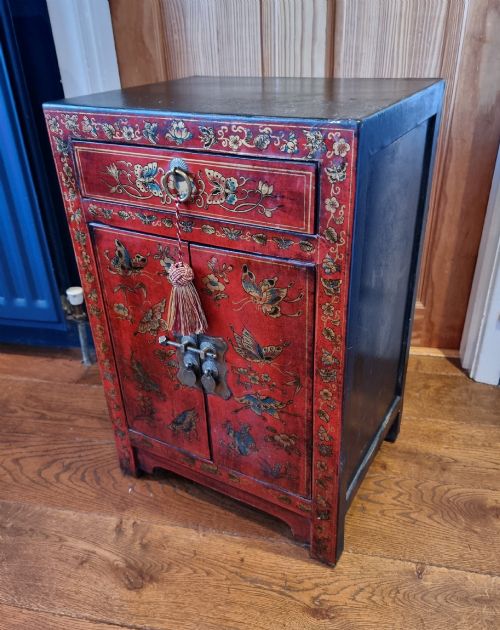
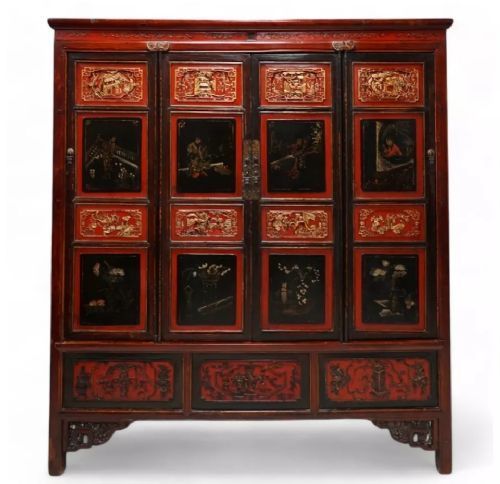
An oriental wood cupboard encompasses various forms such as marriage cabinets, apothecary chests, and display cabinets originating from diverse periods like the nineteenth century. Buyers searching this phrase encounter pieces ranging from Chinese elm storage furniture to Japanese tansu chests and intricately decorated lacquer cabinets.
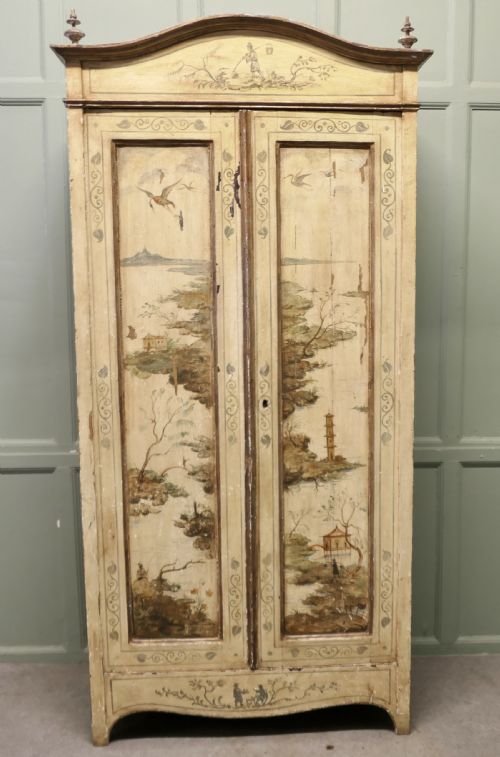
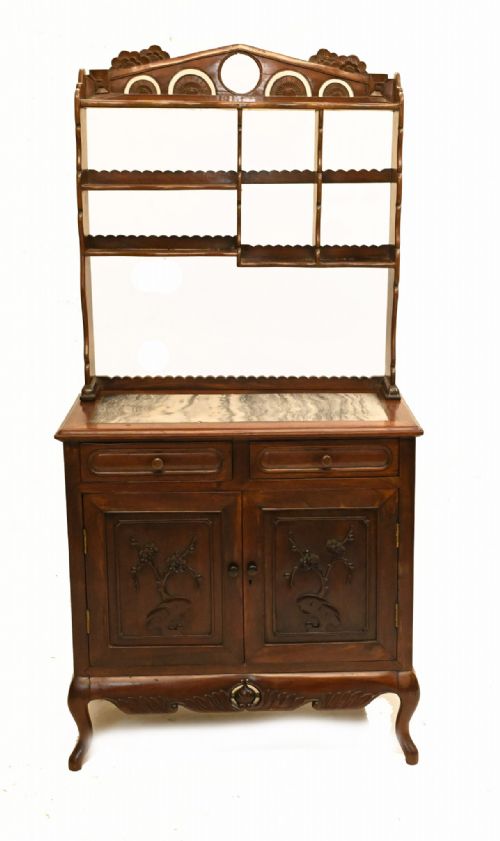
The selection includes regional variations like Shanxi province style storage, Korean painted chests, and Anglo-Indian cabinets alongside British and European interpretations in the Chinoiserie style. Forms vary from large sideboards and larder cupboards down to small table cabinets and corner cupboards.
Most examples date from the nineteenth and early twentieth centuries, spanning periods such as the Qing Dynasty and Meiji Period. Construction employs both native hardwoods and softer timbers finished with paint, lacquer, or carving.
Materials and construction methods
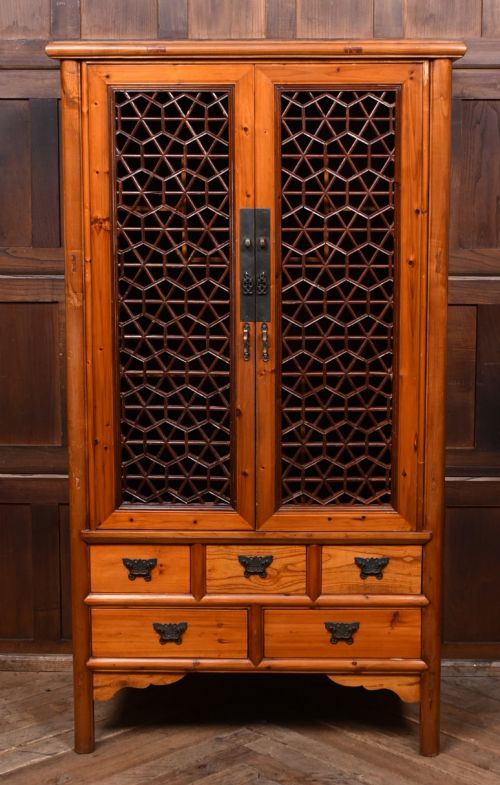
Maker construction relies heavily on hardwoods, elm, and camphor wood, often utilising traditional joinery without reliance on metal fixings. Cabinets frequently incorporate applied panels of lacquer, brass hardware, and iron fittings to reinforce corners and doors.
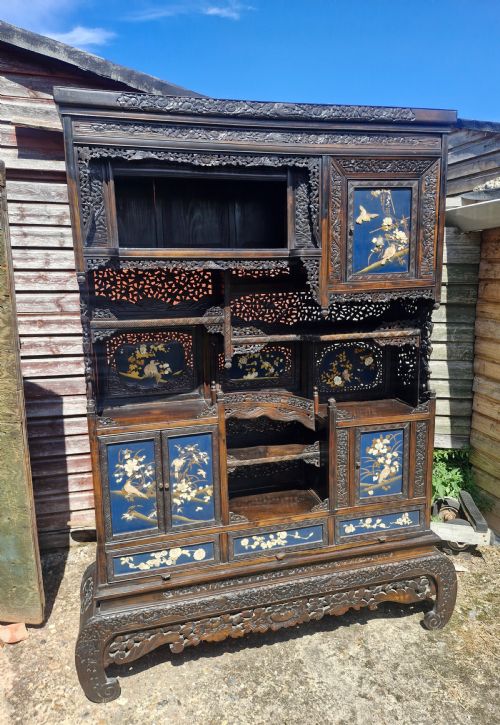
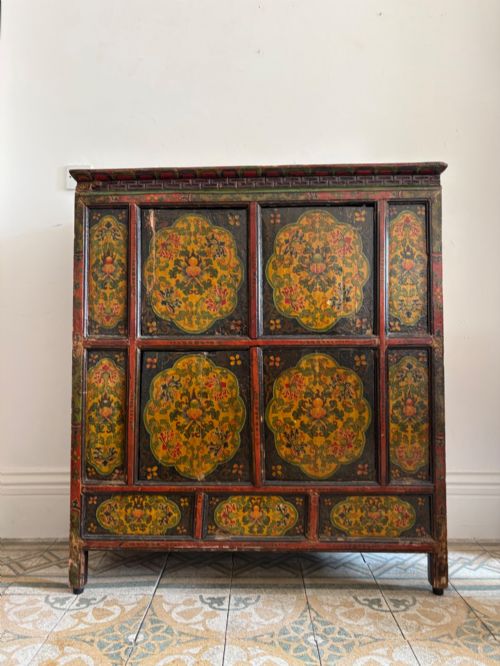
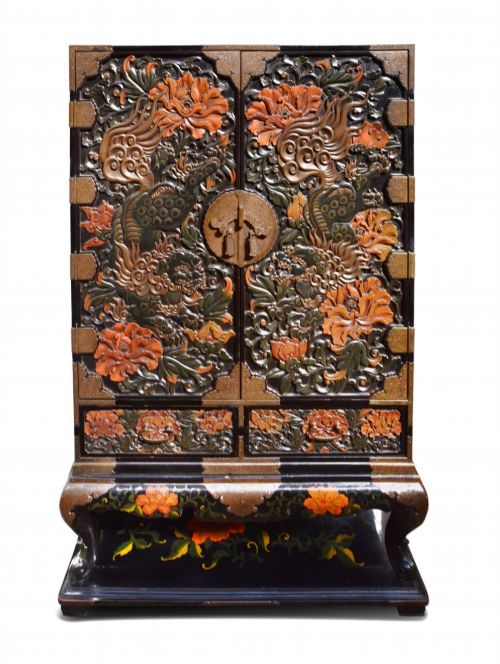
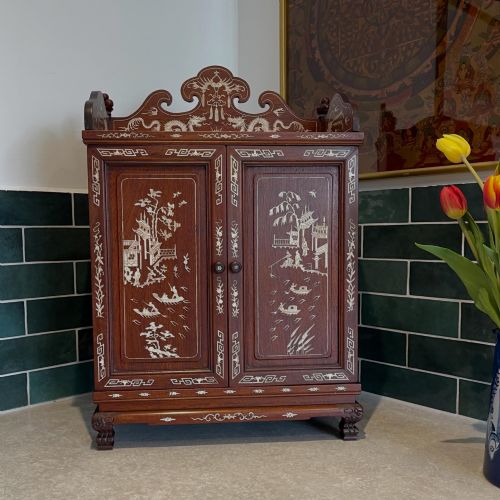
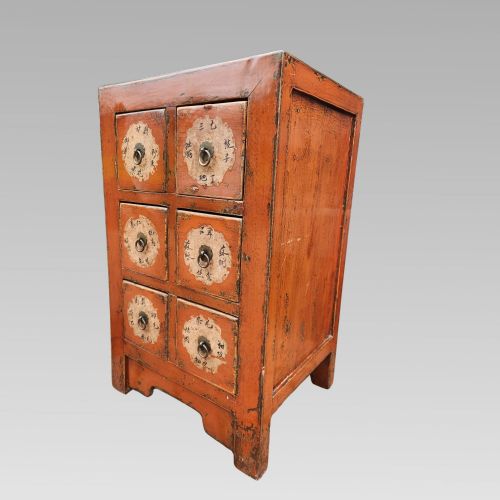
Surface decoration involves hand painting, carving, and sometimes mother of pearl inlay applied to wood surfaces. Lacquered pieces build up multiple layers of finish, occasionally featuring outdoor scenes or floral motifs.
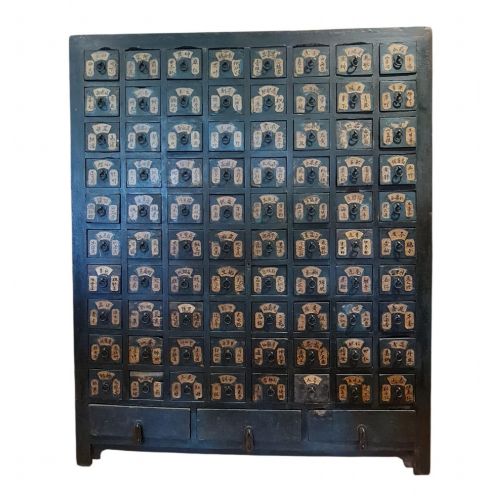
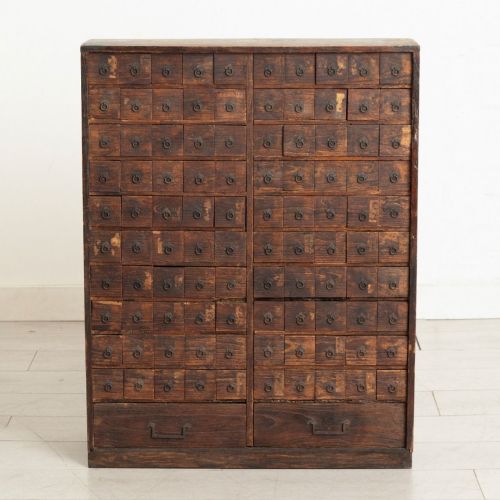
An apothecary chest listed here contains eighty individual small drawers for traditional medicines.
Factors separating examples
Quality differences emerge in the execution of carved details, the preservation of original painted or lacquered surfaces, and the integrity of the timber. Finer examples maintain crisp carving and stable wood movement across large panels like marriage cabinet doors.
The complexity of internal arrangement, such as the multitude of small drawers in apothecary chests or the finesse of metal hinges and lock plates, distinguishes standard functional items from superior workshop production.
Gabriel Frederic Viardot·Harrods
The Oriental Wood Cupboard Glossary
- Chinoiserie
- European imitation or interpretation of Chinese and East Asian artistic traditions, popular in furniture decoration.
- Tansu
- Traditional Japanese mobile storage chests built for various domestic uses such as kitchen storage or clothing.
- Shodana
- A Japanese display cabinet featuring asymmetrical shelving and sliding doors, common in the Meiji period.
- Lacquer
- A durable finish applied in multiple coats to wood surfaces, often pigmented in red, green, or black.
- Marriage cabinet
- A large Chinese storage piece traditionally given to newlywed couples as part of dowry furnishings.
Oriental Wood Cupboard: Frequently Asked Questions
How do I use an oriental wood cupboard?
These cabinets suit living areas and dining rooms for general storage, or specialised display of collections.
Larger items serve as focal wardrobes or sideboards while smaller table chests fit on top of existing furniture.
What is a Japanese tansu?
A tansu is a traditional Japanese mobile storage chest designed for household tasks like kitchen work or clothing storage.
They feature robust iron hardware and integrated carrying handles for movement between rooms.
How do I identify Chinese elm furniture?
Chinese elm wood shows a pronounced grain pattern with dense fibrous qualities that take dark stains and clear finishes well.
It forms the structural basis for many nineteenth century marriage cabinets and provincial storage pieces.
What is Chinoiserie style?
Chinoiserie describes European decorative arts inspired by Chinese design motifs, featuring painted scenes, landscapes, and figures.
Cabinet makers applied this aesthetic to European forms like corner cupboards and cocktail cabinets during the eighteenth and nineteenth centuries.