




Oriental Tripod Wine Table
An oriental tripod wine table brings exotic craftsmanship and rich surface decoration into a room, offering a compact surface suited for holding a glass.
Oriental Tripod Wine Table
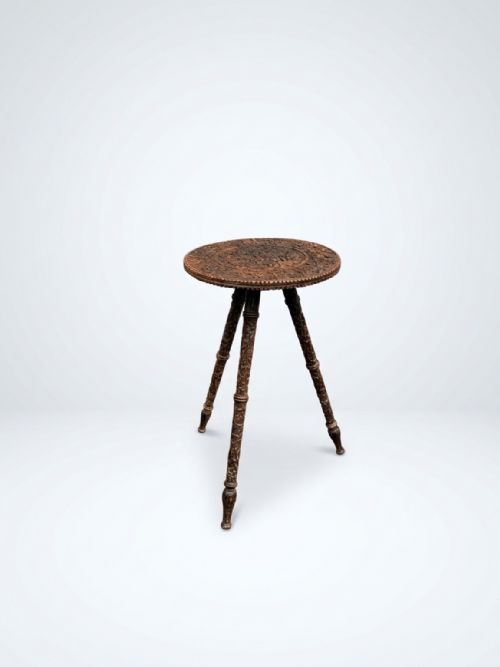
An oriental tripod wine table is a small, portable occasional table supported by a three-legged base, typically designed for resting drinks or displaying decorative items. These pieces combine compact proportions with distinctive Far Eastern or South Asian stylistic traditions.
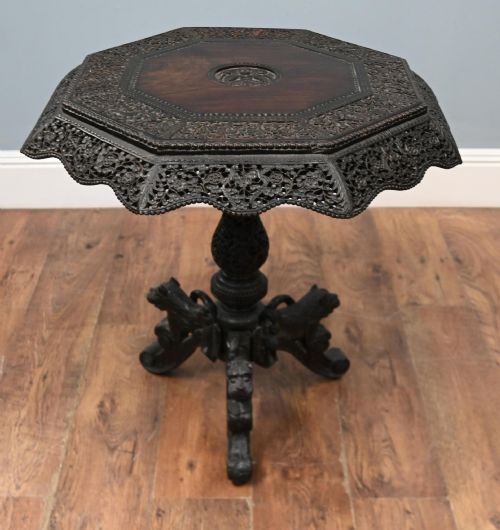
The selections available here span the nineteenth century into the Edwardian period, encompassing distinct regional designs. Buyers encounter forms ranging from carved hardwood occasional stands to painted lacquer surfaces.
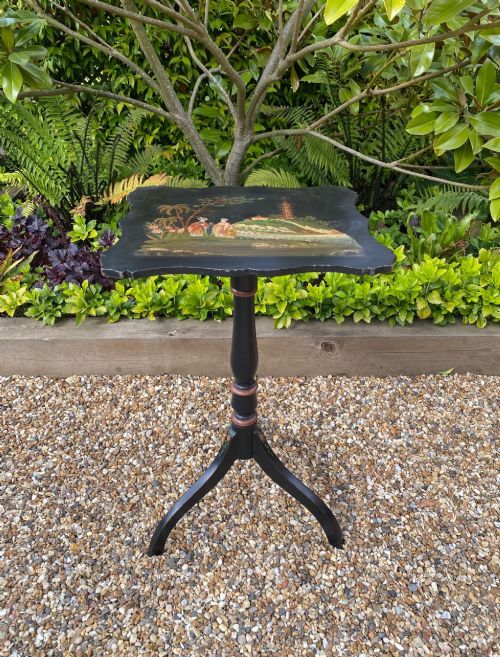
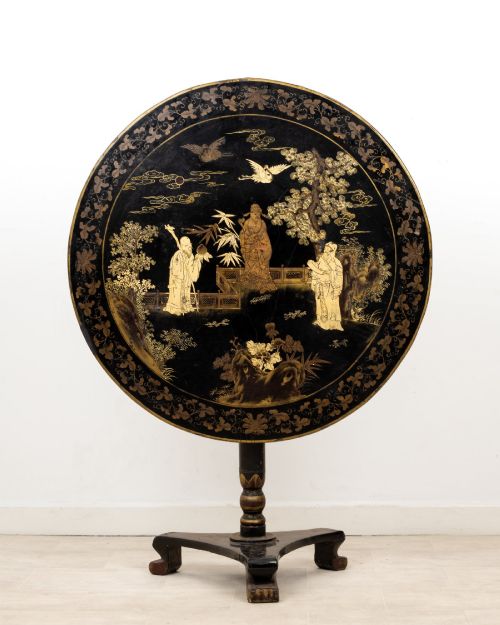
Chinoiserie and Anglo-Indian designs dominate the forms, frequently employing tilt-top mechanisms or tripartite bases. Such tables serve as functional accents that anchor a corner or sit beside a chair.
How they were made
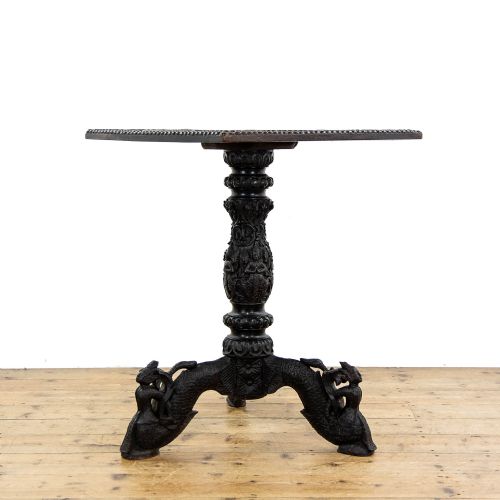
Cabinetmakers utilised dense timbers such as rosewood, teak, padauk, and general hardwoods to construct the stable three-legged bases and tops. These robust woods allowed artisans to execute deep relief carving without compromising structural integrity.
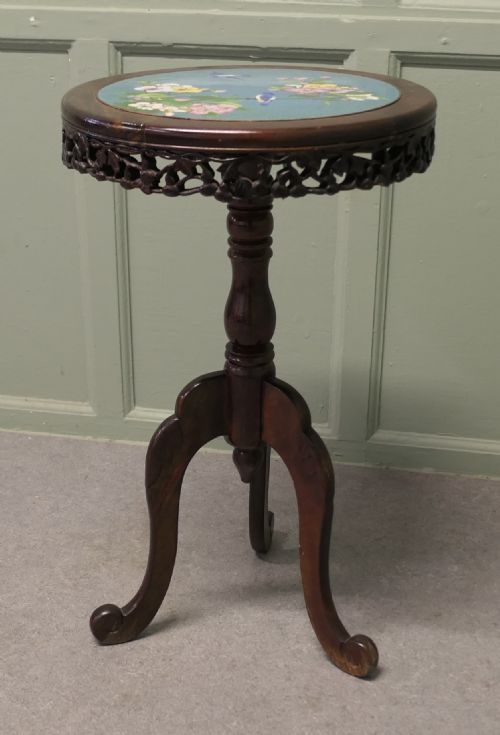
Surface ornamentation involved intricate applications of lacquer, gold leaf, and detailed paintwork. Artisans also integrated specialised decorative elements like cloisonné enamel panels directly into the wooden framework.
Certain tables feature a tilt-top function designed to fold completely flat, hiding decorative faces against walls when empty wine cups demanded clearance.
What varies in quality
The refinement of the carving separates standard regional items from exceptional examples. Crisp undercut relief work in hardwood demonstrates superior hand-tool mastery compared to softer, shallower incisions.
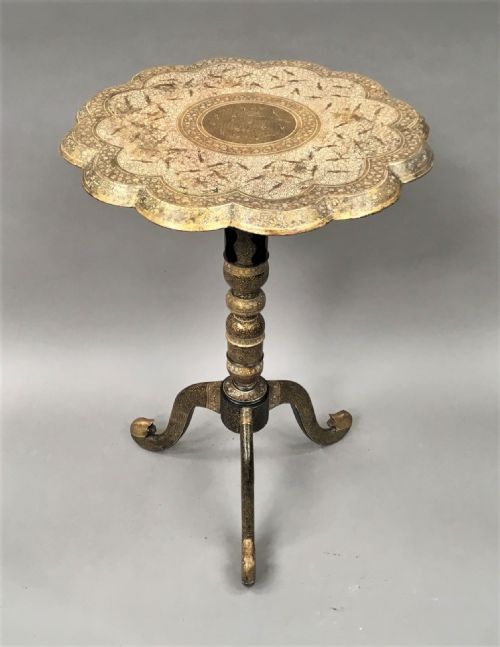
The preservation and complexity of the surface finish dictate the upper tier of quality. Intricate chinoiserie lacquer with well-preserved gold leaf or detailed pictorial paintwork demands greater skill than plain polished timber.
The Oriental Tripod Wine Table Glossary
- Tripod base
- A furniture support consisting of three legs branching from a central pillar. This configuration ensures stability on uneven floors.
- Chinoiserie
- European decorative style reflecting Chinese artistic influences. It frequently employs lacquer, gold leaf, and motifs of figures and landscapes.
- Cloisonné
- Enamelwork technique where thin metal wires form compartments to hold coloured glass paste. These are fired to create vibrant decorative panels.
- Tilt-top table
- A table featuring a mechanism that allows the top to hinge vertically. This permitted convenient storage against a wall when not in use.
- Padauk
- A heavy tropical hardwood valued for its durability and rich colour. Artisans used it extensively in fine regional furniture.
Oriental Tripod Wine Table: Frequently Asked Questions
What is an oriental tripod wine table used for?
These compact tables serve primarily as occasional surfaces for drinks, small lamps, or decorative objects. Their small footprints allow them to fit easily beside seating or in tight corners.
Historically, versions with tilt-top mechanisms were also stored upright against walls when floor space was required for other activities.
How do I date an antique oriental tripod table?
Dating relies on examining the timber species, construction joints, and decorative techniques relative to known regional periods. Nineteenth-century examples often display hand-carved hardwoods and traditional lacquer work.
Later pieces from the Edwardian era may show stylistic transitions or modified manufacturing methods while retaining oriental motifs.
Are these tables sturdy enough for daily use?
Solid hardwood construction makes these tables durable, though their three-legged design requires mindful placement. They comfortably support light items like cups, glasses, or small books.
Heavier objects or heavy downward pressure near the edge should be avoided to prevent tipping.
What is the difference between Chinoiserie and Japanese tables?
Chinoiserie items reflect European interpretations and adaptations of Chinese artistic styles, typically featuring painted lacquer and gilt motifs. Japanese pieces from the Meiji period often showcase indigenous woodcarving traditions and specialised insets like cloisonné enamel.
Both styles emerged from distinct regional aesthetic histories represented in nineteenth-century production.