


Oriental Style Storage Chest
An oriental style storage chest brings rich lacquer, hardwood and brass hardware into a room, offering practical storage with decorative presence.
Oriental Style Storage Chest
An oriental style storage chest encompasses cabinets, trunks and chests of drawers drawn from traditions across China, Japan and Korea alongside European Chinoiserie interpretations. Buyers search for these pieces to introduce striking painted finishes, dark hardwoods and distinctive brass mountings into their interiors.
The selections on this page span the eighteenth, nineteenth and early twentieth centuries, moving from provincial elm storage boxes to elaborate lacquered cabinets on stands. Regional forms include apothecary cabinets with multiple small drawers, banded elm chests and trade trunks intended for export.
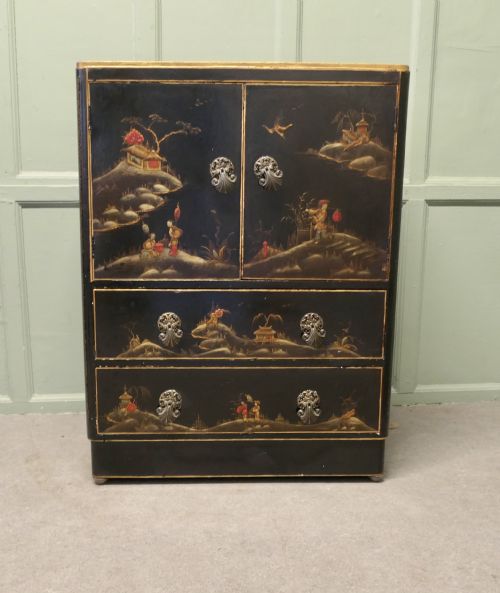
Chinoiserie and Japanned pieces reflect European adaptations of Asian decorative motifs, often featuring black or red lacquer grounds decorated with raised figures and landscapes. Alongside these sit traditional East Asian forms constructed from native timbers like elm, camphor wood and pine.
How They Were Made
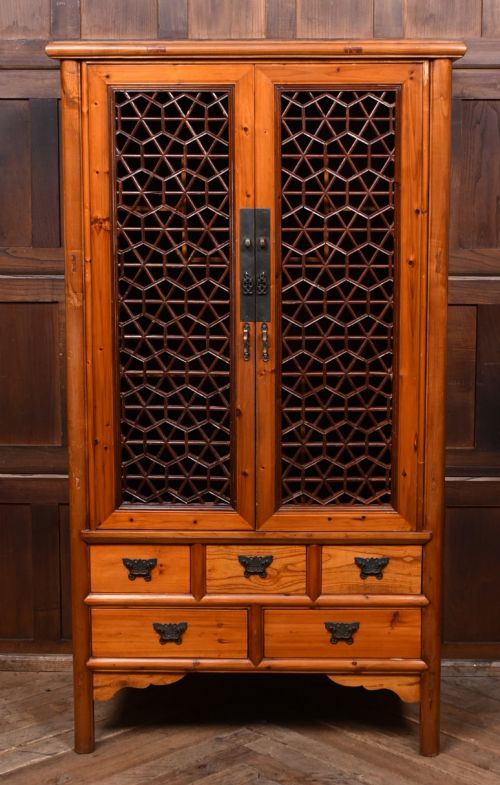
Construction relies heavily on traditional timber framing using native Asian hardwoods such as elm and camphor wood, alongside pine for secondary elements. Surfaces often receive multiple coats of lacquer, sometimes combined with wood veneers and intricate hand carving.
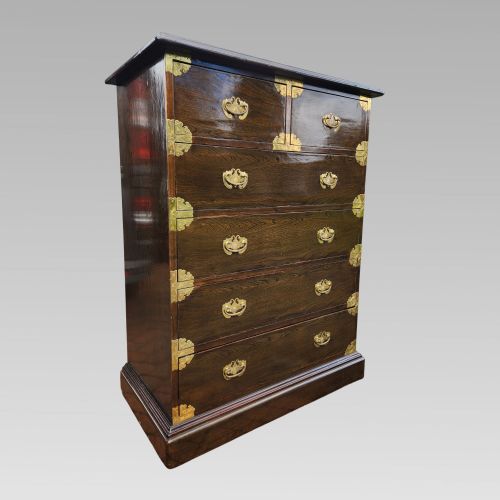
Iron and brass hardware serve both a structural and decorative function, featuring prominent strap hinges, corner brackets and circular lock plates with pin drops. Japassing and Chinoiserie finishes build up layered lacquer applications that create deep, glossy surfaces painted with figurative or botanical scenes.
Camphor wood chests were traditionally packed with winter garments to deter moths, leaving a lingering woodland fragrance that greets every new owner.
What Varies in Quality
Quality rests upon the integrity of the timber framing, the retention of original surface finishes and the complexity of the brass or iron hardware. Superior examples display crisp hand carving and undisturbed lacquer layers that have aged with a rich patina.
The distinction between finer workshop production and provincial utility work lies in the refinement of the joinery and the depth of the decorative scheme. Pieces retaining their original stands, painted details and functional locking mechanisms command greater interest.
Mercier Frères
The Oriental Style Storage Chest Glossary
- Chinoiserie
- European decorative style imitating Chinese artistic traditions, popular in furniture design and surface decoration. It frequently employs lacquered panels and painted figures.
- Bandaji
- Traditional Korean storage chest featuring prominent metal strapwork and hinges across the front. These pieces are typically constructed from elm or other native hardwoods.
- Japanning
- European imitation of Japanese and Chinese lacquerwork developed during the seventeenth and eighteenth centuries. The technique involves layering varnishes and applying gold dust or paint.
- Apothecary chest
- Cabinet fitted with numerous small drawers originally intended for storing medicinal herbs and roots. They are prized today for their distinctive multi-drawer configuration.
- Camphor wood
- Aromatic timber utilised for storage chests due to its natural insect-repellent properties. The wood carries a distinct scent and takes a fine polished finish.
Oriental Style Storage Chest: Frequently Asked Questions
How do I date an oriental style storage chest?
Dating relies on examining the construction methods, timber choice, hardware style and the composition of the lacquer layers. Eighteenth-century pieces and earlier often show hand-cut joinery and specific regional locking plates.
Twentieth-century examples, including 1920s Chinoiserie and Korean elm chests, display different proportions and machine-assisted elements while maintaining traditional forms.
Are these chests practical for modern storage?
These chests offer varied internal capacities, from deep trade trunks and larder cupboards to multi-drawer apothecary cabinets and bedside units. Their robust construction from elm, camphor wood and hardwood makes them suitable for daily use.
Care should be taken to place them away from direct heat sources to protect sensitive lacquer finishes and natural wood veneers.
What is the difference between Chinoiserie and traditional Asian furniture?
Traditional Asian furniture originates from regional workshops in China, Japan and Korea, reflecting local building techniques and native timbers such as elm and camphor wood. These pieces serve specific domestic functions like clothing storage or food preparation.
Chinoiserie furniture represents European interpretation and manufacture, applying Asian-inspired lacquer and painted decoration to Western furniture forms like commodes and cabinets on stands.
How should I care for lacquered surfaces?
Lacquered surfaces require gentle cleaning with a soft, dry cloth to remove dust without abrasive action. Avoid chemical polishes and excessive moisture, which can damage the delicate varnish layers.
Maintaining stable room humidity prevents the timber beneath the lacquer from expanding or contracting, which preserves the stability of the painted finish.