






Decorative Chinoiserie Storage
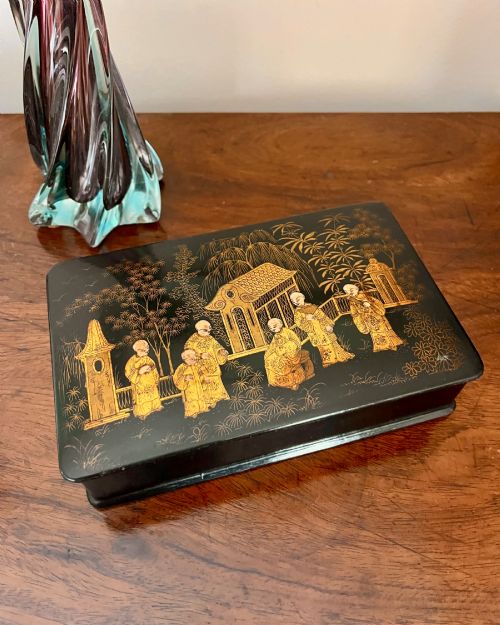
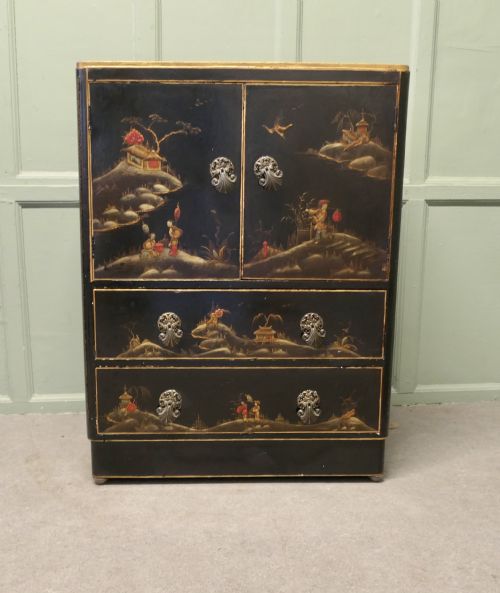
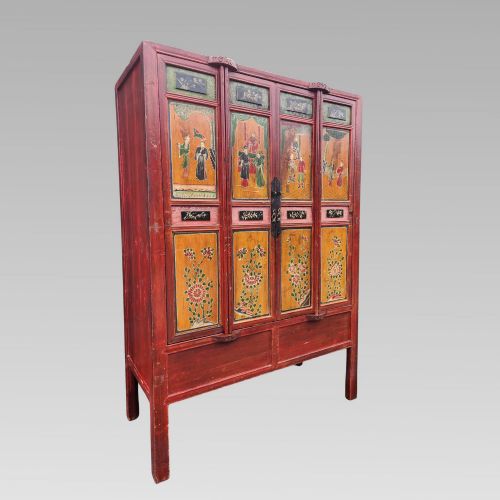
These decorative chinoiserie storage pieces bring painted scenes of eastern motifs into British interiors.
Decorative Chinoiserie Storage
Decorative chinoiserie storage covers items designed to hold household goods while displaying painted oriental scenes. Buyers searching for decorative chinoiserie storage encounter containers and cabinets originating from the nineteenth and early twentieth centuries.
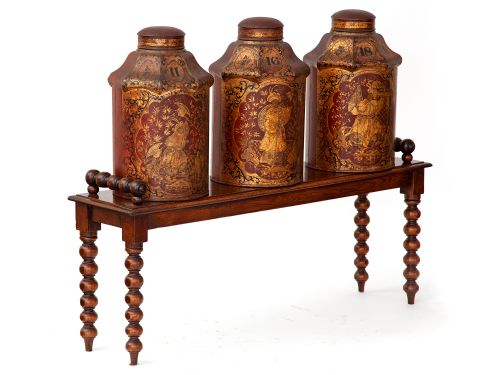
The selection here includes tea canisters, tea caddies, ginger jars, cabinets, and trunks. Forms range from sets of toleware canisters to large cupboards and marriage cabinets.
Pieces span nineteenth-century production alongside examples from 1870, 1900, 1910, and 1920. Styles include Victorian, William IV chinoiserie, and Anglo-Indian variants alongside traditional lacquered surfaces.
Materials and construction
Construction relies on wood, tinplate, and toleware formed into boxes, trunks, and cabinets. Lacquer provides the foundational dark or coloured surfaces upon which detailed schemes are built.
Decoration employs paint, gilt, and gold leaf to render figures, pagodas, and botanical motifs. Certain porcelain ginger jars incorporate handpainted elements alongside blue and white ceramic bodies.
Decorative Chinoiserie Storage Retail Price Guide 2026
Typical asking prices for decorative chinoiserie storage among the pieces listed under this phrase on Sellingantiques today, from the lower quarter to the upper quarter. They describe what is for sale here now, not the wider market.
What separates fine examples from ordinary ones
The sophistication of the painted surface determines visual standing. Examples featuring meticulous handpainted gilt and gold leaf display greater depth than simpler applied decoration.
Completeness of sets influences desirability, particularly with matching sets of three tea canisters or paired ginger jars. Original surfaces retain character that heavy restoration alters.
Herend
The Decorative Chinoiserie Storage Glossary
- Toleware
- Painted or enamelled metalware, usually tinplate, shaped into domestic items such as tea canisters and boxes. This technique allowed metal to mimic lacquered wood.
- Chinoiserie
- European artistic interpretation of Chinese and East Asian artistic traditions. It manifests through painted landscapes, figures, and architectural details.
- Lacquer
- A durable finish applied in multiple layers to wood or metal substrates. It yields a smooth, glossy surface suitable for gilt decoration.
- Ginger Jar
- A high-shouldered ceramic vessel originally used for storing spices and preserves. Later periods adopted them as decorative ornaments or tea caddies.
- Gilt
- Gold or gold-coloured material applied to surfaces to create metallic highlights. It catches light against dark black, red, or maroon backgrounds.
Decorative Chinoiserie Storage: Frequently Asked Questions
What were tea canisters used for?
Tea canisters stored valuable dry tea leaves in domestic settings. Their tight lids protected contents from moisture and loss of aroma.
Larger versions stood on sideboards or tables as decorative objects in formal rooms.
How do I care for lacquer storage?
Dust surfaces gently with a dry, soft cloth to prevent scratching the finish. Avoid placing lacquer items near direct sunlight or heat sources.
Keep humidity stable to protect the wooden or metal substrates beneath the lacquer coating.
Are these cabinets used daily?
Cabinets and trunks suit light domestic storage needs like linens or paperwork. Their decorative surfaces reward careful placement in living spaces.
Avoid heavy daily friction to preserve the original paint and gilt details.
How do I date a piece?
Dating relies on material construction methods, hinge types, and stylistic indicators. Nineteenth-century examples often use tinplate toleware while later pieces show twentieth-century lacquer work.
Comparative study of painted motifs helps establish whether an item originates from the 1870s or the 1920s.