
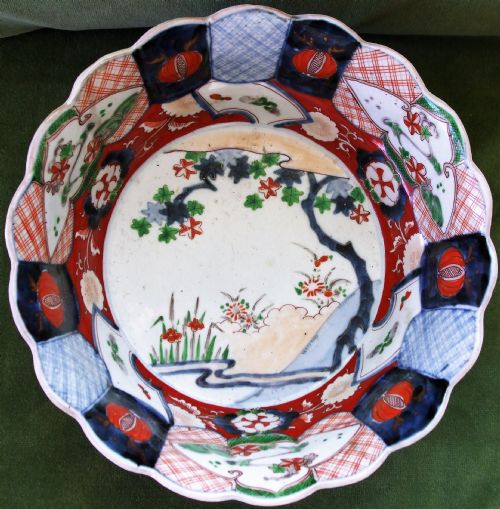

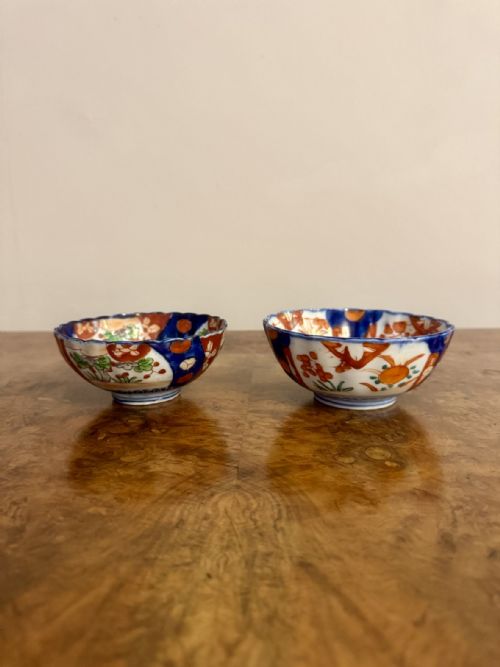
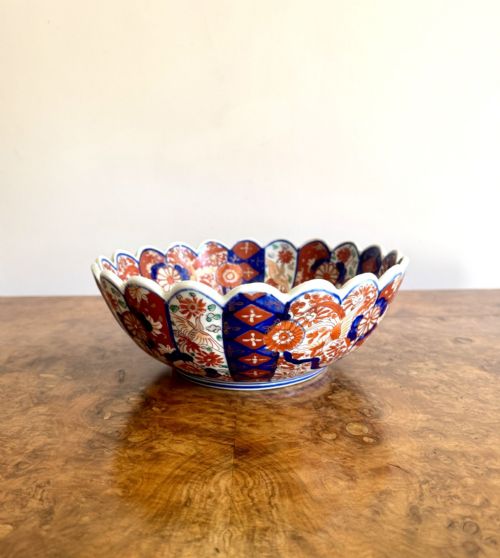
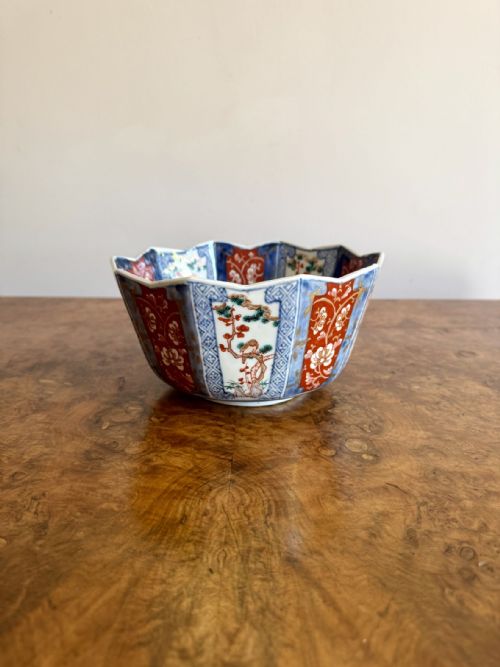

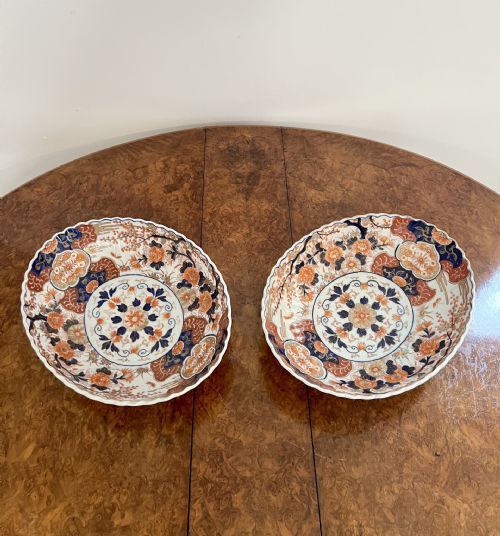


Oriental Scalloped Edge Bowl
An oriental scalloped edge bowl brings distinct form and colour to a table, combining patterned glaze with shaped rims.
Oriental Scalloped Edge Bowl
An oriental scalloped edge bowl brings the traditional aesthetic of the Meiji period and Qing dynasty into a modern interior. These pieces primarily take the form of decorative bowls and plates shaped with distinctive wavy or lobed borders.
Buyers will most frequently encounter Japanese Imari ware dating from around nineteen hundred and the nineteenth century. These items combine intricate patterns with shaped rims designed for display.
The selection ranges from small domestic bowls to large decorative display dishes and lobbed rectangular forms. Each piece reflects the specific ceramic traditions of its origin period.
How they were made
These pieces are constructed from ceramic and porcelain, shaped by hand or mould before firing. Artisans then applied detailed enamel colours and glaze to the surface.
Many examples incorporate gold leaf and gilding to highlight specific sections of the design. The firing process locks the pigment beneath a durable glaze finish.
The nineteenth-century makers evidently spent hours ensuring every single scallop lined up precisely with the hand-painted motifs.
What varies in quality
Quality in an oriental scalloped edge bowl rests on the precision of the rim shaping and the clarity of the painted decoration. Superior examples display crisp definition along each curve of the scalloped edge.
The richness of the enamel and the application of gilding distinguish finer pieces from standard production. Artisans who achieved well-balanced composition and steady brushwork created items with lasting visual appeal.
The Oriental Scalloped Edge Bowl Glossary
- Imari
- A style of Japanese porcelain featuring a distinct palette of underglaze blue and iron red, often augmented with gold. It originated in the town of Arita and gained international popularity during the Edo period.
- Meiji Period
- The era in Japanese history spanning from eighteen sixty-eight to nineteen twelve, characterised by significant artistic production and export. Pieces from this time frequently demonstrate highly detailed painted patterns.
- Qing Dynasty
- The final imperial dynasty of China, lasting from nineteen sixteen to nineteen twelve. Ceramics from this period include sophisticated lobbed and rectangular vessel forms.
- Scallop Edge
- A decorative border shaped into a series of continuous curves resembling the edge of a scallop shell. This technique softens the outline of bowls and plates.
- Gilding
- The application of gold leaf or powder to the surface of ceramic objects. It serves to accent specific design elements and add reflective contrast.
Oriental Scalloped Edge Bowl: Frequently Asked Questions
How were these bowls used?
These pieces served primarily as decorative display dishes rather than for daily dining. Their detailed painted surfaces made them centrepieces in traditional interiors.
Larger examples functioned as centrepieces on tables or sideboards, while smaller bowls held small items or stood alone for visual appreciation.
How do I clean an antique bowl?
Dust these items gently with a soft, dry cloth to remove surface particles. Avoid harsh modern cleaning agents that might damage the enamel or gilding.
Immersing antique ceramics in water can harm fragile glazes, particularly where gold leaf or delicate enamel decoration is present.
How do I identify a Meiji period piece?
Meiji period items often exhibit the characteristic Imari palette of blue, red, and gold across porcelain surfaces. The forms typically include carefully shaped scalloped rims.
Examining the base and the weight of the ceramic helps determine the production period and manufacturing origin.
Where should I display my bowl?
Place your piece on a sturdy surface away from direct sunlight to preserve the vibrant enamel colours. Cabinets or mantelpieces provide a stable environment for decorative plates and bowls.
Ensure the display stand properly supports the shaped rim without putting undue pressure on the ceramic body.