




Japanese Porcelain Display Bowl
A japanese porcelain display bowl brings centuries of East Asian kiln artistry straight to the centre of a modern room.
Japanese Porcelain Display Bowl
A japanese porcelain display bowl sits at the intersection of domestic utility and decorative fine art, taking the form of deep vessels, shallow dishes, and scalloped chargers. Buyers searching this phrase meet pieces originating from historic production centres like Arita, alongside works spanning the Edo, Meiji, and Showa periods.
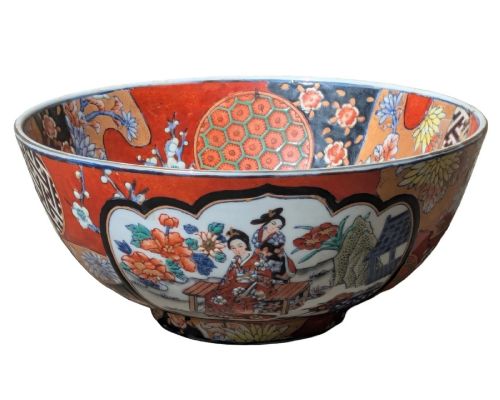
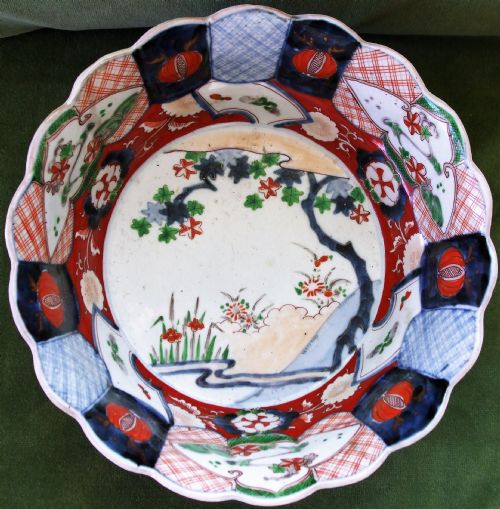
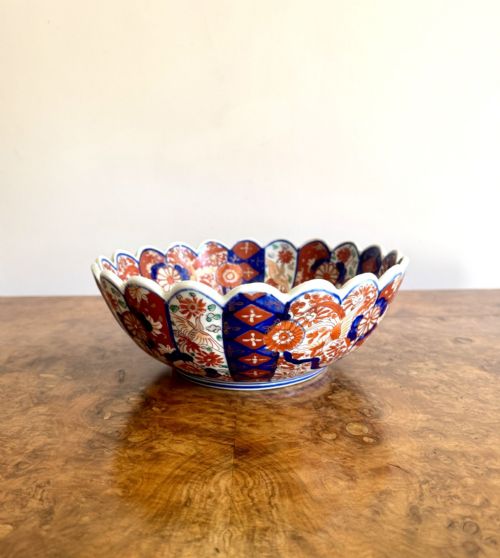
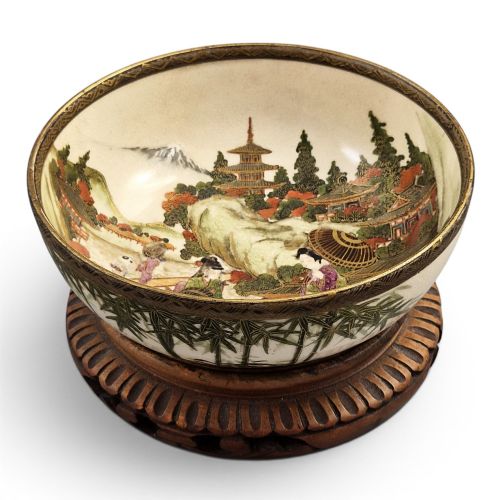
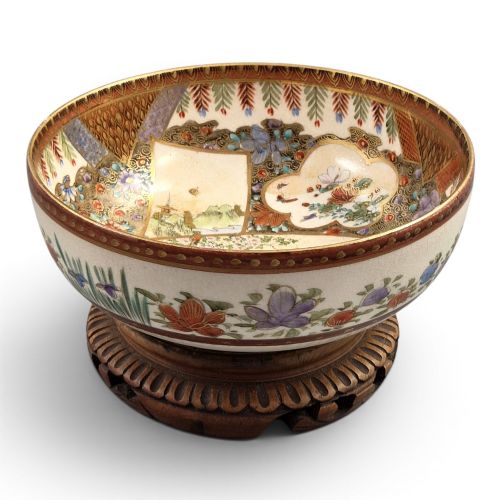
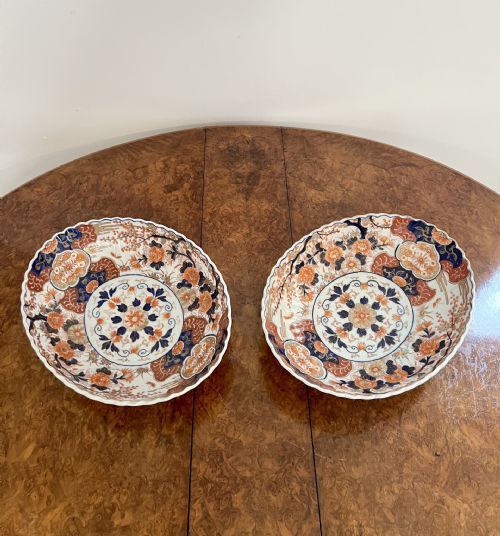
The assortment on this page leans heavily toward Japanese Imari wares from the late nineteenth and early twentieth centuries, alongside earlier Arita productions and intricate Satsuma earthenware pieces. These items serve primarily as table centerpieces or wall-hung decorative chargers rather than functional kitchenware.
Materials and Technique
Potters built these vessels using fine-grained porcelain or dense earthenware bodies, shaped by hand or wheel before receiving initial underglaze cobalt blue painting. Kiln workers then applied contrasting overglaze enamel pigments in iron red, green, and turquoise to build up complex pictorial surfaces.
Many examples incorporate applied gold leaf and heavy gilding over the finished glaze, catching the ambient light to highlight intricate surface patterns. Wood stands sometimes accompany the bowls, providing a stable base for display without altering the ceramic body.
Some nineteenth-century plates cheerfully depict European steamships under sail, capturing a moment when local potters encountered foreign visitors.
Standards of Craftsmanship
Quality rests upon the crispness of the underglaze cobalt painting and the precision with which the overglaze enamels and gilding are applied. Finer pieces demonstrate strict control in the kiln, resulting in a clear white porcelain ground that makes the contrasting enamel colours vibrant and sharp.
The depth and complexity of the pictorial design also separate standard output from superior works, with master-painted scenes and signed workshop pieces showing exceptional brushwork. Scalloped edges and unusual hexagonal forms require greater dexterity from the potter during shaping and drying.
Gyokkō·Kozan·Kinkozan·Shozo
The Japanese Porcelain Display Bowl Glossary
- Imari
- A traditional style of Japanese porcelain decorated in underglaze blue, iron red, and gold, named after the port from which the wares were shipped. This palette dominates the pieces found in nineteenth-century production.
- Arita
- The Japanese town renowned as the birthplace of domestic porcelain manufacture, operating kilns that supplied both local markets and European export trade since the seventeenth century.
- Satsuma
- A type of Japanese earthenware featuring a pale, crackled ivory glaze decorated with polychrome enamels and extensive gilding. These pieces often depict dense figural scenes or botanical motifs.
- Meiji Period
- The historical era spanning from eighteen sixty-eight to nineteen twelve, characterised by an opening of international trade and a surge in highly detailed decorative arts destined for Western collectors.
- Edo Period
- The period of Japanese history lasting from sixteen hundred and three to eighteen sixty-seven, marked by domestic peace and the establishment of distinct regional ceramic traditions.
Japanese Porcelain Display Bowl: Frequently Asked Questions
Can I use these bowls for serving food?
Historic decorative bowls feature delicate overglaze enamels and gold leaf that can wear away with regular use and washing. These surfaces are designed primarily for visual appreciation rather than daily culinary service.
Cleaning should be limited to gentle dusting with a soft, dry cloth. Avoid submerging older earthenware pieces in water, as moisture can enter through historic glaze crackle.
What is the difference between Imari and Arita?
Arita refers to the geographical production centre in Japan where the porcelain clay was sourced and fired. Imari is the distinct decorative style and export classification associated with the finished wares shipped through that region's port.
All Imari is fundamentally Arita porcelain, but not all Arita wares feature the characteristic blue, red, and gold Imari colour palette.
How do I recognise a Meiji period piece?
Meiji period items often exhibit intricate, densely packed surface decoration and fine painterly details produced for international export markets during the late nineteenth and early twentieth centuries. Many of these pieces bear artist signatures or workshop marks on the base.
The porcelain bodies from this era tend to be crisp and uniform, reflecting industrial improvements in kiln temperature control and manufacturing standards.