


Oriental Pot Stand
An oriental pot stand is a low supporting platform or table designed to elevate heavy ceramic planters, vases and jardinieres.
Oriental Pot Stand
An oriental pot stand is a dedicated piece of furniture designed to elevate and frame ceramic vessels, planters, and jardinieres within a room. When searching for an oriental pot stand, buyers encounter a variety of forms ranging from low table stands to tall plant supports created in Chinese and Japanese traditions.
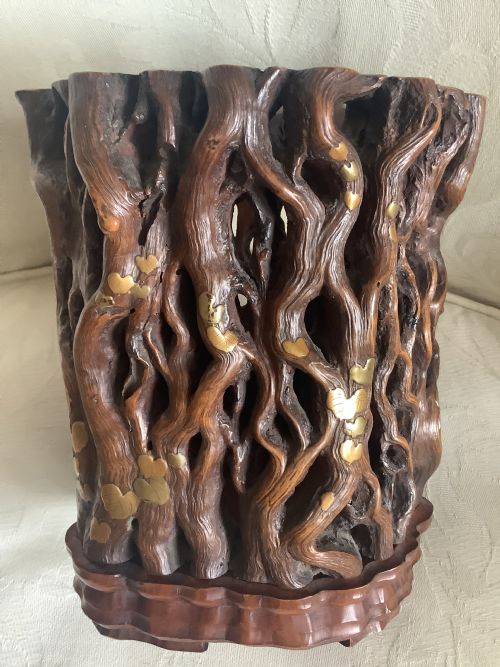
The pieces appearing on this page span the Victorian era, the late 19th century, the Meiji period, and the Qing dynasty. Formats vary from freestanding square or rectangular low tables to carved pedestals and round vase stands.
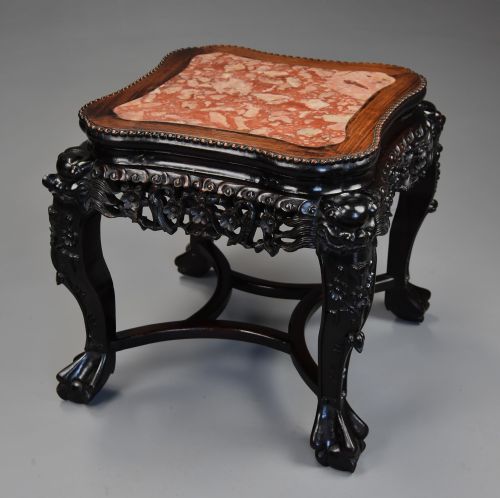
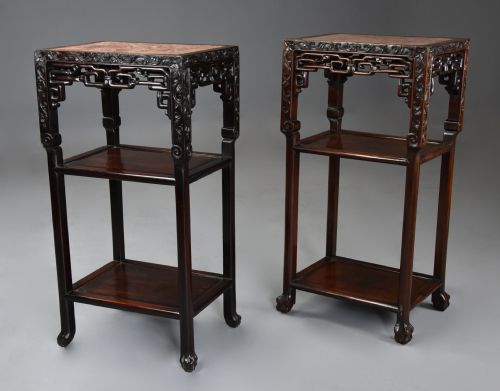
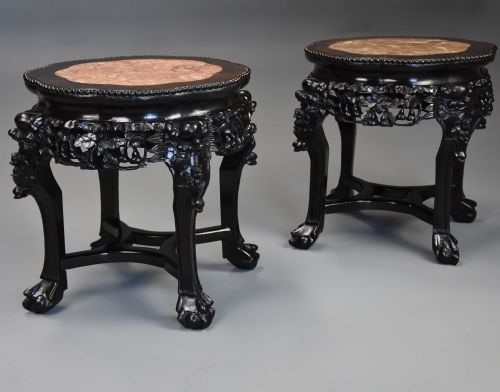
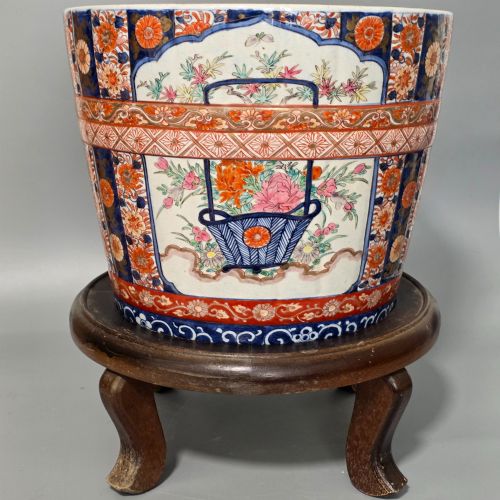
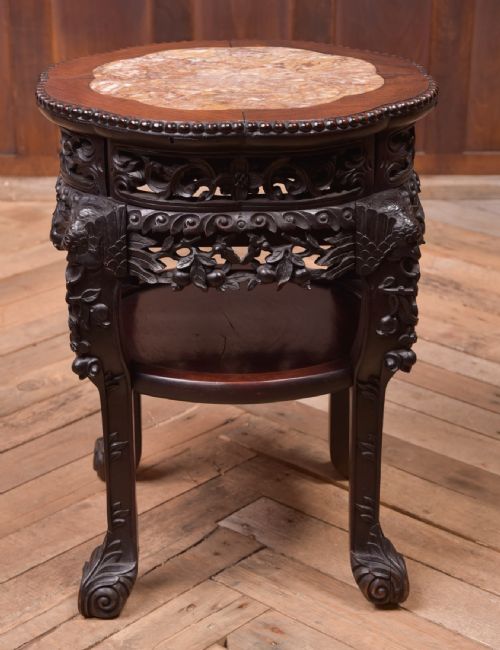
Many examples incorporate inset surfaces of marble, whilst others support separate porcelain, cloisonne, or Imari planters. They function equally well as lamp tables or side tables in modern interiors whilst retaining their original purpose of elevation.
Materials and construction
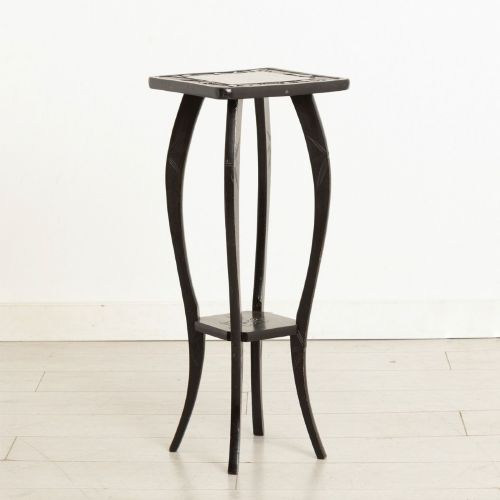
Hardwood forms the primary structural material across the majority of pieces, frequently paired with carved detailing and articulated joinery. Ebonised wood and lacquered wood also appear frequently, alongside giltwood and brass accents.
Many stands incorporate inset marble tops designed to protect the wood from moisture and damp soil when holding live plants and jardinieres. Construction techniques involve traditional joinery to support heavy loads of porcelain and stone without warping.
Several stands double happily as wine tables, proving that Victorian botanists and Victorian wine enthusiasts shared identical furniture tastes.
Assessing quality and finish
Quality in these stands rests upon the depth and crispness of the carving, the selection of dense hardwoods, and the precise fit of any marble inset. Superior examples exhibit fluid, balanced proportions and secure joints that withstand weight.
The integration of materials determines distinction, such as the quality of the glaze on paired porcelain planters or the smoothness of ebonised surfaces. Matched pairs and pieces with original associated stands command particular attention from collectors.
Liberty of London
The Oriental Pot Stand Glossary
- Jardiniere
- A decorative ceramic or metal pot or bowl for holding flowers or plants. They frequently sit atop dedicated stands.
- Marble inset
- A slab of polished marble fitted flush into the wooden top of a stand. This provides a durable, water-resistant surface for damp flowerpots.
- Ebonised wood
- Timber treated with a finish to resemble ebony. It was popular in Victorian interpretations of Asian design.
- Imari
- A style of Japanese porcelain decorated in underglaze blue and iron red, often highlighted with gold. These wares frequently accompanied specific stands.
- Cloisonne
- An ancient technique for decorating metalwork objects with colourful material held in place by thin metal strips. Pieces in this style appear mounted on supporting frames.
Oriental Pot Stand: Frequently Asked Questions
What is an oriental pot stand used for?
These pieces were originally built to elevate heavy ceramic jardinieres, bronze vases, and large indoor plants off the floor. Raising the vessel protected delicate flooring from moisture and brought the floral arrangement up to eye level.
Today, they find common use as compact side tables, lamp tables, or dedicated display surfaces for sculptural objects and ceramics in living spaces.
How do I date a Victorian oriental pot stand?
Dating relies on examining the timber species, construction joints, and decorative motifs used across the piece. Victorian interpretations often utilise ebonised wood alongside Asian carving styles popularised during the Anglo-Japanese taste.
Comparing the turned elements, edge moulding, and the fit of marble inserts against known Victorian and late 19th-century manufacturing methods helps establish the correct period.
Are these stands strong enough for heavy plants?
Hardwood and marble-topped stands are structurally engineered to bear considerable downward weight from large ceramic pots and damp soil. The dense timbers utilised provide robust support for heavy jardinieres.
Buyers should inspect the structural integrity of the legs and joinery to ensure the stand remains stable before placing exceptionally heavy stone or ceramic vessels on top.
What is the difference between a pot stand and a jardiniere?
A pot stand is the supporting table, pedestal, or frame, whilst a jardiniere is the actual planter or bowl that sits upon it. Many listings feature matched pairs where the stand and the planter were created to complement each other.
Other stands are sold independently, designed to accommodate separate ceramic bowls, vases, or plants acquired separately by the owner.