





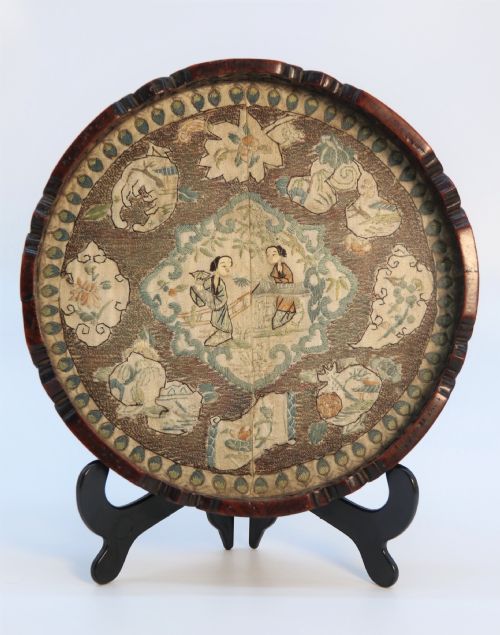


Oriental Needlework Panel
These oriental needlework panel examples are rich textile works that bring depth and vibrant colour to a room.
Oriental Needlework Panel
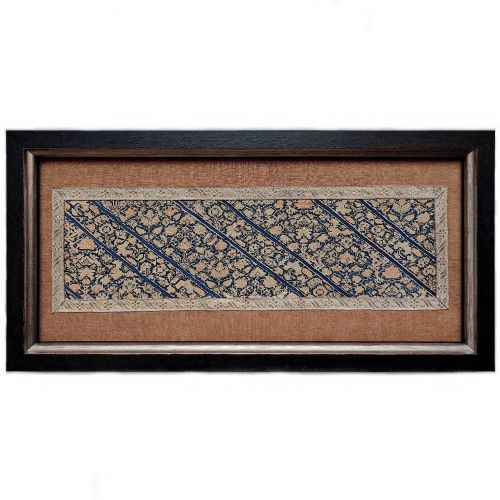
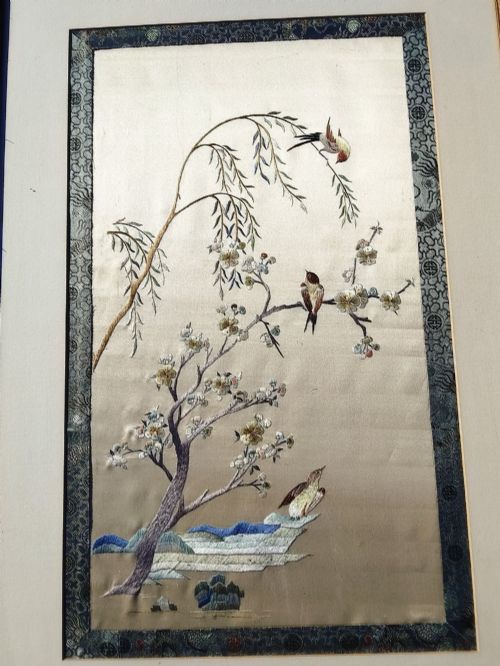
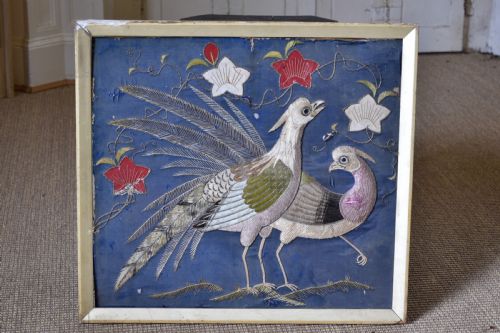
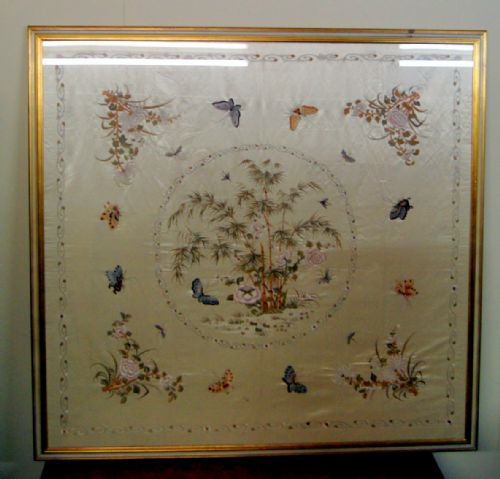
An oriental needlework panel spans several distinct traditions and forms, ranging from framed silk pictures to large wall hangings. When exploring this selection, buyers encounter Chinese embroideries featuring garden birds and mandarin ducks, alongside Japanese silk textiles depicting geese in flight.
The materials and origins reflect diverse cultural practices across the nineteenth and twentieth centuries. Pieces include Central Asian tribal works such as Bokhara suzanis with architectural designs from Uzbekistan, as well as Persian Rasht embroidery executed in silk and felt applique work.
Forms also extend beyond wall art into functional items, such as antique Chinese carved hardwood and silk embroidered trays. These items provide a direct link to historical textile workshops and traditional decorative arts from various Asian regions.
Materials and construction methods
The foundation materials rely heavily on natural textiles, utilising silk, cotton, felt, and wool to build the primary ground for the stitching. Artisans often mounted these rich fabrics onto wooden frames or integrated them into hardwood trays utilising glass for protection.
Needlework techniques combine fine silk embroidery with detailed felt applique work, often incorporating metallic thread to add texture and luminance. Uzbek suzanis demonstrate traditional stitching on cotton foundations, while Persian Rasht pieces employ complex layered applique methods.
Oriental Needlework Panel Retail Price Guide 2026
Typical asking prices for oriental needlework panel among the pieces listed under this phrase on Sellingantiques today, from the lower quarter to the upper quarter. They describe what is for sale here now, not the wider market.
Mandarin ducks frequently appear in these textile scenes as traditional symbols of lifelong devotion and fidelity.
Appraising quality and execution
Quality rests primarily on the precision of the needlework and the complexity of the design composition. Pieces demonstrating finer stitches and intricate pictorial depth stand apart from simpler decorative items.
The preservation of the original materials also influences the standing of a panel. Intact silk threads, well-maintained felt applique work, and solid framing or structural housings contribute significantly to the integrity of the piece.
Iida Takashimaya Company
The Oriental Needlework Panel Glossary
- Suzani
- A type of embroidered tribal textile originating from Tajikistan, Uzbekistan, and other Central Asian nations. These pieces typically feature bold floral or geometric motifs stitched on a cotton or linen ground.
- Rasht embroidery
- A traditional form of textile art from Iran characterised by intricate mosaic-like applique work using wool felt and silk. Artisans cut and inlay coloured pieces to form elaborate scrollwork and pictorial scenes.
- Applique
- A needlework technique where smaller pieces of fabric are sewn onto a larger background ground to build up a pattern or picture. This method adds raised texture and contrasting colour to the finished textile.
- Chinoiserie
- A European style that reflects Chinese artistic influences, often seen in decorative arts and textiles produced during the nineteenth and twentieth centuries. It incorporates traditional motifs such as exotic birds, garden scenes, and stylized landscapes.
Oriental Needlework Panel: Frequently Asked Questions
How should I clean an antique silk panel?
Historic textiles require delicate handling and professional conservation rather than standard domestic washing.
Dust should be gently removed using low suction through a mesh screen to protect fragile silk and metallic threads.
Are these panels meant to be framed?
Many examples are designed specifically for wall display and are preserved behind glass to shield the delicate threads from environmental wear.
Others function as hanging textiles or decorative elements within wooden trays.
What is the difference between a suzan and Chinese embroidery?
Uzbek suzanis originate from Central Asia and typically feature bold botanical motifs worked in silk on a cotton ground.
Chinese embroideries often focus on pictorial realism using fine silk threads to depict birds, flowers, and natural landscapes.
How do I protect textiles from light damage?
Silk and cotton fibres are sensitive to direct sunlight and strong artificial illumination, which can cause colours to fade over time.
Displaying pieces away from windows and utilising UV-filtered glass helps preserve the original tones.