


Oriental Metalwork Charger
An oriental metalwork charger is a large decorative plate or tray brought to life through intricate enamel, bronze, and brass techniques.
Oriental Metalwork Charger
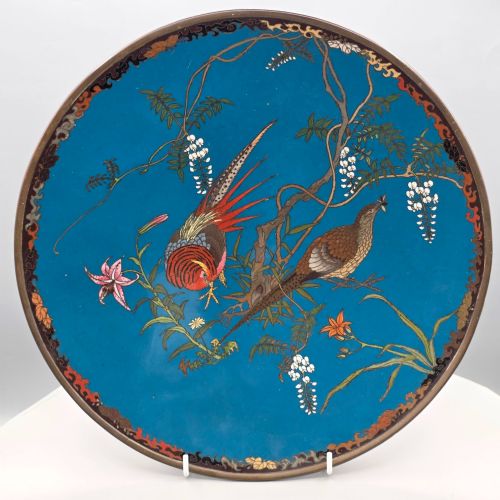
When you search for an oriental metalwork charger, you encounter large decorative plates, dishes, and trays originating from Japan during the Meiji, Taisho, and Edo periods. These pieces serve primarily as wall plaques or cabinet centrepieces rather than tableware. Most examples on this page date from the nineteenth century, particularly the decades surrounding eighteen-eighty.
The decorative subjects span natural and mythical motifs. You find chargers and plates featuring birds such as ho-o birds, phoenixes, ibis, and owls, alongside dragons, leaping koi, and Mount Fuji. Geometric trays and pieces decorated with auspicious symbols also appear regularly.
How they were made
The primary technique relies on cloisonne enamel, where fine brass wire creates cellular compartments on a metal base before coloured enamel pastes are applied and fired. Copper, brass, and iron serve as the foundational metal bodies for these chargers and plates. Artisans then polished the surfaces smooth to reveal the intricate metal outlines between the glass paste fields.
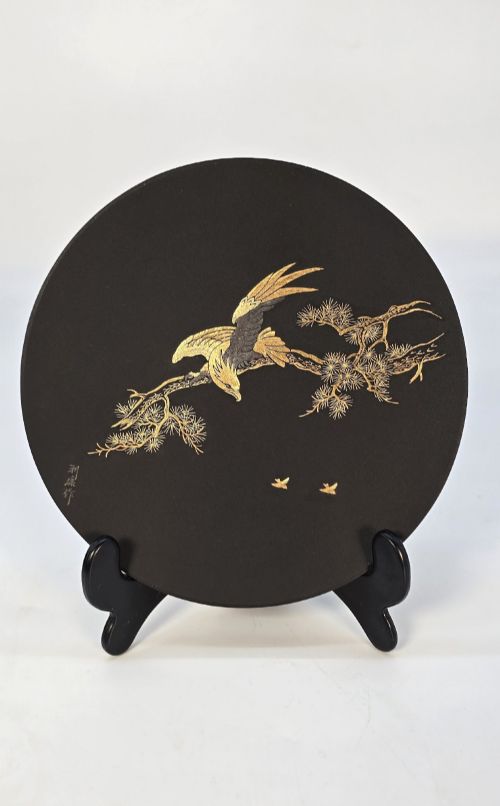
Alternative methods involve patinated iron plaques enhanced with gold and silver inlay, alongside mixed-metal work in the Komai style. Artisans combined bronze and brass to build complex figurative scenes such as Benzaiten and dragons. These varied techniques produced deep textures and lasting metallic sheens.
An owl contemplates Mount Fuji entirely made of melted glass.
What varies in quality
The division between standard production and masterwork output rests on the fineness of the wirework and the control of the enamel firing. Pieces attributed to specific makers like Kinkozan or executed in the Komai style demonstrate superior discipline in line and composition. Scale also dictates tier, as larger chargers demand greater technical precision to prevent warping during kiln firing.
Subtlety of shading and the complexity of the subject matter separate basic dishes from exceptional plaques. A single dragon spanning a thirty-six centimetre surface requires advanced dexterity compared to a standard floral repeat. The crispness of the gold and silver inlay on iron further elevates a piece within the range.
Kinkozan
The Oriental Metalwork Charger Glossary
- Charger
- A large decorative plate or platter intended for display rather than service. These pieces usually measure over thirty centimetres across.
- Cloisonne
- An enamelling technique using thin metal wires soldered to a metal body to form cells for coloured paste. Artisans fire and polish the surface until smooth.
- Meiji Period
- A Japanese historical era lasting from eighteen-sixty-eight to nineteen-twelve. This era saw a surge in export metalwork and enamel production.
- Patination
- The chemical or thermal treatment applied to metal surfaces to produce a specific aged colour. Iron and bronze plaques frequently utilise this to create depth.
- Inlay
- The technique of hammering contrasting metals like gold and silver into cut recesses on an iron base. This creates detailed pictorial compositions.
Oriental Metalwork Charger: Frequently Asked Questions
What is an oriental metalwork charger?
An oriental metalwork charger is a broad decorative plate or tray manufactured in Japan using techniques like cloisonne enamel, bronze, or inlaid iron. These objects were produced for export and display.
They function as wall plaques or tabletop centrepieces rather than functional dining ware. Their surfaces depict birds, dragons, and symbolic imagery.
How do I date a cloisonne charger?
Dating relies on stylistic shifts and manufacturing methods seen across the Meiji, Taisho, and late Edo periods. Nineteenth-century pieces often employ specific wire weights and distinct enamel palettes.
Signatures or attribution marks stamped or worked into the reverse or base also help establish a production window. Comparing motif complexity provides further chronological context.
Where were these chargers displayed?
These chargers were designed primarily for ornamental display in nineteenth-century interiors and drawing rooms. Their large scale made them natural focal points for walls or cabinets.
Today, they suit similar prominent display spaces where light can catch the enamel fields and metallic wirework. Proper wall mounting or stable plate stands ensure their safety.
What motifs appear on these pieces?
Common subjects include mythical creatures like dragons and ho-o birds, alongside natural fauna such as koi fish, owls, and ibis. Landscapes featuring Mount Fuji also recur.
Other chargers display abstract auspicious symbols or complex figurative narratives involving traditional deities. These themes reflect Japanese aesthetic traditions adapted for international collectors.