


Oriental Kelleh Rug
An oriental kelleh rug provides a substantial floor covering that brings rich traditional patterns and enduring craftsmanship into a room.
Oriental Kelleh Rug
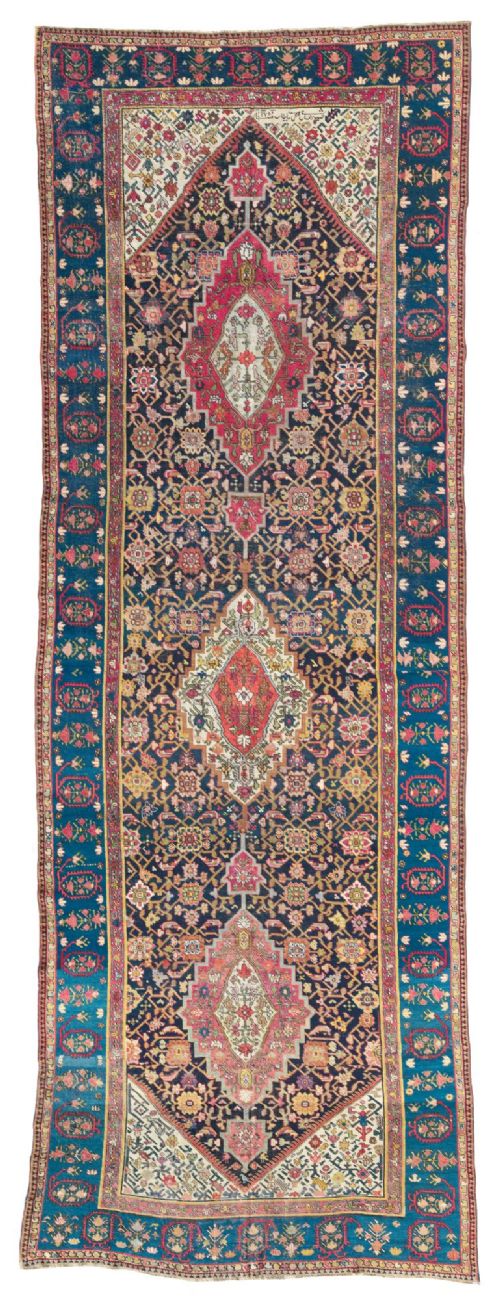
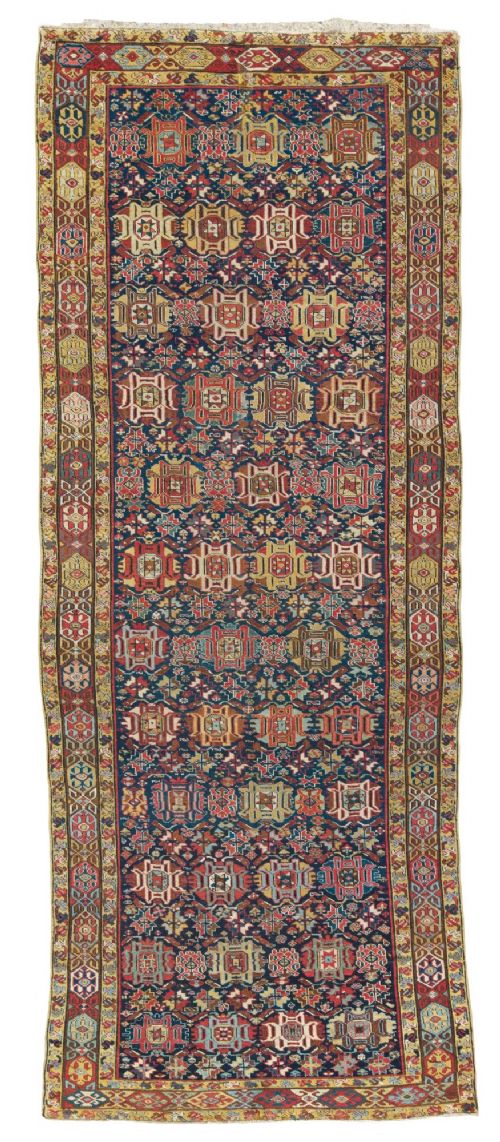
An oriental kelleh rug is a large format floor covering, typically longer than it is wide, designed to anchor a traditional room. When you examine an oriental kelleh rug on this page, you encounter formats classified as rugs, area rugs, runner rugs, and large carpets spanning the mid nineteenth century through the early twentieth century.
The regional origins of these pieces span diverse weaving traditions across Persia and the Caucasus, encompassing styles such as Persian Tribal, Caucasian, Persian Kurdish, and Tribal and Nomadic. You will frequently find specific regional attributions including Bidjar, Kurdish, Karabagh, Malayer, Hamadan, Khamseh, Ersari, Baktiari, Zanjan, Kazak, Senneh, Khotan, Shashavan, and Mahal.
Makers and weavers across these regions produced formats ranging from intimate long rugs to expansive carpets exceeding five metres in length. The proportions serve specific architectural layouts, traditionally positioned along the edge of a larger room or centre stage in a grand hall.
What varies in quality
Knot density and structural tightness dictate the crispness of the design details and the overall resilience of the pile. Pieces with finer foundations maintain sharper pattern definition, particularly in complex borders like the harshang or dragon motifs.
The integrity of the wool and the depth of the natural dye palette determine the visual resonance of the piece. Superior examples exhibit harmonious colour saturation and balanced proportions across the extended format.
Many of these sturdy carpets have outlived several generations of furniture while quietly holding their ground under heavy footsteps.
The Oriental Kelleh Rug Glossary
- Kelleh
- A large format rectangular rug or carpet, traditionally longer than a standard carpet and wider than a runner. It serves as a commanding central floor covering.
- Bidjar
- A Persian weaving centre renowned for exceptionally dense, heavy construction and durable foundation structures. These pieces are often called the iron rugs of Iran due to their robust build.
- Boteh
- A traditional teardrop or almond-shaped motif representing a floral spray or cypress tree. It appears frequently across Persian and Kurdish textile designs.
- Kavkaz
- A geographical descriptor for Caucasian weaving regions situated between the Black Sea and the Caspian Sea. These textiles are celebrated for bold geometric abstraction.
Oriental Kelleh Rug: Frequently Asked Questions
Where were oriental kelleh rugs traditionally used?
These large format floor coverings were historically placed along the perimeter of a principal reception room or positioned centrally in traditional dwellings. Their elongated proportions accommodated the specific architectural layouts of Persian and Caucasian homes.
Today, their dimensions make them well-suited for hallways, long living spaces, or beneath dining tables where an extended format provides balanced coverage.
How do I identify a Kurdish kelleh?
Kurdish examples typically display robust wool foundations, hearty hand-spun piles, and expressive tribal motifs such as repeated boteh patterns or distinct dragon borders. The weaving structure tends to be robust and substantive.
Regional characteristics often reveal themselves through saturated palettes and spontaneous design variations executed by nomadic or village weavers.
What is the difference between a kelleh and a runner?
While both formats are significantly longer than they are wide, a kelleh maintains a broader width that classifies it as a large carpet or substantial area rug rather than a narrow corridor runner. Standard runners are proportioned specifically for tight hallways and stairs.
A kelleh offers enough width to anchor furniture arrangements, whereas a runner serves primarily as a pathway.
How should I care for an antique wool carpet?
Protect the textile by placing a quality rug underlay beneath it to prevent slipping and reduce friction against the floorboards. Regular gentle vacuuming without a beater bar removes abrasive dust particles from the wool pile.
Professional specialist cleaning is recommended when necessary, avoiding harsh chemical treatments that can strip natural lanolin from the hand-spun fibres.