




Oriental Embroidered Tapestry
Oriental embroidered tapestry brings together needlework, applique and woven textile wall art from Central Asia, China, Japan and Persia.
Oriental Embroidered Tapestry
An oriental embroidered tapestry covers a broad spectrum of textile wall art, panels and hangings originating from regions including Uzbekistan, China, Japan, Persia and Turkey. These pieces span from the mid-nineteenth century through the early twentieth century, reflecting diverse cultural motifs and regional traditions.
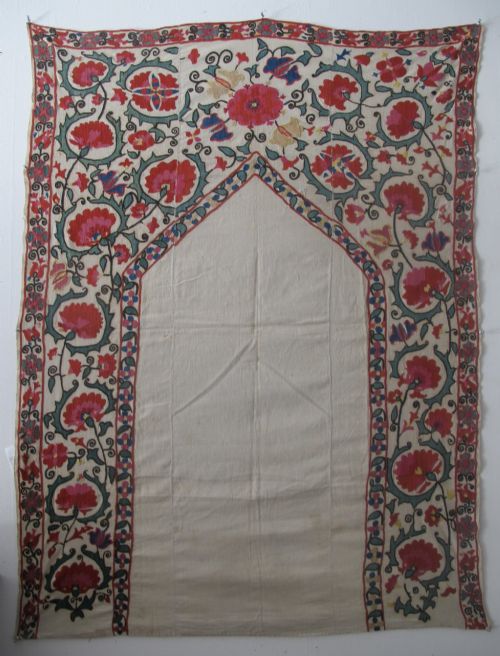
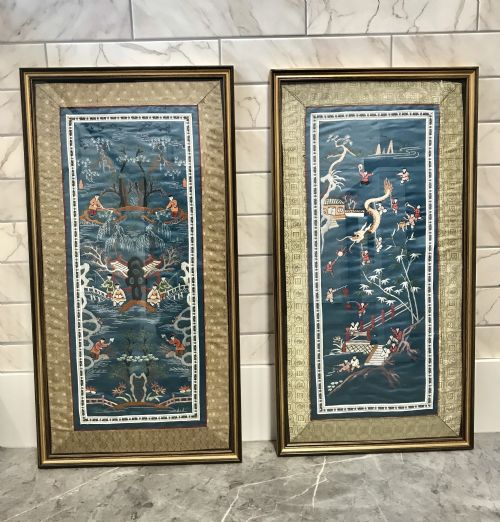
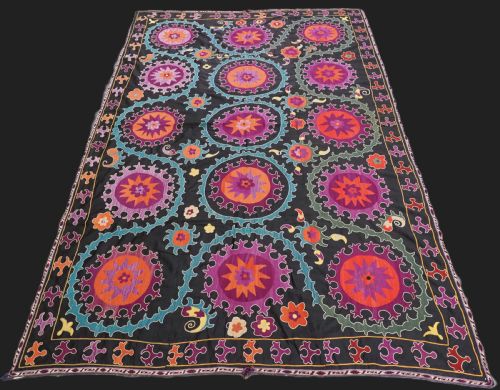
The most common pieces encountered on this page are antique Uzbek suzanis, which typically feature silk embroidery worked on cotton foundations. Alongside these, buyers find Chinese silk embroidered panels, Persian Rasht applique work, and Japanese silk textiles depicting figures, animals and botanical forms.
Forms range from small decorative panels and architectural design suzanis to large relief hangings and prayer format textiles. Each piece functions primarily as wall art or a decorative textile hanging, bringing texture and historical narrative into an interior space.
Materials and construction
Needlework and construction rely heavily on fine silk threads applied to various foundation materials such as cotton, wool and felt. Artisans execute intricate hand-sewn stitching, often combining surface embroidery with detailed applique work to build up rich pictorial designs.
Many Chinese and Japanese panels utilise smooth silk grounds, sometimes framed under glass to preserve delicate needlework depicting dragons, trees and birds in flight. Central Asian suzanis employ vibrant silk thread worked densely across cotton grounds, occasionally incorporating specialised prayer formats or geometric borders.
Listings span from eighteen-fifty to nineteen-thirty, uniting silk, cotton, wool, felt, glass and wood across multiple Asian regions.
Judging quality
Quality in these textiles rests upon the density and precision of the needlework, the complexity of the composition, and the integrity of the ground material. Finer pieces demonstrate meticulous hand-sewing with varied stitch types that create depth and visual weight within the design.
Condition and originality also dictate standing, with well-preserved silk threads, stable cotton or felt grounds, and intact applique elements distinguishing superior examples. The vitality of the pictorial narrative - whether depicting architectural layouts, tigers, dragons or geese in flight - drives the overall presence of the piece.
The Oriental Embroidered Tapestry Glossary
- Suzani
- An embroidered tribal textile originating from Uzbekistan and surrounding Central Asian regions. These large wall hangings are traditionally worked in silk thread on a cotton or linen ground.
- Applique
- A decorative needlework technique where pieces of fabric, such as felt or silk, are sewn onto a larger foundation material to form a composite design. This method appears frequently in Persian Rasht work.
- Prayer format
- A textile design featuring a central architectural arch or mihrab motif that directs the viewer's eye towards a focal point. These pieces were often utilised for wall hanging purposes.
- Kilim
- A flatwoven textile that can incorporate supplementary embroidery or decorative surface work. Examples include pieces from Afghan workshops.
Oriental Embroidered Tapestry: Frequently Asked Questions
How do I hang an antique textile safely?
Mounting heavy embroidered panels requires careful weight distribution to prevent strain on the historical fabric. Conservation framing or custom sleeves sewn along the reverse allow the piece to hang flat without direct pinning.
Keeping textiles away from direct sunlight preserves the natural dyes used in silk threads and cotton grounds. Rotating pieces periodically ensures even exposure within a room.
What is the difference between a suzan and a panel?
Suzanis are specific Central Asian embroideries traditionally stitched by hand on cotton foundations, often featuring large floral or geometric medallions. Chinese and Japanese panels typically focus on pictorial scenes with figures, birds, and dragons.
While both serve as wall art, their origins, stitch techniques, and cultural symbolism vary distinctly across regions.
How are Persian embroideries different from Uzbek ones?
Persian embroideries, such as those from Rasht, frequently employ complex felt and silk applique work with intricate classic designs. Uzbek suzanis rely primarily on dense silk embroidery stitches directly onto a cotton ground.
Both styles utilise rich colour palettes, but the underlying construction methods create distinct textural qualities.
Can these textiles be cleaned?
Historical textiles require specialist conservation cleaning rather than standard domestic washing methods. Surface dust can be gently removed using low suction through a mesh screen.
Professional textile conservators should handle any deeper cleaning to protect fragile silk threads and antique cotton foundations from damage.