
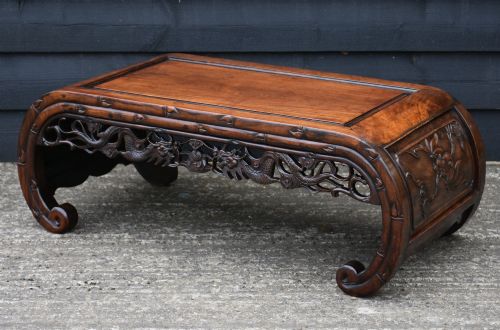
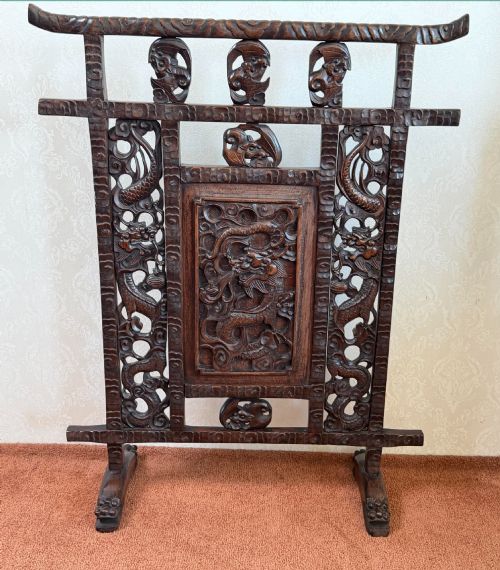


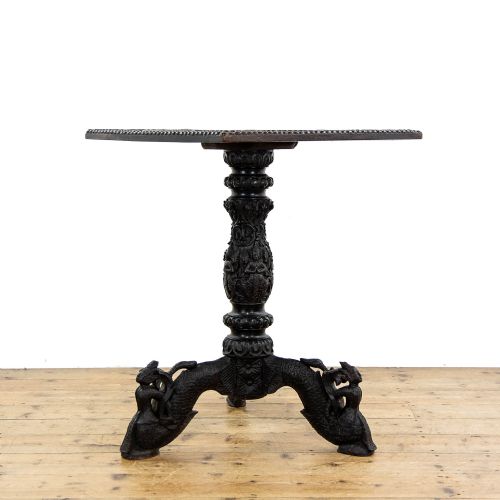

Oriental Dragon Carved Table
An oriental dragon carved table brings dense hand-carved detail and rich timber presence into a room, drawing the eye instantly.
Oriental Dragon Carved Table
When you search for an oriental dragon carved table, you encounter a distinct group of furniture pieces created in various forms. The selection here primarily spans side tables, occasional tables, coffee tables, and centre tables.
Most examples originate from the nineteenth century into the early twentieth century, carrying stylistic influences from Chinese export work, Qing Dynasty production, and Japanese Meiji periods. These tables range from low opium tables to octagonal occasional stands and nests of tables.
Makers utilised dense timbers and fitted them with carved motifs representing dragons. Alongside these, you find related forms such as plant stands, lantern stands, and writing desks sharing the same carved vocabulary.
Materials and Construction
Makers relied heavily on durable hardwoods, specifically rosewood, teak, and camphorwood, which lent themselves to deep chisel work. These timbers provided the weight and structural stability necessary for intricate relief carving without splintering.
Certain examples incorporate inset marble tops, adding a cool, smooth counter-texture to the heavily figured wooden frames below. Brass and bronze elements occasionally appear as supporting fittings, hinges, or decorative accents.
The surface decoration involved hand-carving techniques executed with specialist chisels to render scales, claws, and undulating dragon bodies in high relief. Joinery methods matched traditional regional cabinet-making standards, ensuring robust assembly across side tables and nests.
Some dragons on these tables clutch carved wooden pearls, an ancient symbol of wisdom and spiritual energy.
Evaluating Quality
The choice of material heavily influences the standard of the piece. Dense, well-figured rosewood or heavy hardwoods with stable grain structures hold crisp carved lines far better than softer substitute timbers.
Integration of secondary materials like inset marble tops marks higher grade production. A tightly fitted marble insert that sits flush within a rebated hardwood channel denotes careful initial joinery and skilled workshop practice.
The Oriental Dragon Carved Table Glossary
- Hardwood
- Dense, durable timber sourced from broad-leaved trees, favoured here for its ability to retain fine carved detail. Rosewood and teak are common examples found in this category.
- Chinoiserie
- European decorative style reflecting Chinese artistic motifs and techniques. It appears on various items produced for Western export markets during the nineteenth and early twentieth centuries.
- Qing Dynasty
- The final imperial dynasty of China, spanning from sixteen-fourteen-fourteen to nineteen-twelve. Pieces associated with this period reflect traditional court and export carving styles.
- Meiji Period
- The era of Japanese history lasting from eighteen-sixty-eight to nineteen-twelve. Works from this time often showcase exceptional metalwork and detailed woodwork.
- Occasional Table
- A small, movable table designed for a specific, intermittent use within a room. These frequently serve as display surfaces or small tea tables.
Oriental Dragon Carved Table: Frequently Asked Questions
What is an oriental dragon carved table?
These are nineteenth and early twentieth-century wooden tables featuring hand-carved dragon motifs. They originate primarily from Chinese export workshops and Japanese makers.
They take forms such as side tables, coffee tables, and occasional stands, utilising dense timbers like rosewood and teak.
How were these tables used originally?
They served functional roles in homes as display surfaces for plants, ornaments, or tea ceremonies. Lower variations functioned as opium tables or general seating-adjacent surfaces.
Export pieces were frequently bought by Western households to furnish reception rooms in the Victorian and Edwardian periods.
How do I style a carved dragon table?
These pieces function well as accent furniture in contemporary or traditional interiors. Their dark timbers and ornate carvings anchor a corner or sit beside plain upholstered seating.
Keep surrounding surfaces relatively uncluttered to allow the detailed woodwork and dragon motifs to remain the focal point.
How can I tell the period of a carved table?
Dating relies on timber characteristics, construction methods, and stylistic markers linked to Victorian, Edwardian, or Meiji eras. Examining the underside and joinery reveals hand tools and assembly techniques specific to those decades.
Export records and regional stylistic traits further narrow down the decade of production.