


Oriental Credenza
An oriental credenza brings striking lacquer and carving into a room, offering both surface display and deep storage.
Oriental Credenza
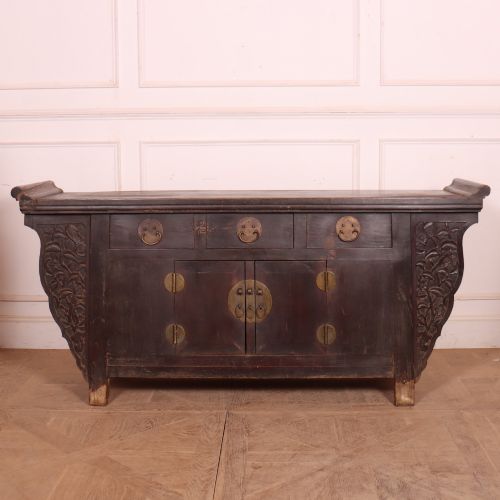
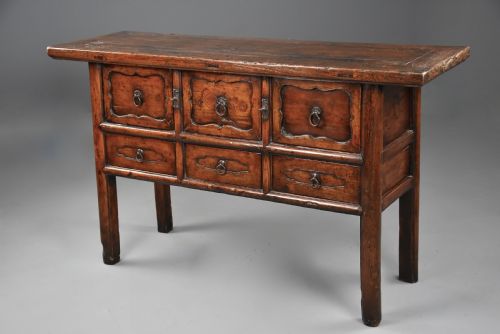
An oriental credenza encompasses side cabinets, sideboards, and console tables drawn from various Asian and European revival traditions. You meet pieces spanning the nineteenth century up to the nineteen-twenties, incorporating Chinese elm forms alongside British and French interpretations of Eastern motifs.
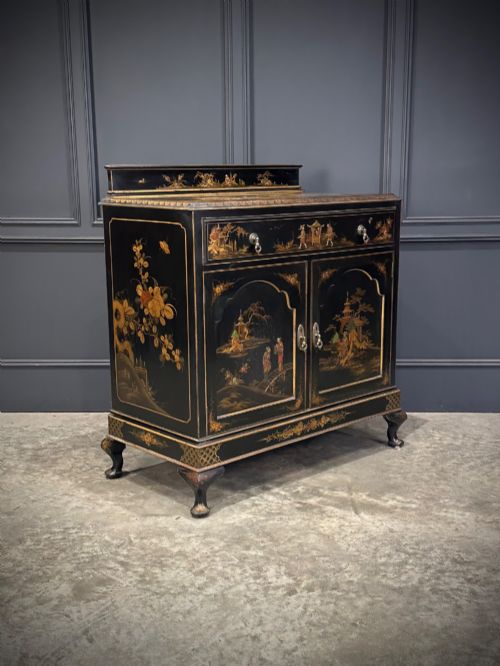
The Chinese provincial items take the form of elm sideboards and storage cupboards, often bearing the stylistic hallmarks of the Qing Dynasty or Shanxi Province. Alongside these sit European cabinet pieces executed in the Chinoiserie taste, ranging from black and red lacquered stands to Regency chiffoniers.
Sideboards and side cabinets dominate the selection, functioning as practical storage solutions with significant decorative presence. The variety bridges nineteenth-century cabinet-making and early twentieth-century interpretations, uniting disparate regional aesthetics under a single decorative banner.
How they were made
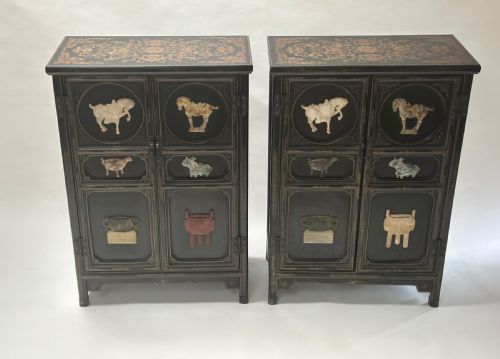
Cabinet-makers relied on native timbers such as elm and walnut, frequently selecting dense exotic hardwoods like padauk for heavily carved forms. Surface decoration involved layers of lacquer, often applied in black or red tones and occasionally heightened with gilding.
Metal components in brass and iron provided structural reinforcement and decorative hinges, while intricate wood carving defined panels, stands, and friezes. European workshops employed japanning techniques to replicate Asian lacquer finishes on domestic furniture bases.
Listings span the nineteenth century through the nineteen-twenties, incorporating elm, walnut, and padauk alongside black and red lacquer finishes.
What varies in quality
The depth and crispness of the wood carving dictate the distinction between standard provincial items and exceptional cabinet-making. Hand-applied lacquer finishes display varying degrees of lustre and durability, separating basic surface treatments from multi-layered japanning.
Structural integrity depends on the selection of timber, with seasoned elm and dense padauk offering superior stability compared to softer secondary woods. The harmony between the main cabinet body and its supporting stand or base marks the distinction in resolved design.
Gabriel Viardot·Mercier Frères
The Oriental Credenza Glossary
- Chinoiserie
- European artistic tradition reflecting Chinese and East Asian motifs, prevalent in furniture decoration and lacquerwork throughout the eighteenth and nineteenth centuries.
- Japanning
- European imitation of East Asian lacquerwork, created by applying layers of varnish and heat-cured finishes often decorated with raised metallic motifs.
- Padauk
- Dense tropical hardwood valued for its deep reddish hue and durability, frequently utilised in nineteenth-century carved furniture from British colonial regions.
- Qing Dynasty
- The final imperial dynasty of China, spanning from sixteen-forty-four to nineteen-twelve, whose traditional furniture styles heavily influence antique elm sideboards and cabinets.
Oriental Credenza: Frequently Asked Questions
How do I clean lacquered wood?
Dust surfaces gently with a soft, dry cloth to prevent scratching the delicate finish. Avoid using chemical polishes or water, which can damage aged lacquer.
Maintain a stable room temperature and keep the furniture away from direct sunlight to preserve the depth of the red or black tones.
Where should I place a side cabinet?
These cabinets suit dining rooms, hallways, or living spaces where they provide functional storage alongside surface display area. Their decorative doors and stands allow them to function as focal points against plain walls.
Ensure the chosen location has adequate floor space to allow doors or drawers to open fully without obstruction.
What defines Regency Chinoiserie?
This style combines classical British Regency furniture silhouettes with decorative Asian-inspired surface ornamentation. Cabinets from this period unite structured architectural forms with japanned panels and gilded highlights.
They represent a specific European fascination with Eastern aesthetics adapted for refined nineteenth-century interiors.