


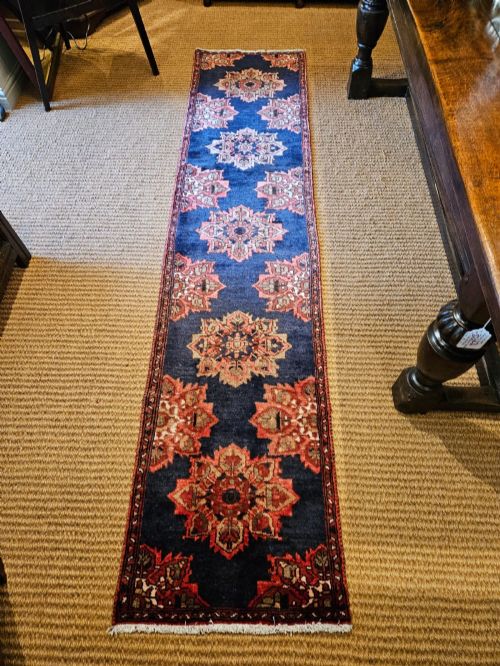
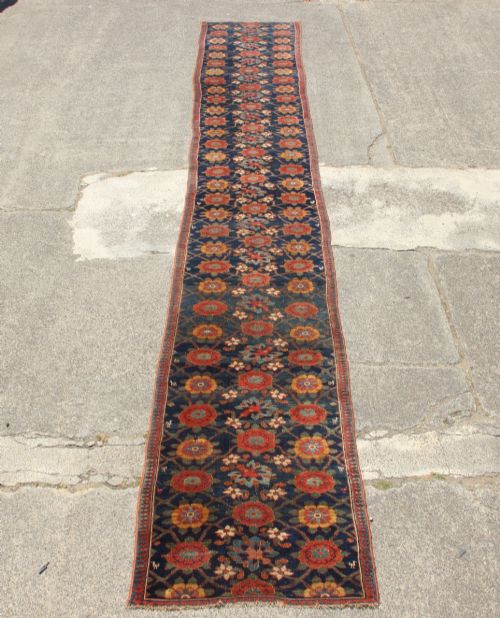
Oriental Corridor Runner
An oriental corridor runner brings warmth and pattern to long hallways through centuries-old weaving traditions.
Oriental Corridor Runner
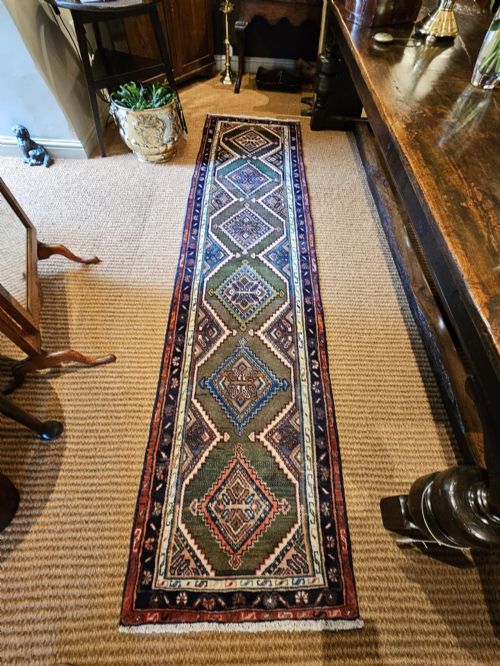
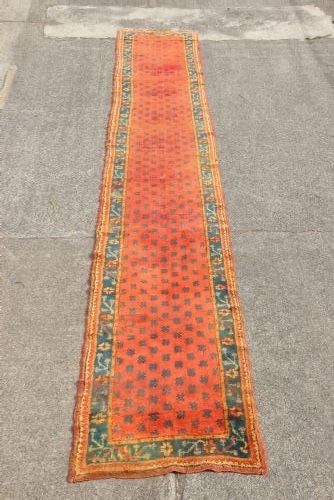
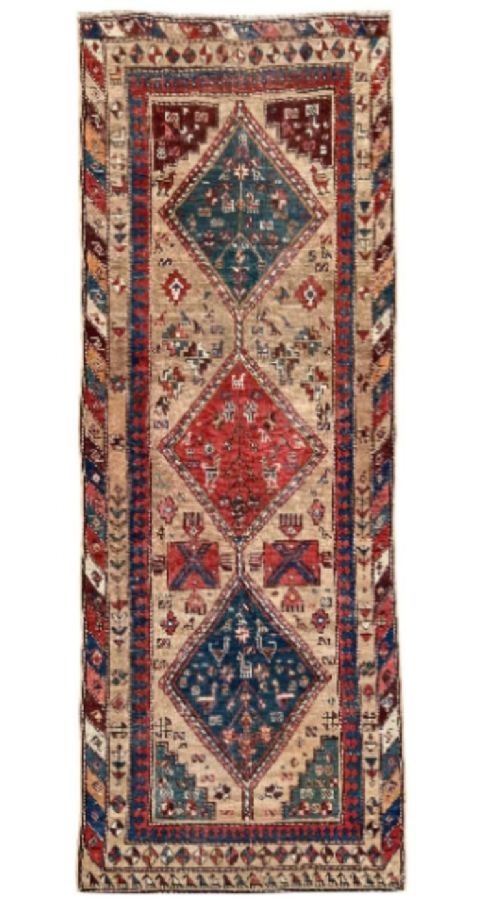
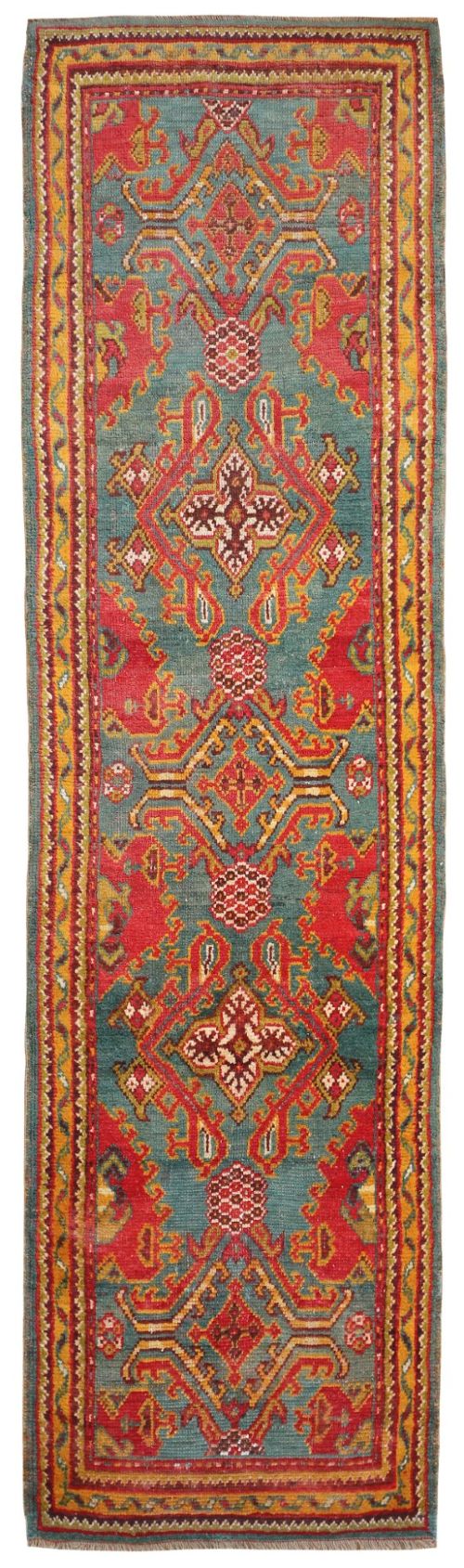
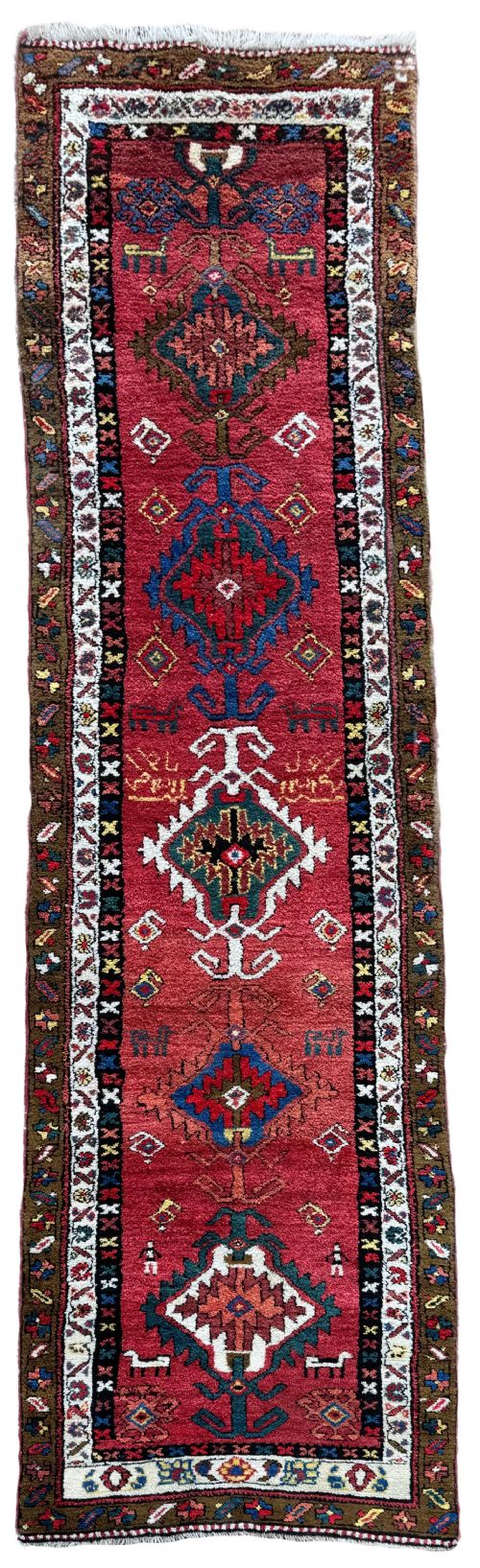
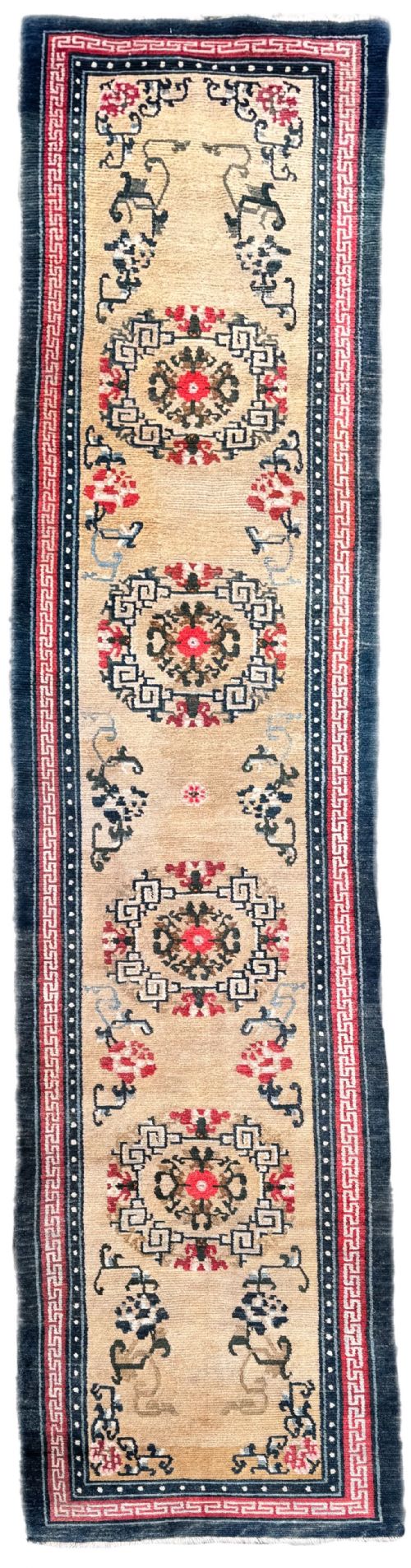
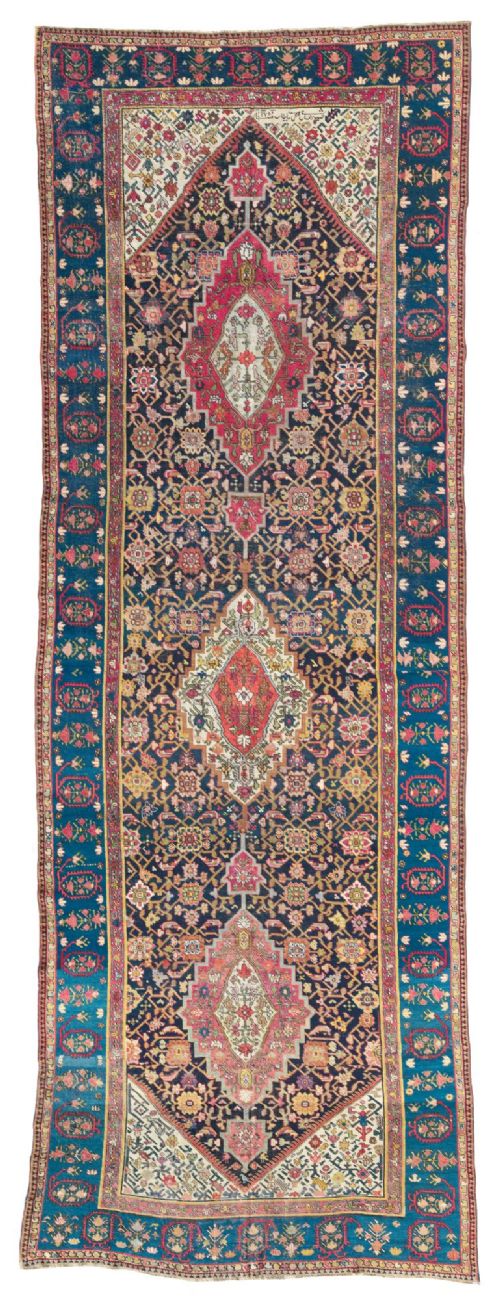
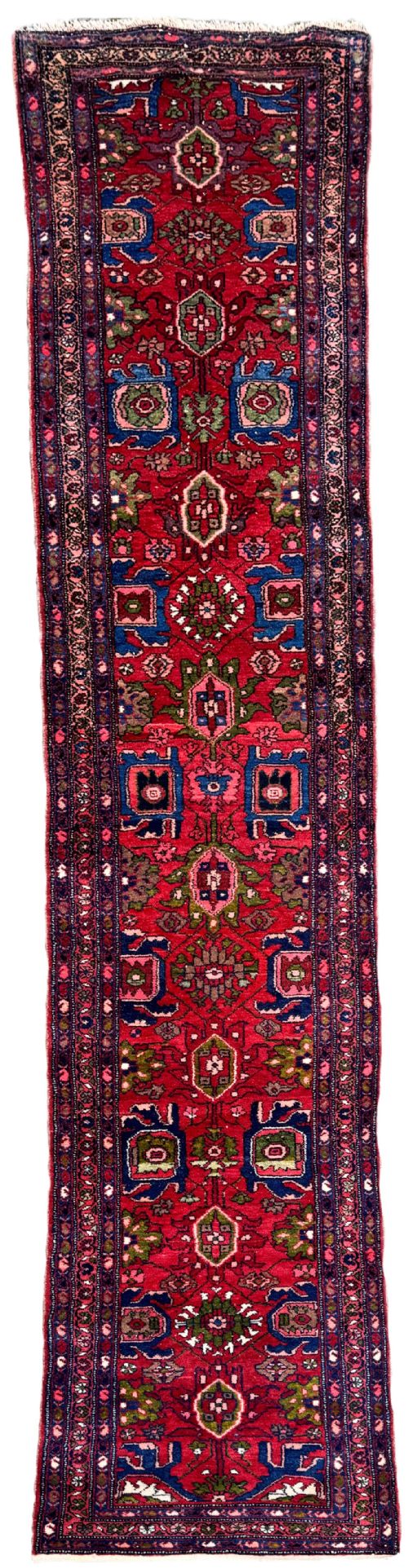
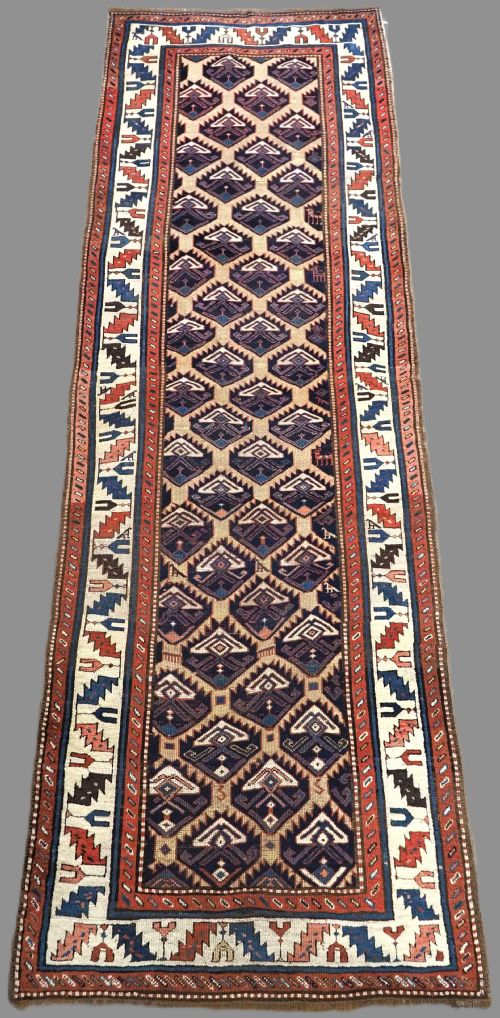
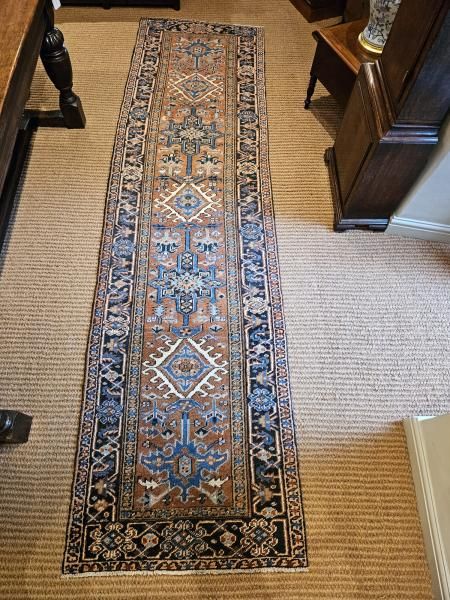
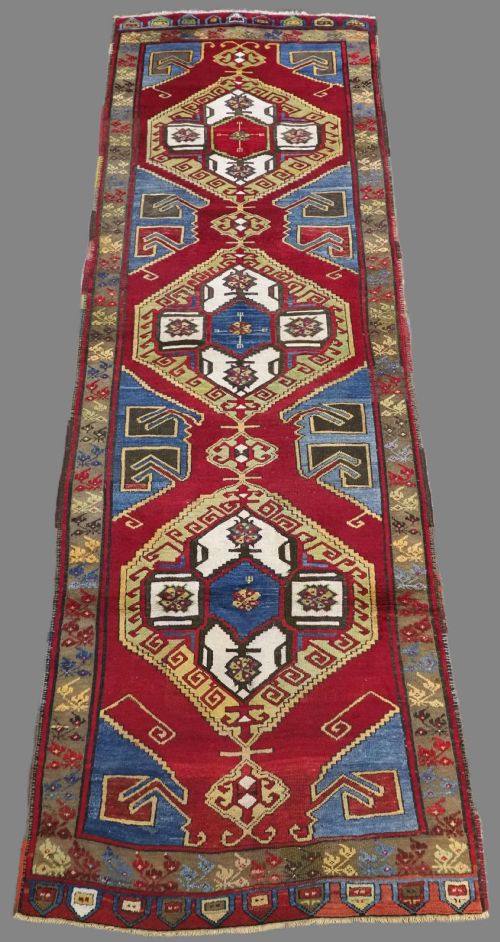
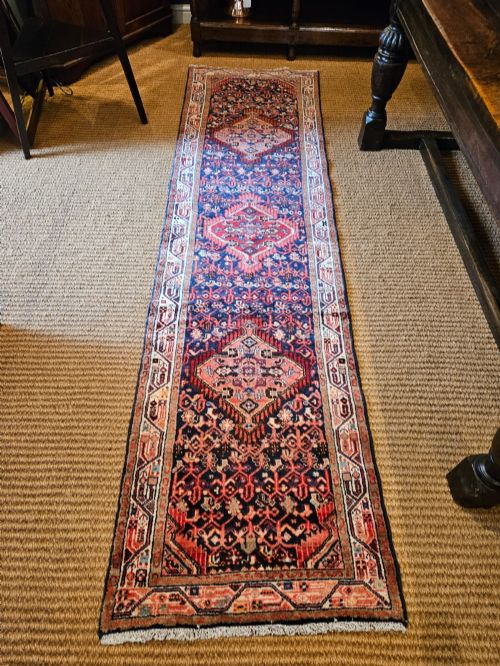
An oriental corridor runner is a long, narrow carpet designed specifically to span hallways, landings and passage spaces in traditional and modern interiors alike. When searching for this phrase, buyers encounter elongated formats originating from Persian, Caucasian, Anatolian and Tibetan weaving centres. These pieces date principally from the nineteenth and early twentieth centuries, encompassing styles such as Heriz, Kurdish, Ushak, Kazak and Shirvan.
The format itself serves a practical architectural purpose, protecting wooden floorboards in high-traffic corridors while introducing rich geometric or floral motifs. Pieces range from modest lengths to exceptional spans exceeding five metres, accommodating varying corridor proportions. The selection draws heavily upon tribal and village traditions where weavers worked from memory rather than rigid scale drawings.
How they were made
Traditional runners rely primarily on wool and hand-spun wool for the pile, providing resilience underfoot across decades of daily use. Foundations typically consist of cotton or wool warp and weft threads, knotted by hand to secure the dense surface pile. Natural dye sources yield deep indigos, terracotta reds and muted olive greens that mellow gradually over time.
Weavers employed regional knotting techniques specific to their locality, whether Kurdish, Caucasian or Anatolian, resulting in varying pile densities and structural rigidity. Edges are generally overcast by hand with wool, while ends often retain rudimentary kilim end-weves or secured fringes. The combination of hand-spun materials and natural colorants underpins the characteristic handle of these older textiles.
What varies in quality
The calibre of a runner depends significantly on the tightness of the knotting and the quality of the wool utilised in the pile. Finer wools retain lanolin effectively, contributing to a softer handle and greater longevity under heavy foot traffic. Structural integrity, including straightness along the borders and even wear across the foundation, distinguishes superior examples from more irregular village weaves.
Artistic execution also separates standard production from exceptional pieces, particularly in the precision of tribal motifs and the harmonious balance of vegetable dyes. Variations in saturation and the subtle abrash of shifting dye batches lend depth to better specimens. The handling of corner transitions and border symmetry reflects the weaver's individual skill and experience.
The Oriental Corridor Runner Glossary
- Kelleh
- A large format rug or short runner, typically wider and shorter than a standard corridor runner. It served formal reception spaces in traditional households.
- Abrash
- A natural variation in colour shading caused by changes in dye batches or hand-spun wool lots. This subtle horizontal striping indicates genuine artisanal production.
- Warp
- The stationary vertical threads stretched across the loom that form the structural foundation of the rug. Weft threads are interlaced across these to secure the knots.
- Kilim
- A flat-weave textile structure often found at the finished ends of pile carpets. It provides a protective barrier against fraying beyond the knotted field.
Oriental Corridor Runner: Frequently Asked Questions
How do I clean an old runner?
Gentle surface brushing and regular low-suction vacuuming remove loose dust without stressing the fragile wool foundation.
Professional textile conservation cleaning is recommended for deep soil removal, avoiding harsh chemical detergents that strip natural lanolin.
Can these runners handle hallway foot traffic?
Traditional wool pile construction provides natural durability suitable for domestic corridors and landing spaces.
Utilising a quality underlay beneath the runner prevents slipping and cushions the fibres against hard subfloors.
What is the difference between Kurdish and Caucasian styles?
Kurdish pieces often feature saturated geometric layouts and soft, heavy wool handles produced in western regional settlements.
Caucasian runners tend to display crisper, more linear tribal medallions with highly contrasting primary colour palettes.
How do I determine the age of a runner?
Stylistic markers, structural materials like hand-spun wool, and natural dye characteristics help anchor pieces within nineteenth or early twentieth-century windows.
Slight irregularities in weave and natural wear patterns further indicate traditional production methods predating modern synthetic dyes.