



Oriental Carved Writing Desk
An oriental carved writing desk is a dense, heavily worked piece of furniture built to anchor a study, often bringing intricate traditional carving right into a room.
Oriental Carved Writing Desk
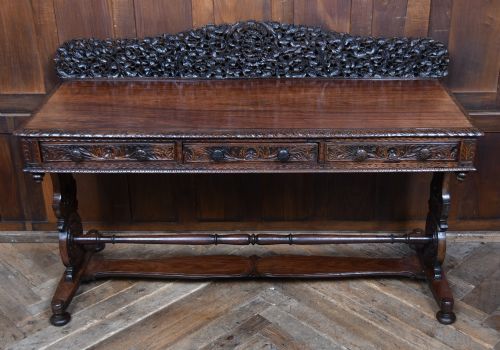
An oriental carved writing desk combines solid hardwoods with deep relief work, forming a stable surface designed for writing or correspondence. The most common form on this page is the nineteenth-century Chinese hardwood desk, often displaying regional or export characteristics.
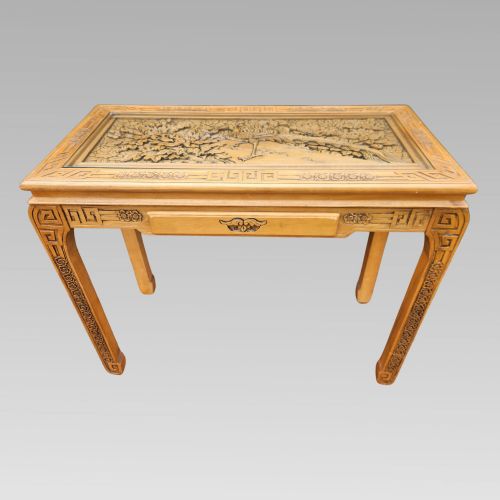
Makers shaped these surfaces to serve as functional writing spaces while incorporating motifs that reflect specific periods such as the Qing dynasty or the Victorian era. Alongside traditional desks, one encounters related forms including partners desks, writing tables, and side tables fitted for similar domestic use.
The materials span dense tropical woods like padouk and camphorwood alongside elm and lacquered finishes. Each piece demonstrates how nineteenth-century workshops adapted traditional forms for both domestic scholars and international export markets.
Materials and construction
Carpenters utilised dense hardwoods such as padouk, camphorwood, and general hardwood to build these desks, relying on their weight and stability to support deep surface carving. These timbers resist warping and provide a firm ground for intricate chisel work.
Carvers executed high-relief motifs directly into the solid wood panels, framing drawers and aprons with scrolling foliage, dragons, or traditional scenes. Joinery remained traditional, securing heavy tops and legs without relying on modern adhesives.
Oriental Carved Writing Desk Retail Price Guide 2026
Typical asking prices for oriental carved writing desk among the pieces listed under this phrase on Sellingantiques today, from the lower quarter to the upper quarter. They describe what is for sale here now, not the wider market.
Some nineteenth-century travelling boxes include clever swing-out cases designed to keep a scholar's ink and brushes from rolling away.
Judging quality and execution
The depth and clarity of the chisel work distinguish superior examples from simpler production, as master carvers achieved sharp undercut details and well-defined figures. Lower quality pieces display shallow, mechanical stamping or soft lines that lack definition.
The selection of timber plays a major role, with dense padouk and figured camphorwood commanding greater presence than ordinary mixed woods. Uniform colour and careful matching of timber boards across the writing surface indicate greater care during assembly.
Liberty·Viardot
The Oriental Carved Writing Desk Glossary
- Padouk
- A heavy, dense tropical hardwood valued for its reddish-brown colour and durability. It was frequently utilised for fine nineteenth-century export furniture.
- Camphorwood
- An aromatic timber used in panel construction, prized for its distinct scent and resistance to insects. It forms stable panels suitable for intricate carving.
- Chinoiserie
- European artistic style reflecting Chinese motifs and techniques. It appears on furniture produced in the West using Asian decorative themes.
- Qing Dynasty
- The final imperial dynasty of China, spanning from sixteen forty-four to nineteen twelve. Pieces from this era often show traditional court or export styles.
Oriental Carved Writing Desk: Frequently Asked Questions
What is an oriental carved writing desk?
It is a nineteenth-century or early twentieth-century desk built from dense hardwoods and embellished with deep relief carving, originating primarily from Chinese or Japanese workshops.
These pieces served as functional writing furniture for scholars and merchants, combining practical drawers with elaborate decorative motifs.
How do I care for a hardwood desk?
Keep the wood away from direct heat sources and sudden humidity changes to prevent the dense timbers from splitting. Dust regularly with a dry cloth and avoid harsh chemical polishes that can damage the antique finish.
Applying a traditional beeswax occasionally helps nourish padouk or camphorwood surfaces without building up a sticky residue.
Are these desks comfortable for daily writing?
Many nineteenth-century writing tables offer adequate knee clearance and stable flat surfaces, though drawer configurations vary by regional style. Partners desks provide extra space and storage accessible from both sides.
Matching the chair height carefully to the fixed writing surface ensures a comfortable posture for modern use.
How can I tell Chinese export desks apart?
Export pieces often combine traditional carving techniques with Western furniture forms such as pedestal bases or partners desks. They utilise timbers like padouk and camphorwood that were readily available to coastal workshops.
Regional domestic tables tend to follow strict local forms without adapting to European proportions or utility.