
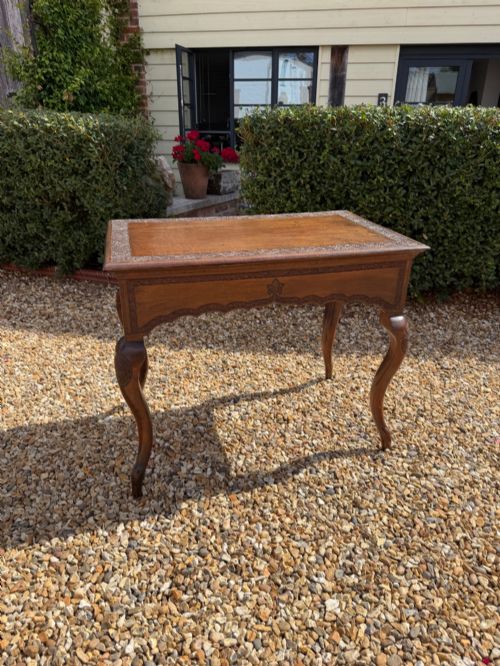
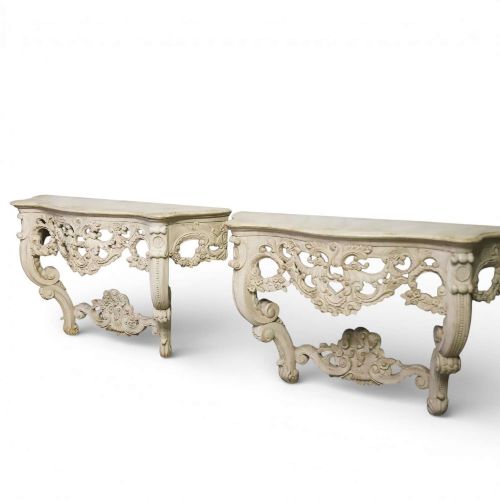
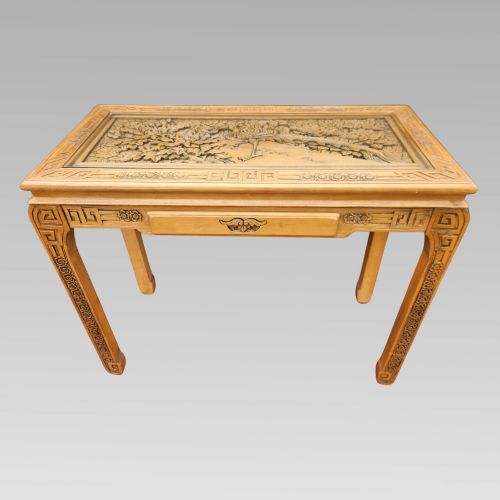


Hand Carved Console Table
These hand carved console table examples bring substantial regional character and sculptural depth into an interior, offering practical surface space alongside heavy ornamentation.
Hand Carved Console Table
A hand carved console table encompasses diverse regional traditions, appearing across styles such as French Rococo Revival, Chinoiserie, and Anglo-Indian origins. These tables frequently function as wall consoles, serving tables, or narrow hall pieces designed to occupy perimeter spaces.
The material selection spans walnut, teak, mahogany, and hardwood, frequently paired with glass, mirror glass, or granite tops. Examples range from 19th-century English and French workshops to 20th-century creations reflecting earlier Victorian aesthetics.
Construction and materials
Makers utilised solid timbers including walnut, teak, and mahogany, applying intensive hand-carving techniques directly to the structural wood. Surface treatments vary from natural polished hardwood finishes to antique white paint and giltwood applications.
Inland and regional workshops incorporated inset elements such as granite or mirror glass into the timber frames. Joinery supports functional surfaces like serving tables and side tables while accommodating intricate relief work.
Listings feature periods spanning from the late 19th century through the 1930s, utilising walnut, teak, mahogany, and granite.
Assessing craftsmanship
The depth and definition of the hand-carved detail separate standard decorative items from superior examples. Crisp execution in complex motifs, such as dragons or floral scrolls, demonstrates higher artisan skill.
Material integrity also dictates quality, particularly the selection of dense hardwoods and the preservation of original finishes like giltwood or antique white paint. Structural cohesion in supporting tops of granite or mirror glass reflects robust historical joinery.
The Hand Carved Console Table Glossary
- Console table
- A table designed to stand against a wall, frequently fixed or supported by brackets, utilised in hallways or principal reception rooms.
- Giltwood
- Timber treated with gold leaf or a gold-coloured metallic finish, prevalent in ornate French revival furniture.
- Chinoiserie
- European artistic style reflecting Chinese motifs and techniques, popular in decorative furniture and tables.
- Hardwood
- Dense timber derived from broad-leaved trees, providing the structural foundation for detailed carving.
- Granite
- A durable igneous rock utilised as a heavy inset tabletop surface on specific console designs.
Hand Carved Console Table: Frequently Asked Questions
Where should I place a console table?
These narrow tables suit hallways, entryways, and reception rooms where floor space is limited. They provide a practical surface for displaying decorative items while maintaining clear circulation routes.
Wall-fixed variants require secure mounting to support their weight and any items placed upon them, whereas freestanding side tables offer more flexible placement.
How do I care for carved wooden furniture?
Dust surfaces regularly with a soft cloth to prevent particulate accumulation within deep carved recesses. Avoid using harsh chemical sprays or silicone polishes that can degrade historical finishes like paint or giltwood.
Maintain stable room humidity to protect solid hardwoods such as walnut and mahogany from splitting or warping over time.
What styles are available in these tables?
The selection includes French Rococo Revival, Victorian styles, Chinoiserie, and Anglo-Indian designs. Each style employs distinct regional motifs, from gilded scrollwork to intricate elephant or dragon carvings.
Finishes range from natural polished timber and teak to antique white paint and giltwood.
How do I identify the period of a table?
Examine the timber species, tool marks, and construction methods visible beneath the piece. Nineteenth-century examples often display hand-cut joinery and dense regional hardwoods, whilst 20th-century pieces may replicate earlier Victorian aesthetics.
Stylistic markers such as French Neoclassical symmetry or Qing Dynasty influences help narrow down the historical origin.