
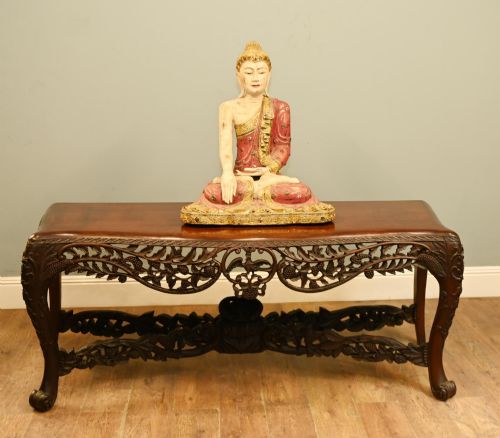
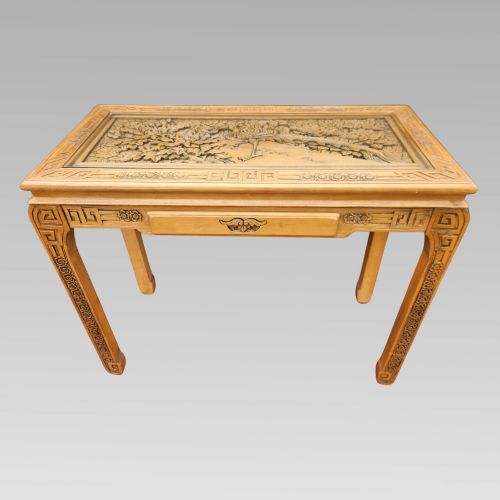


Oriental Carved Entry Table
An oriental carved entry table brings dramatic grain, deep relief and regional character straight to your hallway.
Oriental Carved Entry Table
When you search for an oriental carved entry table, you are looking at substantial hardwood furniture designed for hallways, corridors and reception rooms. The pieces gathered here span from the nineteenth century into the early twentieth century, taking forms such as console tables, altar tables and side cabinets. They originate largely from Chinese traditions, including Qing Dynasty workshops and export production, alongside Burmese colonial cabinet making.
You are most likely to meet rectangular altar tables and console tables constructed from dense timbers like elm, rosewood and camphorwood. Many pieces display traditional carved decoration, while others feature red lacquer or brass fittings. Their narrow proportions suit modern entryways precisely, providing a surface for lamps and letters while anchoring the space with historical weight.
How they were made
Cabinet makers built these tables using native Asian hardwoods such as elm, rosewood and camphorwood, selecting timber for strength and prominent grain patterns. Hardwood construction required precise joinery techniques to accommodate seasonal movement in the wood without metal fasteners. Artisans also applied red lacquer finishes to seal the timber and create a smooth, glossy surface.
Carvers worked directly into the solid wood of the aprons and panels, executing deep relief motifs rooted in regional and dynastic styles. Brass elements occasionally reinforced corners and drawers, combining structural utility with decorative contrast against the dark or lacquered timber.
Forms on this page concentrate primarily on console tables, altar tables and side cabinets originating from Chinese and Burmese workshops.
What varies in quality
The distinction between standard and superior pieces rests upon the density and choice of timber, with heavy rosewood and dense elm commanding higher regard than softer woods. Depth and crispness of the hand carving separate ordinary production from skilled workshop execution, particularly around the aprons and leg joints. Original surface treatments, such as undisturbed red lacquer or patinated hardwood, preserve the integrity of the piece far better than modern refinishing.
Structural proportion and architectural balance also define the upper tier of these tables. Well-resolved console and altar tables maintain clean joinery lines and stable stances despite decades of use. The presence of period characteristics, such as Kangxi design references or specific regional Chinese carving traditions, elevates the historical interest of the furniture.
The Oriental Carved Entry Table Glossary
- Altar table
- A long, narrow table originally used for ceremonial purposes in Chinese homes and temples, characterised by upturned flange ends and carved aprons.
- Console table
- A table designed to stand flat against a wall, frequently supported by wall brackets or distinct legs, making it suitable for narrow hallways.
- Qing Dynasty
- The last imperial dynasty of China, lasting from sixteen forty-four to nineteen twelve, known for robust hardwood furniture and intricate relief carving.
- Lacquer
- A durable glossy finish applied in multiple layers using natural resin, commonly found in deep red on export and domestic furniture.
- Camphorwood
- A fragrant hardwood utilised in Asian cabinet making for its insect-resistant properties and attractive grain.
Oriental Carved Entry Table: Frequently Asked Questions
Where should I place an oriental carved entry table?
These narrow tables suit hallways, landings and entrance foyers where floor space is limited. Their shallow depth allows them to sit flush against a wall while offering a useful surface.
They also function effectively behind sofas or as serving consoles in dining rooms. Pairing the table with a simple mirror or lamp creates a balanced focal point.
How do I care for antique hardwood furniture?
Maintain stable indoor humidity levels to prevent the dense timbers like elm and rosewood from splitting. Keep the furniture away from direct heat sources and strong sunlight.
Dust the carved surfaces regularly with a soft, dry cloth. Avoid using modern silicone polishes, applying natural wax sparingly only when the wood appears dry.
What is the difference between an altar table and a console table?
Altar tables often feature distinctive upturned flanges at the short ends and elongated proportions designed originally for ritual display. Console tables generally present flat rectangular tops intended purely for domestic utility.
Both forms share narrow profiles that make them interchangeable in modern interior settings. The carving on altar tables tends to concentrate heavily on the structural aprons beneath the top.
How can I tell the age of these tables?
Examine the construction methods, tool marks and timber shrinkage visible on the underside and interior joints. Traditional joinery without modern screws indicates older production.
Compare the decorative motifs and wood patination against documented pieces from the nineteenth and early twentieth centuries. Natural wear patterns accumulated over generations offer reliable clues to antiquity.