




Chinese Dark Wood Console
These Chinese dark wood console pieces bring sculptural timber grain and architectural joinery into a room, offering both surface display and historic presence.
Chinese Dark Wood Console
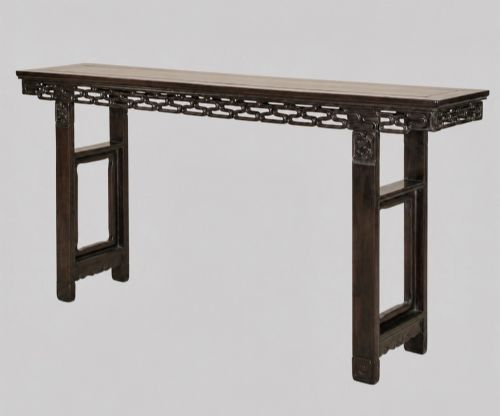
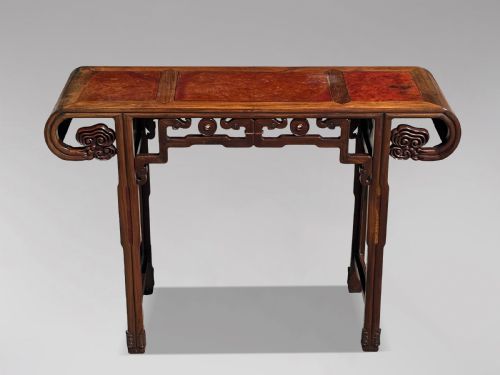
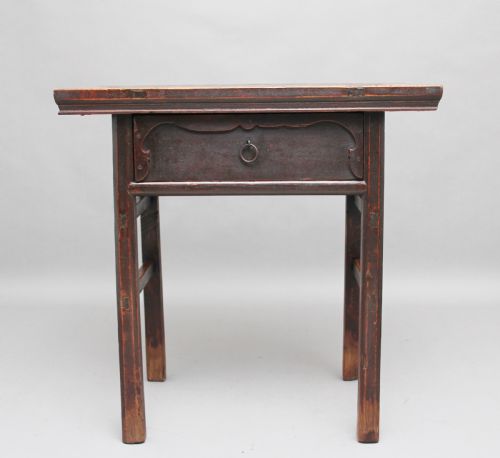
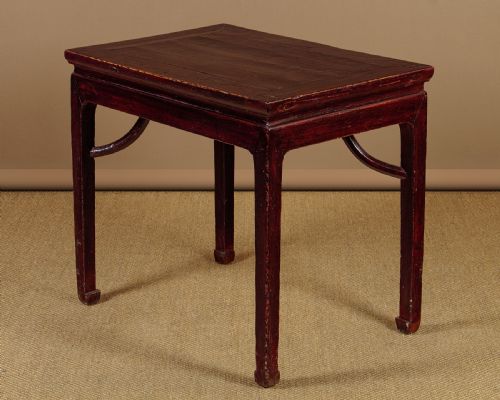
A Chinese dark wood console on this page typically appears as a nineteenth-century altar table, side table, or trestle table originating from the Qing Dynasty or later periods. These forms range from long plank-top surfaces designed for ritual placement to smaller elm side tables and demi-lune hall tables.
Makers utilised dense Asian hardwoods alongside elm and mahogany to build furniture suited for both formal halls and domestic interiors. Pieces span traditional Chinese provincial construction as well as British interpretations in the Chinese Chippendale and Chinoiserie manners.
Buyers select these tables for their restrained linear framework, upturned flange ends, and carved aprons. The selection balances austere scholar pieces with richly carved mahogany revival designs from the Edwardian era.
How they were made
Carpenters constructed these tables using dense timbers such as hongmu, hardwood, and elm, relying on traditional mortise and tenon joinery without relying on metal fasteners. Planks were selected for their dark grain and stability over wide spans.
Surface decoration involved low-relief carving on aprons and spandrels, complemented by occasional brass mounts or polished lacquer finishes. Secondary timbers like amboyna wood provided contrasting veneers on specific nineteenth-century altar tables.
Materials recorded across the inventory include dense hongmu, native elm, amboyna wood veneer, and structural brass hardware.
What varies in quality
Quality rests in the density and selection of the timber, where heavy hongmu or figured amboyna commands greater regard than standard commercial elm. The crispness of the carved spandrels and the tightness of the structural joints dictate the refinement of the piece.
Proportion and integrity of the original top planks separate superior altar tables from altered examples. Tables retaining their original finish and uncompromised corner leg framing represent the higher tier of surviving inventory.
The Chinese Dark Wood Console Glossary
- Altar table
- A rectangular form featuring high placement of side stretchers and often upturned flanges at the short ends. These tables originally held ceremonial objects in domestic halls.
- Hongmu
- A dense, heavy Chinese hardwood prized for its dark red-brown tone and fine grain. Furniture in this material maintains sharp carving detail over centuries.
- Elm
- A resilient domestic timber utilised widely in provincial Chinese cabinetmaking. It yields strong side tables with pronounced grain patterns.
- Chinoiserie
- European decorative style mimicking Chinese motifs and architectural lines. This aesthetic appears on eighteenth and nineteenth-century English console tables.
- Demi-lune
- A half-moon shape used for console tables placed flat against a wall. This format suits narrow hallways and reception spaces.
Chinese Dark Wood Console: Frequently Asked Questions
What is a Chinese altar table?
An altar table is a long, narrow surface traditionally used for display in the main rooms of traditional Chinese homes. They are characterised by overhangs, recessed legs, and carved aprons.
These tables function well today as console surfaces in hallways or behind sofas, providing slim profiles for lamps and decorative objects.
How do I identify Qing Dynasty timber?
Qing Dynasty pieces often utilise dense hardwoods like hongmu or local elm, exhibiting dark patination and substantial weight. Grain patterns show deep figure without modern chemical staining.
Examination of the underside reveals traditional joinery marks and hand-planed surfaces indicative of period workshop practices.
Where should I place a console table?
Console tables fit narrow entryways, corridors, and living room perimeters where floor space is limited. Their shallow depth allows for display without obstructing room traffic.
Pairing a nineteenth-century altar table with a plain wall highlights the architectural joinery and carved aprons.
What is the difference between elm and hongmu?
Elm is a lighter, resilient domestic timber showing expressive grain patterns utilised in provincial Chinese furniture. Hongmu is a much denser, heavier exotic hardwood that takes a sharper carved edge.
Hongmu pieces generally possess greater weight and formal presence than their elm counterparts.