

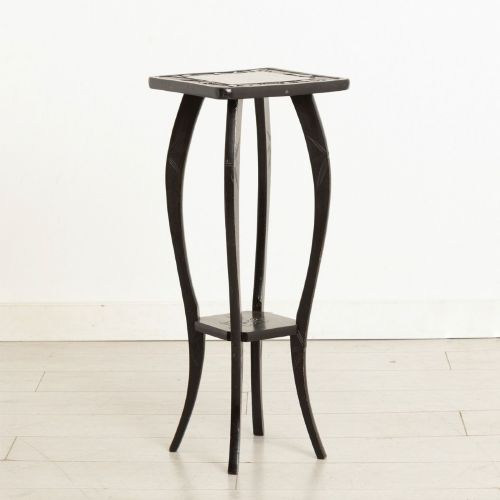
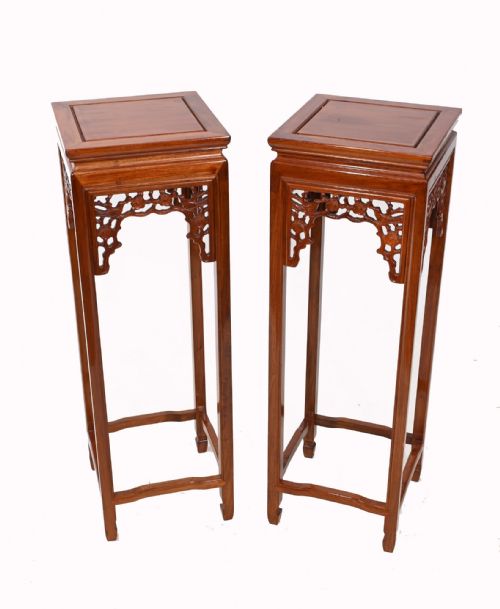
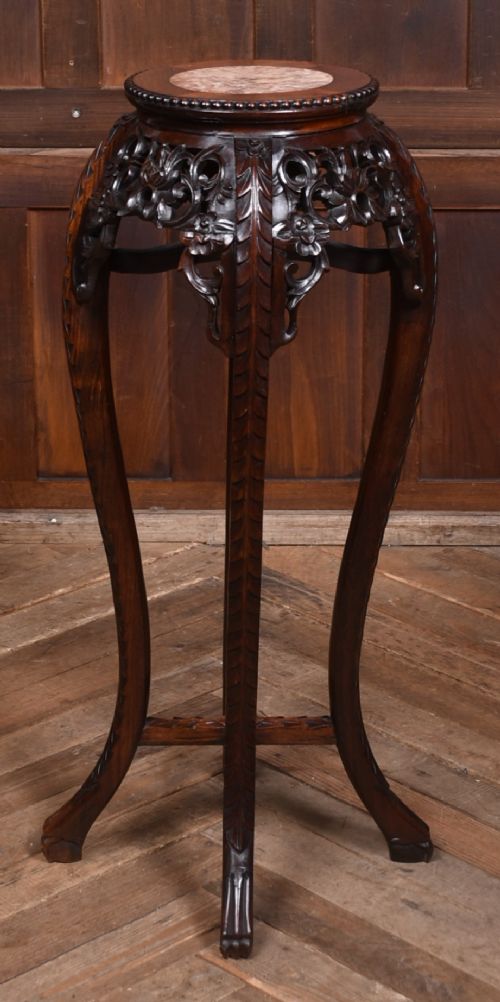


Oriental Carved Display Stand
An oriental carved display stand brings dense texture and dark timber grain to a room, elevating ceramics and bronze figures with considered height.
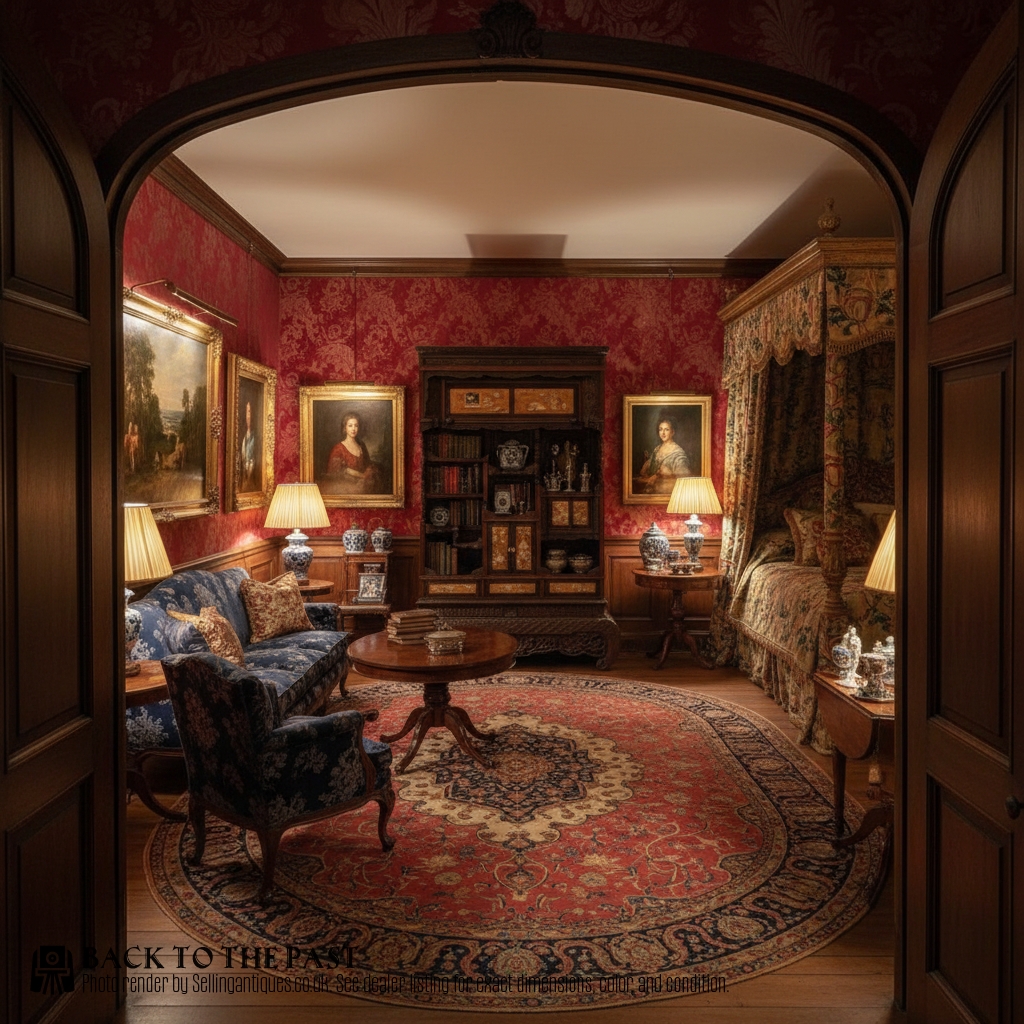
Oriental Carved Display Stand
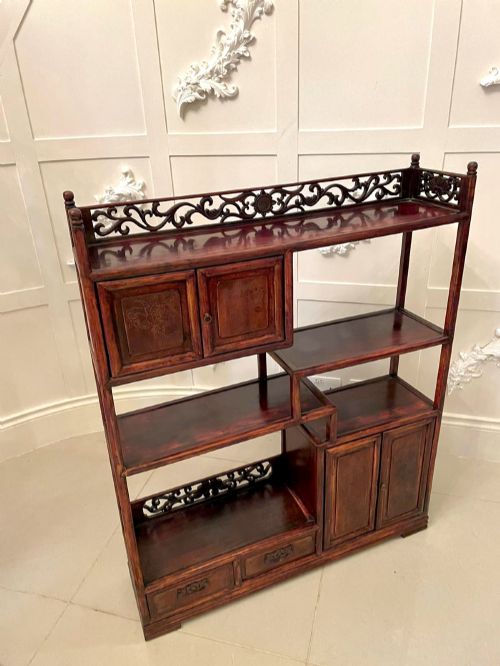
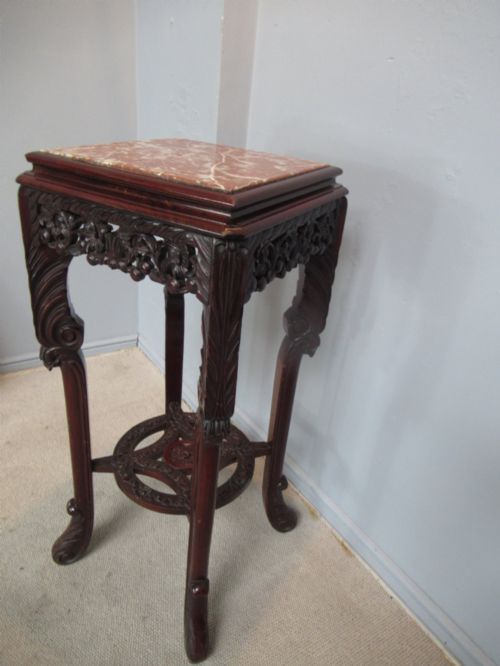
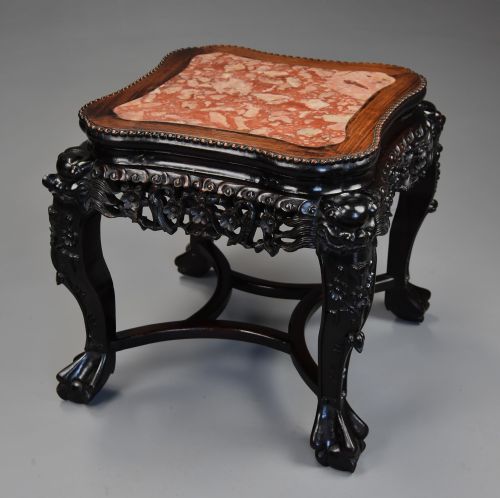
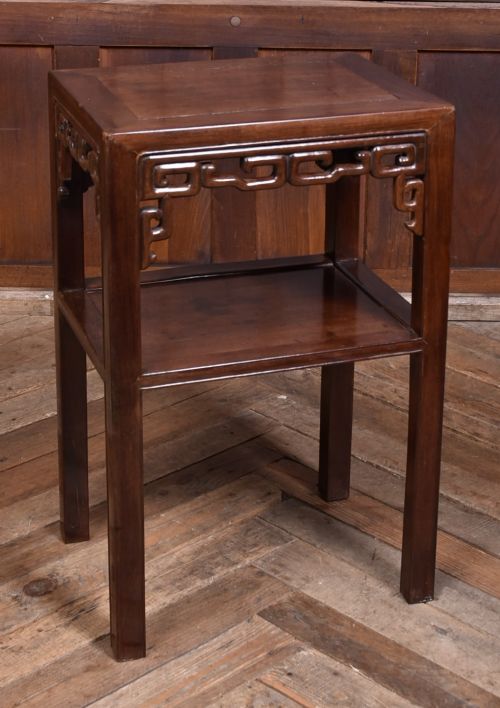
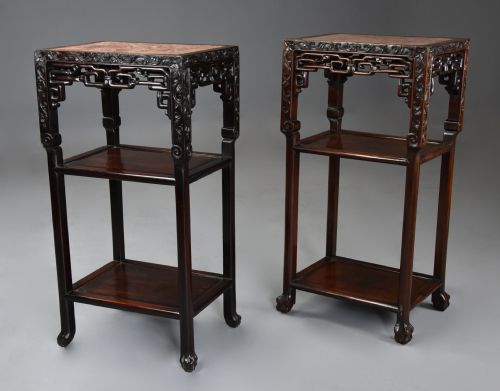
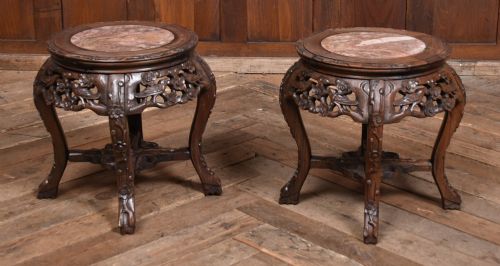
An oriental carved display stand encompasses a broad variety of low tables, pedestals, and plant supports originating from Chinese export workshops and Japanese Meiji period makers. You will most frequently encounter nineteenth century hardwood and rosewood pieces featuring inset marble tops designed for holding heavy ceramic vases and jardinieres.
The forms range from compact pot stands and occasional tables to taller plant pedestals, altar tables, and small tabletop cabinets. Makers utilised diverse styles spanning Qing Dynasty traditions, Chinese Export work, and European Japonisme interpretations.
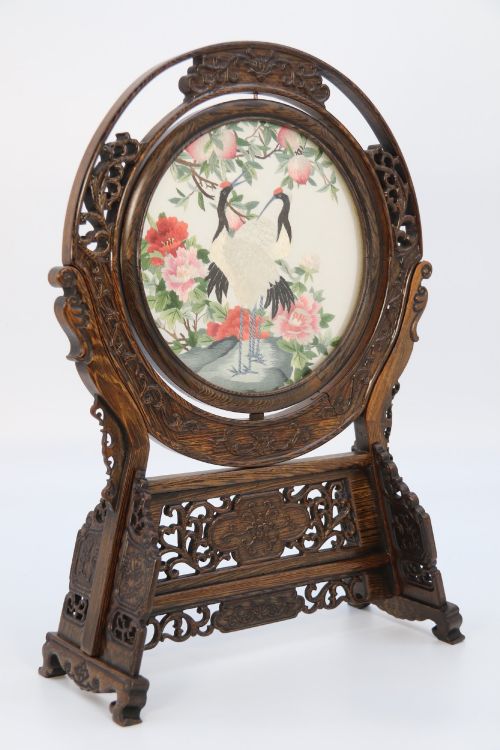
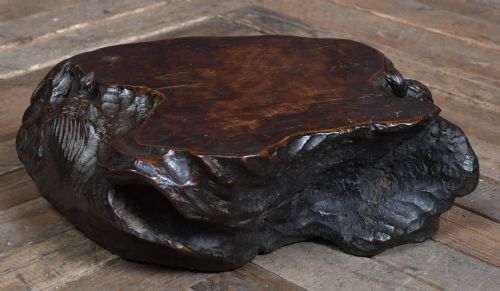
Beyond simple table surfaces, these objects include rotating silk embroidery screens, music cabinets, and specialised bonsai stands carved in the shape of turtles. They function equally well as standalone side tables or as dedicated stages for focal items in an interior.
Materials and Construction
Cabinetmakers constructed these pieces primarily using dense dark timbers such as hardwood, rosewood, padouk, and occasionally bamboo or amboyna. These heavy woods provided the structural integrity required to support inset rouge marble panels and intricate pierced carving.
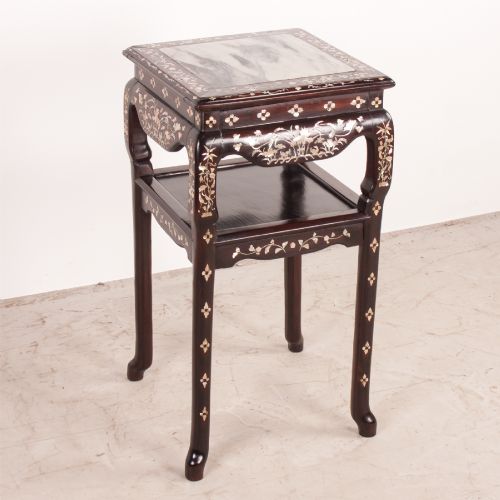
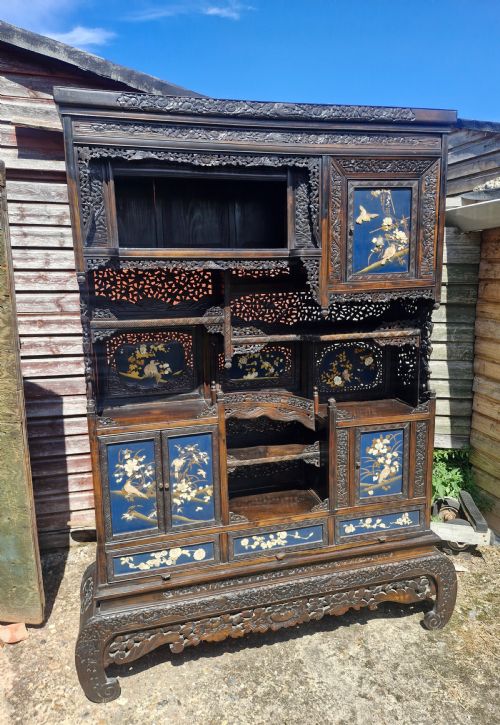
Decoration relied heavily on manual labour, incorporating mother of pearl inlay, lacquer, glass, and brass fittings. Artisans also employed silk embroidery and soapstone carving within rotating frames or display cabinets to add colour and narrative detail.
One remarkably specific piece elevates the art of display by taking the literal shape of a carved wooden turtle.
Distinctions in Quality
The distinction between ordinary and exceptional examples rests in the depth and crispness of the hand carving, alongside the selection of timber. Superior pieces display deeply undercut foliage and figures that retain their sharp profiles, whereas lesser items show shallow, mechanical tooling.
Material selection further defines the upper tier, particularly the quality of the veined marble inset and the precision of the mother of pearl or brass inlay. Heavier, denser hardwoods like padouk and rosewood indicate sturdier construction than lighter, softer wood alternatives.
Gabriel Viardot·Liberty of London
The Oriental Carved Display Stand Glossary
- Jardiniere
- A large ornamental pot or planter, usually ceramic, designed to hold plants and displayed upon a matching low stand.
- Shodana
- A traditional Japanese multi-tiered display cabinet featuring irregular shelving for ornaments, common during the Meiji period.
- Padouk
- A heavy tropical hardwood prized for its deep reddish-brown colour and durability in carved oriental furniture.
- Japonisme
- A late nineteenth century Western artistic movement heavily influenced by Japanese art, woodblock prints, and decorative objects.
- Qing Dynasty
- The last imperial dynasty of China, spanning from sixteen forty-four to nineteen twelve, whose aesthetic heavily influenced export furniture.
Oriental Carved Display Stand: Frequently Asked Questions
What were oriental stands used for?
These stands served primarily to elevate decorative objects such as porcelain vases, bronze vessels, and potted plants within traditional interiors.
By raising the items off the floor or surface, the stands drew attention to the craftsmanship of both the object and the carved timber support.
How do I clean a hardwood stand?
Dust the carved surfaces regularly with a soft, dry brush to prevent dirt from settling into the deep recesses of the wood.
Avoid applying modern liquid polishes or silicone sprays, which can build up on the timber and dull the natural grain over time.
Can these tables hold heavy items?
The dense hardwoods used in these pieces provide remarkable strength and stability for supporting heavy ceramic planters and stone sculptures.
Stands featuring inset marble tops are particularly well suited to weight, as the stone provides a rigid and durable platform.
How do I distinguish Chinese from Japanese pieces?
Chinese pieces often feature heavy hardwood construction, symmetrical floral carvings, and inset marble tops associated with Qing Dynasty aesthetics.
Japanese items from the Meiji period frequently include asymmetric shelving, delicate lacquer work, or naturalist motifs like animals and bamboo.