
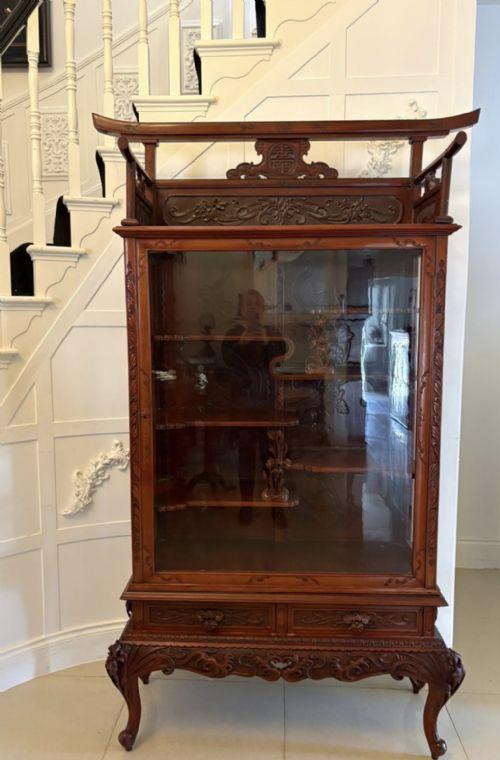
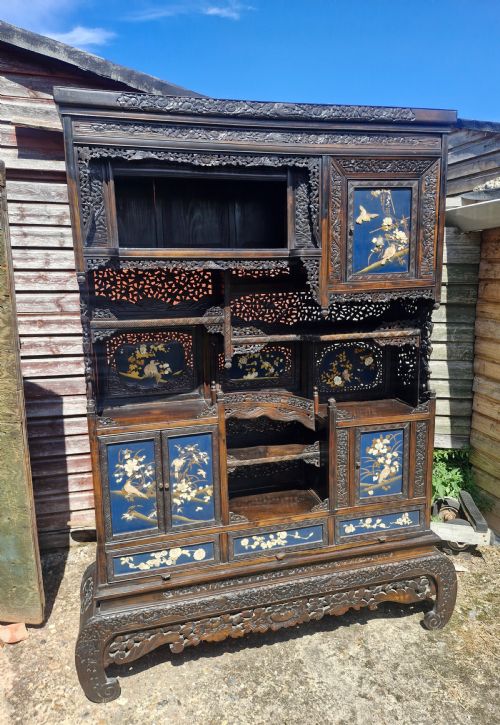
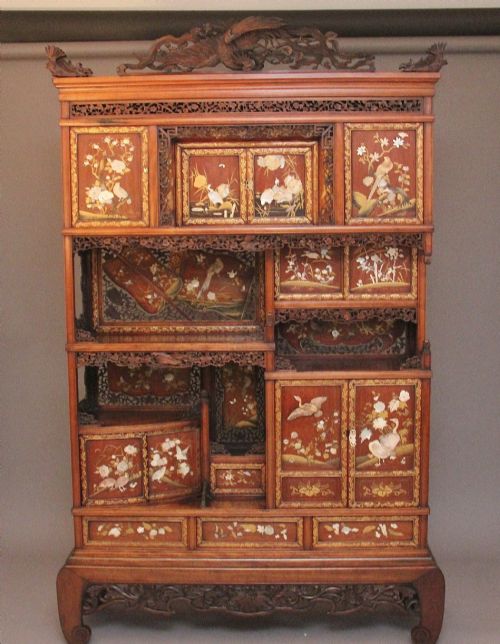
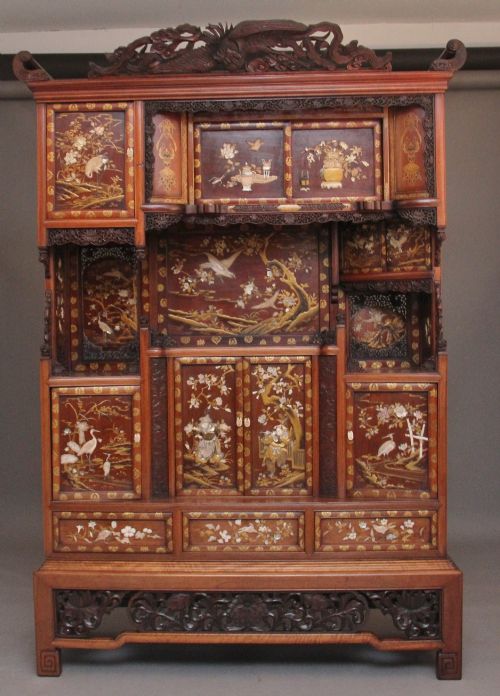




Carved Hardwood Japanese Cabinet
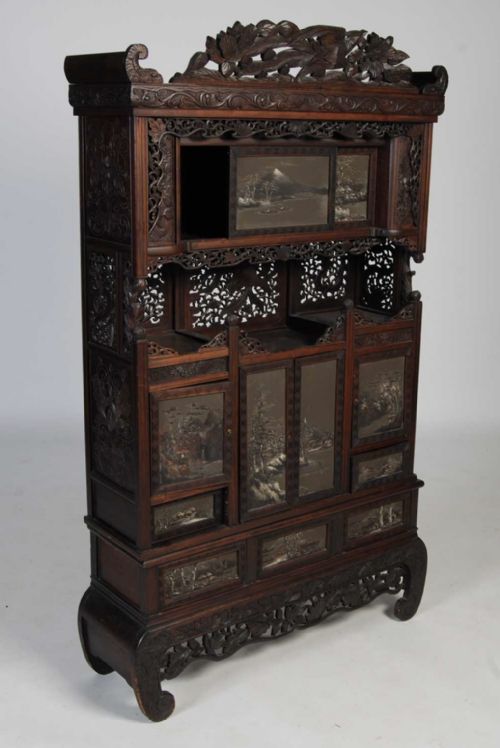
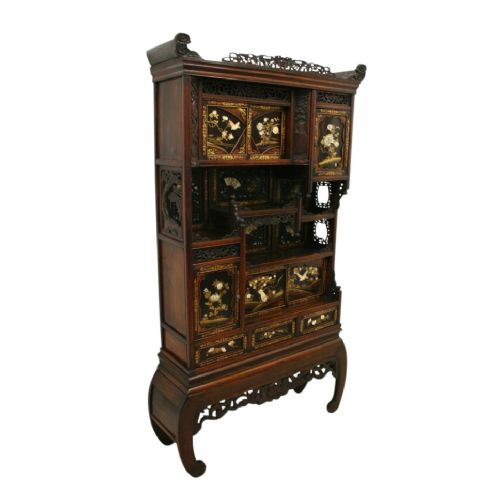
These carved hardwood Japanese cabinet pieces bring intricate Meiji period craftsmanship and rich display spaces into the home.
Carved Hardwood Japanese Cabinet
A carved hardwood Japanese cabinet encompasses elaborate nineteenth century display furniture, predominantly taking the form of the traditional shodona. Buyers searching for a carved hardwood Japanese cabinet encounter intricate storage furniture originating primarily from the Meiji period.
Materials and construction
These items rely on dense hardwood structures, frequently augmented with contrasting inlays of mother of pearl, bone, and metal. Artisans combined carved woodwork with detailed lacquer surfaces to create textured visual depth across panels and doors.
Specialised techniques such as yosegi marquetry appear in the construction, alongside applied bone inlay and delicate glass panels. The integration of Shibayama decoration demonstrates the intricate assembly methods utilised by period craftsmen.
Materials documented across the inventory include hardwood, lacquer, mother of pearl, bone inlay, glass, and metal.
Assessing quality
Quality in these pieces rests upon the depth of the carving and the precision of the inlay work. Finer examples display meticulous bone and mother of pearl placement that remains flush and secure within the hardwood body.
The complexity of the architectural arrangement also separates standard storage from exhibition quality items. Superior proportioning and integrated stands elevate the decorative impact of the shodona.
Gabriel Viardot
The Carved Hardwood Japanese Cabinet Glossary
- Shodona
- A traditional Japanese small tiered display cabinet featuring asymmetrical shelving and cupboards. These pieces were designed to showcase precious objects and ceramics.
- Yosegi
- A traditional Japanese mosaic woodwork technique utilising natural coloured woods to form geometric patterns. This method creates detailed pictorial surfaces without paint.
- Shibayama
- A decorative craft involving inlaid translucent materials such as shell, bone, and ivory set into a wood or lacquer base. The resulting relief designs depict flora, fauna, and figures.
- Meiji Period
- The era of Japanese history spanning from eighteen sixty eight to nineteen twelve, marked by extensive international trade and artistic output. Furniture from this time often blends traditional forms with western display requirements.
- Japonisme
- A western artistic movement of the late nineteenth century influenced by Japanese art and design. European makers adopted these aesthetic principles in furniture such as tables and cabinets.
Carved Hardwood Japanese Cabinet: Frequently Asked Questions
What is a Japanese shodona cabinet?
A shodona is a traditional multi tiered display cabinet featuring asymmetrical shelving, sliding doors, and small cupboards. These pieces were constructed to house and display small art objects and scholarly items.
In period interiors, they served both functional storage and decorative display purposes. The varied compartments reflect traditional Japanese interior joinery adapted for collectors.
How do I identify Meiji period furniture?
Meiji period furniture is generally identified through nineteenth century construction methods, dense hardwood bodies, and characteristic decorative motifs. Pieces often feature distinct Japanese export styles or specific period stylistic markers.
Items from this era frequently incorporate intricate carving alongside mother of pearl or bone inlay. The presence of traditional shodona forms provides a further chronological indicator.
Where were these cabinets placed?
These cabinets were designed for reception rooms and studies where collectors could display ceramics, bronzes, and curio collections. Their varied shelving accommodated objects of differing sizes.
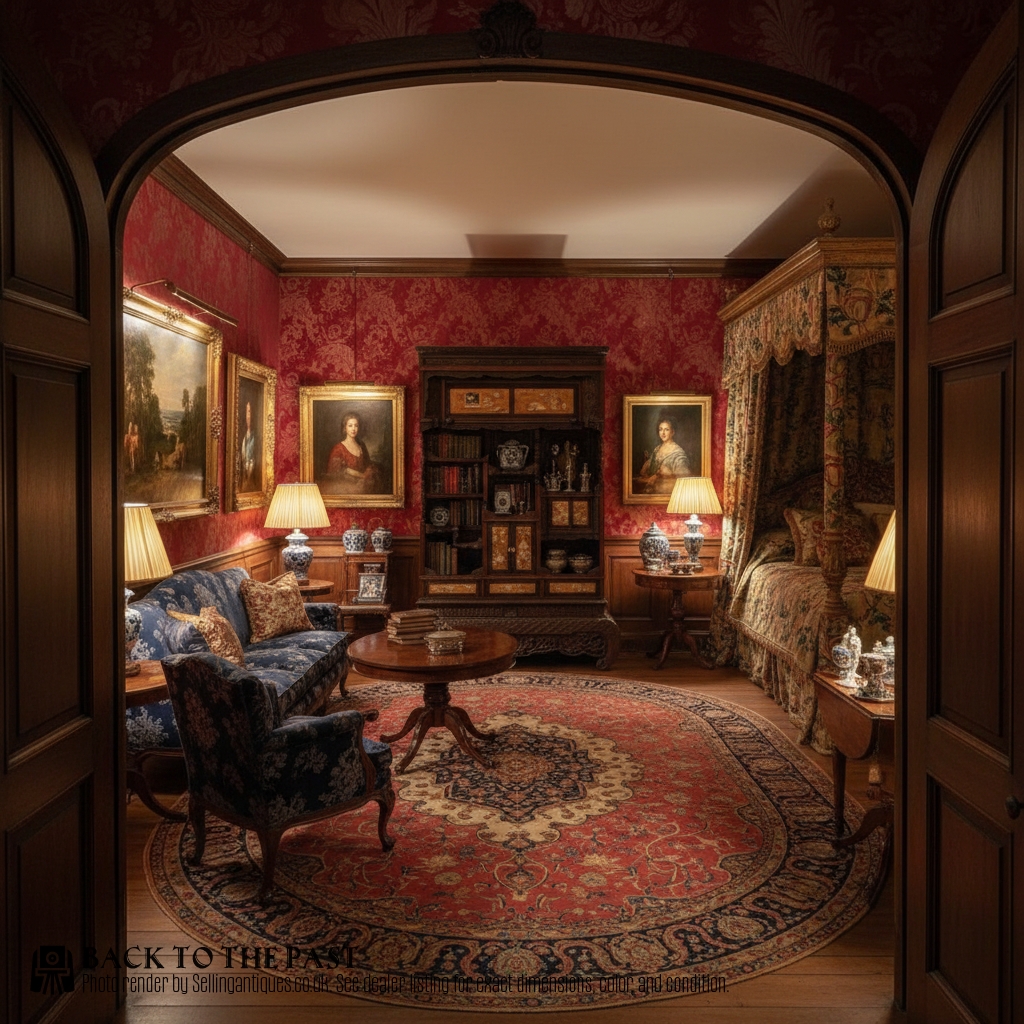
In western homes influenced by Japonisme, they functioned as focal points for exotic interior displays. Smaller variants stood upon tables or dedicated stands to elevate their visibility.
What materials are used in Shibayama cabinets?
Shibayama cabinets utilise dense hardwoods decorated with inlaid elements of mother of pearl, bone, and metal. These materials are shaped into raised pictorial motifs across doors and panels.
The technique creates high contrast textures against the dark wood background. Artisans secured each delicate piece by hand into prepared recesses.