


Gold Lacquer Display Cabinet
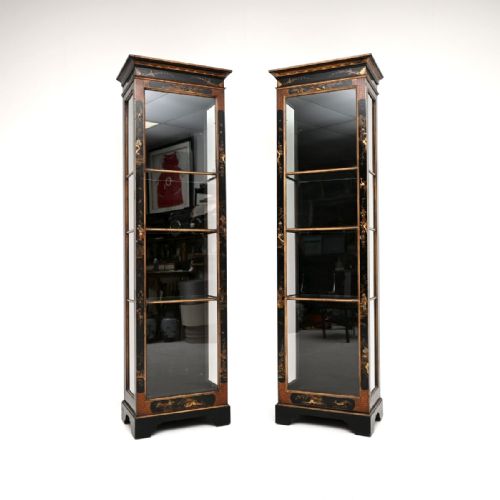
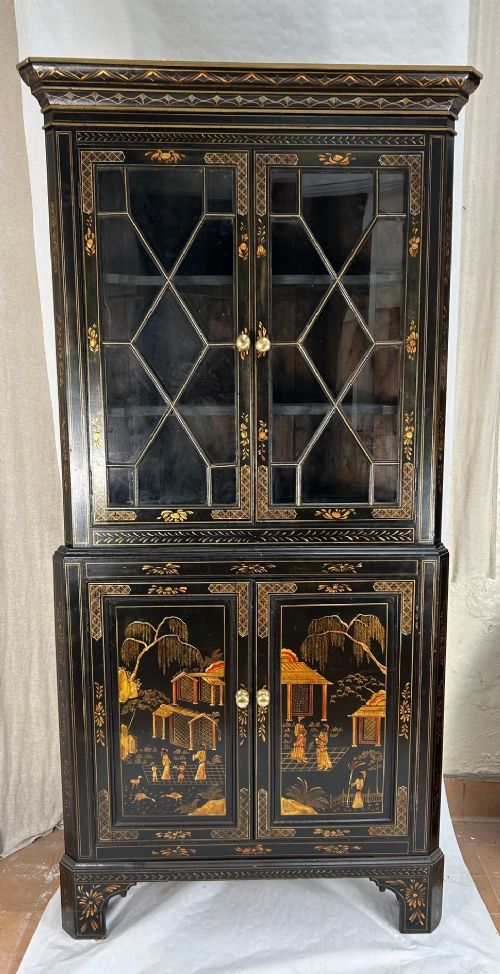
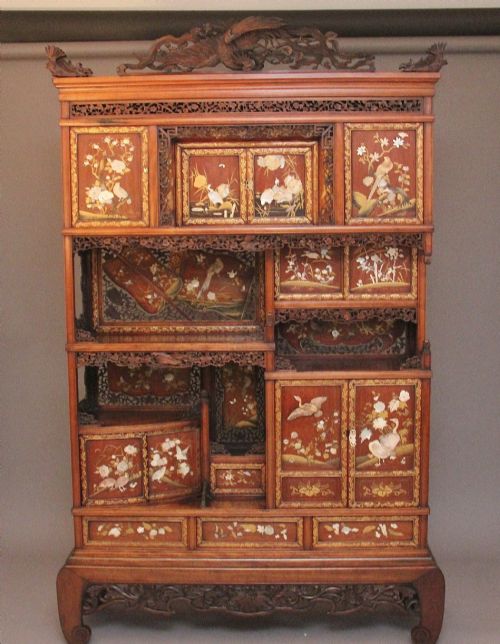
These gold lacquer display cabinets bring striking Chinoiserie and Japanese Meiji craftsmanship into a room to hold your finest porcelain and curios.
Gold Lacquer Display Cabinet
When you search for a gold lacquer display cabinet, you meet a distinct group of furniture spanning the Regency, Victorian, and Edwardian eras, alongside Japanese Meiji imports. The forms range from corner cabinets and chiffoniers to substantial cabinets on stand and tall shodona cabinets.
The aesthetic divides cleanly between British interpretations featuring Chinoiserie lacquer and authentic Japanese Meiji period pieces incorporating Shibayama elements. You will encounter corner cupboards and side cabinets designed to showcase small collections behind glass panels.
The English examples often lean into Regency penwork or Edwardian Chinoiserie styling, while the Japanese pieces display intricate lacquer work. Each variation serves the primary purpose of display, combining practical storage with decorative presence.
Materials and construction
The makers built these pieces using hardwood and ebonised wood as a foundation for layers of lacquer. Gold leaf accents were applied to highlight the intricate decorative scenes across the surfaces.
Glass panels were fitted into doors and sides to protect the contents while maintaining visibility. Brass and ormolu mounts frequently reinforced the corners, edges, and stands of the finer cabinets.
Bone and specialised inlays appear on specific Japanese Meiji examples, adding texture and contrast to the lacquered panels. The combination of these materials required skilled joinery to ensure stability.
Materials recorded across the inventory include lacquer, glass, gold leaf, brass, hardwood, bone, and ebonised wood.
Assessing quality
The distinction between standard and exceptional pieces rests upon the depth and intricacy of the lacquer work. Superior cabinets display meticulous detail in the gold leaf application and painted motifs rather than simple surface decoration.
The quality of the underlying timber and the precision of the brass or ormolu mounts dictate the overall caliber of the construction. Cabinets featuring specialised elements like bone inlays or bamboo form shaping command greater attention.
Proportion and the integration of glazing bars reveal the hand of a more accomplished maker. A well-balanced frame supports the elaborate surface ornamentation without appearing clumsy or overcharged.
The Gold Lacquer Display Cabinet Glossary
- Shodona
- A traditional Japanese multi-tiered display cabinet designed for curios and art objects. These pieces often incorporate asymmetrical shelving and sliding doors.
- Shibayama
- A Japanese decorative technique utilising inlaid materials such as shell, ivory, bone, and coral on a lacquer base. This method creates a rich, textured surface.
- Ormolu
- Gilded bronze mounts used decoratively on furniture edges and feet. It provides a bright metallic contrast to dark wood and lacquer.
- Penwork
- A form of fine decoration created using ink applied to wood, frequently seen on Regency pieces. It mimics more complex carving through meticulous line drawing.
Gold Lacquer Display Cabinet: Frequently Asked Questions
Where should I place my cabinet?
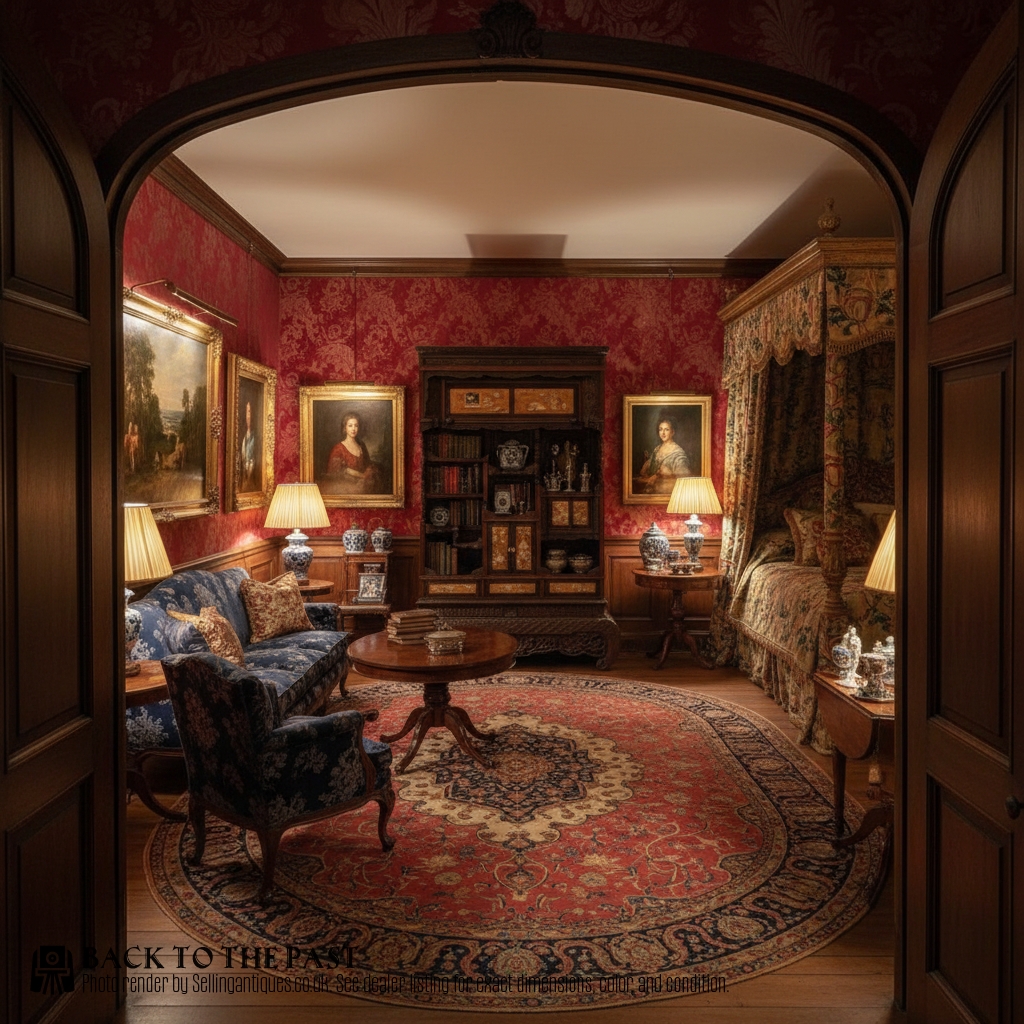
These cabinets suit drawing rooms and studies where their reflective lacquer surfaces catch ambient light. Keep them away from direct sunlight to preserve the finish.
Position them against plain walls to let the intricate Chinoiserie or Meiji details stand out without visual competition.
How do I clean gold lacquer?
Dust the surfaces gently with a soft, dry microfibre cloth to prevent scratching the delicate lacquer and gold leaf. Avoid commercial polishes and abrasive cleaners entirely.
If moisture is necessary, use a barely damp cloth followed immediately by a dry one to protect the wood and joints.
Can these cabinets hold heavy items?
Most of these pieces were designed for lighter decorative objects, porcelain, and curios rather than heavy books. Check the construction of the internal shelves before loading them.
Corner cabinets and smaller chiffoniers distribute weight differently, so balance your collection evenly across the available space.
How do I date a lacquer cabinet?
Look to the overall style, noting whether the piece uses Regency penwork, Victorian revivalism, or Edwardian Chinoiserie proportions. The choice of hardware and secondary timbers also aids attribution.
Japanese Meiji pieces typically reflect late nineteenth-century export standards, while British interpretations follow domestic stylistic shifts.